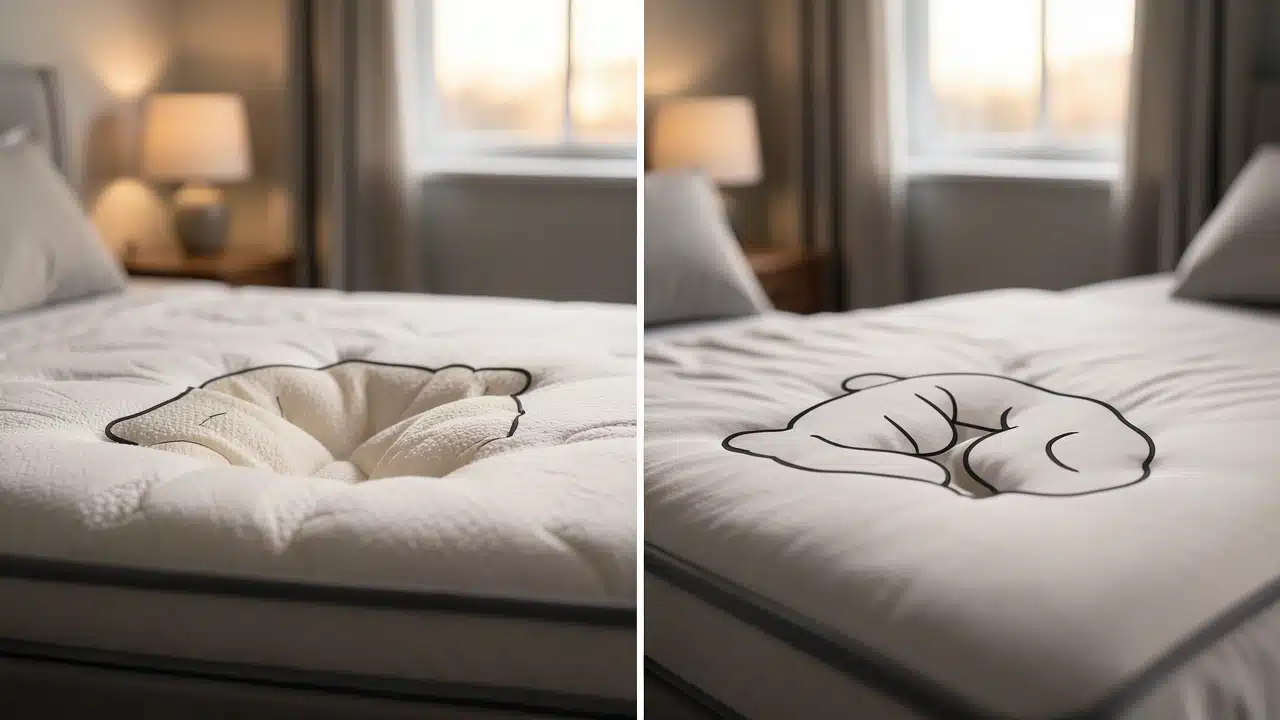
One side of a shared mattress wears out faster because body weight, sleeping position, heat, and movement are not distributed evenly between two people.
The heavier or more active sleeper can compress foam and springs sooner. Rotate the mattress regularly, swap sleeping sides when practical, use a supportive base, and replace it when sagging affects comfort.
It’s frustrating when your mattress starts to feel uneven, especially when you share it. You might notice one side dips more or feels softer than the other.
Understanding Why One Side of a Shared Mattress Wears Out Faster and What To Do About It is key to getting more sleep and making your mattress last longer.
This knowledge helps you keep your bed comfortable for both of you and avoid having to buy a new one too soon. We’ll show you why this happens and give you simple steps to keep your mattress feeling balanced.
Key Takeaways
- Uneven weight distribution from partners is a primary cause of one side wearing out faster.
- Consistent sleeping positions and habits of individuals contribute significantly to localized wear.
- Mattress type plays a role, with some materials being more susceptible to uneven wear than others.
- Regularly rotating and flipping your mattress can help equalize wear and extend its lifespan.
- Using protective covers and being mindful of sleeping habits can prevent premature sagging.
- Addressing the problem early can save you money and improve sleep quality.
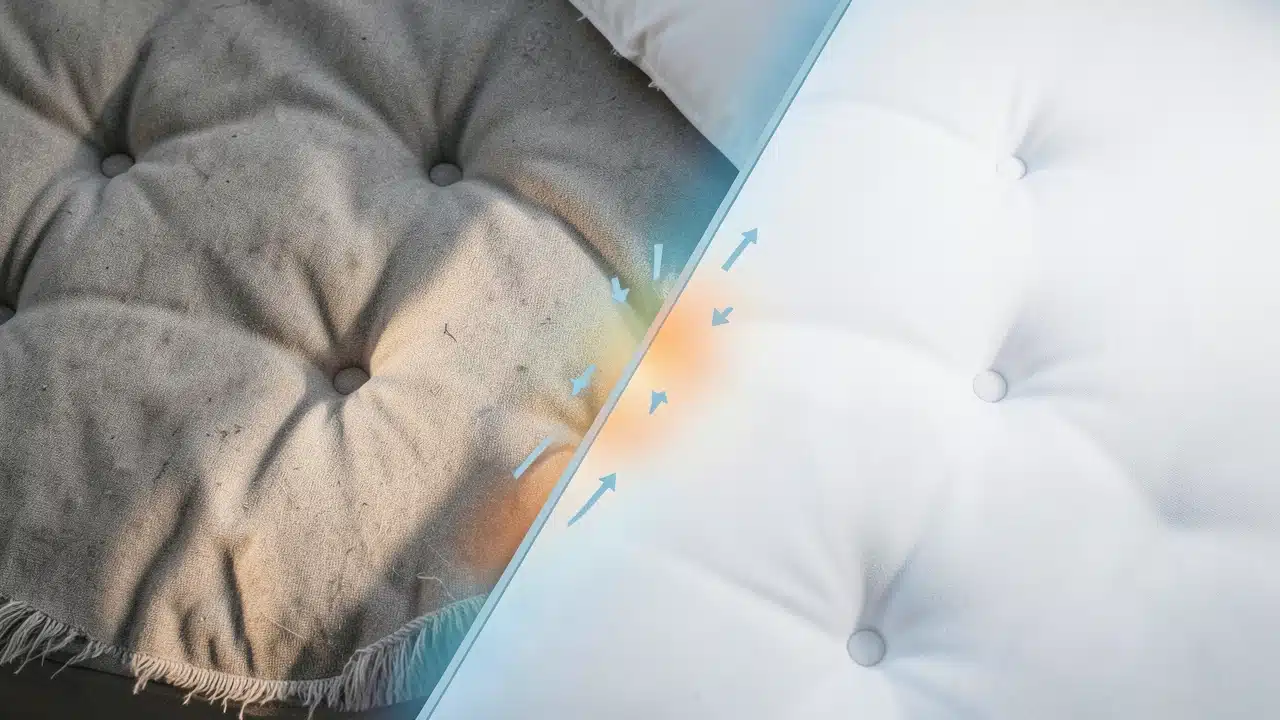
The Hidden Reasons Your Mattress Wears Unevenly
How Weight and Habits Cause One-Sided Wear
When two people share a bed, they often don’t distribute their weight perfectly evenly. One person might be heavier than the other. Or, both people might tend to sleep on the same side of the bed.
This constant pressure on one area causes the mattress materials to compress more on that side. Over time, this leads to a noticeable difference in firmness and support. It’s a common issue for couples.
Think about your daily routines. Do you always get into bed from the same side? Do you have a favorite spot where you always sleep?
These small habits add up. If one person consistently sleeps on the left side, and the other on the right, it can still lead to one side wearing faster if one person’s habits create more pressure. This is a big part of Why One Side of a Shared Mattress Wears Out Faster and What To Do About It.
The Impact of Sleeping Positions
Your preferred sleeping position also matters. Side sleepers often put more pressure on one hip and shoulder. If both partners are side sleepers and favor the same side of the mattress, that area will see more wear.
Back sleepers might have consistent pressure in the center. Stomach sleepers can create uneven wear around the waist and hips.
Understanding these patterns helps explain Why One Side of a Shared Mattress Wears Out Faster and What To Do About It.
Consider how you move in your sleep. Do you toss and turn a lot? If one person moves more, they might be creating more stress on certain parts of the mattress.
This movement can cause the internal support layers to shift or compress unevenly. This is a key factor in Why One Side of a Shared Mattress Wears Out Faster and What To Do About It.
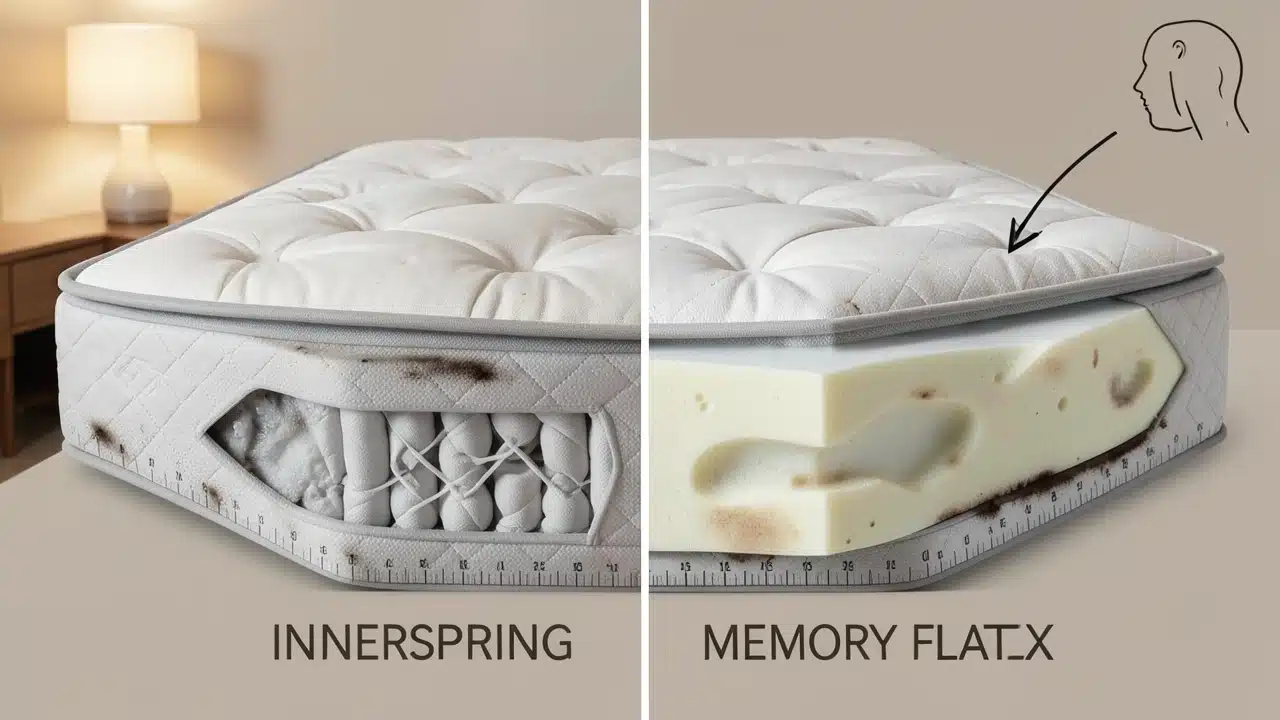
Mattress Types and Their Susceptibility to Uneven Wear
Innerspring Mattresses
Innerspring mattresses rely on a system of coils for support. If one side has more weight or pressure applied consistently, the coils on that side can sag or become misshapen. The padding on top can also compress unevenly.
This makes the one side feel softer and less supportive. This is a common reason for Why One Side of a Shared Mattress Wears Out Faster and What To Do About It.
The type of innerspring system also plays a role. Pocketed coils tend to offer more independent support than traditional Bonnell coils.
However, even pocketed coils can eventually show wear if one side is consistently stressed more than the other.
This is something to consider when looking at Why One Side of a Shared Mattress Wears Out Faster and What To Do About It.
Memory Foam Mattresses
Memory foam is known for its contouring ability. This means it molds to your body. While this is great for comfort, it can also lead to indentations where weight is consistently applied.
If one side of the mattress experiences more consistent pressure, the foam on that side can break down faster. This is a significant factor in Why One Side of a Shared Mattress Wears Out Faster and What To Do About It.
The density and quality of the memory foam matter. Higher-density foams tend to be more durable and resistant to sagging. Lower-density foams might show wear more quickly, especially in shared beds.
This is a crucial part of understanding Why One Side of a Shared Mattress Wears Out Faster and What To Do About It.
Latex Mattresses
Latex mattresses are generally very durable and resistant to sagging. Natural latex, in particular, tends to bounce back well.
However, even latex can show signs of wear if one side is subjected to significantly more pressure over a long period.
It’s less common, but still possible. This is a factor in Why One Side of a Shared Mattress Wears Out Faster and What To Do About It.
The construction of a latex mattress can also influence wear. Some latex mattresses have different firmness zones. If these zones aren’t aligned with how weight is distributed, it could lead to uneven wear.
This is a detail to consider when thinking about Why One Side of a Shared Mattress Wears Out Faster and What To Do About It.
Hybrid Mattresses
Hybrid mattresses combine innerspring coils with foam or latex layers. They offer the benefits of both. However, they can also inherit the weaknesses of both.
The innerspring system can sag on one side, and the foam layers can compress unevenly. This makes them susceptible to the same issues as their individual components.
This is a common explanation for Why One Side of a Shared Mattress Wears Out Faster and What To Do About It.
The quality of the materials in a hybrid mattress is very important. A well-made hybrid with good quality coils and dense foam layers will resist uneven wear better than a cheaper one. This is a key point in understanding Why One Side of a Shared Mattress Wears Out Faster and What To Do About It.
Strategies to Prevent and Address Uneven Mattress Wear
The Power of Regular Rotation
The most effective way to combat uneven wear is to rotate your mattress regularly. This means turning it end-to-end. For example, the head of the bed becomes the foot, and vice versa.
This helps to distribute the wear more evenly across the entire surface of the mattress. It’s a simple step that makes a big difference.
How often should you rotate? Aim for every 3 to 6 months. If you notice signs of uneven wear sooner, rotate it more frequently.
This proactive approach is crucial for understanding Why One Side of a Shared Mattress Wears Out Faster and What To Do About It and preventing it.
The Importance of Flipping (If Applicable)
Some mattresses are designed to be flipped, meaning they have comfort layers on both sides. If your mattress is flippable, this offers another excellent way to equalize wear. Flipping means turning the mattress over completely, so the bottom becomes the top.
This doubles the sleeping surface available for wear.
Always check your mattress’s care label or manufacturer’s instructions to see if it’s designed to be flipped.
Many modern mattresses, especially pillow-tops and some foam types, are one-sided and cannot be flipped. For those that can, flipping in addition to rotating is a powerful strategy.
This is a vital part of knowing Why One Side of a Shared Mattress Wears Out Faster and What To Do About It and how to fix it.
Using a Mattress Topper Strategically
A mattress topper can add an extra layer of comfort and support. It can also help to equalize the feel of a mattress that’s starting to wear unevenly.
If one side is sagging, a thicker topper on that side, or a topper that distributes weight more evenly, can help.
However, a topper is a temporary fix. It won’t repair the underlying mattress damage. It’s more of a band-aid solution.
It can buy you some time, but it’s not a long-term answer to Why One Side of a Shared Mattress Wears Out Faster and What To Do About It.
Adjusting Sleeping Habits
While it’s hard to completely change lifelong habits, small adjustments can help. Try to encourage both partners to sleep in different positions or on different parts of the bed occasionally. This isn’t always practical or comfortable, but even small shifts can make a difference over time.
Consider swapping sides of the bed every few months. This might seem strange, but it can help distribute wear more evenly. It’s a creative approach to managing Why One Side of a Shared Mattress Wears Out Faster and What To Do About It.
Investing in Quality and Support
When buying a new mattress, consider its construction and durability. Higher-density foams, robust coil systems, and quality latex tend to last longer and resist wear better.
Look for mattresses designed for couples, which often have better motion isolation and edge support, and are built to withstand more consistent use.
A good quality mattress is an investment in your sleep. While it might cost more upfront, it can save you money in the long run by lasting longer and providing consistent comfort.
This is a key aspect of understanding Why One Side of a Shared Mattress Wears Out Faster and What To Do About It and preventing future problems.
The Role of a Mattress Protector
While a mattress protector primarily shields against spills and allergens, it can also add a thin, even layer of material over the mattress surface. This layer can subtly help in distributing pressure more uniformly. It’s not a primary solution for wear, but it contributes to the overall protection of the mattress.
A good protector also keeps the internal materials clean, which can indirectly help maintain their integrity. This is a small but helpful step in managing Why One Side of a Shared Mattress Wears Out Faster and What To Do About It.
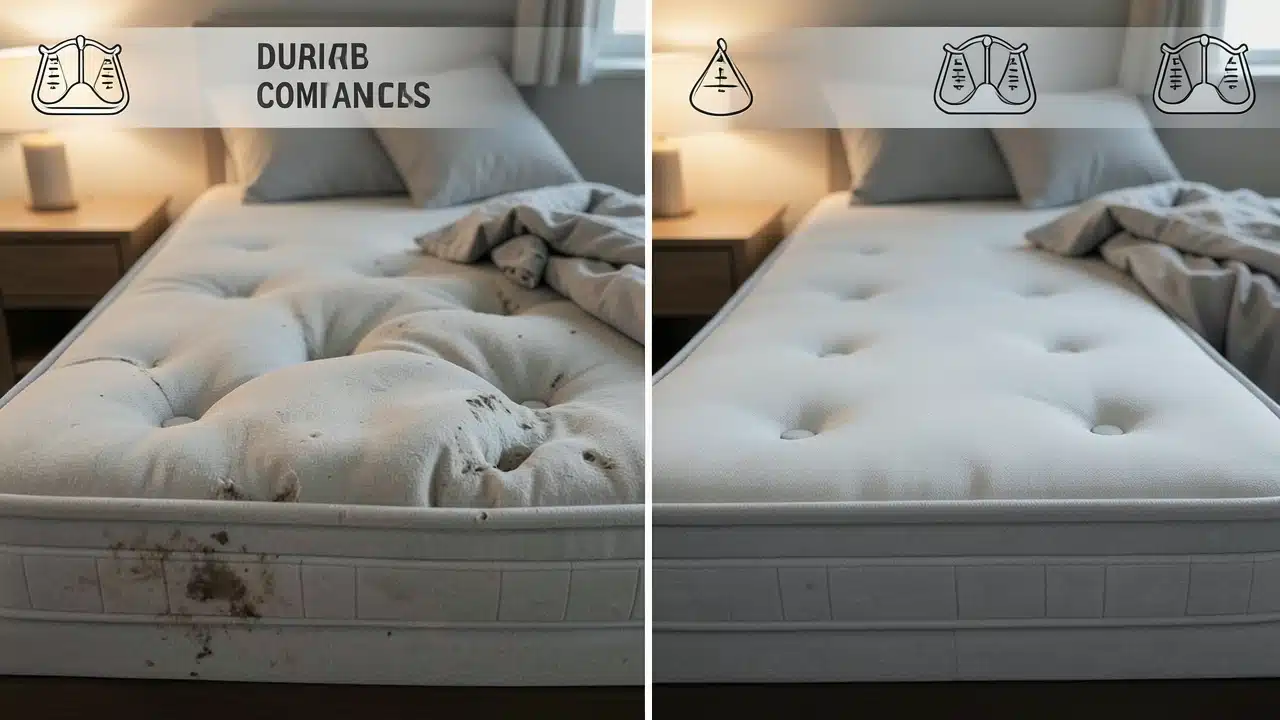
Comparing Mattress Durability and Wear Patterns
When looking at Why One Side of a Shared Mattress Wears Out Faster and What To Do About It, it helps to see how different mattress types stack up.
Not all mattresses are created equal when it comes to resisting uneven wear. Some materials are simply more prone to showing the effects of consistent pressure.
| Susceptibility to Sagging | Moderate to High (coils can weaken) | Moderate to High (foam can compress) | Low (very resilient) | Moderate (combines coil and foam issues) |
| Impact of Consistent Weight | Coils on one side can lose support | Foam can permanently indent on one side | Resists permanent indentation well | Both coil and foam layers can wear unevenly |
| Rotation Effectiveness | High (distributes coil stress) | Moderate (can help redistribute foam compression) | High (maintains evenness) | High (helps both layers) |
| Flipping Potential | Often yes, if designed for it | Rarely (usually one-sided) | Often yes, if designed for it | Rarely (usually one-sided foam top) |
| Overall Durability for Couples | Can be good if high quality | Can be good if high density | Excellent | Depends heavily on quality of both components |
As you can see, latex mattresses generally offer the best resistance to uneven wear. However, even with other types, proper care can significantly extend their lifespan and maintain an even feel.
Understanding these differences is crucial for addressing Why One Side of a Shared Mattress Wears Out Faster and What To Do About It.
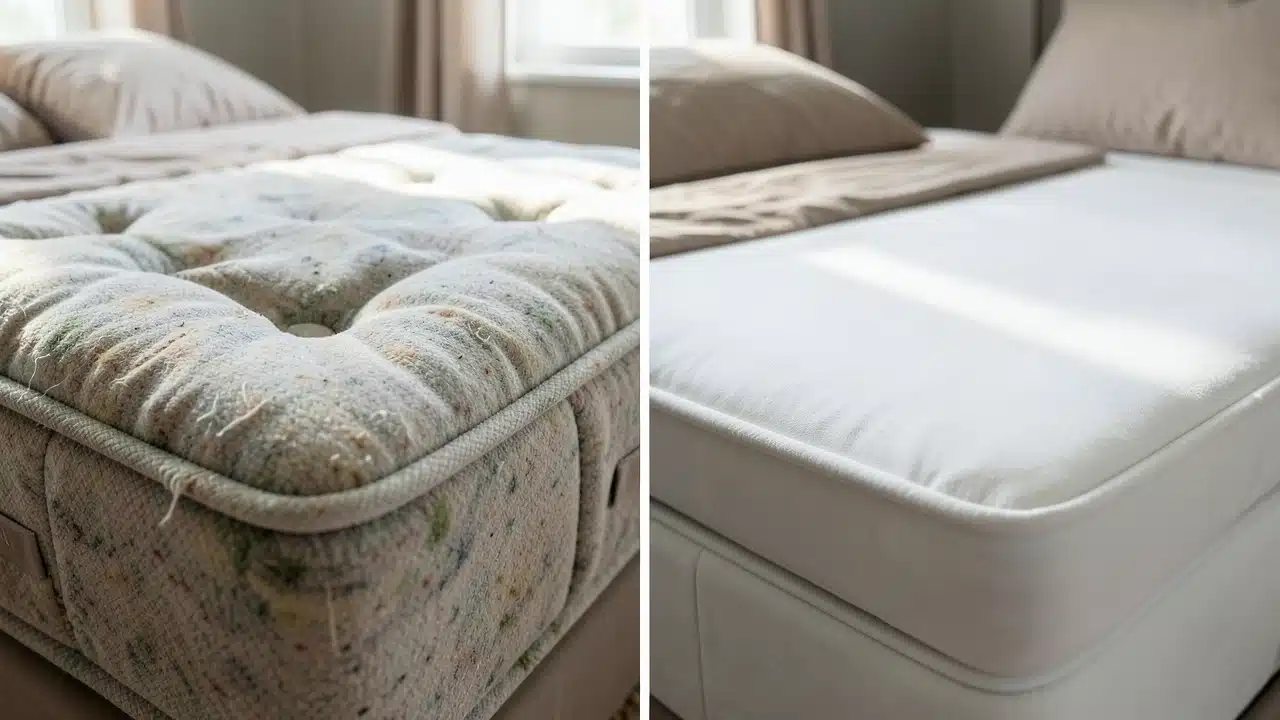
When to Consider a New Mattress
Signs Your Mattress Needs Replacing
Even with the best care, mattresses have a lifespan. If you notice persistent sagging on one side, deep indentations that don't disappear, or significant loss of support, it might be time for a new mattress. These are clear indicators that the internal support system has failed.
Another sign is if you wake up with aches and pains regularly, and you’ve ruled out other causes. A worn-out mattress can no longer provide the proper spinal alignment needed for restful sleep.
This is a strong signal that the issues related to Why One Side of a Shared Mattress Wears Out Faster and What To Do About It have become too severe.
The Cost-Benefit of Early Replacement
While buying a new mattress is an expense, sometimes it’s more cost-effective than trying to constantly fix a failing one.
If your mattress is old and showing significant wear, a new one can improve your sleep quality and overall health. It’s an investment in your well-being.
Don’t wait until your mattress is completely unusable. If you’re experiencing discomfort or the unevenness is too pronounced, consider replacing it.
This is the ultimate solution when managing Why One Side of a Shared Mattress Wears Out Faster and What To Do About It becomes impossible with current methods.
Question: How often should I rotate my mattress?
Answer: You should aim to rotate your mattress every 3 to 6 months. If you notice uneven wear sooner, rotate it more frequently.
Question: Can a mattress topper fix one side wearing out faster?
Answer: A mattress topper can temporarily mask the issue and improve comfort, but it doesn’t fix the underlying wear in the mattress itself.
Question: Is it normal for one side of a new mattress to feel different?
Answer: Some new mattresses, especially foam ones, might have a slight break-in period. However, significant differences in firmness between sides usually indicate a manufacturing issue or are a sign of Why One Side of a Shared Mattress Wears Out Faster and What To Do About It developing.
Question: Does sleeping position affect mattress wear?
Answer: Yes, your sleeping position can concentrate pressure on certain areas of the mattress, contributing to uneven wear over time.
Question: What’s the best mattress type for couples to avoid uneven wear?
Answer: Latex mattresses are generally the most durable and resistant to uneven wear. High-quality hybrid and dense memory foam mattresses are also good options.
Question: If I flip my mattress, will that solve the problem of one side wearing out faster?
Answer: Flipping a mattress (if it’s designed to be flipped) is a very effective way to equalize wear, as it utilizes both sides of the mattress for sleeping.
Final Thoughts
Uneven mattress wear is common for couples, but it doesn’t have to ruin your sleep. By understanding the reasons like weight distribution and habits, and by taking simple steps like regular rotation, you can significantly extend your mattress’s life and keep both sides feeling comfortable.
Addressing Why One Side of a Shared Mattress Wears Out Faster and What To Do About It proactively ensures better sleep for everyone.