
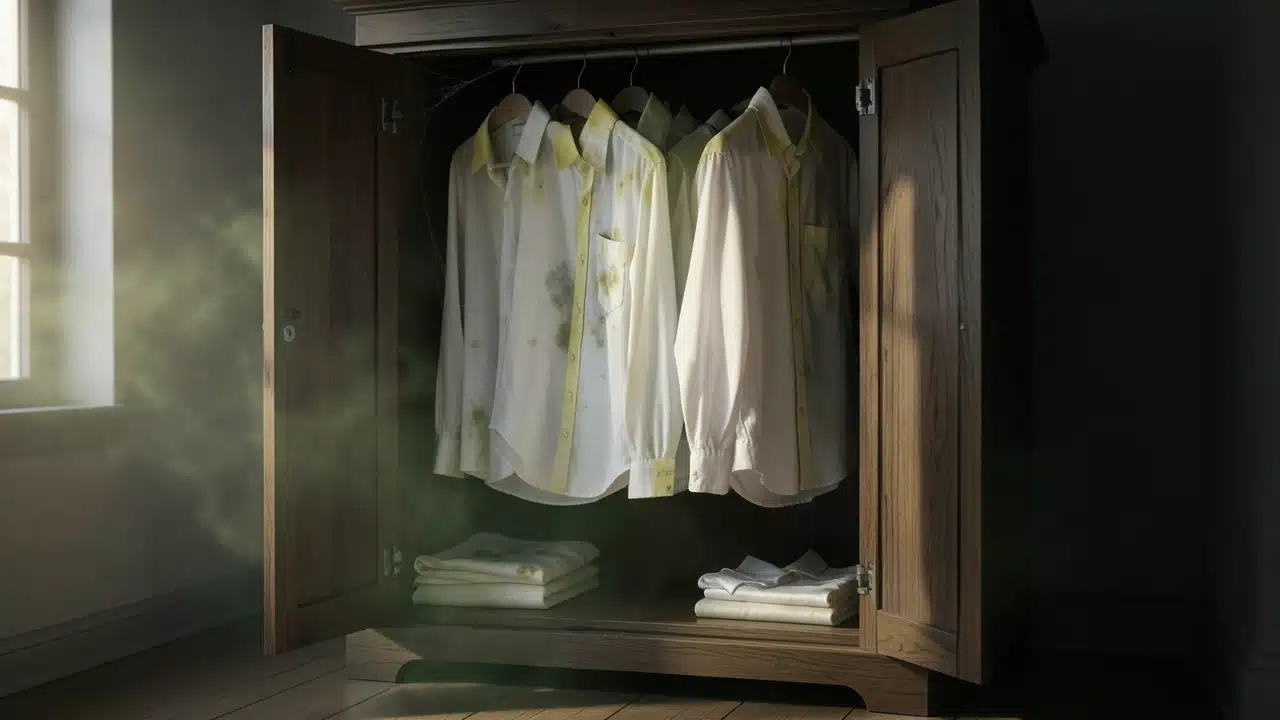
Clothes in a wardrobe go yellow or develop a musty smell because trapped moisture, poor airflow, body oils, detergent residue, and dust accumulate on fabric during storage, with white and light fabrics showing yellowing fastest. These conditions enable chemical reactions and microbial growth that degrade fibers and produce stale odors, making proper drying and cleaning before storage essential. Prevent these issues by storing completely dry garments with breathable spacing, using moisture absorbers, and airing the wardrobe regularly to protect your clothing investment.
Clothes in a wardrobe go yellow or develop a musty smell because trapped moisture, poor airflow, body oils, detergent residue, and dust slowly react with fabric during storage.
White and light fabrics show yellowing fastest. Keep clothes fully dry, clean before storing, use breathable spacing, add moisture absorbers, and air the wardrobe regularly.
It’s frustrating when your favorite clothes start to look dingy or smell stale, especially when they’ve been tucked away.
Understanding Why Clothes in a Wardrobe Go Yellow or Develop a Musty Smell helps you keep your garments fresh and ready to wear.
By learning the common culprits, you can protect your wardrobe investment and enjoy clothes that look and smell their best, saving you money and effort in the long run.
Let’s find out what causes these issues and how you can prevent them.
Key Takeaways
- Fabrics can yellow from sweat, body oils, and certain types of detergent residue.
- Musty smells often come from moisture trapped in clothes and the closet environment.
- Improper storage, like using plastic bags, can trap humidity and lead to odors.
- Moths and other pests can contribute to damage and odors on clothing.
- Washing and drying methods play a big role in preventing discoloration and smells.
- Regular closet maintenance is key to keeping clothes fresh.
The Hidden Causes of Yellowing Fabrics
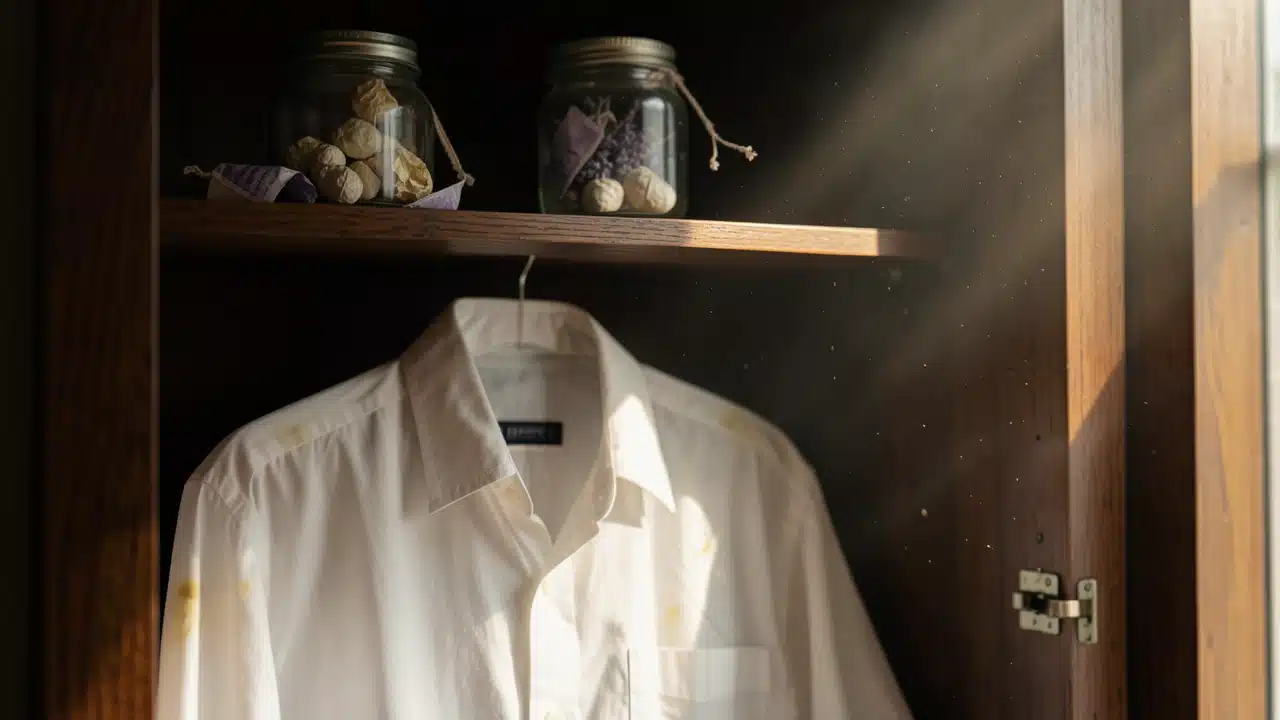
Your clothes might turn yellow for a variety of reasons, and it’s often not just one thing. The most common culprit is the breakdown of body oils and sweat.
When these substances mix with certain fabric types and are exposed to heat, like from a dryer or even sunlight, they can oxidize and turn yellowish.
This is especially true for white or light-colored fabrics, where the discoloration is most noticeable.
Another factor is the detergent you use. Some detergents contain optical brighteners that can build up over time. While they make clothes look whiter initially, too much can create a residue.
This residue can then react with minerals in water or other laundry products, leading to a yellow tint. Fabric softeners can also leave behind a waxy coating that traps oils and contributes to yellowing.
The type of fabric itself matters too. Natural fibers like cotton and linen are more prone to absorbing oils and moisture than synthetic materials. Over time, this absorption can lead to a dulling or yellowing effect.
Even the chemicals used in manufacturing or finishing certain garments can sometimes contribute to this color change, though this is less common for everyday wear.
Unmasking the Mystery of Musty Wardrobe Smells
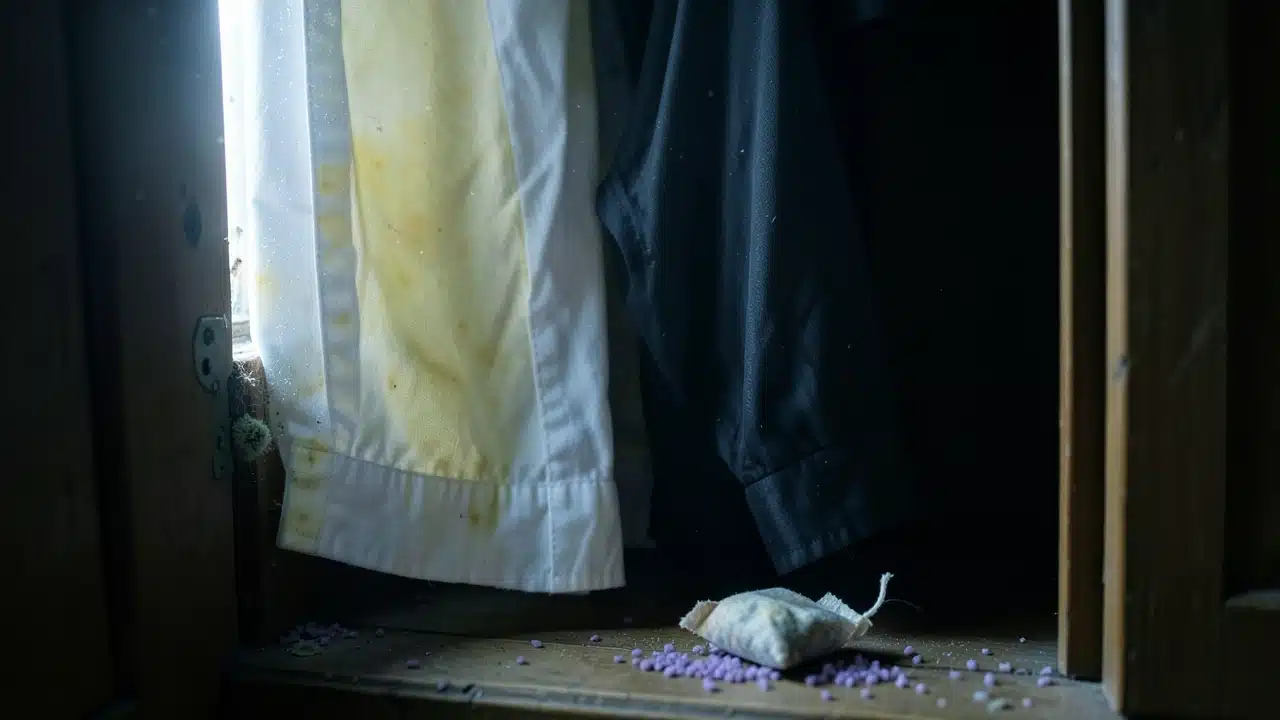
A musty smell in your wardrobe is almost always a sign of excess moisture. When clothes are stored in a damp environment, they become a breeding ground for mold and mildew.
These microscopic organisms thrive in dark, humid conditions and release that distinct, unpleasant odor.
This is why closets in basements or bathrooms are often more susceptible to this problem.
The culprit isn’t always visible mold. Even a slight dampness from clothes that weren’t fully dried, or from humidity seeping into the closet space, can lead to the development of these musty odors.
If you’ve ever put away laundry that felt slightly cool to the touch, that residual dampness can cause big problems over time.
It can even transfer to other items stored nearby.
Even if your clothes seem dry when you put them away, they can still pick up moisture from the air in a poorly ventilated closet.
Think of it like a sponge; the fabric can absorb ambient humidity. This is why good airflow is so important for keeping clothes smelling fresh.
Trapped air means trapped moisture, which spells trouble for your wardrobe.
How Storage Choices Impact Your Clothes
The way you store your clothes plays a huge role in preventing yellowing and musty smells. Using plastic garment bags, for example, might seem like a good way to protect clothes from dust. However, plastic is not breathable.
It traps moisture and prevents air circulation, creating a perfect environment for mildew and those dreaded musty odors to develop. It can also trap heat, which can contribute to yellowing.
On the other hand, breathable garment bags made from cotton or felt are a much better choice. They allow air to flow through, reducing moisture buildup and preventing smells. If you’re storing seasonal clothing, ensure it’s completely clean and dry before bagging it up.
Even a tiny bit of residual dirt or moisture can cause issues over months of storage.
Wire hangers can also cause problems. They can snag delicate fabrics or leave rust marks if they corrode.
Wooden hangers are generally a better option, but be cautious with unfinished wood, as it can sometimes transfer oils or odors to your clothes.
Cedar hangers are a popular choice because they offer natural moth-repelling properties and a pleasant scent, helping to keep both pests and musty smells at bay.
The Role of Washing and Drying Techniques
Your laundry routine significantly impacts Why Clothes in a Wardrobe Go Yellow or Develop a Musty Smell.
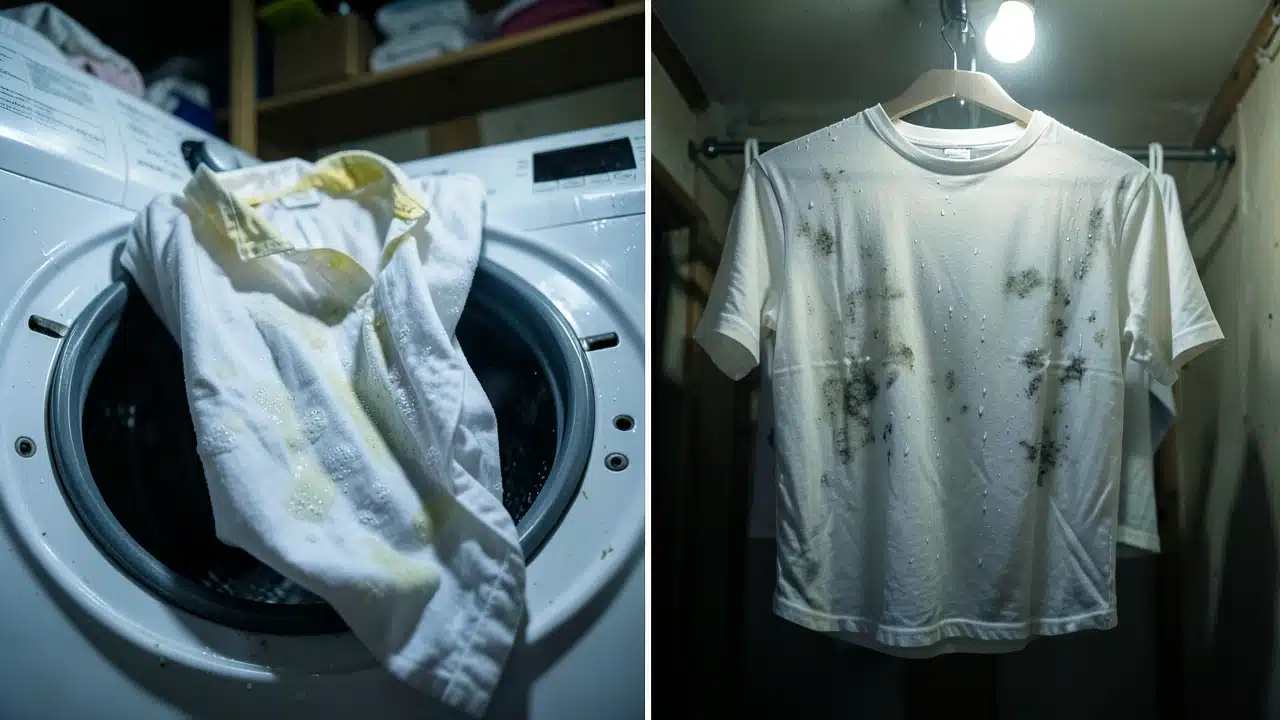
Overusing detergent is a common mistake. Too much soap leaves a residue on your clothes that can attract dirt and oils, leading to yellowing over time.
It can also make fabrics stiffer and less breathable, contributing to odor retention.
Always follow the detergent manufacturer’s recommendations for dosage. If you have hard water, you might need to use a bit more, but it’s often better to use a water softener or a specialized detergent for hard water. Rinsing your clothes thoroughly is also crucial.
An extra rinse cycle can help ensure all detergent residue is removed, preventing buildup that can cause discoloration.
When it comes to drying, over-drying can be just as bad as not drying enough. Excessive heat can set stains or cause yellowing, especially on synthetic fabrics. It’s also important to ensure clothes are completely dry before folding and putting them away.
Even a hint of dampness can lead to mildew and those unpleasant musty smells. Air drying on a clothesline outdoors is an excellent way to get fresh-smelling clothes, and the sun’s rays can even help naturally bleach white fabrics.

Environmental Factors in Your Closet
The environment within your closet itself plays a critical role in Why Clothes in a Wardrobe Go Yellow or Develop a Musty Smell.
Humidity is the primary enemy. If your closet is in a damp part of the house, or if you live in a humid climate, moisture can easily accumulate.
This dampness creates the perfect conditions for mold and mildew to grow on your clothes and the closet walls.
Good ventilation is key to combating humidity. Leaving the closet door open periodically, or installing a small vent, can help air circulate. You can also use moisture absorbers, like silica gel packets or charcoal briquettes, to help soak up excess humidity.
These are inexpensive and can make a big difference in maintaining a dry closet environment.
Light can also be a factor. While sunlight can help bleach white fabrics, prolonged exposure to direct sunlight can actually cause colors to fade or fabrics to degrade. Keep your closet doors closed to protect your clothes from excessive light.
Dust accumulation can also contribute to a stale smell, so regular dusting of shelves and surfaces is a good practice.
Dealing with Existing Yellowing and Odors
If you’re already dealing with yellowed or musty clothes, don’t despair. There are ways to salvage them. For yellowing, especially on whites, a soak in a solution of oxygen bleach or white vinegar can work wonders. For severe musty odors, refer to the EPA mold cleanup guide for safe remediation practices.
For stubborn yellow stains, try a paste made from baking soda and water, applied directly to the stain before washing.
For musty smells, washing the clothes with a cup of white vinegar added to the rinse cycle can help neutralize odors.
You can also try adding half a cup of baking soda to the wash cycle along with your regular detergent. Airing out the clothes outdoors, especially on a sunny day, can also help dissipate odors naturally.
Sometimes, the issue might be with the fabric itself or a stain that has set permanently. In such cases, professional cleaning might be an option. If the garment is old or the damage is extensive, it might be time to consider repurposing or donating it.
Preventing these issues in the first place is always easier than trying to fix them.
Preventative Measures for a Fresher Wardrobe
Taking proactive steps is the best way to avoid the common problems of Why Clothes in a Wardrobe Go Yellow or Develop a Musty Smell. First, always ensure clothes are completely dry before storing them. This seems simple, but it’s a critical step often overlooked.
Second, avoid overcrowding your closet. Clothes need space to breathe. When they’re packed too tightly, air can’t circulate, leading to dampness and odors.
Try to declutter your wardrobe regularly, donating or discarding items you no longer wear.
Next, consider using natural deodorizers in your closet. Sachets filled with dried lavender or cedar blocks can help keep clothes smelling fresh and deter pests.
Regularly clean out your closet, dusting shelves and vacuuming the floor to remove dust and potential odor sources.
Then, when washing clothes, use the correct amount of detergent and consider using a laundry booster like borax or washing soda for whites to enhance their brightness. For delicates or items prone to yellowing, opt for milder detergents.
Finally, if you notice a persistent musty smell, consider using a dehumidifier in the room where your closet is located, or place moisture-absorbing products directly inside the closet. By incorporating these simple practices, you can significantly improve the lifespan and appearance of your clothing.
| Primary Cause | Oxidation of fibers, chemical reactions with residues (e.g., body oils, detergents, fabric brighteners) | Mold and mildew growth due to moisture and lack of ventilation |
| Contributing Factors | Sunlight exposure, heat, improper storage (plastic bags), aging of fabric, certain dyes | Dampness, humidity, poor air circulation, infrequent washing, storing damp clothes |
| Appearance Change | Visible discoloration, often a pale to deep yellow hue | No direct visual change, though fabric might feel damp or stiff |
| Odor | Typically odorless, though some chemical reactions might produce faint odors | Distinctive earthy, damp, or mildew-like odor |
| Prevention Strategy | Store in cool, dark, breathable containers; wash thoroughly to remove residues; avoid direct sunlight | Ensure clothes are completely dry before storing; store in well-ventilated areas; use desiccants in humid environments |
| Removal/Treatment | Specialized stain removers, oxygen bleaches, soaking in diluted vinegar or lemon juice (test first) | Wash with detergent and vinegar or baking soda; expose to sunlight and fresh air; professional cleaning for severe cases |
Frequently Asked Questions Of Why Clothes In A Wardrobe Go Yellow Or Develop A Musty Smell
Why do my white shirts turn yellow over time?
White shirts often turn yellow due to accumulated body oils, sweat, and detergent residue that oxidize. Exposure to heat during washing or drying can worsen this effect.
Can plastic bags cause clothes to smell musty?
Yes, plastic bags trap moisture and prevent air circulation. This creates a humid environment perfect for mold and mildew growth, leading to musty smells.
Is it safe to store clothes with a slight dampness?
No, it’s not safe. Even slight dampness can lead to the growth of mold and mildew, causing clothes to develop musty odors and potentially damage the fabric over time.
How can I prevent my clothes from yellowing in the wardrobe?
To prevent yellowing, ensure clothes are completely clean and dry before storing. Use breathable storage solutions, avoid overcrowding, and wash whites with appropriate boosters. Understanding Why Clothes in a Wardrobe Go Yellow or Develop a Musty Smell helps in taking the right precautions.
What is the best way to get rid of musty smells from clothes?
Washing clothes with a cup of white vinegar in the rinse cycle or adding baking soda to the wash can help neutralize musty odors. Airing them out in the sun is also effective.
Does sunlight help with yellowing clothes?
Sunlight can act as a natural bleach for white fabrics, helping to reduce yellowing. However, prolonged exposure can damage colored fabrics and weaken natural fibers.
Final Thoughts
Keeping your clothes fresh and vibrant is achievable by understanding the simple reasons behind yellowing and musty smells. Understanding the conditions that promote mold and mildew growth can help you prevent musty odors in your wardrobe.
By focusing on proper washing, drying, and storage, you can protect your wardrobe. These practices ensure your clothes stay looking and smelling great for longer. The yellowing of fabrics over time is a common issue that can be addressed with proper care techniques.