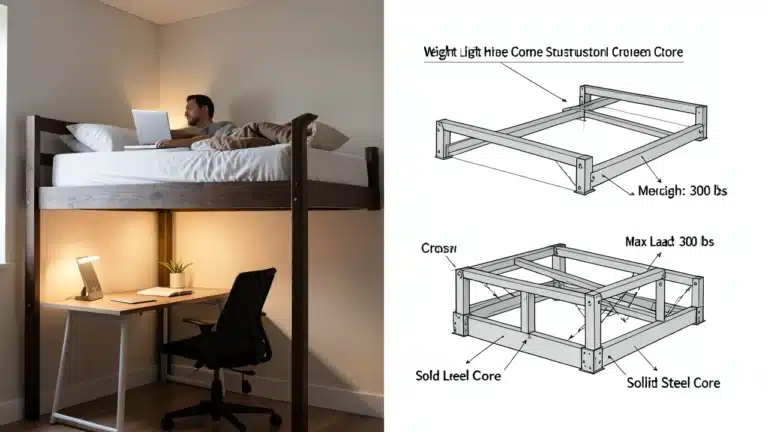

Mattress thickness starts causing problems with bed frame height when the combined height makes the bed difficult to enter, raises the sleeper above bedside tables, compromises headboard support, or lowers guardrails below safe levels. Measuring the total floor-to-mattress height is the essential step, since most adults find a bed at knee level or slightly above easiest to get into and out of. Problems such as knee and hip strain typically emerge when thick mattresses sit on tall frames, pushing the total height significantly above the ideal range.
Mattress thickness starts causing problems with bed frame height when the bed becomes hard to enter, raises you above bedside tables, blocks headboard support, or makes guardrails too low.
Very thick mattresses on tall frames can strain knees and hips. Measure floor-to-mattress height; most adults find knee-level or slightly above easiest.
Choosing the right mattress can make a big difference in how well you sleep. But have you thought about how thick your mattress is and how it might affect your bed frame?
It’s important to know When Does Mattress Thickness Start Causing Problems With Your Bed Frame Height?
This matters because it impacts how easy it is to get into and out of bed, how your bedding fits, and even the overall look of your bedroom.
Understanding this connection helps you make a smart choice for comfort and function.
Key Takeaways
- You’ll learn about the ideal bed height for easy access.
- Discover how thick mattresses can make beds too high.
- Understand how bedding fit can be affected by mattress height.
- Find out how to measure your bed’s total height.
- Learn tips for choosing a mattress and frame that work well together.
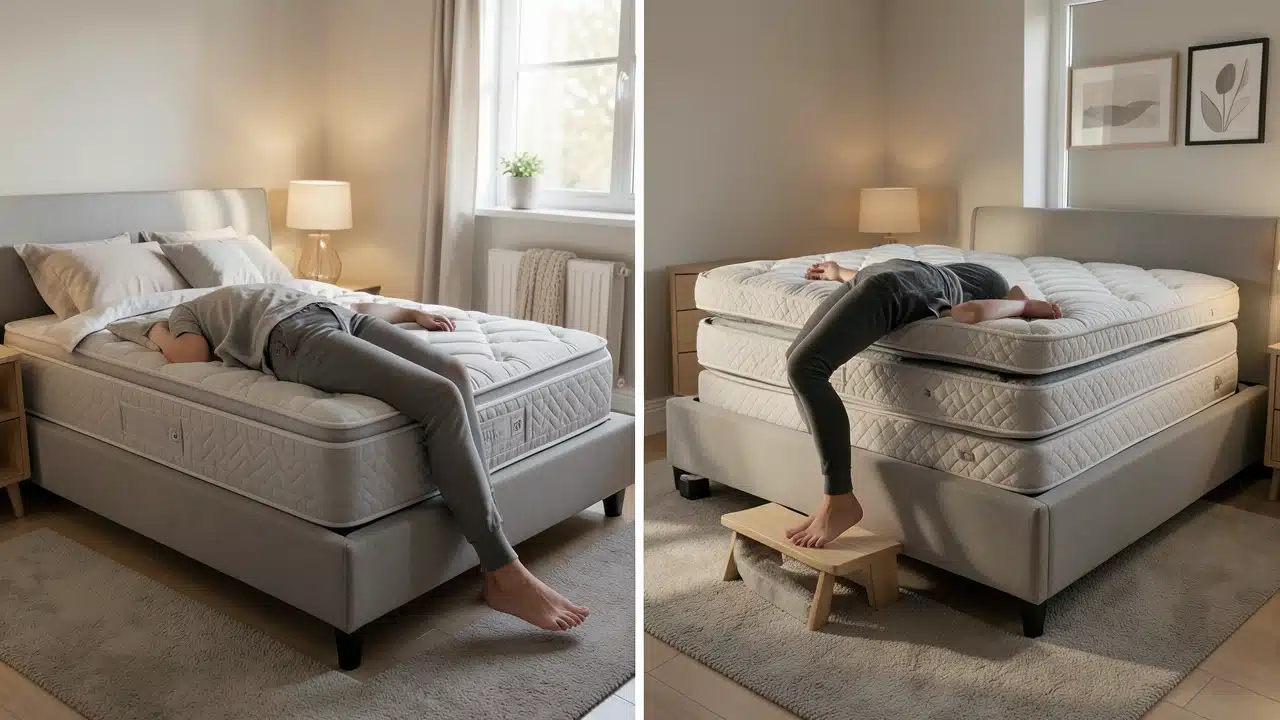
Finding the Right Bed Height for Comfort
Getting into and out of bed should be simple. When your bed is just right, it feels effortless. This “just right” height is often called the sweet spot. It means you can sit on the edge of the bed with your feet flat on the floor.
This makes standing up much easier, especially for those with mobility issues or anyone who just wants a smooth start to their day.
The total height of your bed is a combination of your bed frame and your mattress. A standard bed frame might be around 10 to 14 inches tall.
Mattresses come in many thicknesses, from a few inches to over 15 inches. When these two parts combine, the overall height can change significantly.
The Role of Mattress Thickness
Mattress thickness is a major factor in your bed’s final height. Thicker mattresses, like pillow-tops or certain memory foam models, can add a lot of inches.
A very thick mattress on a standard frame can push the total bed height much higher than comfortable. This is where you start to see When Does Mattress Thickness Start Causing Problems With Your Bed Frame Height?
Consider a bed frame that is 12 inches high. If you add a 14-inch thick mattress, your total bed height becomes 26 inches. For many people, this is too high. It can feel like climbing into bed rather than stepping in.
How Bed Frame Height Affects Things
The height of your bed frame is the foundation. Low-profile frames, often around 5 to 8 inches, are popular for a modern look and easier access.
Platform beds are usually in this range. On the other hand, traditional bed frames with box springs can reach 18 inches or more before you even add a mattress.When you pair a thick mattress with a naturally high frame, the problem is amplified. This combination can quickly lead to a bed that is uncomfortably tall. It’s important to consider both parts of the equation.

When Does Mattress Thickness Start Causing Problems With Your Bed Frame Height?
The main issue arises when the combined height of your mattress and bed frame makes it difficult or awkward to use your bed.
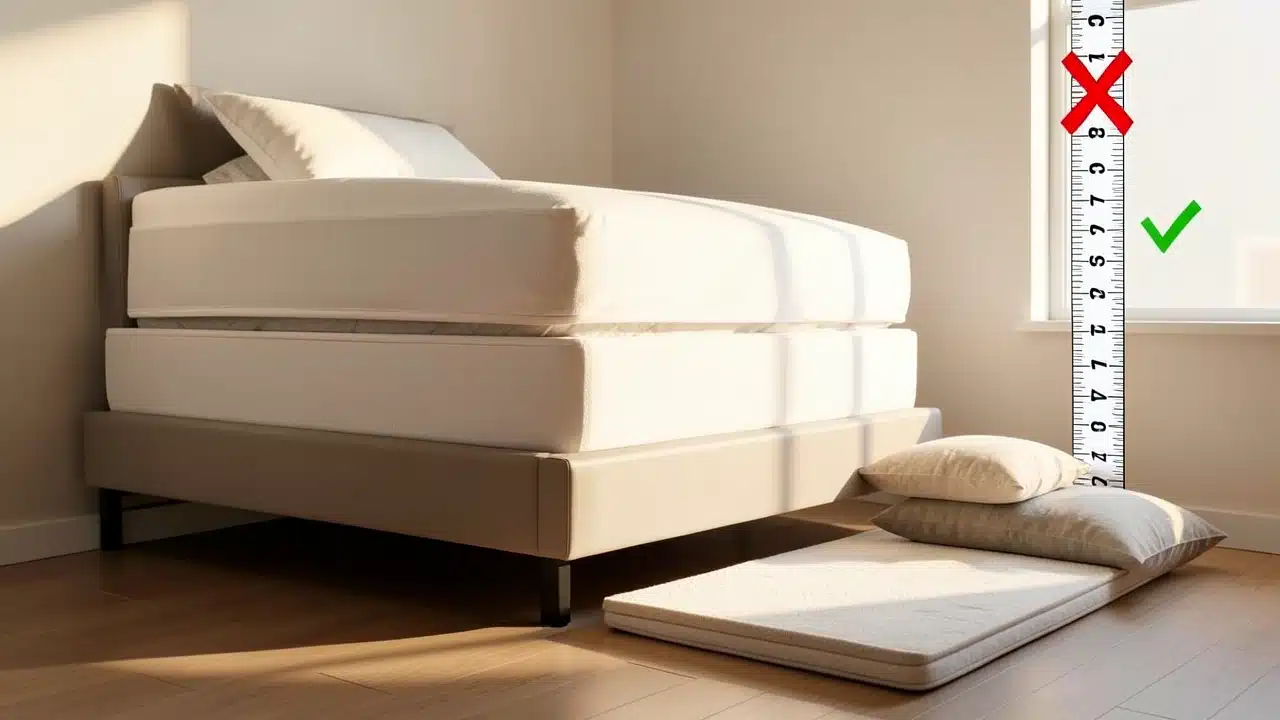
This typically happens when the total sleeping surface is much higher than the ideal range for the user. For most adults, a comfortable bed height is between 20 and 25 inches from the floor to the top of the mattress.
If your bed, with the mattress on top, goes much above 25 inches, you’ll likely start experiencing problems.
This is especially true if you have a frame that is already quite tall, or if you prefer a mattress that is very thick.
You’ll notice When Does Mattress Thickness Start Causing Problems With Your Bed Frame Height? becomes a real concern when getting up feels like a stretch.
Problems with Too-High Beds
One of the first signs is difficulty getting in and out of bed. You might find yourself having to lift your legs higher than usual. This can be hard on your knees and hips. It’s a clear indicator that the height has become problematic.
Another issue is how your bedding fits. If your mattress is very thick and your bed frame is tall, your fitted sheets might not stay on properly.
They can slip off the corners because there isn’t enough mattress for them to grip. Similarly, blankets and duvets might hang very low, or they might not drape nicely over the sides.
The Visual Impact
A bed that is too high can also look out of proportion in a room. It can dominate the space and make the ceiling feel lower. While style is personal, a well-balanced bed height usually looks more pleasing. Understanding When Does Mattress Thickness Start Causing Problems With Your Bed Frame Height? also involves considering the aesthetic of your bedroom.
Measuring Your Bed’s Total Height
To avoid problems, it’s smart to measure your bed’s total height. This is simple to do. You’ll need a tape measure.
First, measure the height of your bed frame from the floor to the top of the frame where the mattress rests. If you use a box spring, measure from the floor to the top of the box spring.
Next, measure the thickness of your mattress. Lay it flat and measure from the bottom to the top.
Then, add these two measurements together. This will give you the total height of your sleeping surface. Compare this number to the ideal height range of 20-25 inches.
Example Calculation
Let’s say your bed frame is 10 inches tall and your mattress is 12 inches thick.
Total height = 10 inches (frame) + 12 inches (mattress) = 22 inches.
This is within the ideal range, so it’s likely comfortable.
Now, imagine your bed frame is 14 inches tall and your mattress is 13 inches thick.
Total height = 14 inches (frame) + 13 inches (mattress) = 27 inches.
This is starting to get too high for many people. You can see When Does Mattress Thickness Start Causing Problems With Your Bed Frame Height? depends on your frame too.
Choosing the Right Mattress and Frame Combination
The key to avoiding issues is to choose your mattress and bed frame thoughtfully. You don’t want to be asking When Does Mattress Thickness Start Causing Problems With Your Bed Frame Height? after you’ve bought everything.
Consider Your Needs
Think about who will be using the bed.
- Younger adults or those with good mobility might find lower beds or medium-height beds comfortable. They can handle a bit more of a climb.
- Older adults or individuals with mobility challenges will benefit most from beds that are not too high. Aim for a total height that allows feet to rest flat on the floor when sitting.
Mattress Thickness Options
Mattresses vary greatly in thickness.
- Thin Mattresses (5-8 inches): Good for bunk beds, trundle beds, or people who want a very low bed.
- Medium Mattresses (9-12 inches): The most common range. Works well with most bed frames for a balanced height.
- Thick Mattresses (13-15+ inches): Offer more cushioning and support but can quickly raise the bed height.
Bed Frame Types and Heights
Bed frames also come in different styles and heights.
- Platform Beds: Often low-profile, typically 5-10 inches high. Great for avoiding the need for a box spring and keeping the bed lower.
- Standard Bed Frames: Can range from 8-14 inches, usually requiring a box spring or a solid foundation.
- Sleigh Beds or Canopy Beds: These can sometimes have higher frames as part of their design.
Balancing the Two
If you have a thick mattress (e.g., 14 inches), you’ll want a lower bed frame (e.g., 8-10 inches) to keep the total height reasonable.
If you have a thinner mattress (e.g., 8 inches), you might opt for a slightly taller frame (e.g., 12-14 inches) to achieve a comfortable sleeping height.
This careful pairing answers When Does Mattress Thickness Start Causing Problems With Your Bed Frame Height? by preventing the problem before it starts.
When to Consider a Foundation or Box Spring
The type of mattress you choose often dictates whether you need a box spring or a different kind of foundation. This choice also affects the final bed height.
Mattress Types and Their Needs
Innerspring Mattresses: These often need a box spring or a slatted foundation to provide proper support and allow air circulation. A box spring adds about 7-9 inches to the bed height.
Memory Foam and Latex Mattresses: Many of these can be placed directly on a platform bed frame or a solid foundation. They don’t typically require a box spring, which helps keep the bed lower. Some manufacturers specify that using a box spring with these types of mattresses can void the warranty.
Hybrid Mattresses: These combine innerspring coils with foam layers. They usually require a slatted foundation or a platform bed. Some may be compatible with box springs, but it’s best to check the manufacturer’s guidelines.
Impact on Bed Height
Using a box spring will significantly increase your bed’s height. If you have a standard bed frame that requires a box spring and you add a thick mattress, you’re almost guaranteed to have a very high bed.
This is a critical point for understanding When Does Mattress Thickness Start Causing Problems With Your Bed Frame Height?
Low Profile Box Spring: If you need a box spring but want to keep the height down, look for a low-profile version. These are typically around 4-5 inches tall, compared to standard 7-9 inch ones.
Slatted Foundation: A slatted foundation is a good alternative to a box spring. It provides support for the mattress and is usually only a few inches high, helping to maintain a lower overall bed height.
Platform Bed: These are designed to support the mattress directly, often eliminating the need for a box spring or separate foundation. They are usually inherently low.
Adjusting for Existing Beds
If you already have a bed frame and mattress, and you’re finding the height isn’t working, you have options. You don’t always need to buy a whole new bed.
Lowering Your Bed Height
Remove the Box Spring: If your current setup uses a box spring and your mattress manufacturer allows it, try removing the box spring. Place the mattress directly on a slatted foundation or a platform bed frame. This can significantly lower your bed.
Swap the Frame: If your current frame is very tall, consider replacing it with a lower-profile platform bed or a frame with a shorter leg height.
Shorter Legs: Some bed frames allow you to change the legs to shorter ones. Check if your frame has this feature.
Raising Your Bed Height (Less Common Problem, but Possible)
While the main concern is beds being too high, some people might find their bed too low, especially with a very thin mattress on a low frame.
Add a Box Spring or Foundation: If your mattress doesn’t require one, adding a standard or low-profile box spring or a slatted foundation can raise the bed.
Bed Risers: These are blocks that fit under the legs of your bed frame to increase its height. They are an easy and inexpensive way to add inches.
Thinking about these adjustments helps manage the question of When Does Mattress Thickness Start Causing Problems With Your Bed Frame Height? by offering solutions.

When Mattress Thickness Becomes a Problem: A Comparison
To help visualize when mattress thickness can become an issue with bed frame height, consider this table. It shows how different mattress thicknesses can affect the total bed height when paired with common bed frame heights.
| 8 inches | 14 inches | 22 inches | Generally comfortable and accessible. |
| 10 inches | 14 inches | 24 inches | Still within a good, accessible range for most. |
| 12 inches | 14 inches | 26 inches | Starting to get high. May be difficult for some to get in/out. |
| 14 inches | 14 inches | 28 inches | Likely too high for many. Bedding may not fit well. |
| 15+ inches | 14 inches | 29+ inches | Significantly too high. Major accessibility issues likely. |
| 8 inches | 8 inches (Platform) | 16 inches | Very low. May be too low for some. |
| 12 inches | 8 inches (Platform) | 20 inches | Good, accessible height. |
| 15+ inches | 8 inches (Platform) | 23+ inches | Comfortable height, but mattress is very thick. |
This table shows clearly When Does Mattress Thickness Start Causing Problems With Your Bed Frame Height?. It’s when the total height exceeds the comfortable range, typically above 25 inches, especially when combined with a taller frame.
Frequently Asked Questions Of When Does Mattress Thickness Start Causing Problems With Your Bed Frame Height?
At what total bed height does it become problematic to get in and out of bed?
Generally, a total bed height above 25 inches from the floor to the top of the mattress can start causing problems with accessibility for many people.
Can a very thick mattress make my bed too high even with a low bed frame?
Yes, a very thick mattress (13 inches or more) combined with a low bed frame (like an 8-inch platform) can still result in a total height that is at the upper end of comfortable or slightly too high for some.
How does mattress thickness affect bedding fit?
Thick mattresses can make fitted sheets difficult to put on and keep secure. The sheets may slip off the corners if the mattress is too tall for the sheet’s pocket depth.
Should I choose a thick mattress or a low bed frame if I want an accessible bed?
If accessibility is key, it’s usually better to pair a thicker mattress with a lower bed frame. This balances the height and ensures easier access. This is a key consideration for When Does Mattress Thickness Start Causing Problems With Your Bed Frame Height?.
What is the ideal total bed height for most adults?
The ideal total bed height is typically between 20 and 25 inches. This allows most adults to sit with their feet flat on the floor.
Can I use bed risers to fix a bed that is too high?
Bed risers are primarily used to make a bed higher. If your bed is already too high, risers would make the problem worse. You’d need to lower the bed by changing the frame or removing a box spring.
Final Thoughts
Understanding When Does Mattress Thickness Start Causing Problems With Your Bed Frame Height? is about finding that sweet spot for comfort and ease. Aim for a total bed height between 20 and 25 inches.
By measuring your current setup and considering how mattress thickness and frame height combine, you can ensure your bed is perfect for you.