
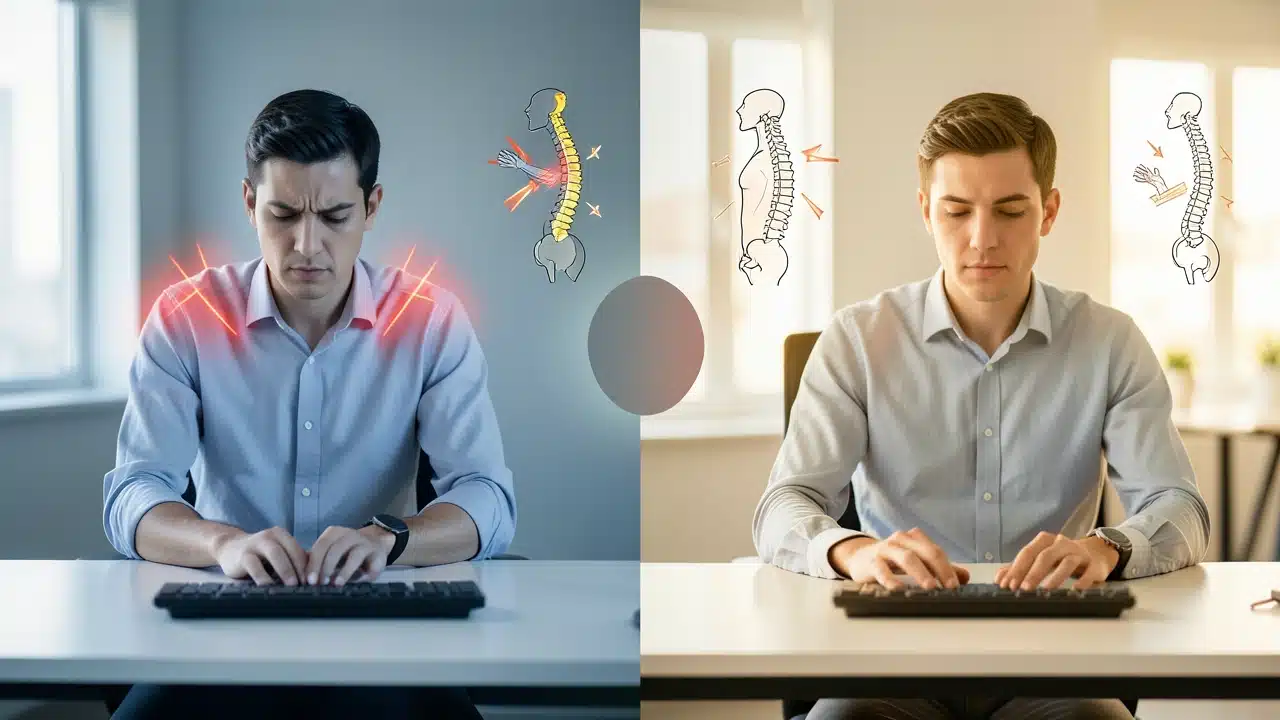
The three physical problems that appear first when your desk height is wrong are shoulder tension, wrist or forearm strain, and neck or upper-back discomfort. A desk that is set too high raises the shoulders while a desk that is too low encourages hunching, and both positions overload the same muscle groups. Positioning the desk so elbows rest at roughly 90 degrees with shoulders relaxed is the key first step to preventing these early warning signs from becoming chronic musculoskeletal issues.
The 3 physical problems that appear first when your desk height is wrong are shoulder tension, wrist or forearm strain, and neck or upper-back discomfort.
A desk that is too high raises the shoulders; too low encourages hunching. Set elbows near 90 degrees, shoulders relaxed, and screen height separately for better posture.
When you spend a lot of time at your desk, its height really matters. Getting it wrong can lead to aches and pains that sneak up on you. You might not even realize your workspace is the cause at first.
Understanding The 3 Physical Problems That Appear First When Your Desk Height Is Wrong can help you fix your setup and feel much better. This knowledge helps you avoid discomfort and boost your daily well-being.
Key Takeaways
- Discover the first physical signs of an improperly set desk height.
- Learn how bad desk height can lead to neck and shoulder pain.
- Understand the impact of desk height on wrist and hand discomfort.
- Recognize the link between desk height and lower back issues.
- Find out simple ways to adjust your desk for better comfort.
- See why a correct desk setup is vital for long-term health.

Neck and Shoulder Strain Signals
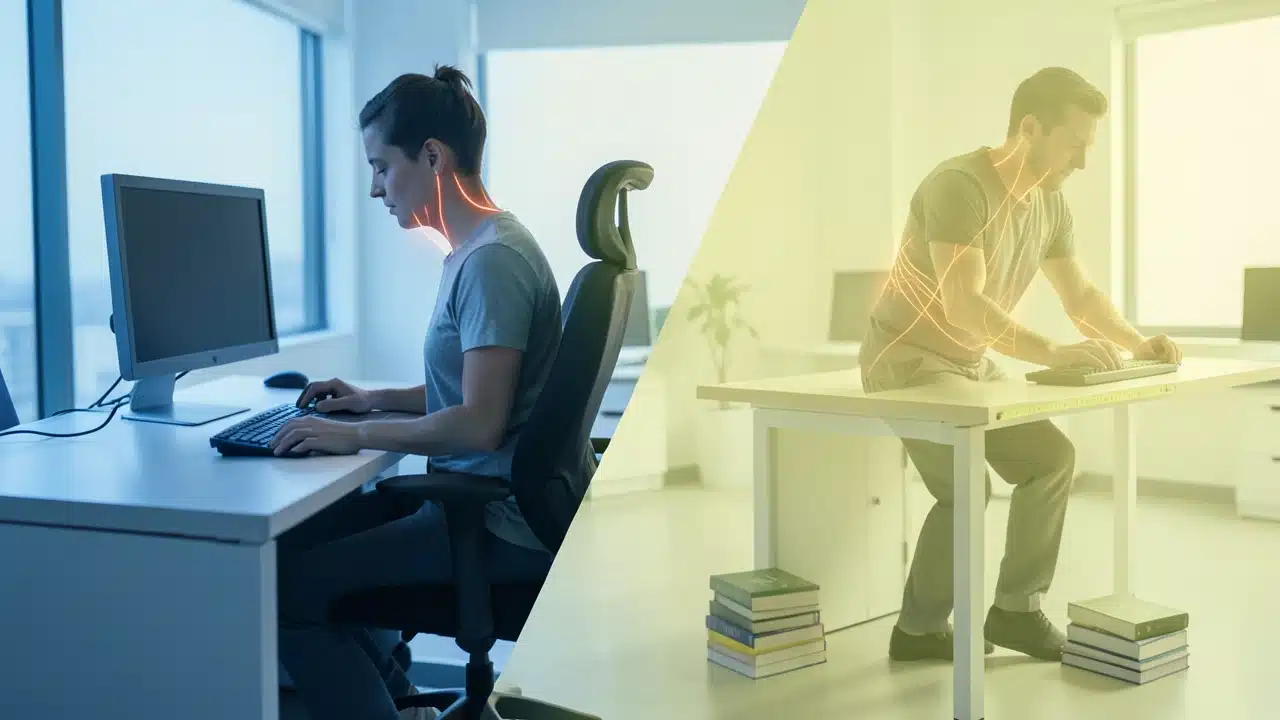
One of the earliest signals your desk height isn’t right shows up in your neck and shoulders. When your desk is too high, you often find yourself hunching forward. This makes your shoulders round and your neck crane to see your screen or work.
It feels like a constant tension building up. You might start rubbing your neck at the end of the day. This strain is a direct result of your arms not being in a relaxed position.
Your shoulders are pulled up and forward, not resting naturally.
If your desk is too low, the opposite can happen. You might lean forward excessively, putting strain on your upper back and shoulders. Your arms might feel like they are hanging too far down, forcing your shoulders to drop.
This can lead to a different kind of ache, often felt deep in the muscles between your shoulder blades. Both too high and too low desks cause your neck and shoulder muscles to work harder than they should.
This is why looking for The 3 Physical Problems That Appear First When Your Desk Height Is Wrong often starts with these areas.
A good desk height lets your arms rest comfortably at a roughly 90-degree angle when typing. Your shoulders should feel relaxed and not pulled up or down. If you notice stiffness or pain here, it’s a strong hint your desk needs adjusting.
These early signs are your body’s way of telling you something is off. Ignoring them can lead to more serious issues down the line.

Wrist and Hand Discomfort Indicators
After neck and shoulder pain, issues with your wrists and hands are often the next to appear. When your desk height is wrong, it forces your wrists into awkward positions. If the desk is too high, you might bend your wrists upwards to reach the keyboard.
This is called wrist extension. Doing this for long periods can pinch nerves and irritate tendons. You might feel tingling or numbness in your fingers.
Pain can also develop in the wrist joint itself.
Conversely, if the desk is too low, your wrists might bend downwards. This is wrist flexion. It can also put pressure on nerves and cause discomfort.
The muscles in your forearms have to work harder to support your hands. This can lead to fatigue and soreness.
These wrist and hand problems are common signs of The 3 Physical Problems That Appear First When Your Desk Height Is Wrong because your hands are in constant contact with your keyboard and mouse.
Any misalignment here will be felt quickly.
Many people develop carpal tunnel syndrome or tendonitis from poor workstation ergonomics. A key factor is how your wrists are positioned. They should be in a neutral, straight line while you type or use your mouse.
This means your forearms should be parallel to the floor, or slightly angled down. Your desk height directly impacts this neutral position.
If you experience pins and needles or aching in your hands and wrists, check your desk setup immediately.
It’s a clear sign your workspace isn’t working for you.
Lower Back Ache and Posture Problems
The final common early symptom of an incorrect desk height involves your lower back and overall posture.
When your desk is too high, you tend to lean forward to compensate. This posture causes your spine to curve unnaturally.
Your lower back muscles have to work overtime to support this forward lean. Over time, this can lead to stiffness and pain in your lumbar region. You might find yourself slouching more, even when you stand up.
If your desk is too low, you might find yourself sitting on the edge of your chair. This forces you to hunch over your work. It can also lead to your hips being positioned lower than your knees.
This unnatural sitting posture puts a lot of stress on your lower back. Your core muscles may also become weak from not being engaged properly.
This is a significant part of The 3 Physical Problems That Appear First When Your Desk Height Is Wrong because posture affects your entire skeletal structure.
Good posture at your desk involves sitting upright with your feet flat on the floor. Your knees should be at about a 90-degree angle. Your back should be supported by your chair.Your desk height should allow you to do this comfortably without having to adjust your body in awkward ways.
If you notice your lower back aching after sitting for a while, or if you find yourself constantly shifting positions to get comfortable, your desk height is likely a contributing factor. Addressing this can prevent long-term back problems.
Why Desk Height Matters So Much
The height of your desk is not just about comfort; it’s about preventing a cascade of physical issues. When your desk is set correctly, it supports a neutral posture. This means your body is aligned naturally.
Your spine is in its proper curve. Your joints, like your elbows and wrists, are in a relaxed, neutral position. This allows your muscles to work efficiently without strain.
It also promotes good blood circulation to your arms and hands.
A desk that’s too high or too low forces your body into unnatural positions. This puts undue stress on muscles, tendons, and nerves. Over time, this stress can lead to inflammation and pain.
These aren’t just minor annoyances; they can develop into chronic conditions. Issues like carpal tunnel syndrome, tendonitis, and persistent back pain can all stem from poor ergonomic setups.
Recognizing The 3 Physical Problems That Appear First When Your Desk Height Is Wrong is the first step to avoiding these more serious health concerns.
Investing a little time to get your desk height right can have a big impact on your daily well-being. It can help you avoid pain, reduce fatigue, and even improve your focus. When you're comfortable and pain-free, you can work more effectively and enjoy your day more.
Your body will thank you for it, both now and in the future.
Simple Steps to Correct Your Desk Height
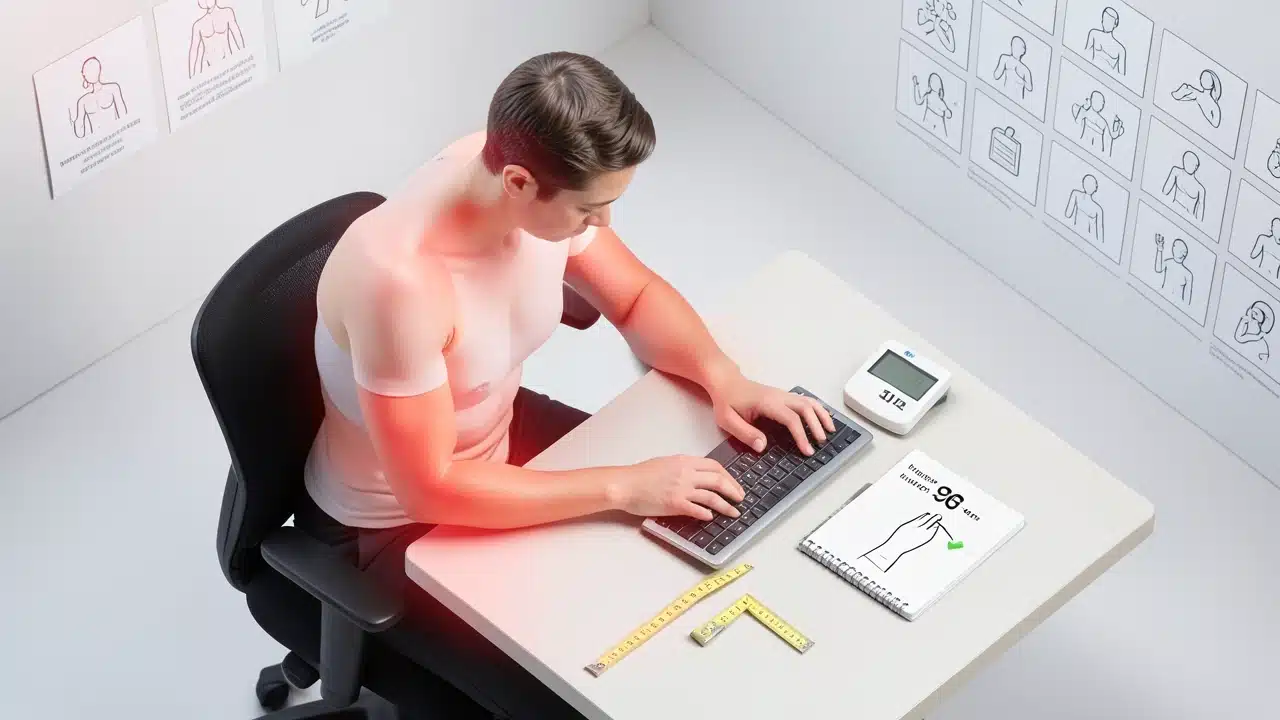
Adjusting your desk height might seem complicated, but it’s often quite simple. The goal is to achieve a position where your arms can rest comfortably. When sitting at your desk, your elbows should be bent at about a 90-degree angle.
Your forearms should be roughly parallel to the floor. Your wrists should remain straight and neutral when typing or using your mouse.
If you have an adjustable-height desk, this is straightforward. Simply raise or lower it until you achieve the correct arm and wrist position. If your desk isn’t adjustable, you can use risers or blocks to elevate it.
For desks that are too high, you might need to consider a keyboard tray that can be lowered independently. This allows your arms to find the correct position while keeping your main desk surface at its original height.
Don’t forget about your chair. Your chair’s height also plays a role. You should be able to sit with your feet flat on the floor.
If your chair is too high, use a footrest to support your feet. The combination of chair height and desk height is crucial for proper ergonomics. Making these small adjustments can make a huge difference in preventing The 3 Physical Problems That Appear First When Your Desk Height Is Wrong.
It’s worth taking the time to fine-tune your workspace.
Comparison: Ideal vs. Incorrect Desk Heights
Understanding the difference between an ideal desk setup and one that causes problems is key. Let’s look at how different heights affect your body.
| Elbow Angle | ~90 degrees, relaxed | May force shoulders up, awkward angles | May force forearms down, strain |
| Wrist Position | Neutral, straight | Bent upwards (extension) | Bent downwards (flexion) |
| Shoulder Position | Relaxed, down | Tensed, pulled up or forward | Drooping, strained |
| Neck Position | Neutral, looking straight ahead | Craned forward | Leaning forward |
| Lower Back | Supported, upright posture | Slouching, increased curve | Stress from leaning or improper sitting |
| Common Issues | Comfort, efficiency | Neck/shoulder pain, wrist strain | Wrist/hand pain, back ache, posture problems |
This table highlights how crucial the right desk height is. It directly impacts your body’s alignment and comfort.
The goal is to avoid the stress points that lead to The 3 Physical Problems That Appear First When Your Desk Height Is Wrong.
Preventing Long-Term Musculoskeletal Issues
The early warning signs of incorrect desk height are important. They are your body’s way of signaling that something needs to change. If these issues are ignored, they can develop into more serious, long-term musculoskeletal disorders.
Conditions like chronic neck pain, persistent headaches, carpal tunnel syndrome, and debilitating back problems can result from years of poor ergonomics.
By addressing The 3 Physical Problems That Appear First When Your Desk Height Is Wrong promptly, you can prevent this progression.
Simple adjustments to your desk and chair setup can make a significant difference. This proactive approach saves you from potential pain, discomfort, and costly medical treatments later on.
It’s about building healthy habits now to ensure your long-term health and productivity. Simple adjustments to your desk and chair setup can make a significant difference.
Think of your workspace as an investment in your health. Ensuring it’s set up correctly is a small effort that yields significant rewards. It allows you to work comfortably and efficiently, without sacrificing your physical well-being.
Making these ergonomic improvements is one of the best things you can do for yourself if you spend a lot of time at a desk.
Frequently Asked Questions Of The 3 Physical Problems That Appear First When Your Desk Height Is Wrong
What is the ideal height for a desk?
The ideal desk height allows your elbows to be bent at roughly 90 degrees with your forearms parallel to the floor when you are sitting comfortably at your chair.
Can a desk that’s too low cause back pain?
Yes, a desk that’s too low can cause you to lean forward and slouch, putting extra strain on your lower back and leading to discomfort.
How does desk height affect wrists?
If the desk is too high, your wrists may bend upwards, causing strain. If it’s too low, they may bend downwards, also leading to discomfort and potential nerve issues.
I feel neck pain. Is my desk height likely the cause?
Neck pain is a common early sign that your desk height might be wrong. Hunching forward or straining to reach your keyboard can lead to this discomfort.
What should I do if my desk is not adjustable?
You can use desk risers to elevate a desk that is too low. For desks that are too high, consider a separate, adjustable keyboard tray.
Does the height of my chair matter with my desk height?
Absolutely. The chair height needs to work in conjunction with the desk height to achieve the correct arm and wrist positioning, and to ensure your feet are flat on the floor.
Final Thoughts
Paying attention to your desk height is crucial for avoiding common aches. Recognizing The 3 Physical Problems That Appear First When Your Desk Height Is Wrong-neck/shoulder strain, wrist discomfort, and lower back pain-lets you make quick adjustments. Understanding the difference between an ideal desk setup and one that causes problems is key.
A correctly set desk promotes better posture and prevents long-term issues, keeping you comfortable and productive. If these issues are ignored, they can develop into more serious, long-term musculoskeletal disorders.