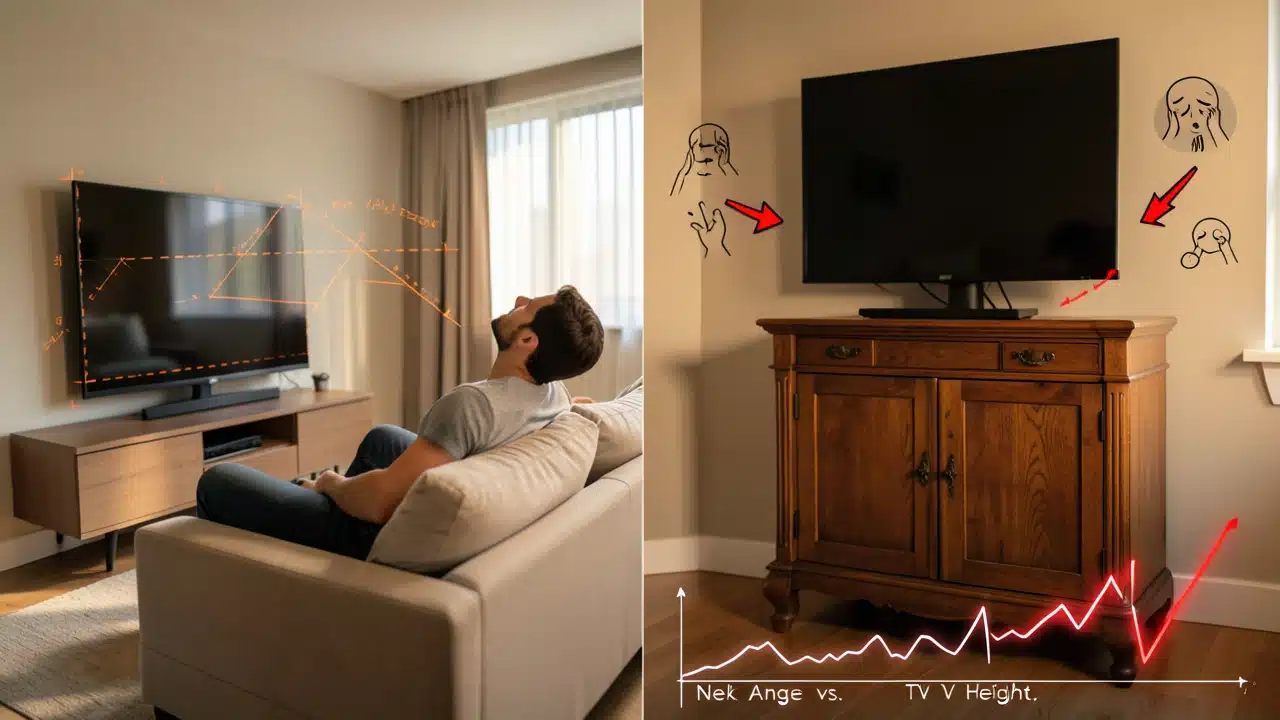
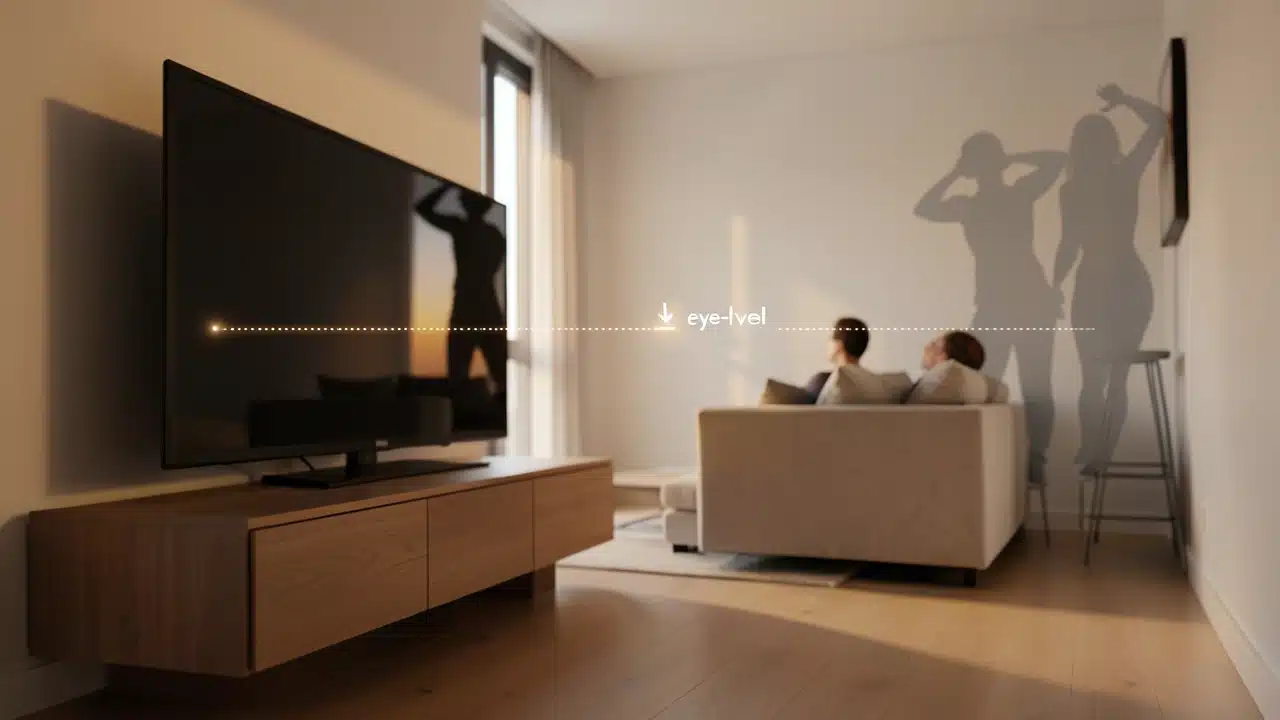
The exact math behind TV unit height shows the ideal TV center height equals your seated eye level, preventing neck pain by aligning the screen's midpoint with your natural forward gaze. To calculate this, measure floor-to-eye distance while seated on your sofa, then subtract half the TV's screen height to find the correct TV center height for the unit. This formula keeps the neck in a neutral position, eliminating upward or downward strain that makes poor furniture height a direct cause of neck pain and eye fatigue.
TV unit height affects neck pain because your eye level should land near the centre of the screen when seated. Measure floor-to-eye height from your sofa, then subtract half the TV’s screen height.
That number gives the ideal TV centre height, helping you choose a unit that avoids upward or downward neck strain.
Finding the right height for your TV unit might seem simple, but it’s actually pretty important for your comfort.
Getting it wrong can lead to a sore neck and tired eyes. We’ll break down The Exact Math Behind TV Unit Height and Why Neck Pain Is a Furniture Problem.
Understanding this helps you set up your living space so it feels good and looks great. You’ll learn how to choose the perfect height to avoid discomfort and enjoy your shows more. Let’s look at the easy steps to get it right.
Key Takeaways
- Proper TV unit height prevents neck strain and eye fatigue.
- Simple measurements based on your seating position are key.
- The center of the screen should align with your eye level.
- Room size and TV size influence the ideal viewing distance and height.
- Choosing the right height makes watching TV a more comfortable experience.
- Understanding The Exact Math Behind TV Unit Height and Why Neck Pain Is a Furniture Problem saves you from future discomfort.
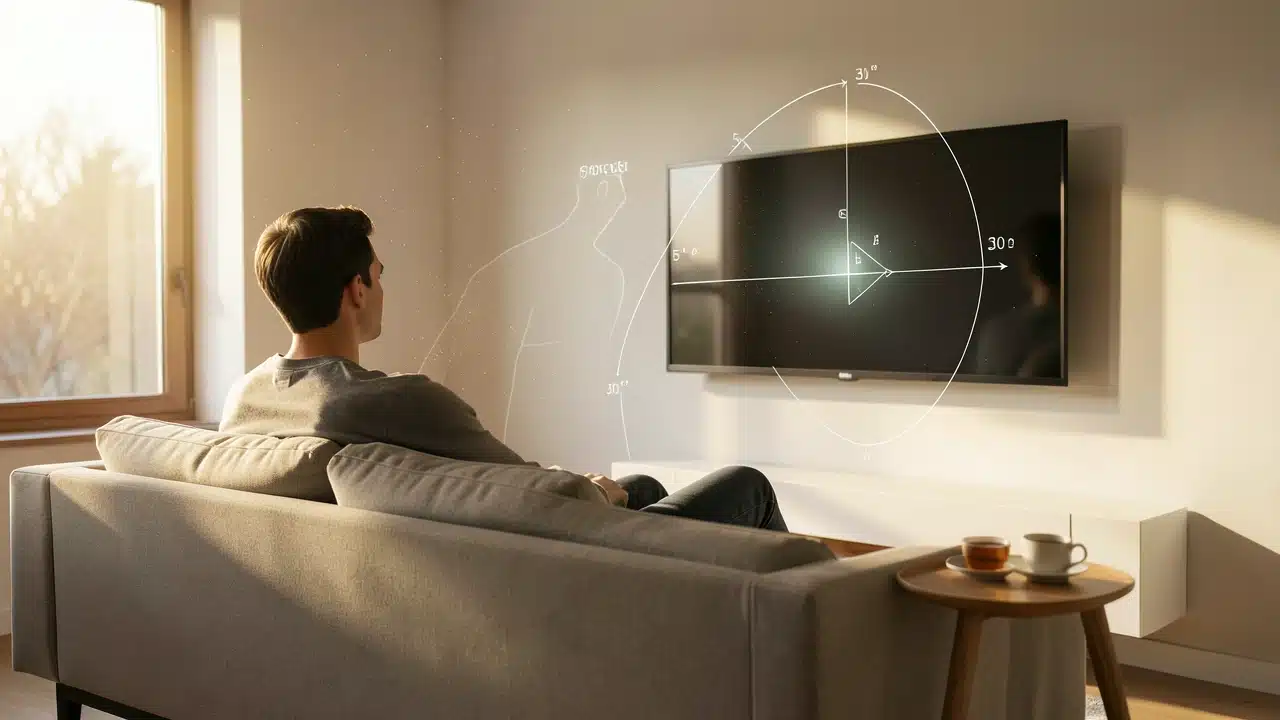
Finding Your Perfect TV Viewing Angle
You want to relax and watch your favorite shows, not feel like you’re doing a neck workout. The height of your TV unit plays a huge role in this. If your TV is too high or too low, you’ll end up craning your neck or looking down too much.
This is where The Exact Math Behind TV Unit Height and Why Neck Pain Is a Furniture Problem comes into play. It’s not just about looks; it’s about your physical well-being.
Think about how you sit on your couch. Your eyes are looking forward. When the TV screen is centered at your eye level, your neck stays in a neutral, comfortable position.
This means you can watch for longer periods without feeling stiff or sore. This simple principle is the foundation of good TV placement.
Measuring for Comfort: The Centerline Rule
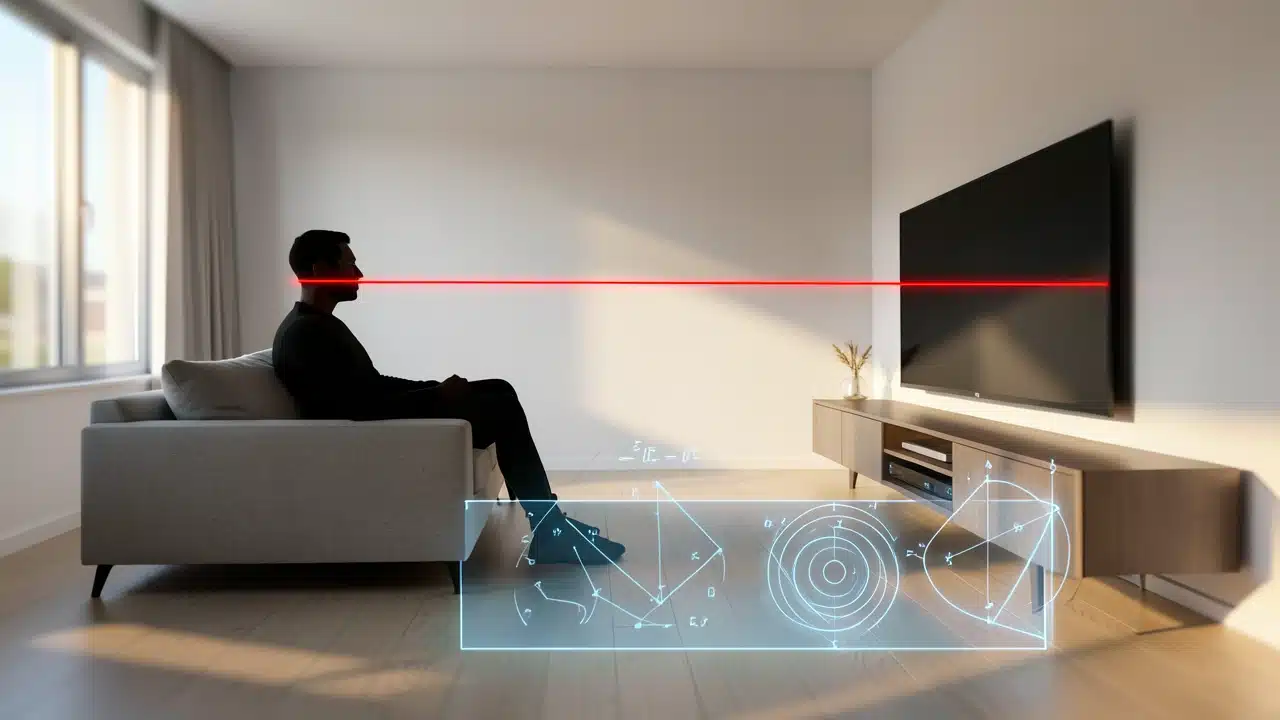
The most important rule for TV height is the centerline rule. This means the middle of your TV screen should be at the same level as your eyes when you are sitting in your usual viewing spot.
This is the core of understanding The Exact Math Behind TV Unit Height and Why Neck Pain Is a Furniture Problem.
It’s a straightforward way to ensure comfort.
To find this spot, grab a measuring tape. Sit on your couch in your favorite spot. Ask someone to measure the distance from the floor to your eye level.
This measurement is your target for the center of the TV screen. If you’re measuring alone, use a piece of tape on the wall at eye level.
This measurement is crucial. It’s the first step in avoiding the pain that comes from poor furniture choices. It’s a simple calculation that makes a big difference.
You are essentially setting up your viewing area for maximum comfort. This avoids the common issue of a TV that’s too low or too high.
How TV Size Affects Height Decisions
The size of your TV matters when you’re figuring out the best height. A larger TV will naturally have its center higher up than a smaller TV, even if both are mounted at the same distance from the floor. This is a key part of The Exact Math Behind TV Unit Height and Why Neck Pain Is a Furniture Problem.
You need to consider both.
For example, a 55-inch TV is different from a 75-inch TV. A bigger screen means a bigger vertical space to consider. You still want the center line at eye level.
This means the bottom of a larger TV might end up being higher off the floor than the bottom of a smaller TV.
It’s important to know the exact dimensions of your TV. Look for the screen size diagonal measurement. Then, find the height of the TV itself.
Most TV stands or wall mounts will have adjustable settings. This allows you to fine-tune the position to hit that perfect eye-level center.
Understanding Viewing Distance
While height is critical, the distance you sit from the TV also impacts your viewing experience and comfort. Too close, and you might miss details or feel overwhelmed. Too far, and you strain to see.
This works hand-in-hand with height to prevent neck pain.
The ideal viewing distance depends on the TV size and resolution. For high-definition (HD) TVs, a common recommendation is to sit about 1.5 to 2.5 times the diagonal screen size away. For 4K TVs, you can sit closer, about 1 to 1.5 times the diagonal screen size.
This is because 4K offers sharper images.
Calculating Your Ideal Viewing Distance
Let’s say you have a 50-inch TV.
- For an HD TV, your viewing distance should be between 75 inches (50 x 1.5) and 125 inches (50 x 2.5). That’s about 6 to 10 feet.
- For a 4K TV, you could sit between 50 inches (50 x 1) and 75 inches (50 x 1.5). That’s about 4 to 6 feet.
Once you know your ideal distance, you can place your furniture. Your couch should be positioned at this distance from where the TV will be. This creates a balanced viewing setup.
It’s a vital part of solving The Exact Math Behind TV Unit Height and Why Neck Pain Is a Furniture Problem.
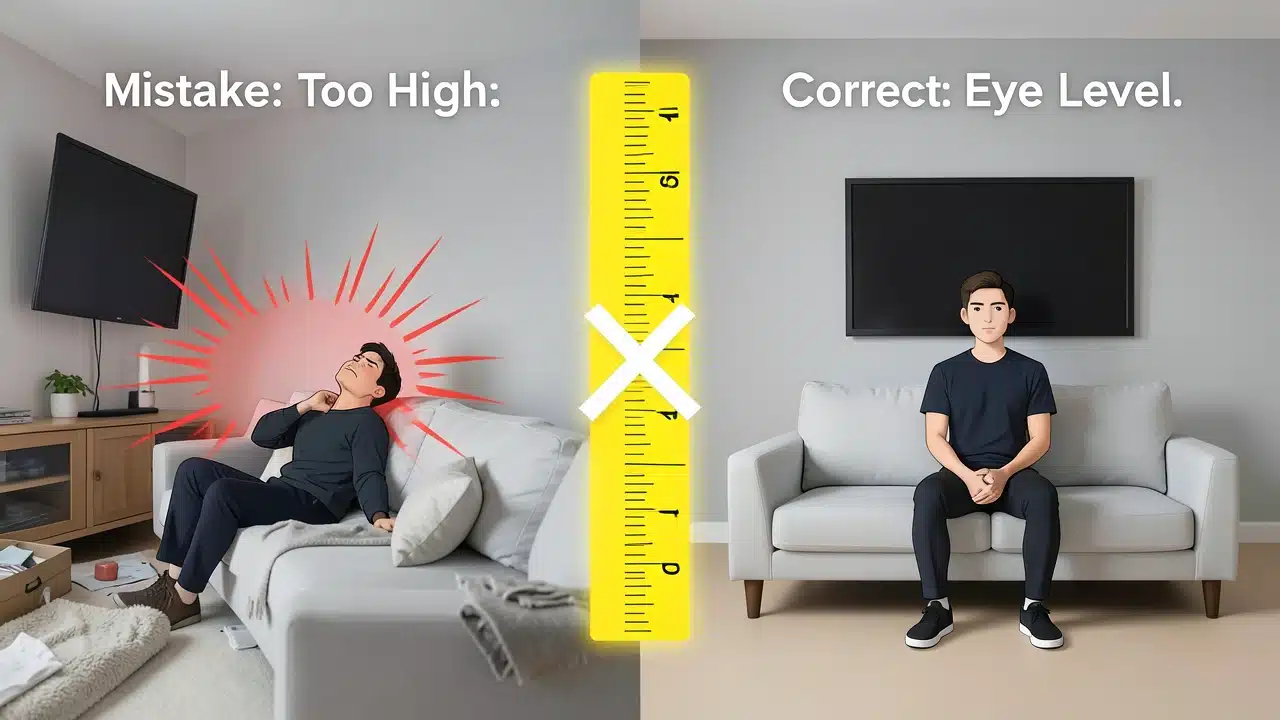
Common TV Unit Height Mistakes and How to Avoid Them
Many people make simple mistakes with TV unit height. These often lead to discomfort. Understanding these pitfalls helps you avoid them.
It’s about making smart choices for your home.
Mistake 1: Mounting Too High
One of the most common errors is mounting the TV too high, often above a fireplace. While it might look good aesthetically, it forces you to tilt your head up constantly. This is a recipe for neck pain.
It’s a classic example of why The Exact Math Behind TV Unit Height and Why Neck Pain Is a Furniture Problem is so important.
If your TV is above eye level, you’re looking up. Even a slight upward tilt for an hour can cause strain. Over time, this can lead to chronic neck issues.
Always aim for that eye-level centerline. If your TV is above a fireplace, consider a mount that can lower it for viewing.
Mistake 2: Placing TV Too Low
On the other hand, placing the TV too low can also cause problems. If the TV is too low, you might find yourself hunching over or straining your neck downward. This can be common with very low media consoles or if the TV is placed on the floor.
This forces your neck into an unnatural downward angle. It can lead to stiffness and pain in the upper back and neck. The goal is a neutral posture.
Always measure from your seated eye level. This simple measurement helps avoid this common mistake.
Mistake 3: Ignoring Room Layout
Sometimes, the layout of the room dictates TV placement. If you have a smaller room, you might feel pressured to put the TV in a spot that isn’t ideal for viewing height. This can happen if you’re trying to fit furniture around an existing fireplace or a large window.
Consider how your furniture arrangement affects viewing. If the best spot for the TV is too high or too low due to room constraints, explore alternative solutions. This could include different types of TV stands or wall mounts.
Thinking about The Exact Math Behind TV Unit Height and Why Neck Pain Is a Furniture Problem means adapting solutions to your space.
TV Unit Height vs. TV Stand Height
It’s important to distinguish between the height of the TV unit itself and the height of the TV screen on that unit.
A TV unit can be low, but if the TV is placed high on it, you still have an issue. Conversely, a tall unit might be fine if the TV is mounted lower on it.
When choosing a TV unit, consider its overall height and the height of the mounting area or shelf. Measure your seated eye level. Then, determine how high the center of your TV will be when placed on that unit.This helps you select furniture that works for your needs.
Using TV Stands
TV stands come in various heights. Some are very low-profile, designed to be minimalist. Others are taller, offering more storage.
When using a stand, you place the TV directly on top or use a bracket that attaches to the stand.
The key is to measure the total height from the floor to the center of the screen. If your TV stand is 18 inches tall, and your TV is 24 inches tall, the center of the screen might be around 30 inches from the floor (this is a simplified example). You need to ensure this aligns with your eye level.
Wall Mounting Your TV
Wall mounting offers more flexibility. You can position the TV precisely where you want it. This is often the best option for achieving the perfect eye-level height.
It also frees up floor space.
When wall mounting, you directly control the height. Use your eye-level measurement as the target for the TV’s center. There are different types of mounts: fixed, tilting, and full-motion.
A tilting or full-motion mount can help adjust the angle if the TV is slightly higher or lower than ideal. This is a practical solution to The Exact Math Behind TV Unit Height and Why Neck Pain Is a Furniture Problem.
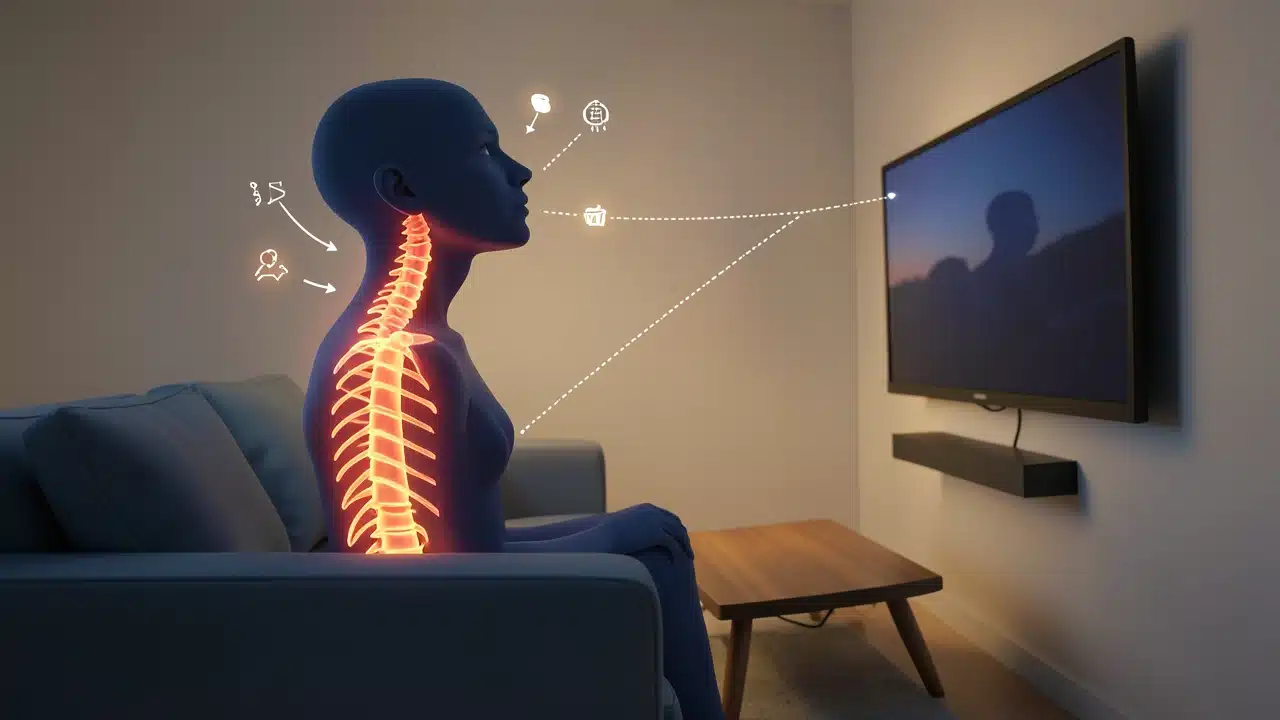
The Impact on Your Well-being
Ignoring TV height can have long-term effects. It’s not just about a temporary ache. Consistent poor posture while watching TV can contribute to chronic pain.
This is why The Exact Math Behind TV Unit Height and Why Neck Pain Is a Furniture Problem is a real concern for many people.
Neck pain can affect your daily life. It can make it hard to sleep, work, and even turn your head. Investing a little time to get the TV height right can prevent these issues.
It’s a small change with significant health benefits.
Preventing Chronic Pain
The human body is designed for neutral postures. When we force our bodies into awkward positions for extended periods, we create stress. This stress, over time, can lead to chronic pain.
This applies directly to watching TV.
By ensuring your TV is at eye level, you maintain a neutral neck position. This reduces strain on your muscles, ligaments, and vertebrae. It’s a proactive step towards preventing long-term discomfort.
Making the right furniture choices is a form of self-care.
Improving Overall Viewing Experience
Beyond just avoiding pain, the correct TV height enhances your viewing pleasure. When the TV is at the right level, you can focus on the content without distraction. Your eyes don’t have to work as hard.
You’ll notice details more clearly. The immersive experience of movies and shows is improved. It simply feels better to watch TV when your body is comfortable.
This is the ultimate benefit of understanding The Exact Math Behind TV Unit Height and Why Neck Pain Is a Furniture Problem. Understanding neck pain prevention starts with correct furniture and screen positioning.
Choosing the Right TV Unit for Your Space
When buying a new TV unit or media console, keep height in mind. Look at the dimensions carefully. Consider how high the TV will sit on it.
Some units are designed with specific viewing heights in mind.
Think about the total height from the floor to the center of the screen. This number should match your seated eye level. If you are unsure, measure your current setup and see what feels most comfortable.
This will give you a baseline.
| Eye Level Alignment | Requires TV to be mounted higher on the unit. | Often ideal for standard eye level. | Can cause upward neck strain if TV is placed too high. |
| Potential for Neck Pain | Low risk if TV is positioned correctly. High risk if TV is too low. | Low risk if TV is positioned correctly. | High risk if TV is placed too high on the unit. |
| Aesthetics | Modern, minimalist look. | Classic, versatile look. | Can dominate a room; requires careful placement. |
| Best For | Large open spaces, minimalist designs. | Most living rooms and bedrooms. | Rooms with high ceilings or specific architectural needs. |
This table shows how different unit heights can affect your viewing setup. Remember, the key is the final height of the TV screen’s center. It’s not just about the unit itself. Applying workstation ergonomics guidelines can help you choose a TV unit that promotes comfort.
Frequently Asked Questions Of The Exact Math Behind Tv Unit Height And Why Neck Pain Is A Furniture Problem
What is the most important measurement for TV unit height?
The most important measurement is your seated eye level. The center of the TV screen should align with this height to prevent neck strain.
Can a TV unit be too low, causing neck pain?
Yes, if the TV is placed too low on a very short unit, you might hunch over, leading to neck and upper back discomfort. Proper positioning is key.
Does TV size change the math for TV unit height?
Yes, larger TVs have a greater vertical dimension, so their center will be higher when placed on the same unit. You must account for the TV’s own height to find the screen’s center.
Wall mounting often provides more flexibility to position the TV precisely at eye level, making it a great option for achieving ideal viewing comfort.
How do I measure my eye level for TV height?
Sit in your normal viewing position on your couch and have someone measure from the floor to your eye level. This is your target for the TV screen’s center.
What is the main takeaway from understanding The Exact Math Behind TV Unit Height and Why Neck Pain Is a Furniture Problem?
The main takeaway is that by aligning the TV’s center with your seated eye level, you prevent neck strain and ensure a comfortable, enjoyable viewing experience.
Final Thoughts
Getting your TV unit height just right is simple math that makes a big difference for your comfort. By aligning the TV’s center with your eye level, you avoid neck pain and enjoy your shows more. Take a moment to measure and position your TV correctly for a pain-free viewing experience. Implementing a proper ergonomic setup ensures your TV height aligns with your seated eye level.