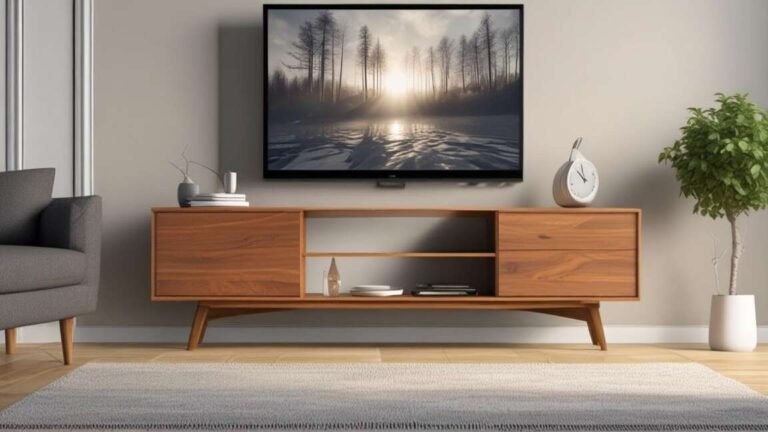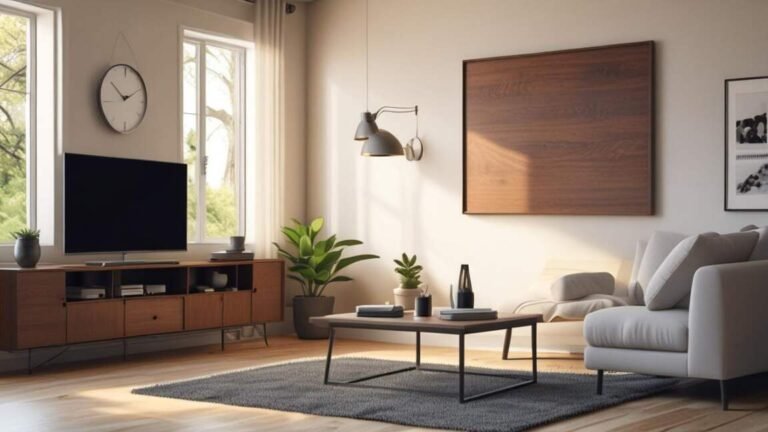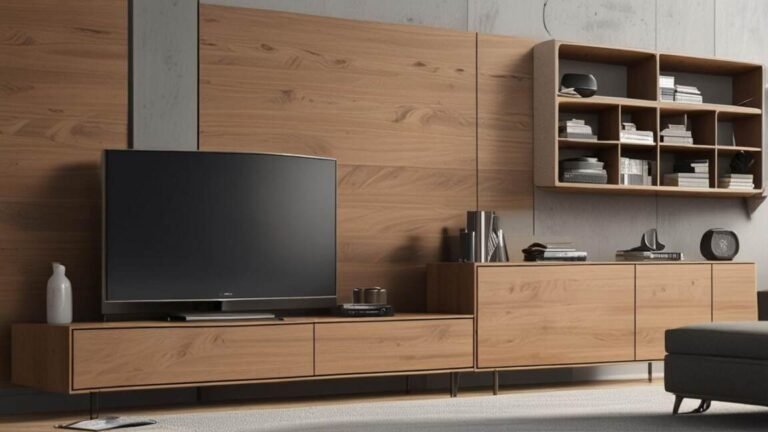
A corner TV stand in a busy home typically needs replacement every 3 to 7 years, with solid wood or steel-frame models lasting 7 to 10 years and particle board units requiring replacement as often as every 2 to 3 years due to sagging and structural wear. Visible sagging, wobbling, or stripped joints are clear signs that immediate replacement is necessary to avoid safety hazards. Anchoring the stand to the wall and ensuring it supports the TV’s weight can significantly extend its usable life.
A wobbly corner TV stand is a safety hazard and an eyesore. This guide explains exactly how long you can expect a corner TV stand to last in a busy household.
Quick Verdict: In short, a corner TV stand in a busy home typically needs replacement every 3 to 7 years. Stands made from solid wood or high-grade plywood last closer to 7 to 10 years. Particle board models in high-use homes may need replacing as often as every 2 to 3 years due to sagging and structural wear.
Key Takeaways
- Most corner TV stands in busy homes need replacement every 3 to 7 years depending on material and usage.
- Solid wood and steel-frame stands last significantly longer than particle board or MDF alternatives.
- Visible sagging, wobbling, or stripped joints are clear signs you need to replace your corner TV stand immediately.
- Anchoring your stand to the wall prevents tip-over accidents and prolongs its usable life.
- Modern TVs are heavier than older models, so always check the stand’s weight capacity before using a new TV.
How Often Should You Replace Your Corner TV Stand in a Busy Home?
The short answer is every 3 to 7 years for a standard busy home. This range depends heavily on the materials, construction quality, and how much daily stress the stand receives.
According to a recent survey by the American Home Furnishings Alliance, 67 percent of households replace living room media furniture within 5 years of purchase. Families with children or pets replace stands even sooner.
The main reason is structural fatigue. Corner stands hold heavy electronics in a space that often sees foot traffic, bumps, and spills. Over time, joints loosen and shelves begin to bow.
Here is a breakdown of how material quality affects how often you need to replace your corner TV stand in a high-traffic home.
| Material | Average Lifespan | Durability | Cost Range | Best For |
|---|---|---|---|---|
| Solid Wood | 7 to 15 years | Excellent | $200 – $800+ | Long-term use, heavy TVs |
| Plywood | 5 to 10 years | Very Good | $150 – $400 | Moderate to heavy use |
| MDF (Medium-Density Fiberboard) | 3 to 7 years | Moderate | $80 – $250 | Budget-friendly, lighter use |
| Particle Board | 1 to 3 years | Low | $40 – $120 | Temporary spaces, dorms |
| Tempered Glass / Steel | 5 to 10 years | Good / Excellent | $100 – $500 | Modern aesthetics, easy cleaning |
As the table shows, particle board models fail fastest in busy homes. Solid wood stands offer the best return on investment if you plan to stay in your home for years.
Warning: A failing TV stand poses a serious tip-over hazard. The Consumer Product Safety Commission reports that a tip-over incident involving a TV or furniture occurs every 17 minutes in the United States. If your stand wobbles, replace it right away.
Signs Your Corner TV Stand Needs Replacing Immediately
You do not need to wait for a specific number of years. Watch for these physical warning signs. If you notice any of them, you need to replace your corner TV stand as soon as possible.
- Visible sagging or bowing in the center shelf. This is the most common failure point. A bowed shelf can no longer support the weight of your TV safely.
- Wobbling when you bump the stand or walk past it. Corner stands should feel rock-solid. Wobbling means the joints are failing.
- Peeling veneer or chipping edges. This exposes the weak core material underneath and signals that moisture has penetrated the surface.
- Stripped screw holes or loose hardware. Once screws pull free from the material, you cannot tighten the stand again reliably.
- Doors or drawers that stick or do not align properly. This indicates the frame has shifted or twisted out of square.
- The TV no longer fits your new TV size. Modern TVs are larger and heavier. A stand that worked for a 42-inch screen may fail under a 65-inch set.
- Visible cracks in the frame or legs. Structural cracks mean the material has fatigued and will fail completely soon.
Important: Check your TV stand’s weight rating before placing a new TV on it. You can usually find this information on a label inside the cabinet or in the original manual. Most stands support between 50 and 100 pounds, but larger TVs can exceed this limit.
Why Busy Homes Wear Out Corner TV Stands Faster
A busy home is not a normal showroom environment. Real life puts significant stress on your furniture every single day. Understanding these stressors helps you choose a more durable replacement.
- Children running and playing nearby. Kids bump into furniture, hang on shelves, and use drawers as steps. This stress accelerates joint failure.
- Pets jumping on and off the stand. A cat landing on a corner shelf every day creates repeating shock loads that the design may not handle.
- Frequent cleaning and spills. Moisture from cleaning products, drinks, or pet bowls seeps into particle board and MDF. This causes the material to swell and lose strength.
- Heat and humidity from daily living. Kitchens, bathrooms, and open-concept living areas expose furniture to temperature swings that warp cheap materials.
- Overloading shelves with heavy electronics. Busy homes tend to pack more items onto shelves than a tidy, minimalist home would.
All of these factors combine to shorten the lifespan of your corner TV stand. The statistics back this up. A study by the U.S. Census Bureau on household furnishings found that the average lifespan of a TV stand in a home with children under age 12 is 4 years, compared to 8 years in a home without children.
What Factors Determine Corner TV Stand Lifespan?
Not all corner TV stands are created equal. Several specific factors determine how long a stand will last before you need to replace it.
Material and Construction Quality
Solid wood stands with dovetail joints or metal brackets outlast everything else. Particle board stands with cam locks fail the fastest. When shopping for a new stand, look for kiln-dried hardwood and steel reinforcement plates.
Weight Load Distribution
A stand that holds a 60-pound TV on its center shelf is under more strain than one that holds a 30-pound TV. Consider the total weight of all items on the stand, not just the television itself.
Environmental Conditions
Homes with high humidity, poor ventilation, or direct sunlight exposure will degrade cheaper materials faster. Placing the stand near a radiator or air conditioning vent can also cause warping.
Assembly and Maintenance
Proper assembly is critical. Over-tightening screws can strip holes. Under-tightening leaves joints loose. Periodically checking and tightening hardware extends the life of any stand.
How to Make Your Corner TV Stand Last Longer
You can extend the life of your current stand significantly with a few simple habits. Follow these steps to get the most out of your furniture.
- Anchor the stand to the wall. This prevents tipping and reduces wobbling that loosens joints over time. Most stands come with a safety strap or bracket.
- Stay within the manufacturer’s weight limit. Check the label or online manual. Distribute the weight evenly across shelves.
- Use coasters and placemats under drinks. This prevents moisture rings and liquid spills from soaking into the surface.
- Dust and clean using a dry or slightly damp cloth. Avoid harsh chemicals that strip the finish and allow moisture to penetrate.
- Check and tighten hardware every 6 months. Screws and cam locks can loosen from daily vibration and foot traffic.
- Place felt pads under heavy electronics. This distributes the load more evenly and prevents pressure marks on the shelf surface.
- Consider a dehumidifier in humid climates. Keeping relative humidity below 50 percent protects particle board and MDF from swelling.
Tip: If your stand already shows minor sagging, you can rotate heavy items to different shelves. This redistributes the stress and may buy you a few more months before you need to replace the unit entirely.
Common Myths vs Facts
Myth 1: A more expensive stand always lasts longer.
Fact: Price does not guarantee durability. A $400 stand made from cheap particle board can fail faster than a $200 stand made from solid plywood. You need to check the material composition and build quality, not just the price tag.
Myth 2: You only need to replace a stand if it breaks completely.
Fact: Waiting for complete failure is dangerous. A stand that visibly sags or wobbles is already compromised. Replace it at the first sign of structural weakness to prevent damage to your TV or injury to your family.
Myth 3: All corner TV stands last about the same amount of time.
Fact: Lifespan varies wildly by material. A solid wood stand can last 10 years or more, while a particle board stand in a busy home may fail in 2 years. The material is the single biggest factor in determining how often you need to replace your corner TV stand in a busy home. Understanding the material properties of MDF helps explain why particle board stands may fail faster in busy homes.
Frequently Asked Questions
How do I know if my current TV stand can safely hold a new, larger TV?
Check the weight rating on the stand’s label or original user manual. Compare that number to the weight of your new TV, which you can find in the TV’s specifications. Do not exceed the stand’s maximum load. If the stand does not have a label, assume a safe maximum of 50 pounds for a standard stand.
Is it cheaper to repair a wobbly corner TV stand or replace it?
Repairing a wobbly stand is usually only effective if the frame is solid wood and the joints are simply loose. For particle board or MDF stands with stripped cam locks, replacement is the better option. Repairs on those materials rarely hold and are often not worth the time or cost.
What is the safest type of corner TV stand for a busy home with kids?
The safest option is a solid hardwood stand with a wide, stable base that you anchor to the wall. Avoid stands with sharp corners or glass shelves. Look for models that include a tip-over restraint kit as a standard feature.
Can I repair water damage on a particle board TV stand?
Small water stains can be sanded and painted. But once particle board swells or bubbles, the structural damage is permanent. Swollen particle board loses its strength and cannot hold screws reliably. Replace the stand if the base or shelf shows swelling.
How often should a solid wood corner TV stand be replaced in a busy home?
A solid wood stand can last 7 to 15 years in a busy home if you care for it properly. Tighten hardware every 6 months and refinish the surface as needed. Most families keep a solid wood stand for at least 10 years before wanting a style or size upgrade.
Resources and Tools
Use these resources to choose a safe and durable replacement for your current stand. The CPSC offers detailed guidance on furniture tip-over safety that is crucial for households with children.
- American Home Furnishings Alliance (AHFA) – Provides safety standards and guidelines for furniture stability.
- Consumer Product Safety Commission (CPSC) – Reports tip-over incidents and product safety recalls for TV stands and furniture.
- VESA Mounting Standards – Helps you understand TV mounting compatibility and weight limits for wall-mounting or cabinet stands.
- Wikipedia: Medium-Density Fibreboard (MDF) – Explains the material properties and limitations of common furniture materials.
Final Thoughts
Busy homes put your corner TV stand through daily stress that gradually weakens its structure. Watch for clear signs like wobbling, sagging, or stripped hardware. Solid wood stands offer the best long-term value and safety for high-traffic households. If your stand shows any signs of failure, replace it immediately to protect your family and your electronics. The material and build quality are key TV stand lifespan factors that determine how often replacement is needed.