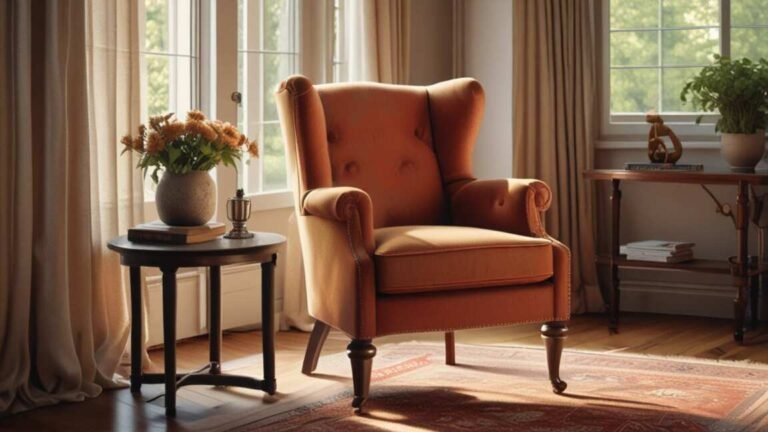

For a bedroom corner, a swivel chair is generally better if the space is tight and you need to pivot between activities, while a stationary chair is preferable when stability and a grounded look are priorities. The choice depends primarily on the corner’s dimensions, how you plan to use the chair, and the room’s overall layout rather than personal preference alone. Swivel chairs maximize floor space and support multitasking, whereas stationary chairs offer a more affordable, classic option suited for calm relaxation and traditional decor.
That empty corner in your bedroom could become your favorite spot in the house with the right chair. This comparison helps you decide between a swivel or stationary chair for your bedroom corner.
Simply put, swivel chairs offer flexibility and movement in tight spaces, while stationary chairs provide stability and classic style. Your choice depends on corner size, how you plan to use the chair, and the overall room layout. Swivel works best for reading nooks and multitasking, while stationary suits calm spots and traditional decor.
Key Takeaways
- Swivel chairs save floor space by letting you turn instead of moving the whole chair, making them ideal for tight corners.
- Stationary chairs offer better stability and a more grounded feel, which suits relaxation and traditional bedroom setups.
- Swivel chairs work well for multitasking spaces where you need to face different directions, like a desk or TV area.
- Stationary chairs are generally more affordable and come in a wider range of classic and modern styles.
- Your corner size, room layout, and intended use matter more than personal preference alone when choosing between swivel and stationary.

Quick Comparison Table
| Feature | Swivel Chair | Stationary Chair |
|---|---|---|
| Space Efficiency | Excellent – turns without moving base | Good – fixed position, needs clearance |
| Stability | Moderate – base can wobble over time | High – solid legs or frame |
| Comfort for Reading | Good – easy to adjust position | Very good – stable support |
| Style Range | Modern, contemporary, mid-century | Traditional, modern, rustic, farmhouse |
| Average Cost | $150 to $800 | $80 to $500 |
| Best Corner Type | Tight or awkward corners | Spacious corners with room to sit |
| Assembly Required | Often yes – base and seat attach | Minimal – legs attach or ready to use |

Swivel Chair Overview
A swivel or stationary choice starts with understanding what each type offers. Swivel chairs have a rotating base that lets you turn 360 degrees without moving the chair itself. This design makes them popular for bedroom corners where space is tight.
Swivel chairs come in many styles. You can find them at IKEA, West Elm, and CB2. They range from modern egg chairs to mid-century accent chairs. Most use a metal or plastic base with a smooth bearing mechanism.
According to the National Association of Home Builders, 62 percent of new home buyers consider a sitting area in the master bedroom a must-have feature. This trend drives demand for space-saving furniture like swivel chairs. Many homeowners now choose swivel options to maximize small bedroom footprints.
Pros and Cons of Swivel Chairs
- Swivel chairs let you face different parts of the room without standing up or dragging the chair.
- They fit well in corners where a stationary chair would block walkways when you turn to sit down.
- The moving base can develop squeaks or wobbles over time with regular use.
- Swivel mechanisms add weight and cost compared to simple stationary frames.
- Some people find the subtle movement distracting when trying to relax or read for long periods.
Best For
Swivel chairs work best in small bedrooms, multipurpose corners, and rooms with multiple focal points. Use them near a desk, TV, or window where you need to shift your view often. They also suit bedrooms with limited floor space where every inch counts.
Tip: Place your swivel chair at least 12 inches from any wall to allow full rotation. This prevents the armrests from scraping the wall and protects both the chair and your paint.
Stationary Chair Overview
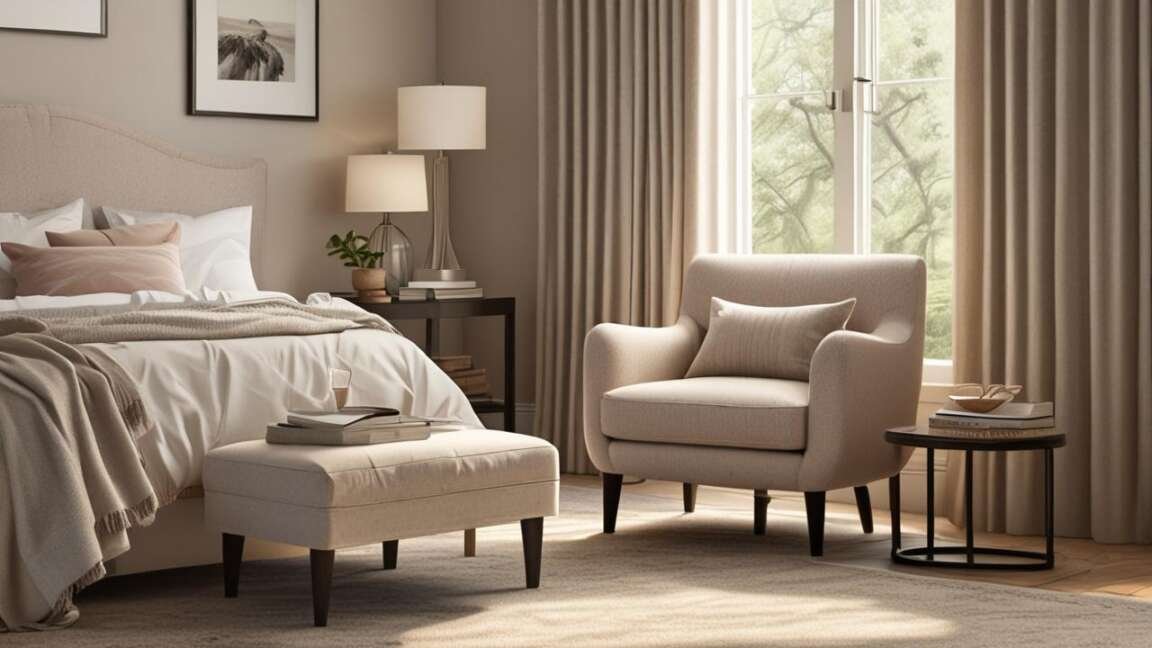
A stationary chair has a fixed base with four legs or a solid pedestal. It does not rotate or move once placed. This design offers a stable, grounded seating experience that many people prefer for relaxation and reading.
Stationary chairs include armchairs, accent chairs, wingbacks, and club chairs. You can find them at Pottery Barn, Wayfair, and Article. They come in more traditional and rustic styles than swivel chairs.
According to a Houzz survey on bedroom design trends, 48 percent of homeowners prioritize comfort over style when choosing bedroom furniture. Stationary chairs typically offer deeper cushions and more ergonomic shaping than swivel models. This makes them a top choice for comfort-focused buyers.
Pros and Cons of Stationary Chairs
- Stationary chairs provide a solid, stable seat that does not move or shift when you sit down or stand up.
- They offer more style variety, including traditional, farmhouse, mid-century, and contemporary designs.
- Stationary chairs require you to physically turn your body to face different directions in the room.
- They take up more visual and physical space because the chair cannot rotate to adjust its position.
- Moving a stationary chair to clean or rearrange requires lifting it rather than sliding it across the floor.
Best For
Stationary chairs suit larger bedrooms, dedicated reading nooks, and rooms where you want a calm, unmoving focal point. They work well in traditional decor and spaces where stability matters most. If you plan to sit for hours with a book, a stationary chair gives you the best support.
Important: Measure your corner space before buying a stationary chair. You need enough room to walk past it and sit down comfortably. A good rule is 3 feet of clearance in front of the chair and 18 inches on each side.
Head-to-Head Comparison
Space and Layout
Space is the biggest factor when choosing a swivel or stationary option for a bedroom corner. Swivel chairs save floor space because you do not need extra clearance behind the chair to turn around. Stationary chairs need more room to walk around and sit down.
In a small bedroom, a swivel chair can fit into a tight corner that a stationary chair cannot. The rotating base allows the chair to tuck into the corner while still being usable. A stationary chair needs the seat facing outward, which takes up more visible floor area. For bedrooms under 100 square feet, a swivel chair is often the only practical choice.
According to the American Society of Interior Designers, space planning is the most critical factor in furniture selection for small rooms. Designers recommend swivel chairs for corners that measure less than 48 inches across. Stationary chairs work better in corners that are 60 inches or wider.
Comfort and Ergonomics
Comfort depends on how you use the chair. Swivel chairs let you change your viewing angle without effort. This helps if you want to look out a window, then at a TV, then at someone in the room. The movement can also help with circulation during long sitting periods.
Stationary chairs offer better lumbar support in most cases. The fixed frame allows for deeper cushions and more ergonomic shaping. Many people find stationary chairs more comfortable for long reading sessions because the chair does not shift under them. A stationary chair with a high back and padded armrests provides the best support for extended use.
Style and Aesthetics
Style preference plays a big role in the swivel or stationary decision. Swivel chairs tend to look more modern and sleek. Their exposed bases and slim profiles work well in contemporary bedrooms. Stationary chairs offer more traditional and classic options, including wingbacks, club chairs, and tufted designs.
Consider the existing decor in your bedroom. A swivel chair with a metal base matches industrial or minimalist rooms. A stationary wingback chair fits traditional or farmhouse styles. Browse Pinterest for inspiration on how each style looks in real bedrooms. The chair should complement your bed, nightstands, and dresser rather than clash with them.
Durability and Stability
Stationary chairs generally last longer than swivel chairs. The fixed frame has fewer moving parts that can break. A well-made stationary chair can last 10 to 15 years or more with proper care. Solid wood frames and reinforced joints add to the lifespan.
Swivel chairs have a rotating mechanism that can wear out. The base may wobble after several years of use. Higher-end swivel chairs from brands like Herman Miller offer better durability, but they cost more. Budget swivel chairs under $150 may only last 2 to 3 years with daily use.
Warning: Check the weight limit of any swivel chair before buying. Many swivel mechanisms support less weight than stationary frames. A stationary chair with solid wood legs can typically support more weight than a swivel chair with a metal base.
Cost Comparison
Stationary chairs are generally more budget-friendly. You can find good quality stationary chairs for $80 to $200 at retailers like Wayfair and IKEA. Swivel chairs start around $150 and go up to $800 or more for designer models with premium mechanisms.
The price difference comes from the hardware. Swivel mechanisms require precision engineering to work smoothly. A stationary chair has no moving parts, so more of the budget goes into the frame, cushions, and fabric. For the same price point, a stationary chair often offers better materials and construction.
How to Measure Your Bedroom Corner
Accurate measurements prevent the common mistake of buying a chair that does not fit. Follow these steps to measure your corner before choosing between a swivel or stationary chair.
- Measure the width of the corner opening from wall to wall at floor level. This tells you how much space the chair can fill.
- Measure the depth from the corner point straight out into the room. Swivel chairs need less depth, while stationary chairs need more.
- Check the height of nearby furniture like windowsills, radiators, and nightstands. The chair back should not block a window or feel cramped.
- Walk through the space to confirm you can move around the chair. Leave at least 24 inches of walking space around the chair on the open side.
- Take photos of the corner from multiple angles. This helps you visualize how different chair styles will look in the actual space.
Tip: Use painter tape to mark the outline of the chair on your floor. This gives you a real sense of how much space the chair will take up before you buy it.
Which One Should You Choose?
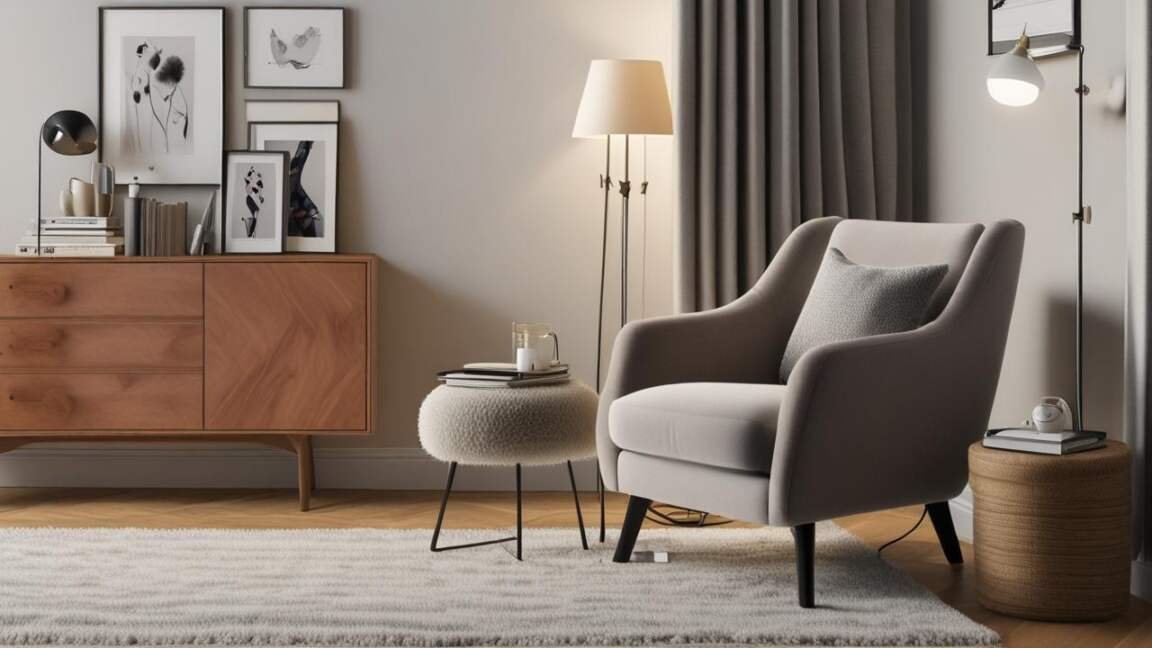
Your choice depends on three factors: corner size, how you use the chair, and your style preference. Consider your specific situation and match it to the right option.
Choose a swivel chair if:
- Your bedroom corner is small or awkwardly shaped with less than 48 inches of wall space.
- You want to face multiple directions from one spot, such as a window and a TV.
- You have a modern, minimalist, or mid-century decor style that favors sleek profiles.
- You plan to use the chair for short periods like putting on shoes, checking your phone, or reading a magazine.
- Your bedroom is under 100 square feet and every inch of floor space matters.
Choose a stationary chair if:
- Your bedroom corner has enough space for a fixed chair with at least 60 inches of wall space.
- You want a stable, grounded seat for reading, meditating, or relaxing for long periods.
- You prefer traditional, farmhouse, or classic decor styles with rich fabrics and wood accents.
- You plan to spend long hours in the chair and want better ergonomic support and cushion depth.
- You have children or pets and need a chair that will not tip or shift when bumped.
Tip: If you cannot decide, try a small swivel chair with a compact base. It gives you the flexibility of rotation without taking up too much space. Many modern swivel chairs are designed to work in tight corners while still looking stylish.
Common Myths vs Facts
Myth: Swivel chairs are always more versatile than stationary chairs.
This is not always true. While swivel chairs let you turn, stationary chairs allow for better positioning of side tables and lamps. A stationary chair can be just as versatile when paired with the right accessories and layout.
Myth: Stationary chairs are old-fashioned and boring.
Stationary chairs come in a huge range of modern and trendy designs. Brands like Article and West Elm offer stationary chairs with sleek lines, bold colors, and contemporary fabrics that look anything but boring. Modern stationary chairs are often the centerpiece of a room.
Myth: Swivel chairs are unstable and unsafe.
High-quality swivel chairs with proper weight ratings are very stable. The key is choosing a chair with a wide, sturdy base and a smooth mechanism. Cheap swivel chairs may wobble, but well-made ones from trusted brands work reliably and safely. Well-made swivel chairs from trusted brands offer reliable safety and stability.
Frequently Asked Questions
What size swivel chair fits in a small bedroom corner?
Look for swivel chairs with a base diameter of 24 to 30 inches. Compact models from IKEA and other retailers fit corners as small as 36 inches wide. Always measure your corner width and depth before buying any chair.
Are swivel chairs comfortable for long reading sessions?
Swivel chairs can be comfortable, but it depends on the cushion quality and back support. Stationary chairs typically offer better ergonomic support for extended periods. Add a small pillow for lumbar support with either type to improve comfort.
How much should I spend on a bedroom corner chair?
Plan to spend $100 to $300 for a good quality chair that will last 5 to 10 years. Budget options under $100 may not last long or provide adequate comfort. Premium chairs from brands like Herman Miller or West Elm cost $500 or more but offer better durability and design.
Can I use a swivel chair as a desk chair in my bedroom?
Yes, many people use swivel chairs as both seating and desk chairs in small bedrooms. Look for one with the right seat height for your desk. Adjustable swivel chairs work best for dual purposes and give you the most flexibility.
Do stationary chairs damage walls if placed in corners?
Stationary chairs can scuff walls if placed too close. Use corner guards or leave at least 3 inches between the chair and the wall. Swivel chairs need even more clearance to rotate without hitting the wall.
Final Thoughts
Swivel chairs work best in tight corners and modern spaces where flexibility matters. Stationary chairs offer better stability and style variety for larger corners and traditional rooms. Measure your space, think about how you will use the chair, and choose the option that fits both your room and your habits.