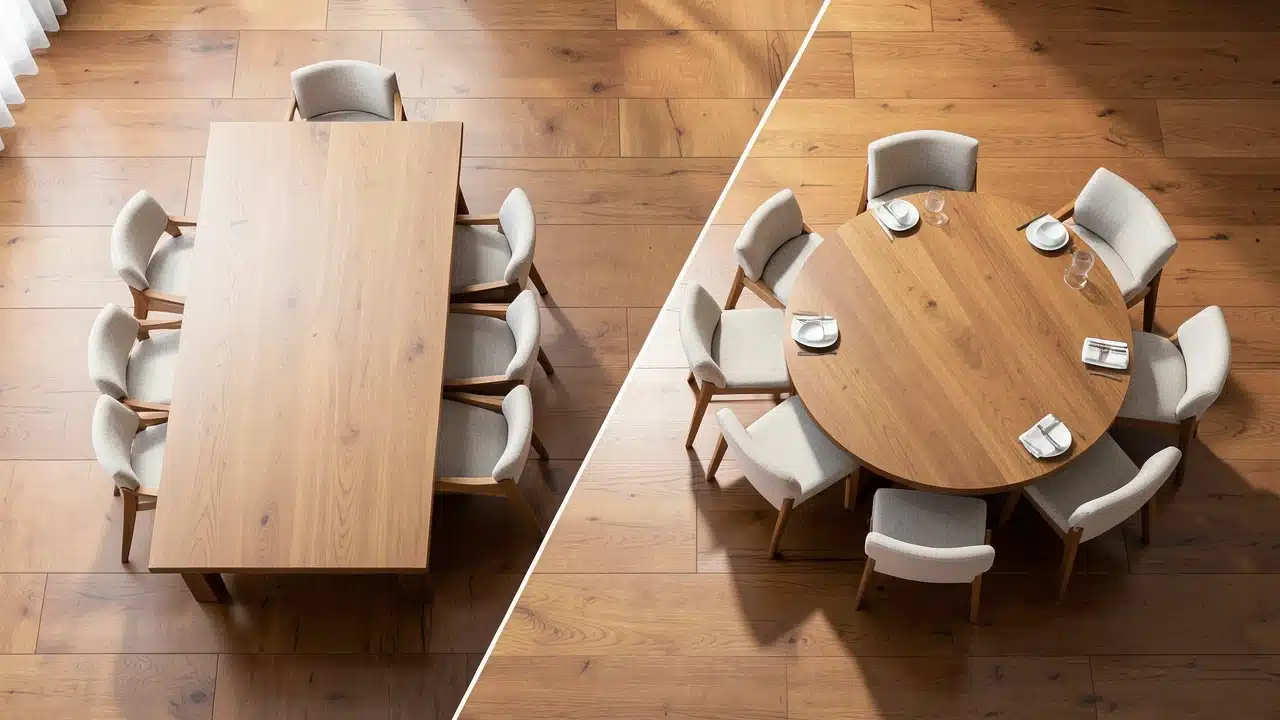
A rectangular table seats more people than a round table within the same floor space because its straight edges allow efficient chair placement along the full length and against walls. Round tables lose usable seating capacity as their diameter increases, since the curved perimeter requires more clearance for chairs and limits how many people can sit comfortably. For maximum capacity choose rectangular, while round tables are better for smaller rooms where conversation flow and movement take priority over headcount.
A rectangular table usually seats more people in the same floor space because its straight sides use wall length and chair spacing more efficiently.
A round table improves conversation and movement in small rooms, but it loses capacity as diameter grows. Choose rectangular for maximum seating, and round for tighter spaces where flow and comfort matter more.
Figuring out the best shape for your dining table can be tricky, especially when you want to make the most of your room.
You want a table that looks great and also fits everyone comfortably for meals and gatherings. Understanding the difference between a round table vs.
rectangular: which seats more people in the same floor space? is key to maximizing your seating capacity and ensuring your dining area works for you. This knowledge will help you choose a table that perfectly suits your needs and your home.
Key Takeaways
- Shape matters for seating capacity: Different table shapes fit varying numbers of people in the same area.
- Rectangular tables offer efficient seating: They generally accommodate more guests in a given footprint due to their straight edges.
- Round tables promote conversation: Their design encourages interaction but can be less space-efficient for maximum seating.
- Consider room dimensions: The size and shape of your room heavily influence which table shape is best.
- Guest count is a major factor: How many people you regularly host will determine the ideal table shape and size.
- Aesthetics and flow are important: Beyond seating, how the table fits visually and allows movement in the room matters.
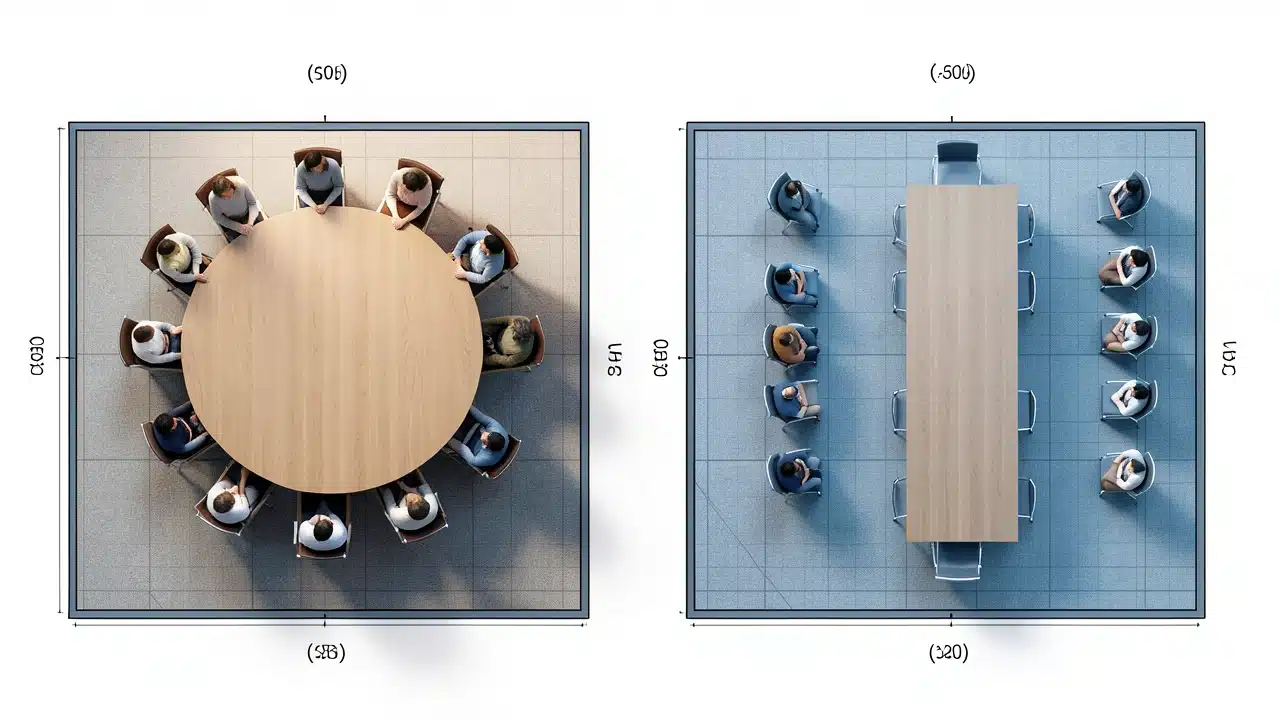
Maximizing Seating: The Core Difference
When you’re trying to fit as many people as possible into a dining space, the shape of your table makes a big difference.
The question of Round Table vs. Rectangular: Which Seats More People in the Same Floor Space? comes up a lot for homeowners and apartment dwellers alike.
Rectangular tables often have an edge because their straight sides allow for more predictable and efficient placement of chairs.
You can line them up along the longer sides, packing in more guests without much wasted space. This makes them a popular choice for families or those who entertain frequently.
Round tables are lovely for creating a cozy atmosphere and encouraging conversation. Everyone can see each other easily.
However, when you’re strictly focused on maximizing the number of seats within a specific area, a round table can sometimes be less efficient.
The curved edges mean there isn’t a straight line to place chairs along, and the space in the center can sometimes feel a bit too large or awkward for very tight seating arrangements.
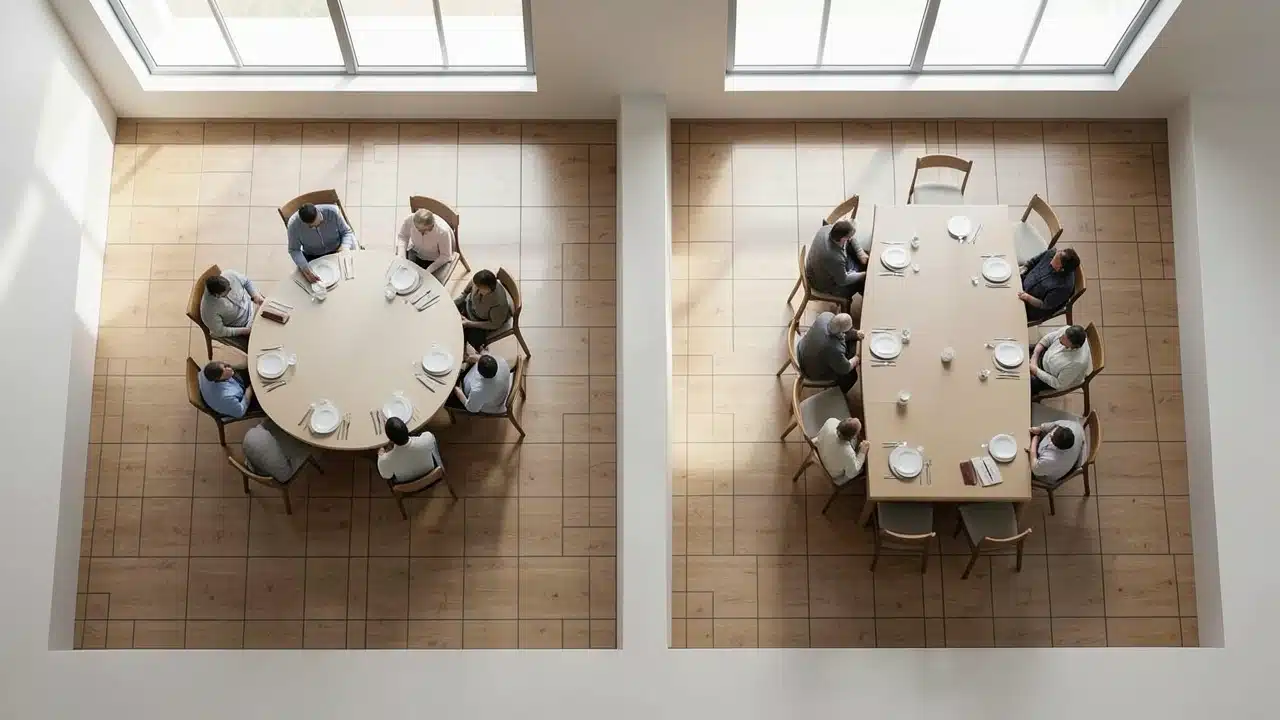
Understanding Space Efficiency: Round Tables
Round tables are wonderful for creating an intimate dining experience. They encourage everyone to feel connected because they can all see each other.
This shape naturally breaks down any sense of hierarchy that can sometimes form at the ends of a long table.
However, when we talk about Round Table vs. Rectangular: Which Seats More People in the Same Floor Space?, round tables can be a bit trickier to pack to their absolute maximum capacity.
The key challenge with round tables is that you can’t simply add another person along a straight edge. You have to place chairs around the circumference.
While a large round table can seat many people, its efficiency in terms of square footage per person might be slightly less than a well-proportioned rectangular table.
For instance, a 48-inch round table might comfortably seat 4 people, while a 48-inch square table (which is essentially a very short rectangle) can also seat 4.
But a 60-inch round table might seat 6, and a 60-inch rectangular table could potentially seat 6 or even 8 depending on its width.
Key benefits of round tables for seating include:
- Enhanced conversation: Easier for everyone to see and talk to each other.
- No “head” of the table: Creates a more egalitarian feel.
- Softer visual appeal: Can soften a room with many straight lines.
- Easier flow around the table: The curves can make it easier to walk around in tighter spaces.
Understanding Space Efficiency: Rectangular Tables
Rectangular tables are often the go-to choice when the primary goal is to seat as many people as possible in a given dining area.
The straightforward geometry of a rectangle makes it incredibly space-efficient. You can place chairs along both long sides, and at the ends if the table is wide enough.
This linear arrangement allows for a predictable number of guests based on the table’s length and width.
When considering Round Table vs. Rectangular: Which Seats More People in the Same Floor Space?, rectangular tables typically win for sheer volume of seating.
For example, a 6-foot (72-inch) rectangular table can easily seat 6 people, with one person at each end and two on each long side.
If the table is wider, or if you don’t need elaborate place settings, you might even squeeze in 8 people. This is especially true for smaller, more compact rectangular tables that are designed for tighter spaces.
They maintain the efficient seating arrangement without taking up an excessive amount of floor space.
Key benefits of rectangular tables for seating include:
- Higher seating capacity: Generally fit more people in the same footprint.
- Predictable space planning: Easier to calculate how many can sit.
- Versatile for different room shapes: Fit well in long, narrow dining rooms.
- Accommodates large gatherings: Ideal for hosting big dinners.
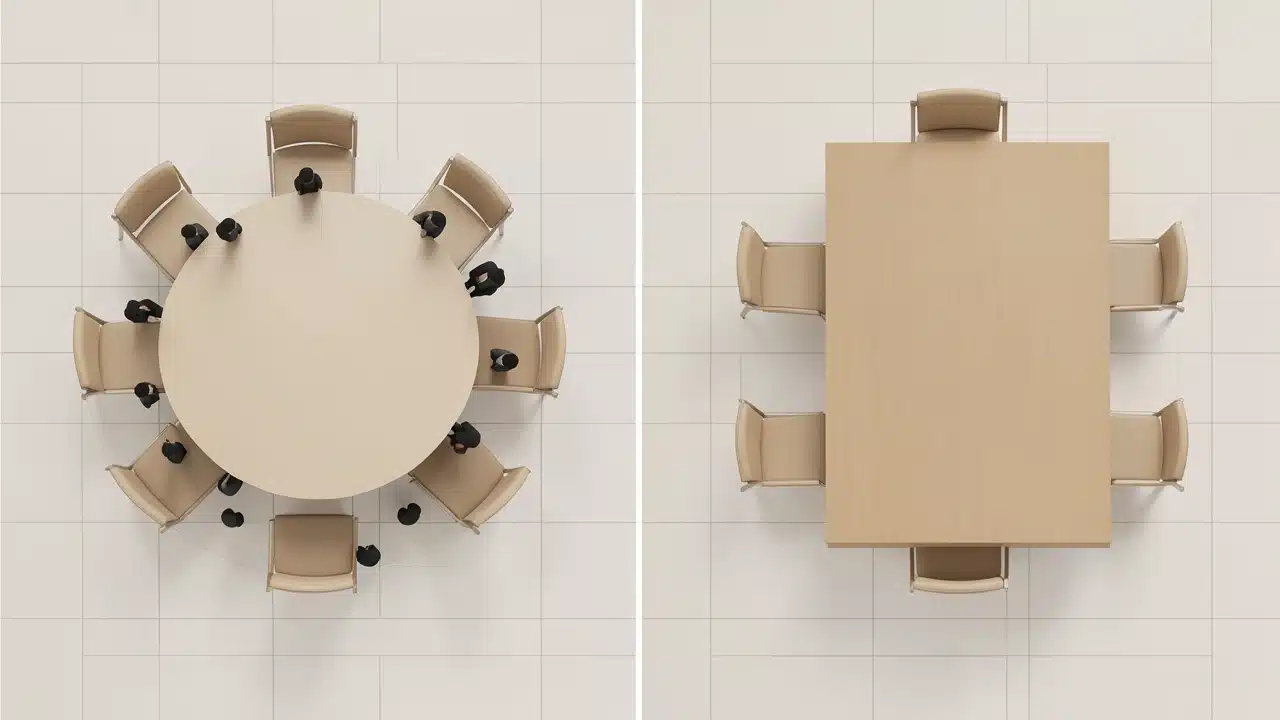
Comparing Seating Capacity: A Practical Look
Let’s get down to the numbers. When we ask Round Table vs. Rectangular: Which Seats More People in the Same Floor Space?, we need to look at typical dimensions and seating arrangements.
It’s not just about the table’s size, but how that size translates into usable seating.
Imagine you have a dining area that can fit a table with a 60-inch diameter or a 60-inch length. A 60-inch round table typically seats 6 people comfortably. Now, consider a 60-inch rectangular table.
This table is 5 feet long. It can easily seat 6 people. If the table is 36 inches wide, you can place 2 people on each long side and one at each end, totaling 6.
If the table is 40 inches wide, you might even fit 3 people on each long side and one at each end, for a total of 8 people.
Here’s a simple comparison:
| 48 inches diameter/length | 4 people | 4-6 people |
| 54 inches diameter/length | 4-6 people | 6 people |
| 60 inches diameter/length | 6 people | 6-8 people |
| 72 inches diameter/length | 6-8 people | 8-10 people |
As you can see from the table, the rectangular shape often offers a higher potential for seating more individuals within similar overall dimensions, especially as the table gets larger.
This is a crucial point when prioritizing guest count over other factors in the Round Table vs. Rectangular: Which Seats More People in the Same Floor Space? debate.
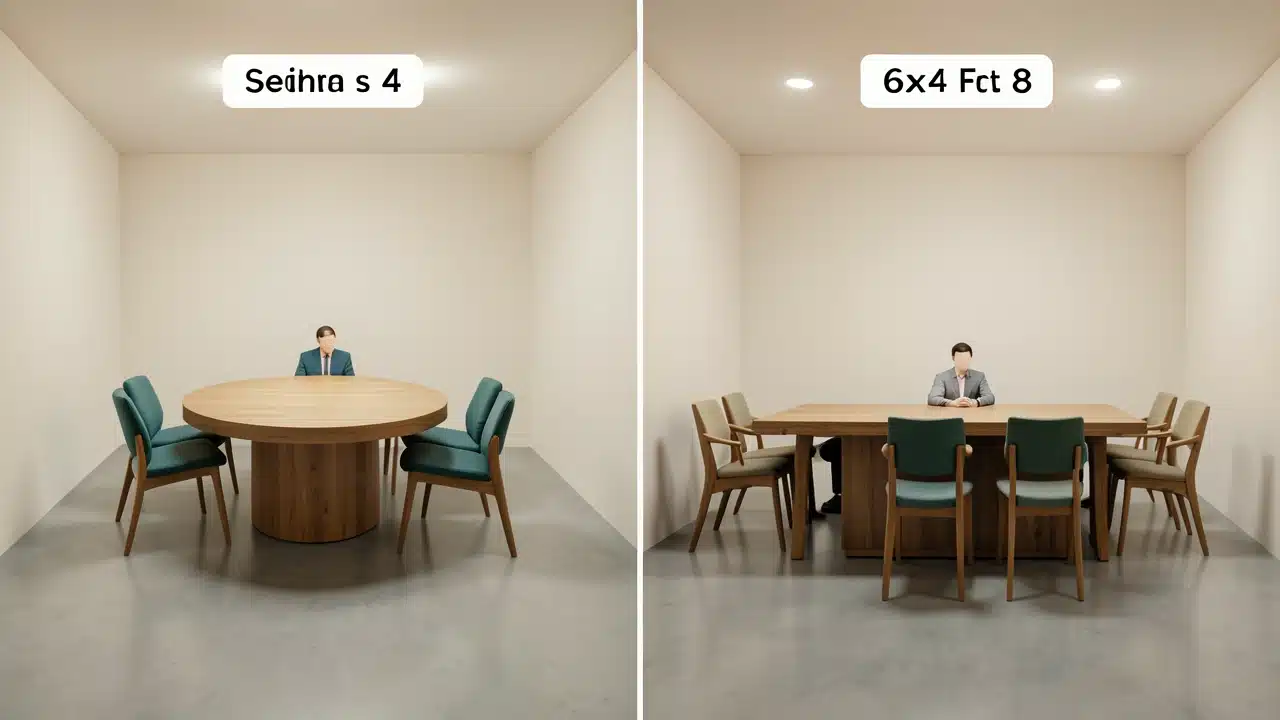
Room Dimensions and Layout Impact
The space you have is a huge factor in deciding between a round and rectangular table. It’s not just about fitting the table itself, but also allowing enough room to pull out chairs and walk around comfortably. This is where the question of Round Table vs.
Rectangular: Which Seats More People in the Same Floor Space? gets more nuanced.
In a square room, a round table can be a perfect fit. It doesn’t have sharp corners that might stick out awkwardly, and it allows for easy circulation around its perimeter. You can often fit a larger diameter round table into a square room and still have good flow.
However, if your room is long and narrow, a rectangular table is usually the better choice. It follows the lines of the room and allows for more seating along its length without making the room feel cramped.
Consider these layout points:
- Square Room: A round table often maximizes visual balance and flow. It can seat a good number of people, but a square table (a type of rectangle) can also work well and might offer slightly more seating.
- Rectangular Room: A rectangular table is the natural fit here. It can be placed lengthwise, allowing for more seating capacity along its sides. A round table might feel out of place or limit seating options in a long, narrow space.
- Traffic Flow: Always leave at least 30-36 inches of space around the table for chairs to be pulled out and for people to walk behind seated guests. This space requirement can influence how many people you can realistically seat with either shape.
- Placement of other furniture: If you have sideboards, buffets, or other furniture in the room, their placement will also affect how much space is available for the table and chairs.
Ultimately, the “same floor space” might not accommodate the same number of people comfortably depending on the room’s shape and how you intend to use the space.
The answer to Round Table vs. Rectangular: Which Seats More People in the Same Floor Space? depends on your specific room and how you want it to function.
Guest Count and Lifestyle Considerations
Your lifestyle and how often you host guests are critical factors when deciding on a table shape. If you frequently have large gatherings, the question of Round Table vs. Rectangular: Which Seats More People in the Same Floor Space? leans heavily towards the rectangular option.
This is because rectangular tables are generally more efficient at accommodating a higher number of individuals.
Think about your typical dinner parties. Do you usually host 4-6 people, or are you often entertaining 8 or more? If you regularly need seating for more than 6, a rectangular table is likely the more practical choice.
You can find rectangular tables that are long and narrow, designed to fit into smaller spaces while still providing ample seating. For example, a 72-inch table that is only 36 inches wide can seat 8 people quite comfortably.
On the other hand, if your gatherings are usually smaller and more intimate, a round table might be more appealing.
The conversational benefits of a round table can be very valuable for smaller groups. However, even for smaller groups, if space is extremely limited and you want maximum flexibility, a compact rectangular or square table might still be a better option than a round one for pure seating numbers.Consider these lifestyle questions:
- How many people do you host most often? If it’s more than 6, lean towards rectangular.
- Do you host formal dinners or casual get-togethers? Formal dinners might benefit from the defined seating of a rectangular table.
- How important is conversation flow versus individual seating space? Round tables excel at conversation, while rectangular tables prioritize seating capacity.
- Do you need flexibility for occasional larger groups? Rectangular tables often offer more flexibility for squeezing in an extra seat or two.
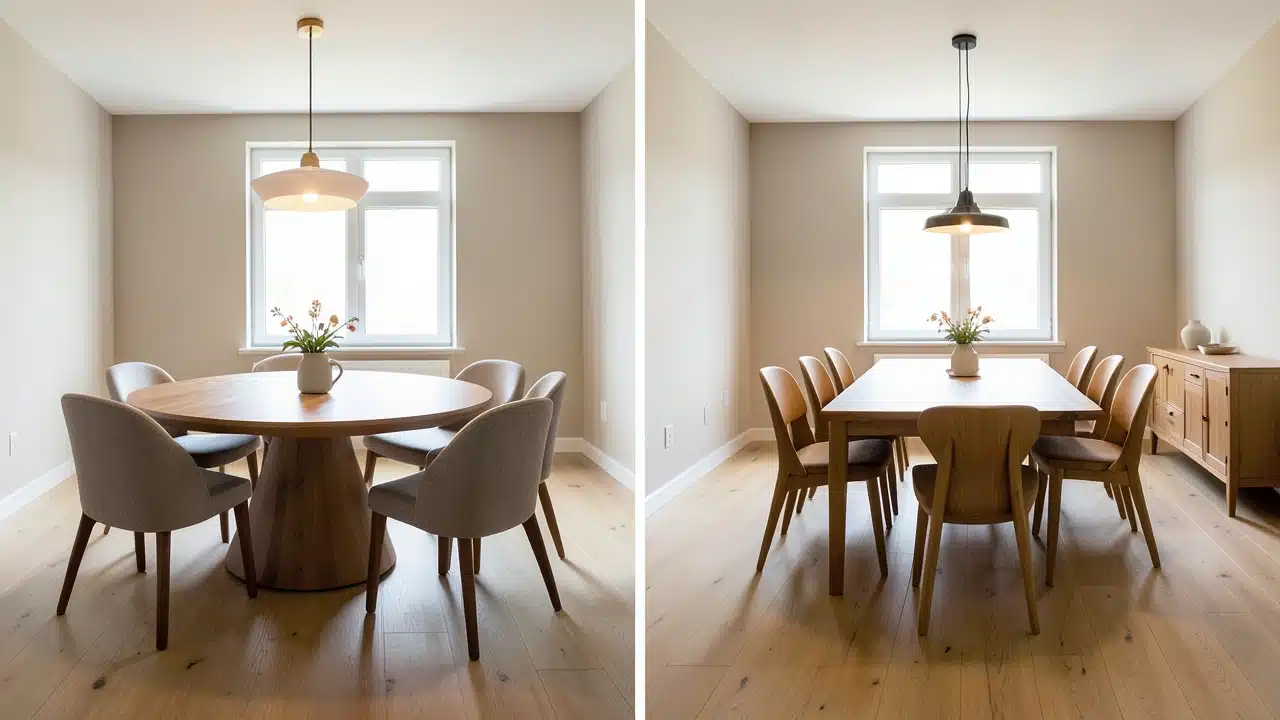
Aesthetics and Overall Room Harmony
While seating capacity is a major concern when comparing Round Table vs. Rectangular: Which Seats More People in the Same Floor Space?, you can’t forget about how the table looks and feels in your room. The shape of your table contributes significantly to the overall aesthetic and flow of your dining space.
Round tables offer a softer look. They have no sharp corners, which can be beneficial in rooms with a lot of hard lines or in households with young children. They can make a room feel more open and inviting.
The lack of a “head” also promotes a more relaxed and communal atmosphere.
Rectangular tables provide a more traditional and structured look. They can anchor a dining room and create a sense of order. In larger rooms, a long rectangular table can fill the space effectively and create a dramatic focal point.
The clean lines of a rectangular table can complement modern or minimalist decor styles.
Think about these aesthetic factors:
- Room Shape: A rectangular table often complements a rectangular room, while a round table can be a great centerpiece in a square room.
- Existing Decor: Consider whether your current decor leans towards soft curves or clean, straight lines.
- Visual Weight: A large round table can feel visually lighter than a similarly sized rectangular table, especially if it has a pedestal base.
- Functionality Beyond Dining: If the table is also used for homework, crafts, or as a workspace, a rectangular surface might be more practical.
- Choosing the right table shape is a balance. You want to seat as many people as you need, but you also want a table that fits beautifully into your home and enhances the overall atmosphere. The answer to Round Table vs.
Rectangular: Which Seats More People in the Same Floor Space? should also consider your personal style and how you use your dining area.
Frequently Asked Questions Of Round Table Vs. Rectangular: Which Seats More People In The Same Floor Space?
Does a round table really seat fewer people than a rectangular table in the same space?
Generally, yes. Rectangular tables are typically more efficient at seating people in a given floor space because their straight edges allow for more linear placement of chairs, whereas round tables have curves that can sometimes lead to less optimized seating arrangements for maximum capacity.
If I have a small dining room, should I choose a round or rectangular table for more seating?
For a small dining room where maximizing seating is the priority, a rectangular table is often the better choice. You can find compact rectangular tables that fit well and allow you to seat more people than a round table of similar footprint.
What is the ideal space needed around a table for comfortable seating?
You should aim for at least 30 to 36 inches of clear space around the table. This allows chairs to be pulled out and for people to walk behind seated guests without bumping into anything.
Can a round table ever seat more people than a rectangular table?
In very specific scenarios, a very large round table might seat the same number of people as a smaller or narrower rectangular table. However, for the same overall footprint or diameter/length, a rectangular table usually offers more seating potential.
How does the shape of my room affect the Round Table vs. Rectangular: Which Seats More People in the Same Floor Space? decision?
A square room often suits a round table well, promoting good flow. A long, narrow room is usually best suited for a rectangular table, as it can follow the room’s dimensions and allow for more seating along its length.
Are there specific types of rectangular tables that are better for seating capacity?
Yes, longer and wider rectangular tables will naturally seat more people. Tables with pedestal bases can sometimes offer more legroom and make it easier to fit an extra person if needed compared to tables with four legs.
Final Thoughts
Choosing between a round and rectangular table involves balancing seating needs with space and style. While rectangular tables generally offer more seating in the same floor space, round tables excel at creating a conversational atmosphere.
Consider your room’s shape, your typical guest count, and the overall flow you want to achieve to make the best choice for your home.