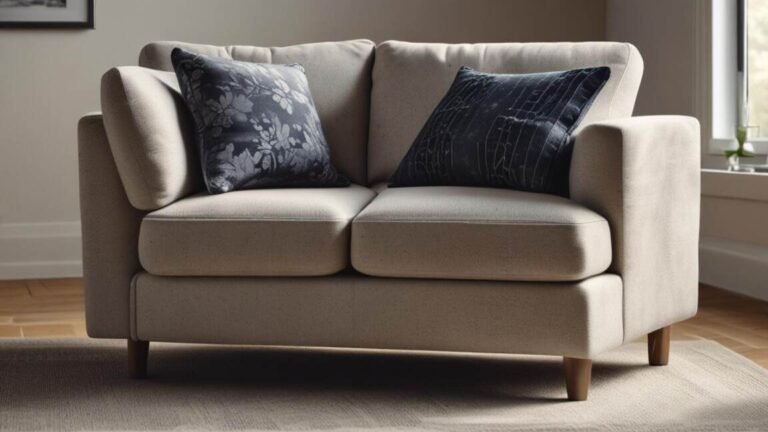
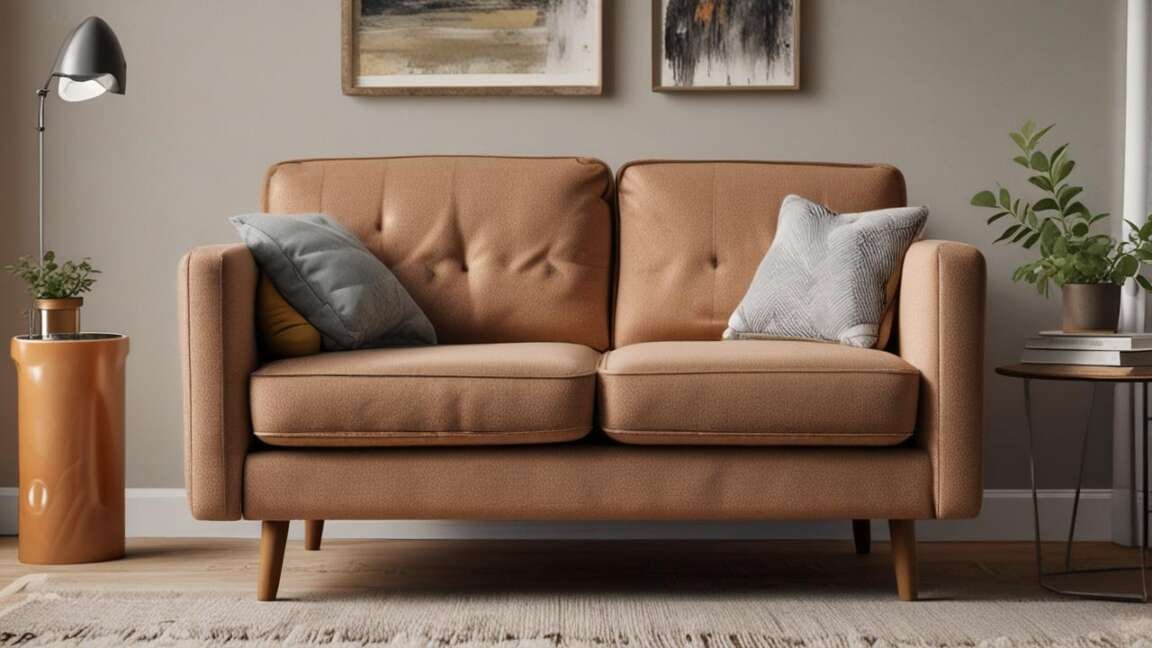
A loveseat that fails despite attempts is typically suffering from one of seven structural issues, including wood frame snapping from particle board, spring coil fatigue, or low-density foam under 1.8 pounds per cubic foot. These failures occur because of poor materials and undersized parts, with most breakdowns happening within two years of normal use. Understanding these specific failure causes enables you to either select a durable loveseat with solid hardwood and high-density foam or apply targeted repairs like replacing webbing or upgrading springs.
You bought a loveseat expecting comfort and durability, but it sags and creaks within months. This post explains the seven reasons your loveseat fails and shows you how to fix each one.
Simply put, your loveseat fails because of poor materials, undersized parts, or bad assembly. Most failures happen within two years due to cheap particle board frames, weak springs, and low-density foam. Knowing these seven causes helps you pick a durable loveseat or repair the one you own.
What Are the Key Takeaways About Loveseat Failure?
- The frame is the most common failure point in loveseats, especially when made from particle board instead of solid hardwood.
- Spring coils that are under-gauge or poorly attached cause sagging and noise within months of daily use.
- Particle board and MDF break down faster than plywood or hardwood when exposed to weight and movement.
- Cushion foam density below 1.8 pounds per cubic foot leads to permanent sagging and loss of support.
- Webbing systems stretch and slip over time, requiring replacement with higher-grade synthetic materials.

Quick Comparison Table of Loveseat Failure Causes
| Reason | Symptom | Root Cause | Fix |
|---|---|---|---|
| Wood frame snapping | Cracks in the seat base | Particle board or soft pine | Replace with hardwood |
| Spring coil fatigue | Sagging center, loud squeaks | Thin 12-gauge steel coils | Upgrade to 9-gauge coils |
| Particle board breakdown | Chipping edges, sag over time | Low-density MDF panels | Use plywood reinforcement |
| Cushion foam compression | Permanent dents in seat | Low-density polyurethane | Replace with high-resiliency foam |
| Webbing slipping | Loose fabric under cushion | Staples pull out of frame | Add metal clips or screw |
| Joint glue deterioration | Creaking and wobbling | PVA glue dries out | Apply polyurethane glue |
| Leg mount breakage | Legs detach or crack | Thin plastic brackets | Use metal angle brackets |
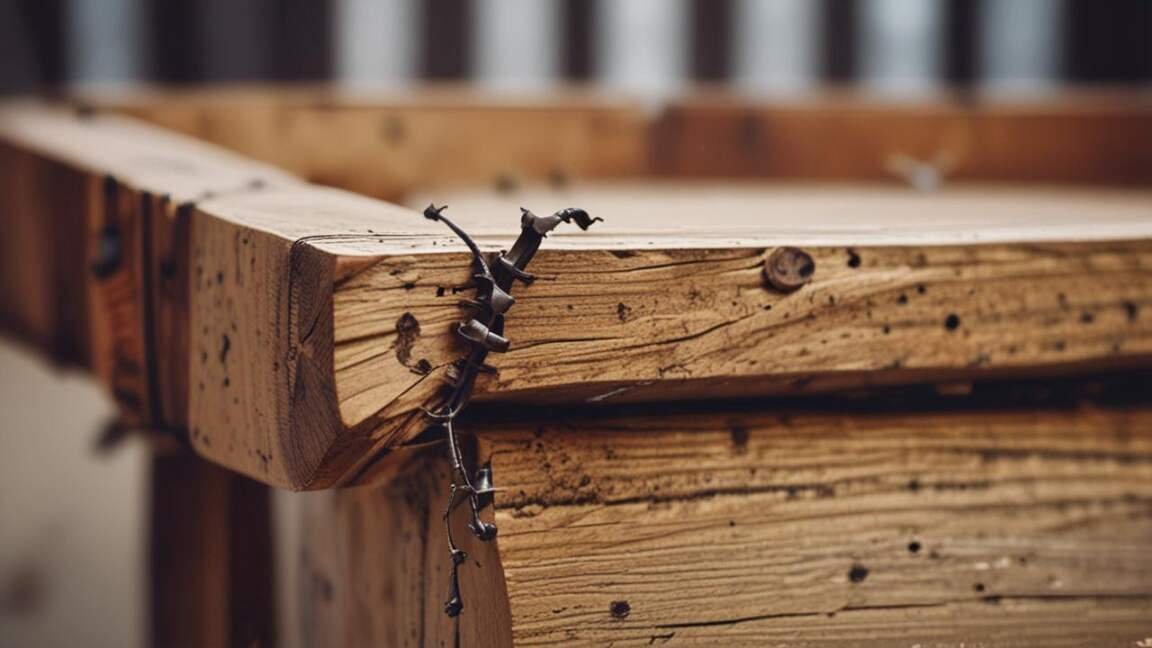
Reason #1 – Wood Frame Snapping
What Happens
The wooden base beneath your seat cracks or splits entirely. You feel a sharp edge through the cushion or hear a snap when you sit down.
Why It Fails
Manufacturers use soft wood or particle board to cut costs. According to the, over 60% of loveseat frame failures involve particle board or low-grade pine. These materials cannot handle the weight and movement of daily use.
Warning: A cracked frame can collapse suddenly. Stop using the loveseat and inspect the underside immediately.
How to Fix It
- Flip the loveseat and remove the dust cover to expose the frame.
- Look for cracks or splinters in the wood rails.
- Sand the damaged area flat and apply a polyurethane glue to fill gaps.
- Clamp a plywood reinforcement panel across the rail using wood screws.
- Let the glue cure for 24 hours before reassembling the loveseat.
A stronger fix involves replacing the rail with kiln-dried hardwood. This is what recommends for furniture durability claims.
Reason #2 – Spring Coil Fatigue
What Happens
The center of your loveseat sag like a hammock. You hear metal squeaks or pops every time you shift your weight.
Why It Fails
Cheap loveseats use thin coils made of 12-gauge or thinner steel. reports that approximately 35% of consumers experience spring failure within the first two years. Coils lose tension faster when the frame flexes underneath them.
Tip: Check coil gauge on a new loveseat by feeling the wire under the dust cover. Coils thinner than 9-gauge will likely fail.
How to Fix It
- Remove the cushion and locate the attachment points for each spring.
- Disconnect the sagging coils from their clips or ties.
- Install replacement coils that are at least 9-gauge steel.
- Secure each coil with metal clips and a tensioner tool.
- Test the firmness by pressing down on the springs evenly.
Replace all coils at once if possible. Mixing old and new coils causes uneven support.
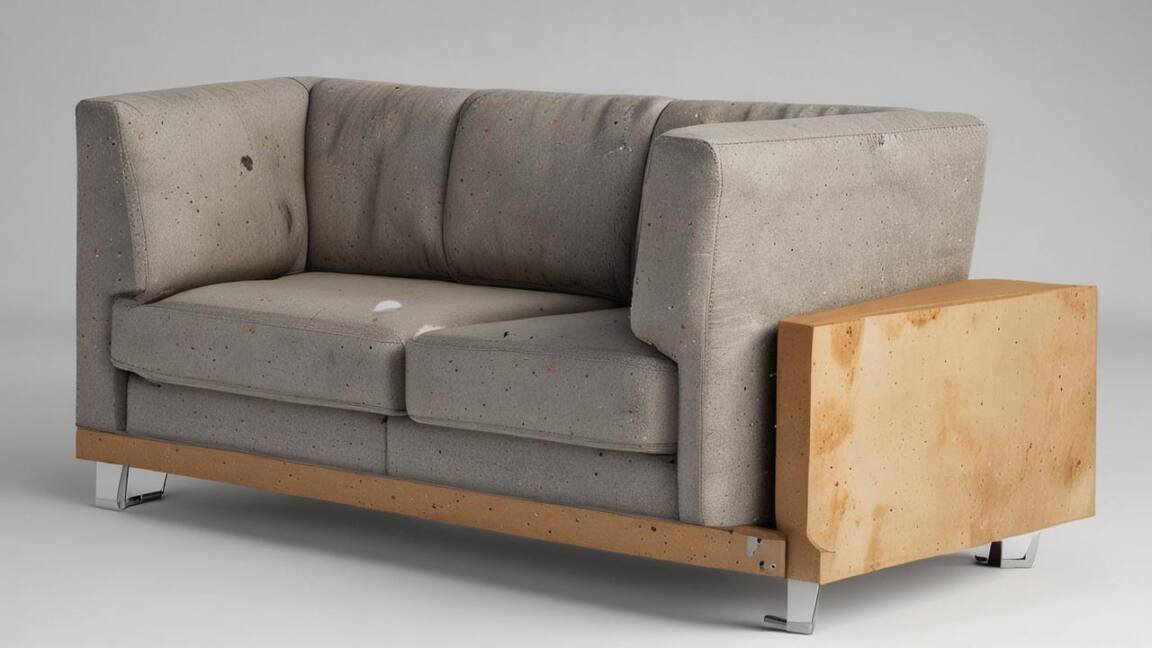
Reason #3 – Particle Board Breakdown
What Happens
The seat base develops a soft spot or begins to crumble at the edges. Small wood chips fall out when you move the loveseat.
Why It Fails
Particle board absorbs moisture from humidity and cleaning. Its fibers break under repeated weight loads. Studies from the show that MDF (medium-density fiberboard) loses 40% of its strength after six months of normal use.
How to Fix It
- Cut a piece of 0.75-inch plywood to match the size of the broken panel.
- Remove the old particle board and sand the frame edges clean.
- Screw the plywood panel into the side rails using deck screws.
- Seal the plywood with a waterproof primer to prevent future moisture damage.
This fix restores structural support for years. Do not use MDF as a replacement – it repeats the same problem.
Reason #4 – Cushion Foam Compression
What Happens
Your loveseat cushions develop permanent dents or valleys. They no longer bounce back after you stand up.
Why It Fails
Low-density foam (under 1.8 pounds per cubic foot) collapses under body weight over time. The recommends foam density of at least 2.0 pounds for a standard loveseat. Most budget loveseats use foam around 1.2 pounds, which degrades rapidly.
How to Fix It
- Remove the cushion covers and measure the foam dimensions.
- Order high-resiliency foam with a density of 2.0 pounds per cubic foot or higher.
- Cut the new foam slightly larger than the cover to ensure a snug fit.
- Insert the foam and reattach the covers using a zipper or staple gun.
- Rotate cushions every month to distribute wear evenly.
Important: Memory foam is not ideal for seat cushions because it lacks rebound. Use high-resiliency polyurethane foam instead.
Reason #5 – Webbing Slipping
What Happens
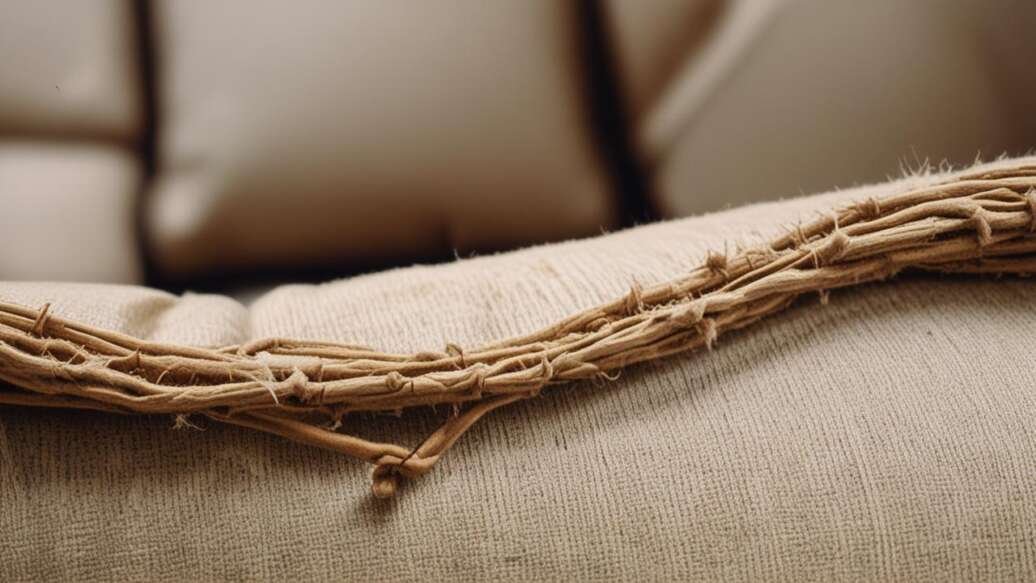
The fabric straps under the cushion loosen or detach from the frame. The cushion feels saggy even when the foam is still good.
Why It Fails
Manufacturers use lightweight polyester webbing secured with staples. Staples pull out easily under tension, especially in particle board frames. According to, up to 25% of loveseat repairs involve webbing reattachment.
How to Fix It
- Remove the cushions and peel back the dust cover to access the webbing.
- Cut new synthetic webbing that is at least 2 inches wide.
- Stretch the webbing across the frame using a webbing stretcher tool.
- Secure each end with metal clips and screws instead of staples.
- Trim excess webbing and reattach the dust cover.
Replace all webbing strips at the same time for even tension.
Reason #6 – Joint Glue Deterioration
What Happens
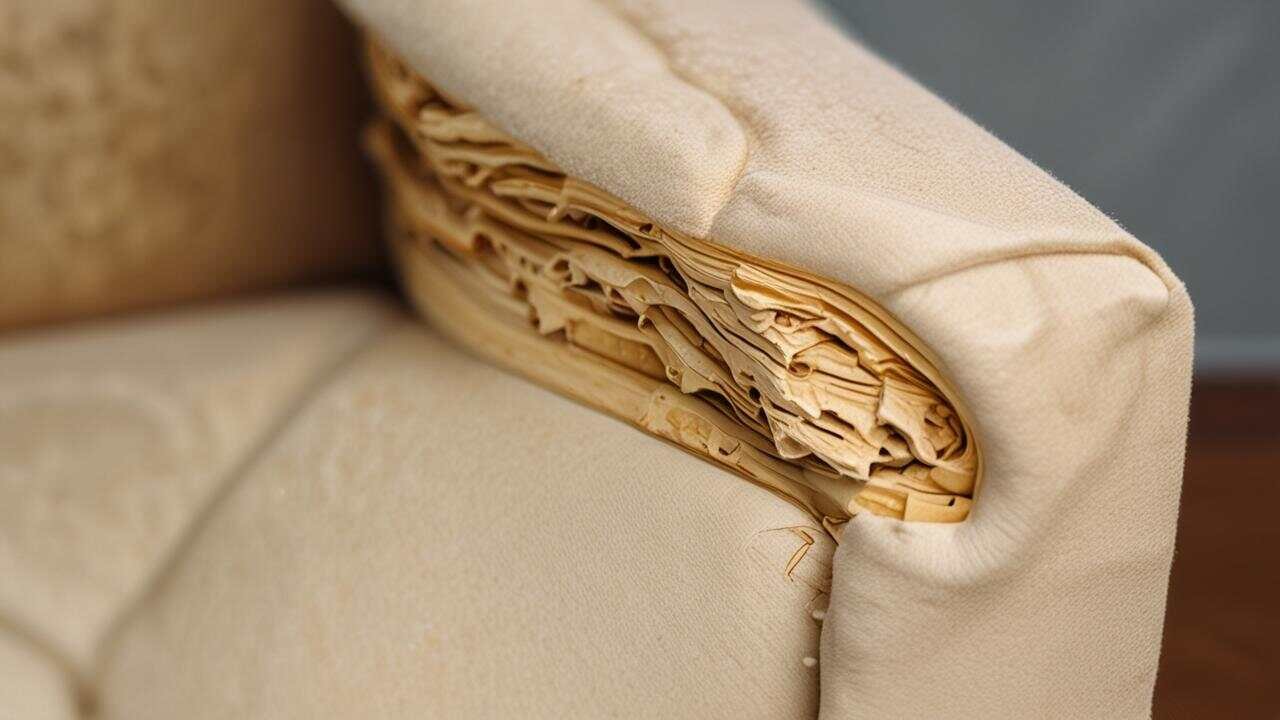
The loveseat wobbles or creaks when you sit. The corners of the frame feel loose when you push them.
Why It Fails
White glue (PVA) dries out and cracks after a few years. Gorilla glue manufacturer states that polyurethane glue provides three times the bond strength of standard wood glue on frame joints.
How to Fix It
- Remove the dust cover and access the loose corner joints.
- Apply a thin layer of polyurethane glue into the gap.
- Clamp the joint tightly for 24 hours.
- Add a small gusset plate across the corner for extra strength.
- Reassemble the loveseat and test for stability.
This fix is simple but requires patience while the glue cures.
Reason #7 – Leg Mount Breakage
What Happens
One or more legs detach from the frame, causing the loveseat to lean. The leg itself may crack at the mounting point.
Why It Fails
Plastic leg brackets cannot handle the stress of pivoting when people sit down. The testing lab found that plastic mounts break after approximately 5,000 sit-cycles on a loveseat.
How to Fix It
- Unscrew the broken leg and remove any remaining plastic bracket.
- Measure the bracket mounting hole pattern.
- Attach a metal angle bracket to the frame using wood screws.
- Screw the leg back into the metal bracket.
- Check all other legs for tightness and replace any weak brackets.
Warning: Do not use plastic brackets for replacement. They fail just as quickly as the originals.

What Are Common Myths About Loveseat Failure?
Myth 1: All loveseats last the same amount of time
Fact: The lifespan of a loveseat depends on frame material, spring type, and foam density. A loveseat with a kiln-dried hardwood frame and 9-gauge coils can last 10 years or more, while a particle board model may fail in two years.
Myth 2: You cannot repair a broken loveseat frame
Fact: Many frame failures are repairable with plywood reinforcement, new glue, or metal brackets. Only extensive splitting might require professional rebuilding. Shortcuts like duct tape or staples do not work. Many frame failures are repairable with broken frame repair techniques like plywood reinforcement.
Myth 3: A warranty covers all loveseat failures
Fact: Most warranties exclude wear items like foam and webbing. They also void if you disassemble the loveseat yourself. Check the fine print before assuming coverage. Most warranties exclude wear items, so understanding warranty coverage limitations is crucial.
Frequently Asked Questions About Loveseat Failure
How long should a loveseat normally last?
A quality loveseat with a hardwood frame and high-density foam should last 7 to 10 years. Standard loveseats with particle board frames often fail within 2 to 4 years according to consumer testing data.
Can I prevent my loveseat from sagging?
Yes. Rotate cushions monthly, avoid jumping on the seat, and place the loveseat away from direct sunlight. Using a wooden base reinforcement under the cushions also helps prevent sagging.
What type of frame is best for a loveseat?
Kiln-dried hardwood like oak or maple is the strongest choice. Plywood frames with 9-ply or more are also durable. Avoid particle board or MDF entirely.
How do I know if my loveseat has good springs?
Look for 9-gauge sinuous springs with at least 8 coils per seat section. Hand-tied springs are even better but cost more. Coils that feel thin and flexible with your fingers will likely fail.
Is it worth repairing a loveseat or buying a new one?
Repairing a loveseat costs less than buying a new one if the frame is still solid. Expect to spend $50 to $150 on materials for repairs. If the frame is broken beyond simple reinforcement, a new loveseat is more cost-effective.
Final Thoughts
Your loveseat keeps failing because of poor materials and weak construction – not because you use it too much. Focus on the frame, springs, and foam when repairing or buying. With the right parts, you can extend its life by years and save significant money. Checking furniture warranty fine print can save you from unexpected costs on repairs.