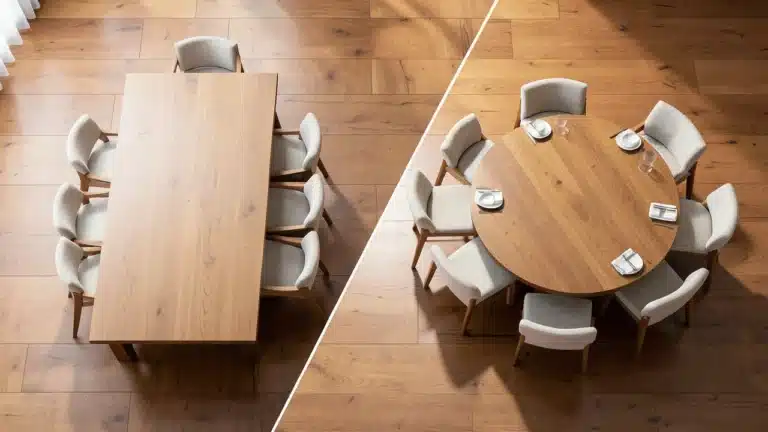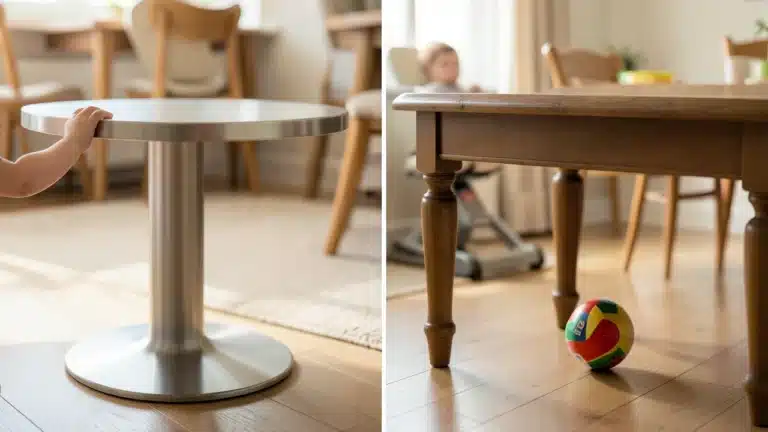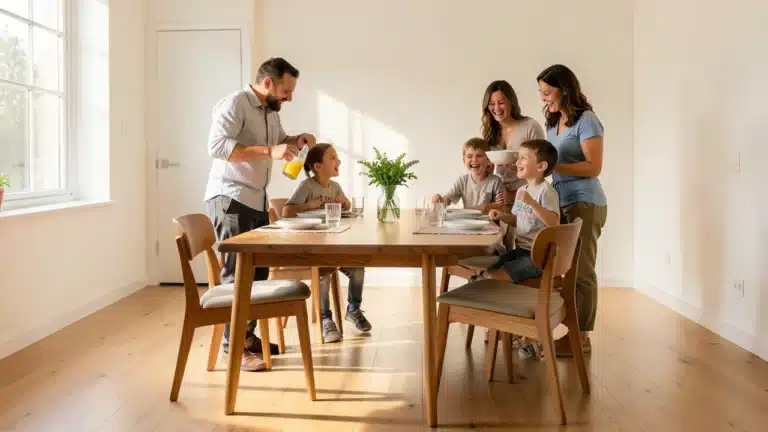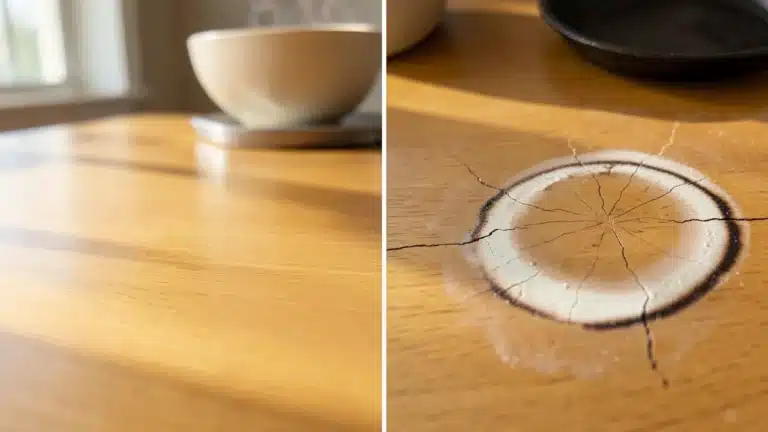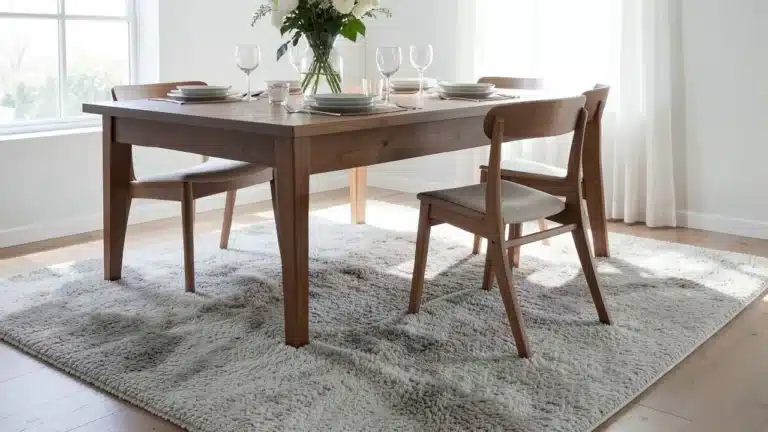
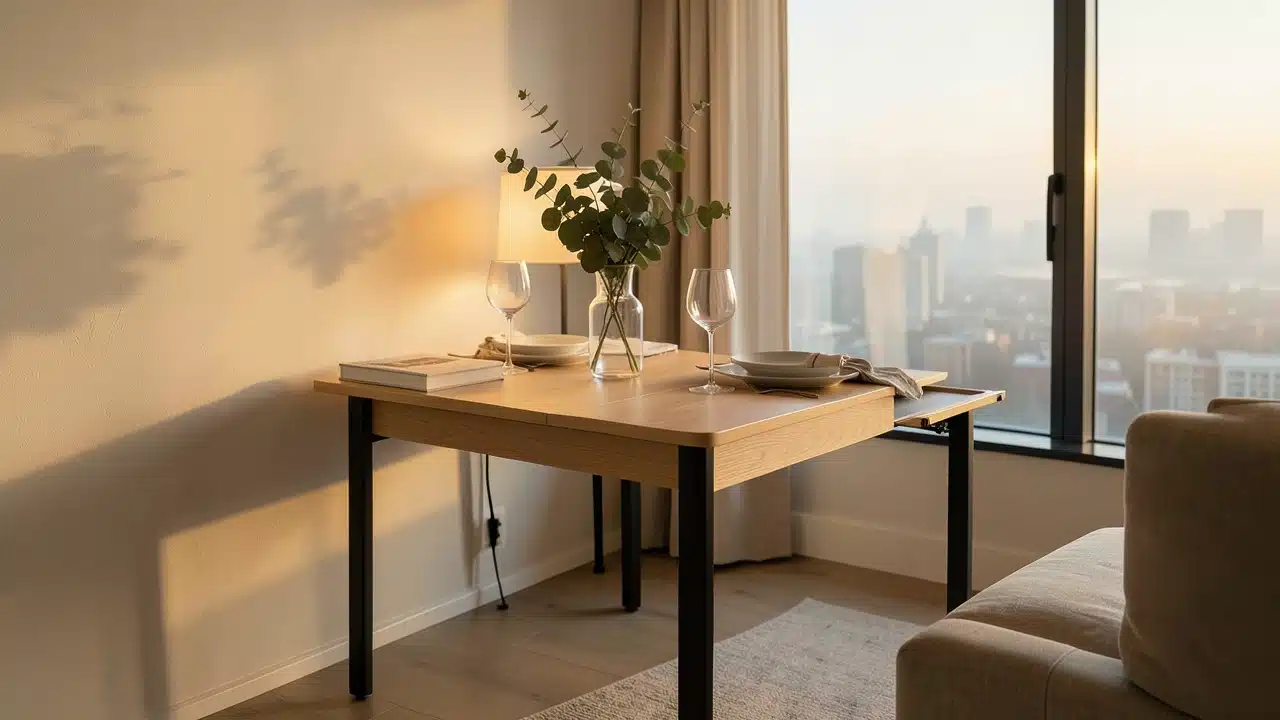
Extendable dining tables in small spaces deliver genuine flexibility only when the room offers sufficient clearance for the expanded top, pulled-out chairs, and daily pass-through traffic. The honest truth is that a table with poor leg placement, a complicated extension mechanism, or no leaf storage can turn a smart space-saver into an everyday obstacle. Choose a slim-leg model with a smooth glide and storable leaves so it functions as a compact daily table and expands seamlessly for occasional guests.
Extendable dining tables in small spaces work only when the room has enough clearance for chairs, walking paths, and the extended top. They are useful for occasional guests, but daily comfort depends on the closed size.
Choose slim legs, easy mechanisms, and storage-friendly leaves so flexibility does not create crowding or awkward movement.
Finding the right dining table for a small home can feel tricky. You want something that works for everyday meals but also fits extra guests when they visit.
This is where extendable dining tables shine, but there’s a lot to consider beyond just the expandable feature.
Understanding The Honest Truth About Extendable Dining Tables in Small Spaces helps you make a smart choice that saves space and fits your lifestyle perfectly. We’ll look at the benefits and the things to watch out for, so you can get a table that truly works for you.
Key Takeaways
- Extendable tables offer flexibility for small dining areas, adapting to different needs.
- Choosing the right size and mechanism is crucial for function and aesthetics in tight spaces.
- Consider the table’s material, style, and how it integrates with your existing decor.
- Proper placement and maintenance ensure your extendable table remains a practical asset.
- The honest truth involves weighing convenience against potential space limitations when fully extended.
Making the Most of Limited Space with Extendable Tables
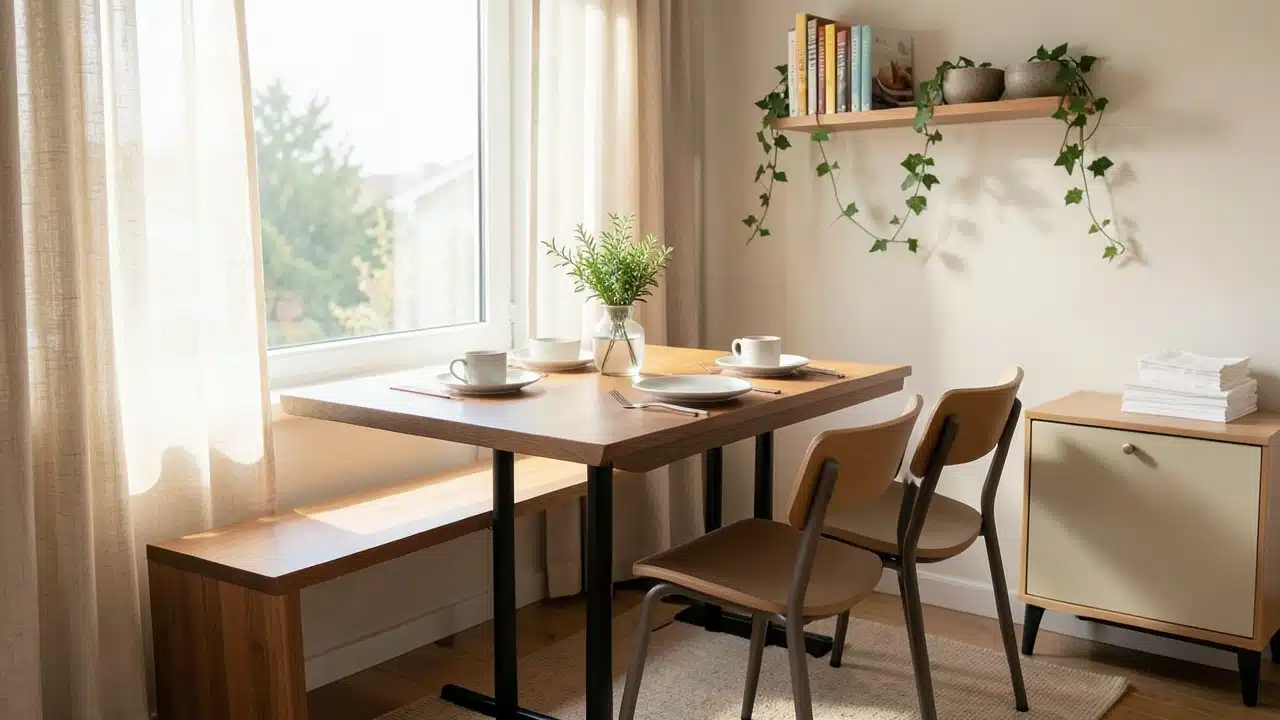
Small homes often mean small dining areas. A regular dining table can take up too much room, making the space feel cramped.
This is why extendable dining tables are such a popular choice for apartment dwellers and those with compact homes. They offer a clever solution, providing a smaller footprint for daily use and the ability to expand when needed.
This versatility means you don't have to sacrifice dining space or hosting opportunities. You get the best of both worlds: a table that fits your everyday life and can grow for special occasions.
The appeal of an extendable table lies in its adaptability. For a small apartment, a table that seats two or four people is often ideal for daily meals.
However, when friends or family come over, that same table can often expand to seat six or even eight. This transformation is key to maximizing the utility of a small dining area.
It means you can enjoy a cozy meal for two without feeling overwhelmed by a large table, and then confidently host a dinner party without feeling like you’re constantly bumping into furniture.
Understanding The Honest Truth About Extendable Dining Tables in Small Spaces means knowing how this flexibility can truly benefit your home.
Choosing the Right Size and Type for Your Small Space
When looking at extendable dining tables for small spaces, size is everything. You need to measure your available area carefully.
Think about the table’s dimensions when it’s in its smallest, everyday setting. Then, measure how much space you’ll need when it’s fully extended.
Don’t forget to account for chairs and the space needed to pull them out and sit comfortably. A table that looks great in the store might be too large or awkward once it’s in your home.
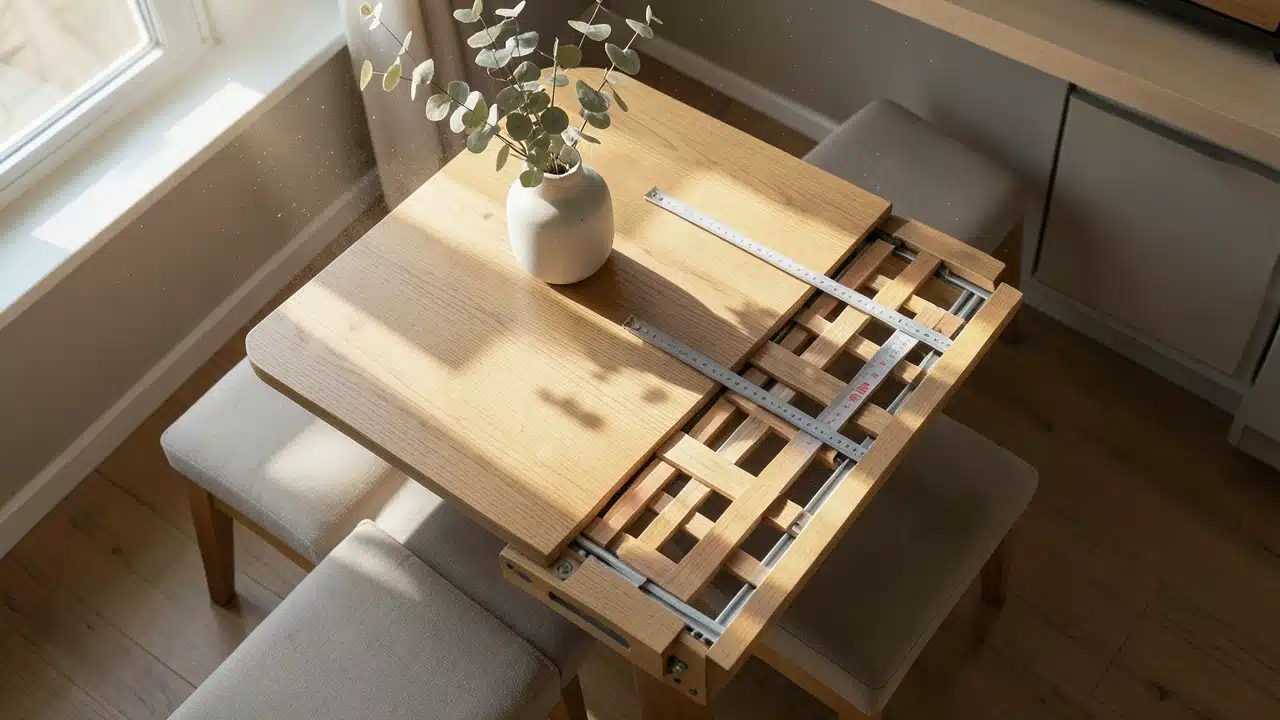
There are several types of extendable mechanisms. Some tables have a leaf that folds out from the center, while others have leaves that slide out from the ends.
Some are self-storing, meaning the leaf tucks away neatly under the tabletop. Others require separate storage. For small spaces, self-storing leaves are often the most convenient.
They eliminate the need to find a place to keep the extra leaf when it’s not in use. This is a key part of The Honest Truth About Extendable Dining Tables in Small Spaces – the practicalities of the extension mechanism matter a lot.
Here’s a quick look at common extension types:
- Butterfly Leaf: The leaf is attached to the table and folds up from the center. It’s easy to use and store.
- Drop Leaf: Sides of the table can be folded down. This is great for very small spaces but offers less extension.
- Extension Leaf: One or more separate leaves that are added to the table. These can be stored separately.
- Table with Pull-Out Leaves: Leaves slide out from under the tabletop. Often self-storing and very convenient.
Material and Style Considerations for Small Dining Areas
The material of your extendable dining table also plays a role in how it feels in a small space. Lighter-colored woods or glass tabletops can make a small area feel more open and airy. Darker, heavier woods might make the space feel smaller.
Consider the durability of the material, too. If you have a busy household, you’ll want something that can withstand daily use.
Style is just as important. A table with clean lines and a simple design will fit better in a small space than something ornate or bulky.
Think about how the table will look with your existing furniture and decor. A table that’s too trendy might look dated quickly. A classic design will stand the test of time and suit your space better.
This is another aspect of The Honest Truth About Extendable Dining Tables in Small Spaces – the visual impact is significant.
Placement and Flow in a Compact Room
Where you place your extendable dining table is critical in a small room. Ideally, you want it in a spot where it doesn’t block pathways.
If your dining area is part of your living room, try to define the dining zone with a rug. This helps create a sense of separation without using walls.
Consider the flow of traffic. Can people walk around the table and chairs easily? When the table is extended, will it still allow for comfortable movement? This is a common challenge with extendable tables in small homes.
You might need to adjust furniture placement in adjacent areas when the table is expanded for entertaining. Planning this out beforehand saves a lot of hassle.
Here are some tips for placement:
- Against a Wall: If space is very tight, consider a table that can be pushed against a wall when not extended.
- In a Corner: A corner placement can sometimes make better use of awkward room shapes.
- Near a Window: Natural light can make a small dining area feel larger and more inviting.
- Define the Space: Use a rug to visually anchor the dining table and chairs.
The Practicalities of Extension Mechanisms
Let’s talk about how these tables actually extend. The mechanism can make a big difference in how easy and practical your table is to use.
Some tables have very smooth, easy-to-operate slides or levers. Others can be a bit stiff or require some effort to extend. If you plan to extend your table frequently, you’ll want a mechanism that is user-friendly.
A common concern with extendable tables is stability. When a table is extended, it has more stress on its structure.
You want to ensure the table remains sturdy and doesn’t wobble, especially when you’re placing dishes or leaning on it. Reading reviews and, if possible, testing the extension mechanism in person can help you avoid disappointment.
This is a vital part of The Honest Truth About Extendable Dining Tables in Small Spaces that many people overlook.
Potential Downsides and How to Mitigate Them
While extendable tables are great, they aren’t perfect for every small space. One potential downside is that when extended, they can still be quite large. If your room is extremely small, even an extended table might feel too big.
You might have to remove other furniture or rearrange things significantly when you want to use the extended portion.
Another point to consider is the visual appearance. Sometimes, the extended portion of the table might not perfectly match the main part in terms of color or finish, especially if the leaves have been stored separately for a long time. Also, the seams where the leaves join can sometimes be noticeable.
To mitigate these issues:
- Measure Twice, Buy Once: Always re-measure your space before buying.
- Consider a Pedestal Base: Tables with a pedestal base often offer more legroom and can be easier to maneuver chairs around.
- Choose Quality: Invest in a well-made table with a reliable extension mechanism.
- Think About Functionality: How often will you really extend it? If it’s rarely, maybe a fixed table is better.
Maintaining Your Extendable Table for Longevity
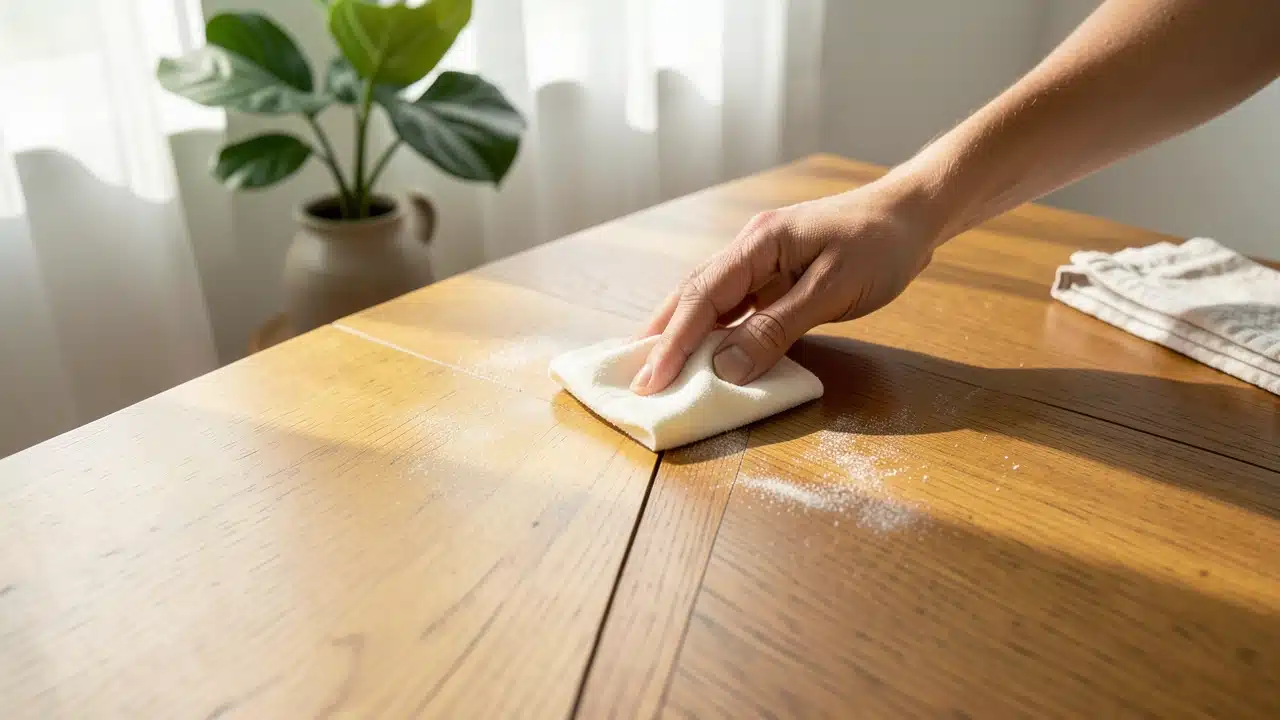
Like any piece of furniture, your extendable dining table needs care to last. Follow the manufacturer’s instructions for cleaning and maintenance.
Most wood tables can be cleaned with a damp cloth and mild soap. Avoid harsh chemicals that can damage the finish.
For tables with extension mechanisms, it’s a good idea to occasionally clean and lubricate the moving parts. This helps ensure they continue to operate smoothly.
Keeping the leaves stored properly, away from extreme temperatures or humidity, can also help maintain their condition and color match.
Proper care is part of The Honest Truth About Extendable Dining Tables in Small Spaces; it ensures your investment remains functional and attractive.
Integrating with Your Existing Decor
When choosing an extendable table for a small space, think about how it fits with your overall home decor. If you have a modern, minimalist style, a sleek, streamlined table would be a good fit. For a more traditional or rustic look, a wooden table with a warm finish might be better.
Consider the chairs too. Do you want chairs that tuck neatly under the table when not in use? Or are you looking for chairs that make a statement? In a small space, it’s often best to choose chairs that are not too bulky. Chairs with open backs or slim profiles can help the dining area feel less crowded.
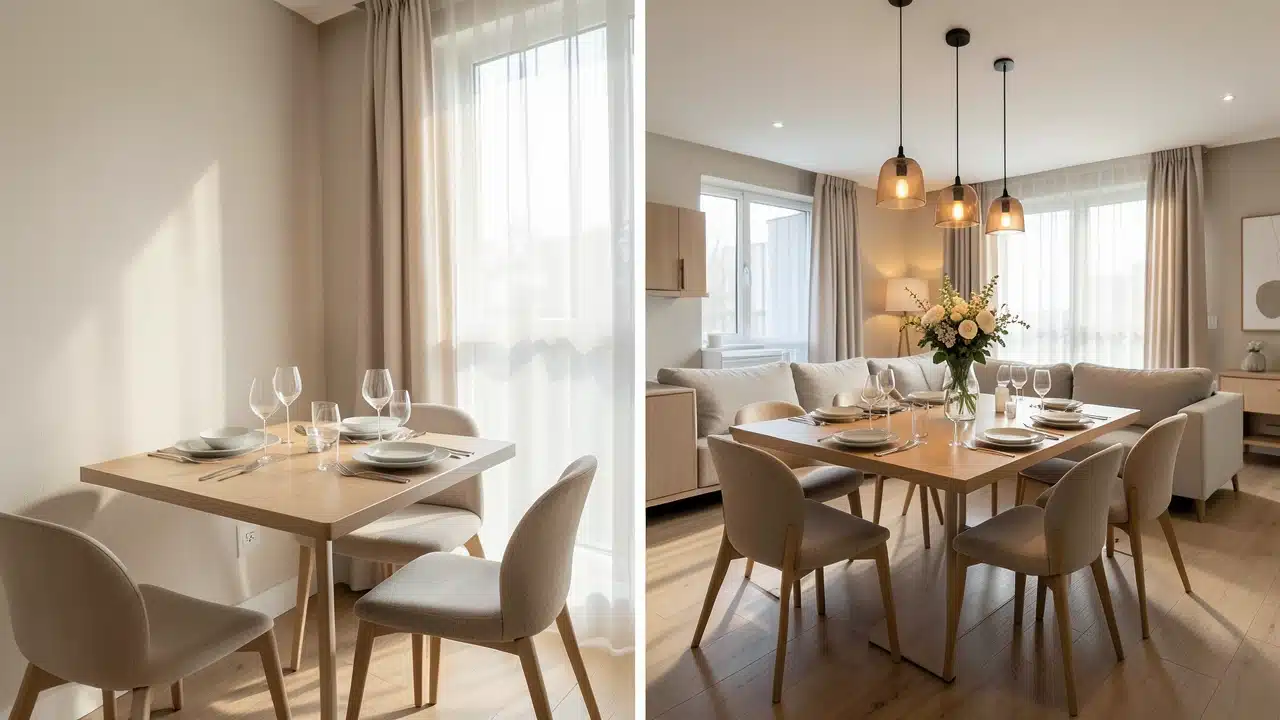
The Honest Truth About Extendable Dining Tables in Small Spaces: A Comparison
To truly understand The Honest Truth About Extendable Dining Tables in Small Spaces, let’s compare them to other options.
| Flexibility | High – adapts to different guest numbers. | Low – fixed size, always takes up the same space. | Moderate – good for small groups, but limited extension. |
| Space Efficiency | Excellent for daily use, expands when needed. | Can be space-saving if small, but not adaptable. | Can be very space-saving, often vertical. |
| Hosting Capacity | Good – can accommodate more guests. | Limited by its fixed size. | Limited, usually for 2-4 people. |
| Mechanism Complexity | Can be simple or complex, requires care. | None – very simple. | None. |
| Visual Impact | Can feel substantial when extended. | Consistent presence. | Can feel less formal, more casual. |
Frequently Asked Questions Of The Honest Truth About Extendable Dining Tables In Small Spaces
Are extendable dining tables worth it for a very small apartment?
Yes, they can be very worth it if you occasionally host guests. They offer flexibility, allowing you to save space daily while still being able to entertain.
What is the best type of extendable dining table for a tiny dining nook?
Look for tables with self-storing leaves or drop-leaf designs. These minimize the need for separate storage and can be easier to manage in tight quarters.
How much extra space do I need for an extendable dining table?
Measure your table’s extended size and add at least 3 feet (about 1 meter) around it for chair clearance and comfortable movement.
Can extendable dining tables look good in a small space?
Absolutely. Choosing a table with a simple design, light color, and slim profile can make it blend seamlessly and even enhance the look of your small dining area.
What are the main challenges of The Honest Truth About Extendable Dining Tables in Small Spaces?
The main challenges involve ensuring enough clearance when extended, managing the extension mechanism, and ensuring the table’s size doesn’t overwhelm the room even when not fully expanded.
Final Thoughts
Extendable dining tables offer a smart way to enjoy dining and hosting in smaller homes. By carefully considering size, mechanism, style, and placement, you can find a table that fits your needs perfectly.
The honest truth is that with the right choice, these tables provide valuable flexibility without sacrificing your precious living space.