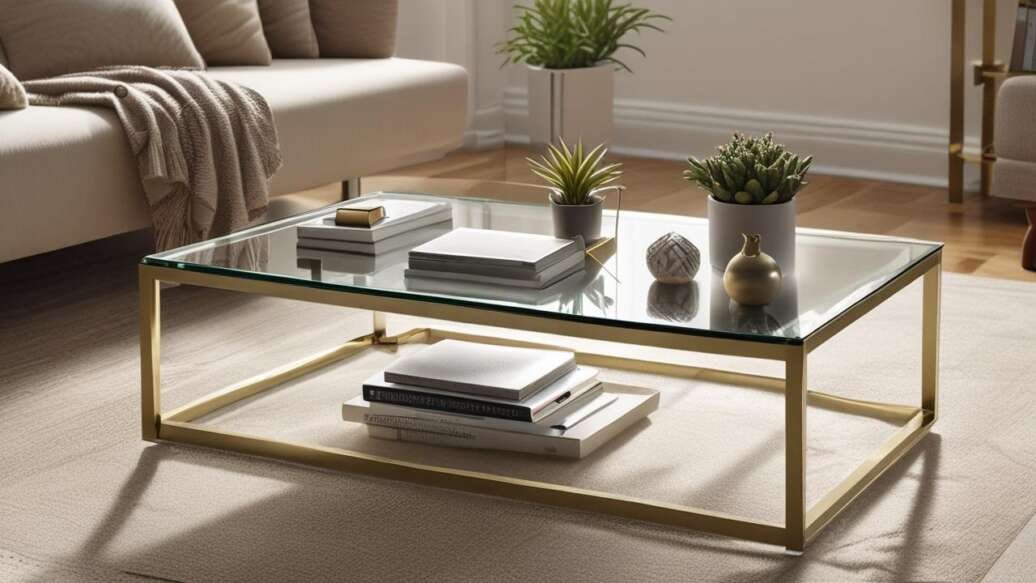
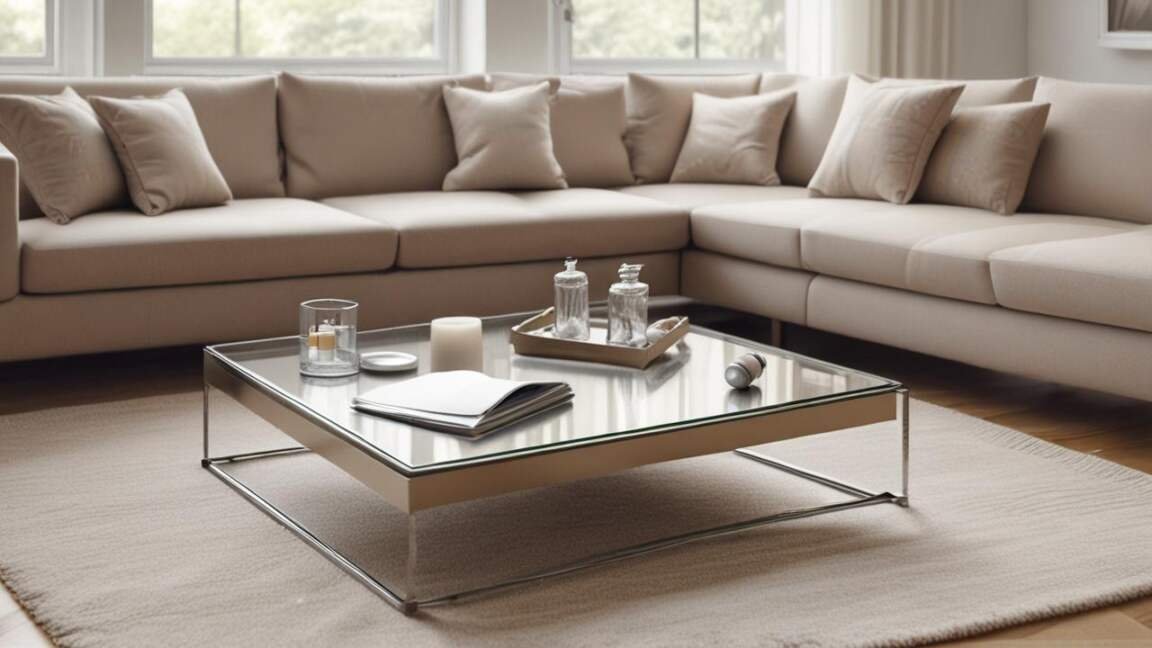
Before buying a glass coffee table, you must verify it uses certified tempered safety glass to prevent dangerous shattering, as non-tempered glass can break into sharp shards. The glass should be 8mm to 12mm thick for durability, and you should also examine the frame material and joinery to ensure the table is stable and not prone to wobbling. Additionally, inspect the edge finishing and glass finish to avoid excessive smudging and to match your maintenance preferences and decor style.
A glass coffee table can open up a living room like no other material. Buying the wrong one leads to endless smudges, dangerous breakage, or a wobbly table you can’t trust.
Quick Verdict: Simply put, the best glass coffee tables combine three features: certified tempered safety glass, a sturdy frame (solid wood or steel), and the right thickness for the table size. An 8mm to 12mm thick glass top ensures durability. Never buy a table without confirming the glass is tempered.
Key Takeaways
- You should only buy a coffee table that uses tempered safety glass to prevent dangerous shattering.
- Glass thickness of 8mm to 12mm is the standard range for durable coffee table tops.
- Edge finishing techniques like polished or beveled edges affect both safety and the look of the table.
- You must check the frame material and joinery to avoid wobbly tables and potential collapses.
- Your choice of glass finish directly impacts how much maintenance and visibility the table requires.
Quick Checklist: What to Verify Before Buying
Use this table as a fast reference when you shop online or in a store. It covers the five most important safety and quality checks.
| Check Point | Why It Matters | What to Look For |
|---|---|---|
| Safety Certification | Prevents dangerous shattering | ANSI Z97.1 or CPSC 16 CFR 1201 mark |
| Glass Thickness | Determines durability and span | 8mm for small, 10-12mm for large tables |
| Edge Finishing | Impacts safety and comfort | Polished or beveled edges only |
| Frame and Joinery | Prevents wobble and collapse | Solid wood or steel, reinforced joints |
| Glass Finish | Affects look and maintenance | Clear, frosted, or tinted options |
1 – Check for Tempered Glass Certification
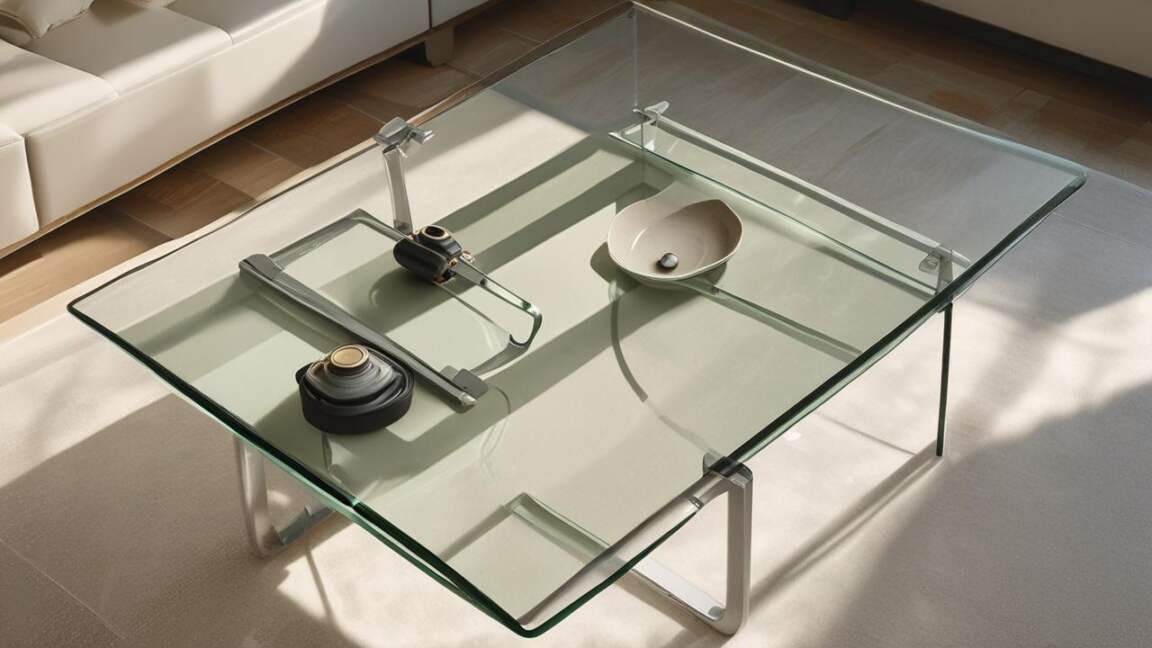
Not all glass is the same. Standard annealed glass breaks into large, sharp shards. Tempered glass shatters into small, blunt pieces. According to, thousands of injuries each year come from glass furniture breakage. Tempered glass reduces this risk drastically.
Warning: Some sellers list “safety glass” without certification. Demand proof. Look for a permanent etched stamp on the glass that reads “Tempered” or “ANSI Z97.1”.
How to check for certification:
- Look for a small mark in the corner of the glass. This is the tempering stamp.
- Check the product specifications online. Search for “ANSI Z97.1” or “CPSC 16 CFR 1201”.
- Ask the retailer directly if the glass meets safety glazing standards.
2 – Verify the Glass Thickness
Glass thickness affects the table’s strength and wobble factor. recommend specific thicknesses based on size. For most coffee tables, the range is 8mm to 12mm. A thinner top on a large frame creates dangerous flex.
Tip: For tables longer than 48 inches, choose 10mm or 12mm thickness. For smaller tables under 36 inches, 8mm is adequate.
Thickness guidelines by table size:
- Small tables (under 36 inches) – 8mm thickness works well.
- Medium tables (36 to 48 inches) – 10mm is the recommended minimum.
- Large tables (over 48 inches) – 12mm is needed to prevent bending.
3 – Inspect the Edge Finishing
The edge of a glass coffee table is a safety hazard if left rough. Raw glass edges can cut skin and chip over time. A quality table has polished, beveled, or flat-ground edges. These finishes remove sharp corners and add visual appeal.
Beveled edges catch light and give a premium look. Polished edges are smooth to the touch. Flat-ground edges are simpler but still safe. Run your hand along the edge before you buy. Any roughness means poor finishing.
4 – Examine the Frame Material and Joinery
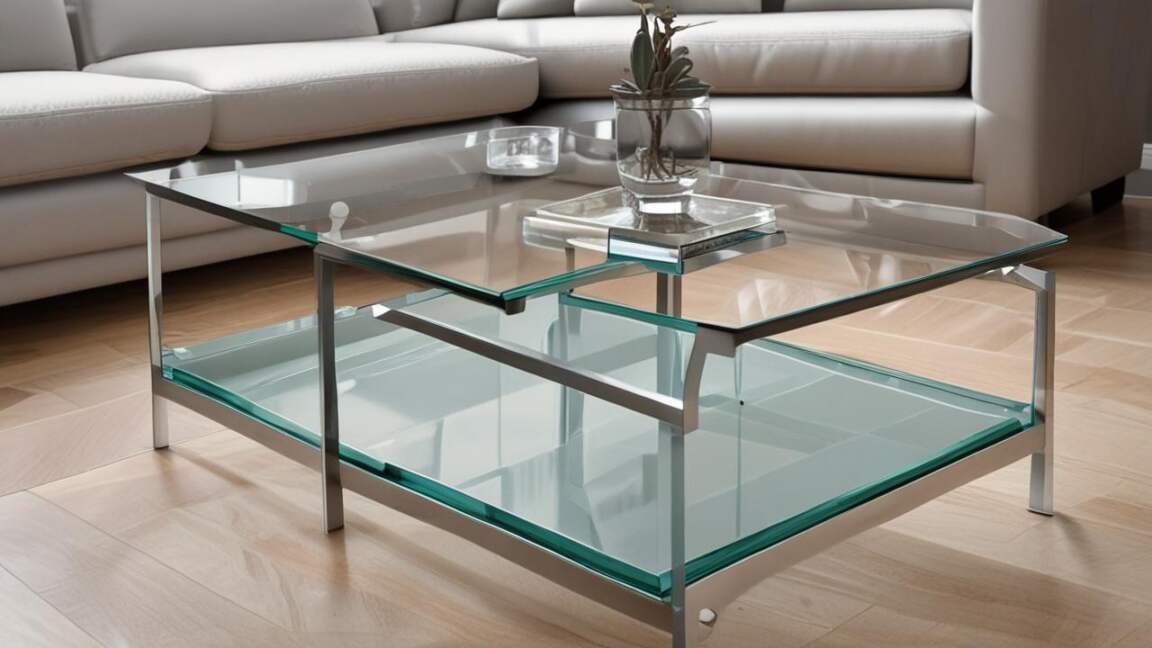
The glass top is only as good as the frame that holds it. notes that a sturdy frame is the backbone of any long-lasting coffee table. Wood, metal, and acrylic are the three main options. Each has different strengths.
- Solid wood frames offer durability and a warm look. Check for dovetail joints or metal brackets, not just glue.
- Steel or aluminum frames feel modern and stable. Look for welded joints instead of screws.
- Acrylic or lucite frames look invisible but scratch easily and can become brittle over time.
Important: Gently rock the table in the store. If the frame wobbles, the joinery is weak. Reject that piece.
5 – Measure the Shape and Size
Size mistakes are the most common reason for returns. Your coffee table should be about half to two-thirds the length of your sofa. For shape, consider your room layout and household needs.
- Rectangular tables fit standard sofas and offer maximum surface area.
- Round or oval tables are safer for families with kids. They have no sharp corners.
- Square tables work best for sectional sofas.
Leave at least 18 inches between the table and the sofa. This allows walkway space and comfortable reach. A table that is too high or too low feels awkward. Standard coffee table height is 16 to 18 inches.
6 – Pick the Right Glass Finish
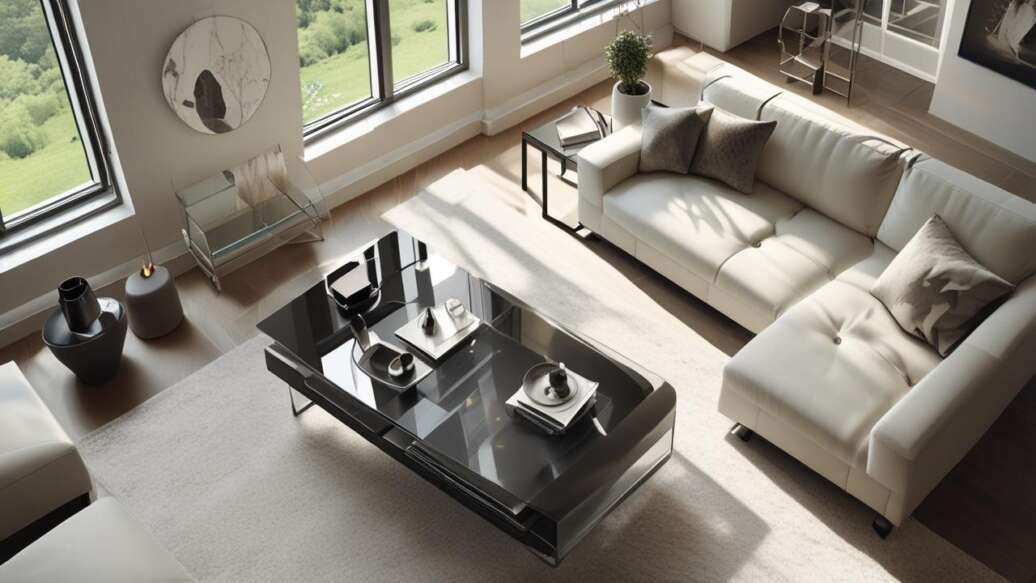
The finish of the glass changes both the look and the cleaning routine. Clear glass is classic but shows every fingerprint and dust speck. Frosted glass hides smudges well and diffuses light. Tinted glass (smoked or bronze) adds a warm tone and hides scratches.
How to choose the best finish for your lifestyle:
- Choose clear glass if you love a minimal, clean look and don’t mind weekly cleaning.
- Choose frosted glass if you have pets or kids who leave fingerprints.
- Choose tinted glass if you want a warmer, more intimate living room feel.
7 – Look at the Base Design and Clearance
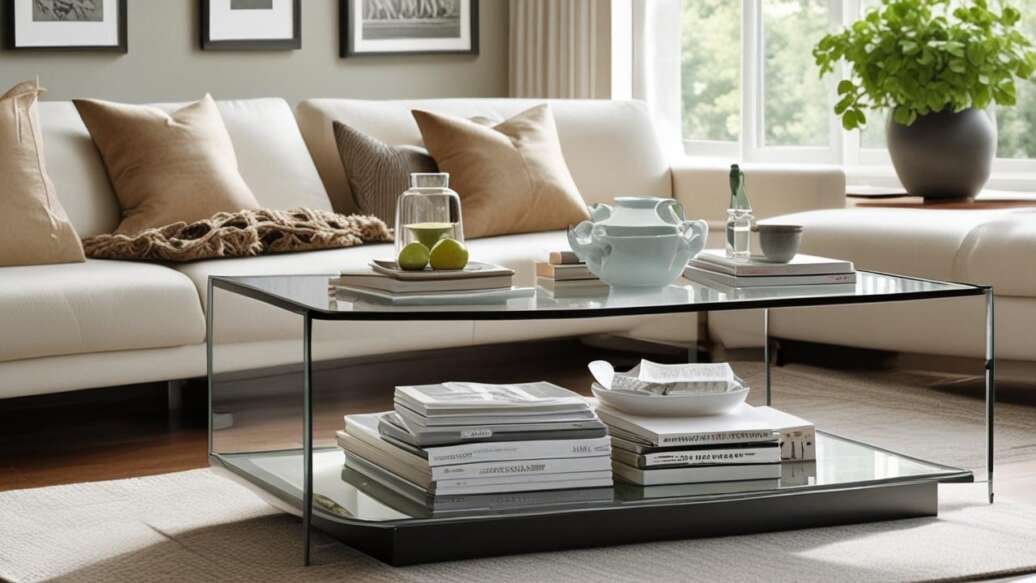
A glass coffee table should not just look good. It should also be comfortable to use. Check the base design. Some tables have low shelves or crossbars that restrict leg room. You want to sit on the couch and stretch your legs under the table without hitting anything.
- Open bases (two separate ends or a single pedestal) give maximum leg room.
- Closed bases (full lower shelf) offer storage but reduce comfort.
- Clearance height should be at least 6 inches from the floor to any lower shelf.
Measure the space under the table. Your family and guests will appreciate the extra room.
8 – Assess the Weight Capacity
Glass is strong, but it is not indestructible. The frame determines the weight capacity more than the glass itself. A standard glass coffee table supports around 50 to 100 pounds if the frame is metal or solid wood. Lightweight frames buckle under heavy items.
Factors that affect weight capacity:
- Frame strength: Steel and solid wood hold more weight than hollow metal or plastic.
- Glass thickness: Thicker glass distributes weight better and resists cracking.
- Contact points: More support points under the glass reduce stress on any single area.
Do not place heavy objects like large aquariums or heavy sculptures on a glass table without checking the manufacturer’s weight limit.
9 – Review the Maintenance Requirements
Glass tables require specific care. The wrong cleaning products damage the surface. Ammonia-based cleaners can dull the finish over time. Abrasive sponges leave tiny scratches that collect dust.
Tip: Use a microfiber cloth with a mix of white vinegar and water. Apply the spray to the cloth, not the glass. This prevents drips on the frame.
Maintenance quick guide:
- Daily: Wipe with a dry microfiber cloth to remove dust.
- Weekly: Clean with vinegar solution for a streak-free shine.
- As needed: Use isopropyl alcohol for sticky residue.
- Never use: Paper towels, bleach-based sprays, or scouring pads.
How to Choose Between Frame Materials
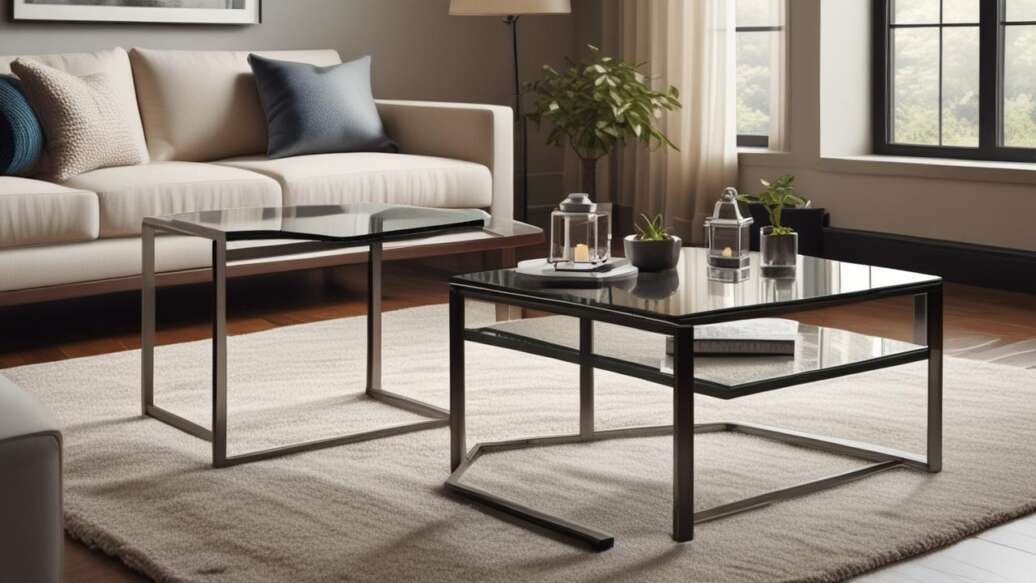
The frame material sets the tone for your whole living room. Each material has trade-offs in cost, durability, and style. Focus your purchase on safety certifications and frame stability to ensure a durable product.
| Material | Durability | Style | Best For |
|---|---|---|---|
| Solid Wood | High | Classic, Warm, Rustic | Traditional and farmhouse homes |
| Steel / Metal | Very High | Modern, Industrial, Sleek | Lofts and contemporary spaces |
| Acrylic / Lucite | Medium | Invisible, Minimal, Chic | Small rooms needing visual space |
What Glass Coffee Tables Are Not
Many people avoid glass tables based on common myths. Here are the facts that will help you decide. A glass coffee table remains a practical and stylish choice for many homes.
- Myth: They break easily. Fact: Tempered glass is 4 to 5 times stronger than standard annealed glass. It can handle daily use, spills, and light impacts well.
- Myth: They show every fingerprint. Fact: Clear glass shows smudges, but frosted and tinted glass finishes hide them completely. You can choose the finish to match your tolerance for cleaning.
- Myth: They are hard to maintain. Fact: Glass is non-porous and resists stains. A quick spray and wipe remove dust and spills in seconds. Wood and fabric tables require more care.
Frequently Asked Questions
Is tempered glass required for coffee tables?
Yes, in most cases. Safety standards like ANSI Z97.1 recommend tempered glass for furniture. Tempered glass shatters into small, blunt pieces instead of sharp shards, which prevents serious injury.
What thickness of glass is best for a coffee table?
For tables under 48 inches, 8mm glass works well. For larger tables, choose 10mm or 12mm glass for better support and less wobble. Always check the manufacturer’s specification for weight limits.
How do I clean a glass coffee table without streaks?
Use a microfiber cloth with a mixture of vinegar and water. Spray the cloth, not the glass, to avoid excess liquid dripping onto the frame. Buff the surface in circular motions until dry.
Can you put hot drinks on a glass coffee table?
Yes, tempered glass can handle moderate heat. Use coasters for very hot items to protect the glass and any surface coating. Sudden extreme temperature changes can still cause stress cracks.
What is the best shape for a glass coffee table?
Rectangular tables fit most living rooms and offer the most surface area. Round or oval tables are safer for families with children and work well in smaller, tighter spaces.
Final Thoughts
A glass coffee table is a practical and stylish choice for many homes. Focus your purchase on safety certifications, frame stability, and the right glass finish for your lifestyle. Check these nine factors, and you will find a table that looks good and lasts for years. When selecting a glass coffee table, remember that tempered glass is 4 to 5 times stronger than standard annealed glass.