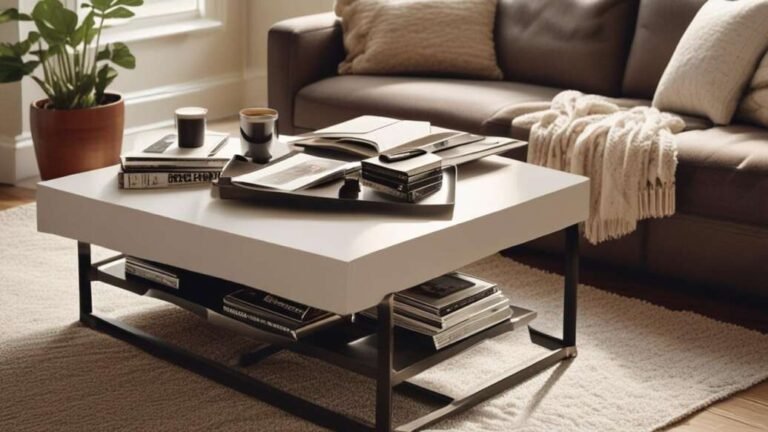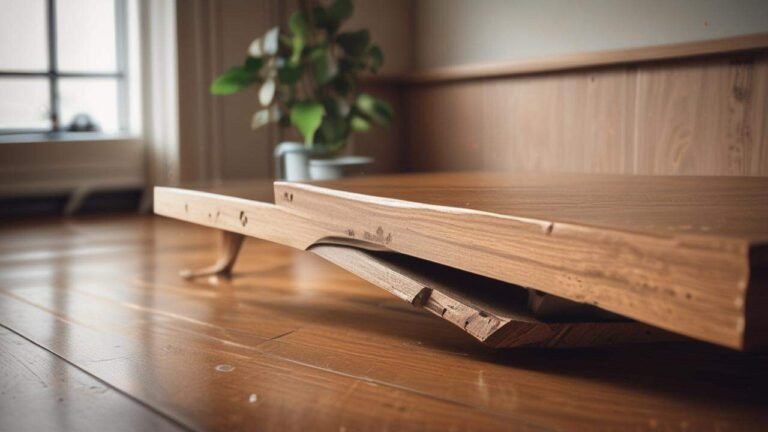
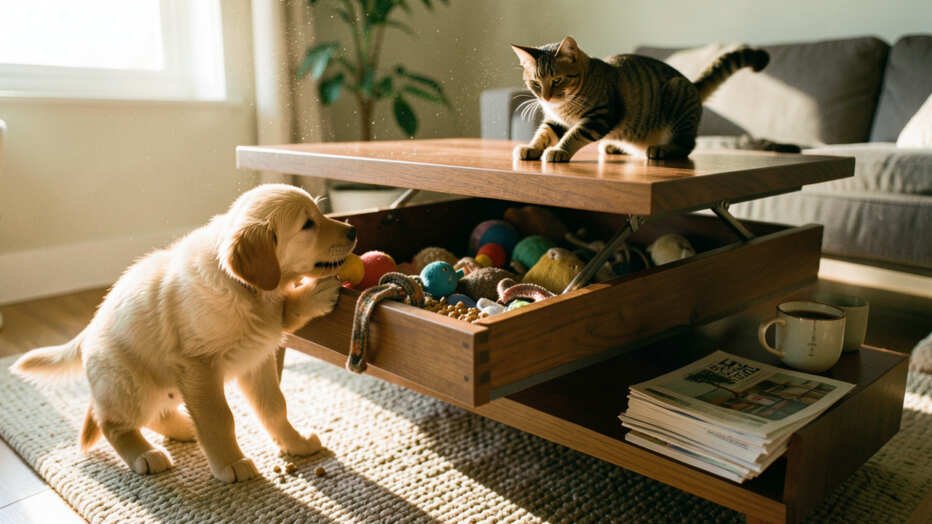
Lift-top coffee tables pose hidden risks for pet owners that include paw and tail entrapment, trapped pets under the table, sudden collapse under a jumping pet's weight, and mechanism damage from scratches and fur. These dangers arise from the lifting mechanism's pinch points, gas spring failures, and soft-close system vulnerabilities that manufacturers rarely disclose. Pet owners should prioritize tables with locking latches, slow-close hydraulics, and rounded edges to prevent costly vet visits and ensure safe coexistence.
A lift-top coffee table seems like the perfect solution for small spaces. You get a coffee table and a work desk in one piece of furniture. But if you share your home with a cat or dog, this trendy table can create real problems.
Quick Verdict: Lift-top coffee tables pose hidden risks for pet owners – from pinched paws and trapped tails to collapsed mechanisms under jumping dogs. Most buyers discover these dangers only after an injury happens. This guide reveals what nobody tells you so you can choose a pet-safe table or avoid a costly vet visit.
Key Takeaways
- A lift-top coffee table can trap your pet’s paws, tail, or legs in the gap between the lifting top and the base, leading to serious injuries.
- Cats and small dogs often hide under the table and can be crushed when the top lowers without warning.
- Gas spring mechanisms can fail under the weight of a large dog jumping onto the table, causing the top to slam down.
- Pet scratches and fur stick to soft-close mechanisms, reducing their lifespan and creating operational issues over time.
- Choosing a lift-top table with locking latches, slow-close hydraulics, and rounded edges reduces the risk for pets significantly.
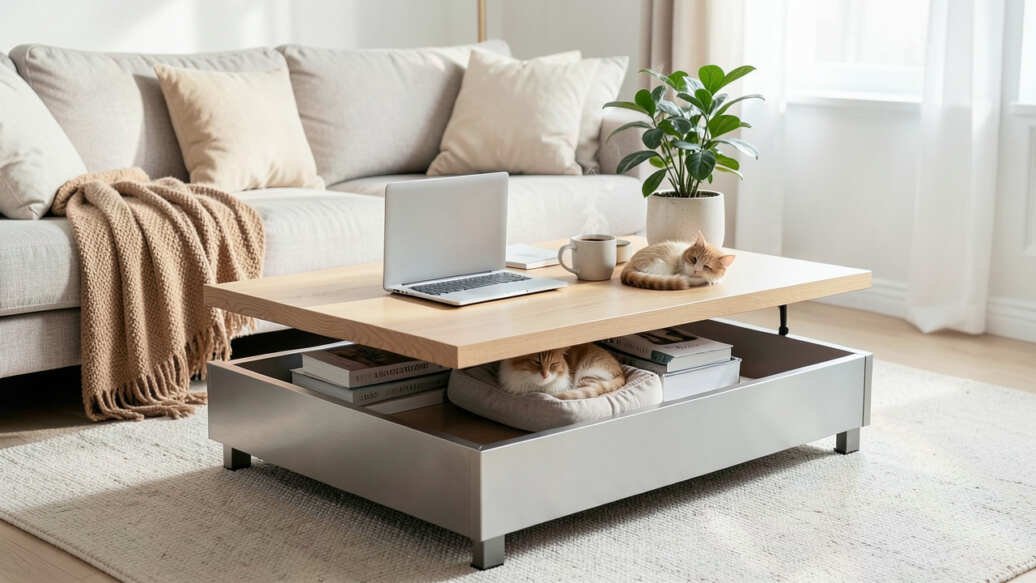
What Is a Lift-Top Coffee Table?
A lift-top coffee table has a tabletop that raises up and toward you on a hinged mechanism. This creates a slanted work surface for eating, using a laptop, or drawing. The mechanism sits inside a hollow base.
Most tables use one of three lifting systems: gas springs, metal scissor hinges, or spring-loaded arms. Gas springs are the most common in mid-range to high-end tables. They use compressed nitrogen to push the top up. You lower the top by pressing it down against the gas pressure.
Scissor hinges use interlocking metal bars that fold flat. Spring-loaded arms use coiled springs to assist the lift. All three types have pinch points that can harm pets.
Warning: The gap between the lifting top and the base is the most dangerous zone for pets. This gap changes size as the top moves, creating a trap that can close on a paw or tail with surprising force.
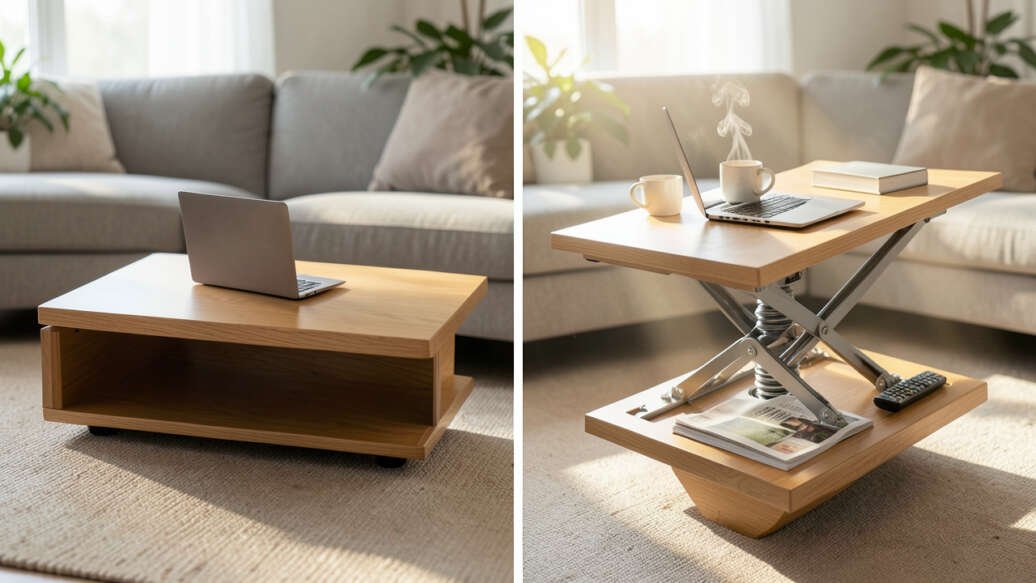
How Does a Lift-Top Mechanism Work?
The mechanism consists of two main parts: the frame that attaches to the tabletop, and the base that sits on the floor. When you lift the top, the mechanism pivots forward. The top moves both upward and toward you.
Most tables have a locking position at full height. Some also lock at intermediate heights. To lower the table, you release the lock and push down. The gas spring or spring system controls the speed of descent.
Soft-close mechanisms use hydraulic dampers to prevent the top from slamming down. These dampers add safety for both people and pets. But they cost more and can wear out faster if fur and dust get inside.
According to the, tip-over and entrapment incidents involving furniture send an estimated 25,000 people to US emergency rooms each year. Pet injuries are not tracked separately, but veterinary reports show similar patterns.
What Nobody Tells You About Pets and Lift-Top Tables
Pet owners focus on style, storage, and price. They rarely think about how their cat or dog will interact with a moving piece of furniture. Here are the hidden dangers you need to know.
Paw and Tail Entrapment
The gap between the lifting top and the base can change from zero to several inches during operation. A cat paw exploring this gap can get trapped when the top moves. The same happens when a dog’s tail hangs over the edge and the top rises or lowers.
Veterinary practices see these injuries regularly. According to the, crush injuries from moving furniture parts are one of the top five household accident types seen in small animal clinics.
Trapped Pets Under the Table
Cats love to hide in enclosed spaces. The hollow base of a lift-top table looks like a perfect den. If you lower the top without checking underneath, you can trap or crush your pet. Dogs also curl up under coffee tables for comfort.
Small breeds such as Chihuahuas, Yorkies, and Shih Tzus are at highest risk. They can fit entirely inside the base cavity. A lowering tabletop can press them against the floor or into the mechanism frame.
Sudden Collapse Under Weight
Dogs jump. A 60-pound Labrador retriever jumping onto a lift-top table can exceed the weight capacity of the gas springs. This can cause the top to slam down suddenly. The impact can injure the dog and damage the table.
Most tables have a weight rating of 30 to 50 pounds on the lifted top. A jumping dog generates two to three times its body weight in force. That is more than the mechanism can handle.
Mechanism Damage From Scratches and Fur
Pet claws scratch the surface of the lifting mechanism. Scratches on gas spring pistons can cause gas leaks. Once the gas leaks out, the mechanism stops working. The top will not stay up or will drop suddenly.
Cat fur and dog hair get into the hinge joints and hydraulic dampers. This increases friction and wear. According to, furniture with moving parts that is exposed to pet fur can fail up to 40% faster than similar pieces in pet-free homes.
Pinch Points on Scissor Hinges
Scissor-type lifting mechanisms have multiple crossing metal bars. These bars create pinch points that open and close as the table moves. A pet nose or ear that gets between these bars can be pinched hard.
Puppies and kittens are most curious at age 3 to 8 months. This is when they explore everything with their mouths. A scissor hinge can trap a tongue or lip, causing panic and injury.
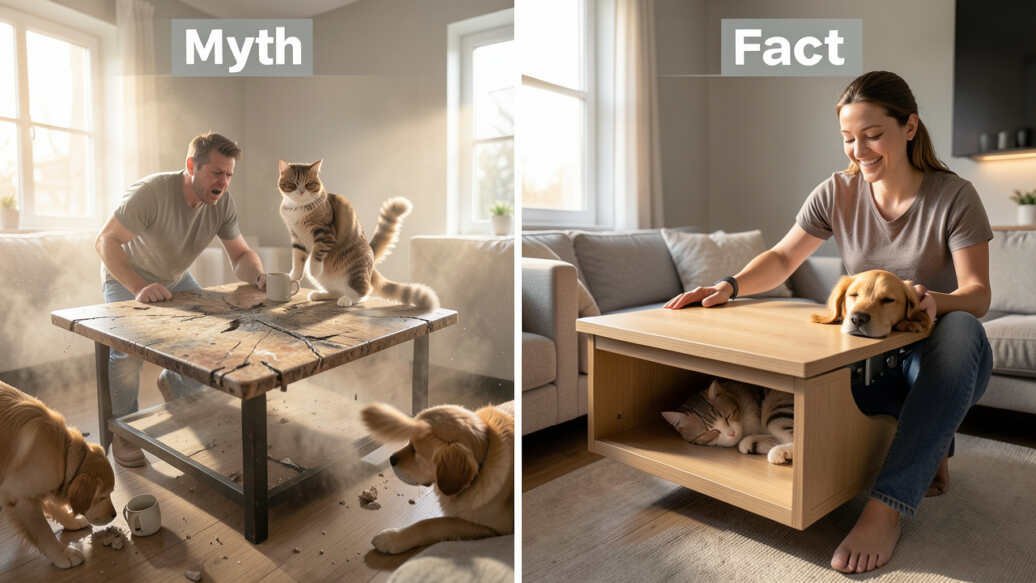
Common Myths vs Facts
Many pet owners believe these tables are safe because they look solid. Here are the most common myths and the truth behind them.
Myth 1: The mechanism is sealed and pets cannot reach it
Most lift-top tables have visible gaps around the hinges and pistons. Pets can stick their paws inside these gaps. Even a gap of one centimeter is enough for a cat’s claw or a small dog’s toe to get caught. Lift-top coffee table manufacturers rarely design for pet safety.
Myth 2: A heavy tabletop will not crush a small pet
A typical tabletop weighs 15 to 30 pounds. That weight concentrated on a small area can cause serious injury. A cat’s spine or a Chihuahua’s skull cannot withstand that much pressure. Veterinary surgery to repair crush injuries can cost between $1,500 and $5,000.
Myth 3: Soft-close mechanisms are pet-proof
Soft-close only controls the speed of descent. It does not prevent the top from closing on something in the gap. Pet fur and dust can clog soft-close dampers, causing them to fail. You still need to check under the table before lowering it.
Step-by-Step Guide to Choosing a Pet-Safe Lift-Top Coffee Table
If you already own a pet or plan to get one, follow these steps when shopping for a lift-top table.
- Measure the gap size. Look for tables with a gap of less than 1 cm between the top and base at all positions. Avoid tables with large expanding gaps.
- Check for locking latches. Choose a table with a manual lock that holds the top at full height. This prevents accidental drops even if the mechanism fails.
- Inspect the underside. Look for exposed springs, hinges, or moving parts. If you can see them, your pet can reach them. Choose models with full underside covers.
- Test the lowering resistance. The table should require firm, intentional pressure to lower. A table that drops too easily is dangerous for pets and children.
- Choose rounded edges. Sharp corners on the tabletop or base can injure pets that bump into them. Round corners are safer for both pets and people.
- Select a solid top surface. Glass or mirrored tops crack under pet weight. Solid wood or engineered wood is safer and hides scratches better.
Tip: Test any table at the store by placing your hand flat on the lifting surface and lowering it. If it pinches your fingers, it will trap a paw. Reject any table that does not lower smoothly and slowly.
Quick Comparison: Lift-Top Table Types by Pet Safety
| Feature | Gas Spring | Scissor Hinge | Spring Arm |
|---|---|---|---|
| Pinch points exposed | Low on sides | High – many bars | Medium – coiled area |
| Pet injury risk | Moderate | High | Moderate |
| Fur buildup effect | Can cause gas leaks | Joints get stiff | Springs can jam |
| Weight capacity | 30-50 lbs | 40-60 lbs | 35-55 lbs |
| Pet-safe locking | Available on premium | Rare | Uncommon |
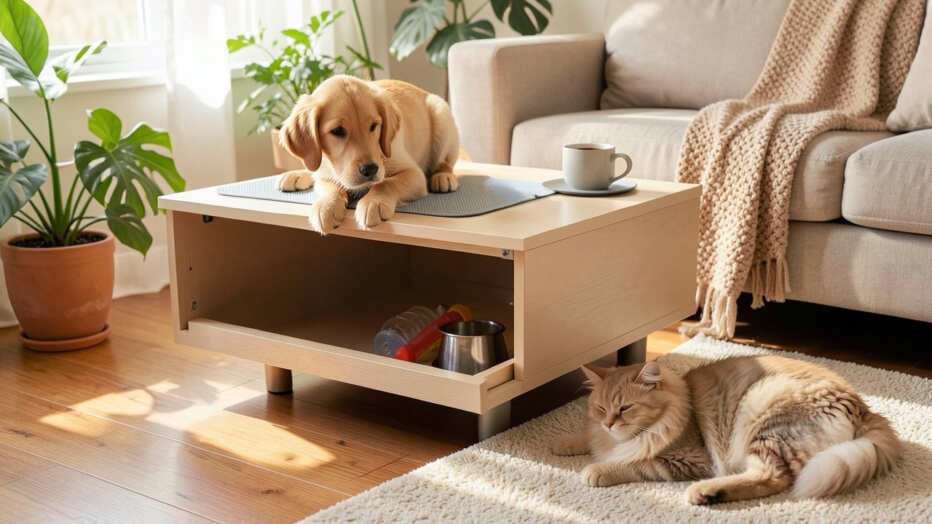
Pro Tips for Pet Owners With a Lift-Top Coffee Table
- Check under the table every time before you lower it. Make it a habit. Look under the base and around the edges before touching the top.
- Apply a protective cover over the mechanism. Use cable management boxes or custom fabric covers to block pets from accessing hinges and pistons.
- Train your pet to stay off the table. Use positive reinforcement to teach your cat or dog that the tabletop is off-limits. A pet that never jumps on the table cannot trigger a collapse.
- Vacuum the mechanism area weekly. Remove dog fur, cat hair, and dust from the hinges and pistons. This extends the life of the soft-close dampers and gas springs.
- Install a door lock for the storage compartment. Many lift-top tables have a lower storage area. Pets can crawl inside and get trapped. A childproof lock prevents access.
- Choose a table with a manual release handle. If your pet does get trapped, a manual release lets you raise the top instantly. Keep the release accessible at all times.
What to Do If Your Pet Gets Trapped or Injured
Lift-top coffee table accidents can happen in seconds. Stay calm and follow these steps.
- Raise the top immediately. Use the manual release or lift the top with steady force. Do not yank hard or you may hurt your pet more.
- Check for visible injuries. Look for cuts, swelling, or limping. Check the trapped limb for bruising or loss of movement.
- Apply a cold compress. If there is swelling, wrap ice in a cloth and hold it on the area for 10 minutes. Do not put ice directly on the skin.
- Call your veterinarian. Describe the accident and ask if you need to come in. Some internal injuries are not visible externally.
- Document the incident. Take photos of the table mechanism and the injury. This helps your vet and may matter if you file a furniture warranty claim.
Urgent: If your pet stops breathing, is unconscious, or has a visible bone fracture, go to the nearest emergency veterinary hospital. Do not try to remove your pet from the table mechanism yourself if it requires disassembly. Get professional help immediately.
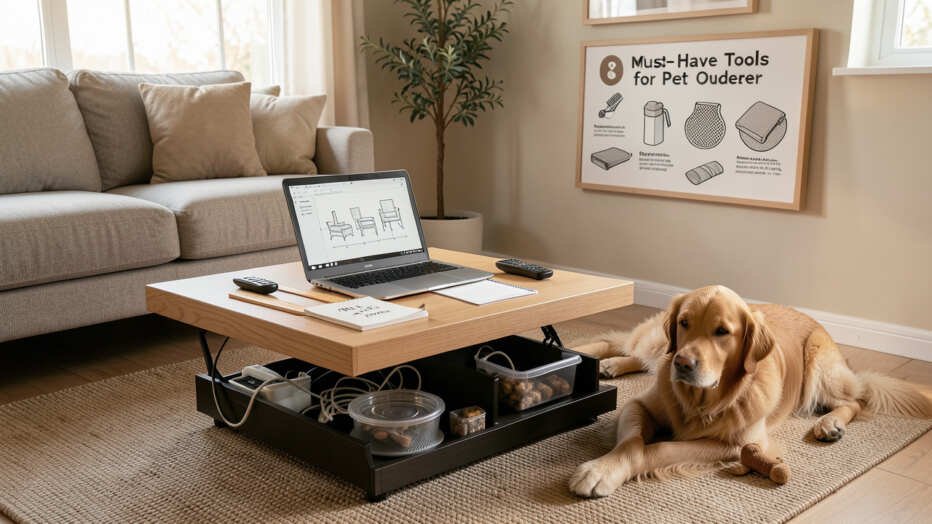
Resources and Tools
American Veterinary Medical Association (AVMA) – Find pet safety guidelines and emergency care tips.
Consumer Product Safety Commission (CPSC) – Report furniture-related injuries and check recall lists.
Pet Poison Helpline – Call if your pet ingests debris from a broken mechanism.
Furniture Safety Kit from SafeStart – Childproof locks and cable covers to pet-proof your lift-top table.
Frequently Asked Questions
Can a lift-top coffee table trap a cat inside?
Yes. Cats often crawl into the hollow base of a lift-top table. If you lower the top without checking, you can trap the cat inside. Some tables also have a lower storage compartment that locks, creating an enclosed space.
Are lift-top coffee tables safe for dogs that jump on furniture?
Not typically. A jumping dog can exceed the weight limit of the lifting mechanism, causing the top to collapse. Dogs should be trained to stay off lift-top tables entirely. Choose a table with a high weight capacity and locking latch if you have a jumper.
How do I pet-proof a lift-top coffee table I already own?
You can add fabric covers over the mechanism, install childproof locks on the base, and put a baby gate around the table area when not in use. Check under the table before every use. Train your pet to avoid the table with positive reinforcement.
What type of lift-top mechanism is safest for homes with pets?
Gas spring mechanisms with soft-close dampers and manual locking latches are the safest choice. They have fewer exposed pinch points than scissor hinges. Premium models from brands like offer locking features that prevent accidental drops.
How much does it cost to repair a pet-damaged lift-top mechanism?
Replacement gas springs cost between $20 and $60. Scissor hinge repair runs $50 to $150. Full mechanism replacement can cost $100 to $300 plus labor. Some damage may require replacing the entire table if the frame is bent.
Final Thoughts
A lift-top coffee table can work in a home with pets, but only if you choose wisely and take precautions. Focus on tables with locking latches, slow-close hydraulics, and covered mechanisms. Train your pets and check the table before every use. With the right preparation, you can enjoy the space-saving benefits without putting your furry friends at risk.