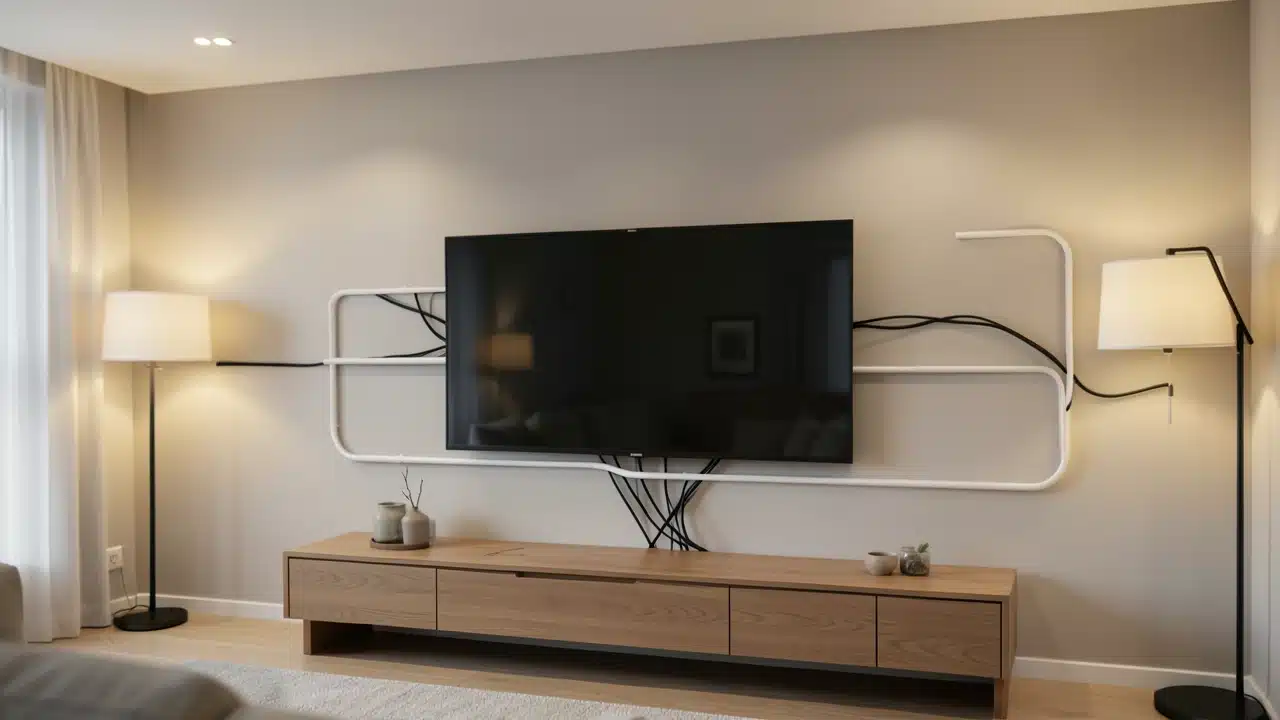
The five practical ways to hide cables behind a TV unit are using cable management sleeves, clips and ties, a cable management box or cover, wall-mounted TV concealment, and furniture with built-in cable management. These methods group wires together, reduce visual clutter, and keep the setup safer for pets and children. Routing cables along furniture edges and leaving sufficient slack ensures easier cleaning and simpler access for future device changes.
Practical ways to hide cables behind your TV unit include using cable clips, cord covers, Velcro ties, cable sleeves, and a rear cable management box.
These keep wires grouped, reduce visual clutter, and make cleaning easier. For a neater setup, route cables along furniture edges and leave enough slack for safe movement and future device changes.
Tangled wires can make any entertainment setup look messy. It’s frustrating when you’ve got a great TV and sound system, but a bird’s nest of cables is ruining the view. Getting your cables out of sight makes your living space look cleaner and more put-together.
Plus, it can be safer, especially if you have pets or little ones. You’ll feel so much more relaxed and enjoy your entertainment more when everything looks neat.
We’ll show you 5 Practical Ways To Hide Cables Behind Your TV Unit so you can finally get that clean look you want.
Key Takeaways
- You’ll learn simple methods to make your TV cables disappear.
- Discover ways to organize and secure loose wires.
- Find out how to create a professional-looking setup without spending a lot.
- Understand how hiding cables improves safety and aesthetics.
- Get ideas for using common household items or affordable accessories.
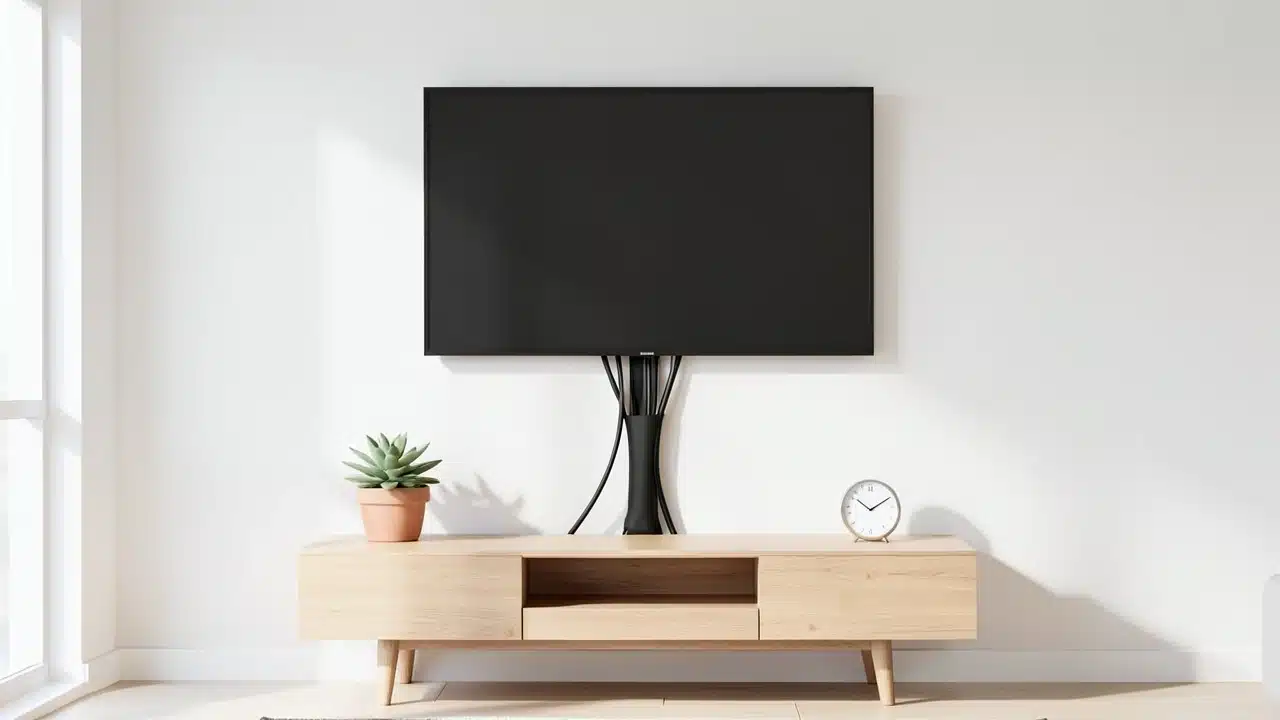
Create a Clean Look with Cable Management Sleeves
One of the easiest ways to deal with messy cables is to group them together. Cable management sleeves are like long tubes that hold all your wires. You can find them in different sizes and materials, like fabric or plastic.
This makes a big difference in how tidy things look.
Using a cable sleeve is super simple. First, gather all the cables that go from your TV to your devices, like your game console, soundbar, or streaming box. Then, gently push them all into the sleeve.
Zip it up or close it with the Velcro. Now, instead of a bunch of separate cords, you have just one neat bundle.
This method is great for making a big impact with little effort. It hides the visual clutter and prevents cables from tangling. You can often buy these sleeves in colors that match your furniture or walls, making them blend in even better.
It’s one of the most effective 5 Practical Ways To Hide Cables Behind Your TV Unit for a smooth appearance.
Choosing the Right Cable Sleeve
When picking a cable sleeve, think about how many cables you need to hide. If you have a lot of devices, you’ll need a wider sleeve. Fabric sleeves are flexible and quiet if they rub against anything.
Plastic sleeves are often more rigid and can provide better protection.
Consider the length you need too. Most sleeves come in long rolls that you can cut to size. This way, you only use what you need.
This simple solution is a big step towards achieving a clean look.
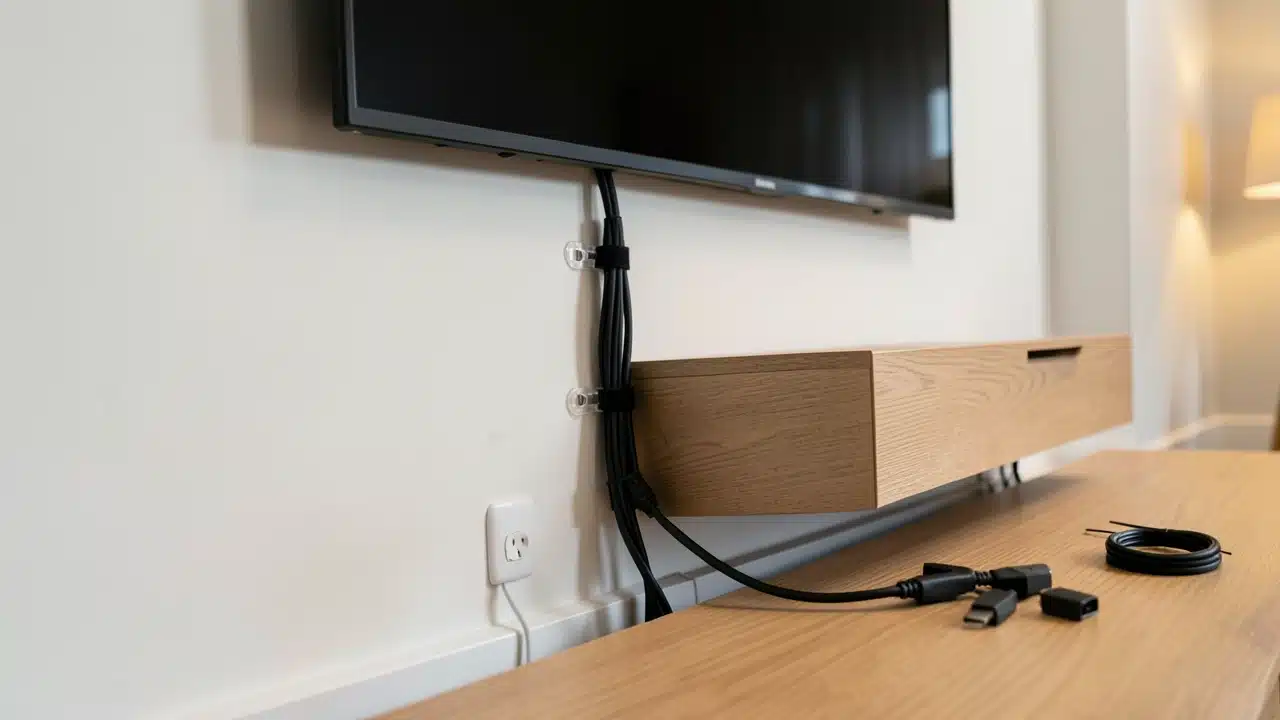
Utilize Cable Clips and Ties for Organization
Cable clips and ties are small but mighty tools for keeping wires in order. They are perfect for securing cables to walls, furniture, or the back of your TV stand. This stops them from dangling down and looking messy.
Second, use adhesive cable clips. These stick to surfaces and have slots where you can thread your cables. You can place them strategically behind your TV unit to guide the wires neatly down to your devices or power strip.
This keeps them from falling and creating a tangled mess.
Cable ties, also known as zip ties or Velcro straps, are another great option. You can bundle several cables together with a tie. This is especially helpful for managing the power cords from your TV and other electronics.
It makes the whole bundle look much tidier.
These small items are essential for any of the 5 Practical Ways To Hide Cables Behind Your TV Unit. They prevent cables from becoming a tangled mess and keep them out of sight. You can buy packs of these very cheaply, and they can make a huge difference in the tidiness of your setup.
Where to Place Clips and Ties
Think about the path your cables need to take. If your power strip is on the floor, use clips to guide the cords down the back of the TV stand. If you have a wall-mounted TV, you can use clips to route cables behind the wall (if you’re comfortable with that) or down the wall to an outlet.
Velcro ties are excellent for bundling cables that aren’t in use or for keeping them neat when they’re plugged into a power strip. This simple step makes a big difference in overall neatness.
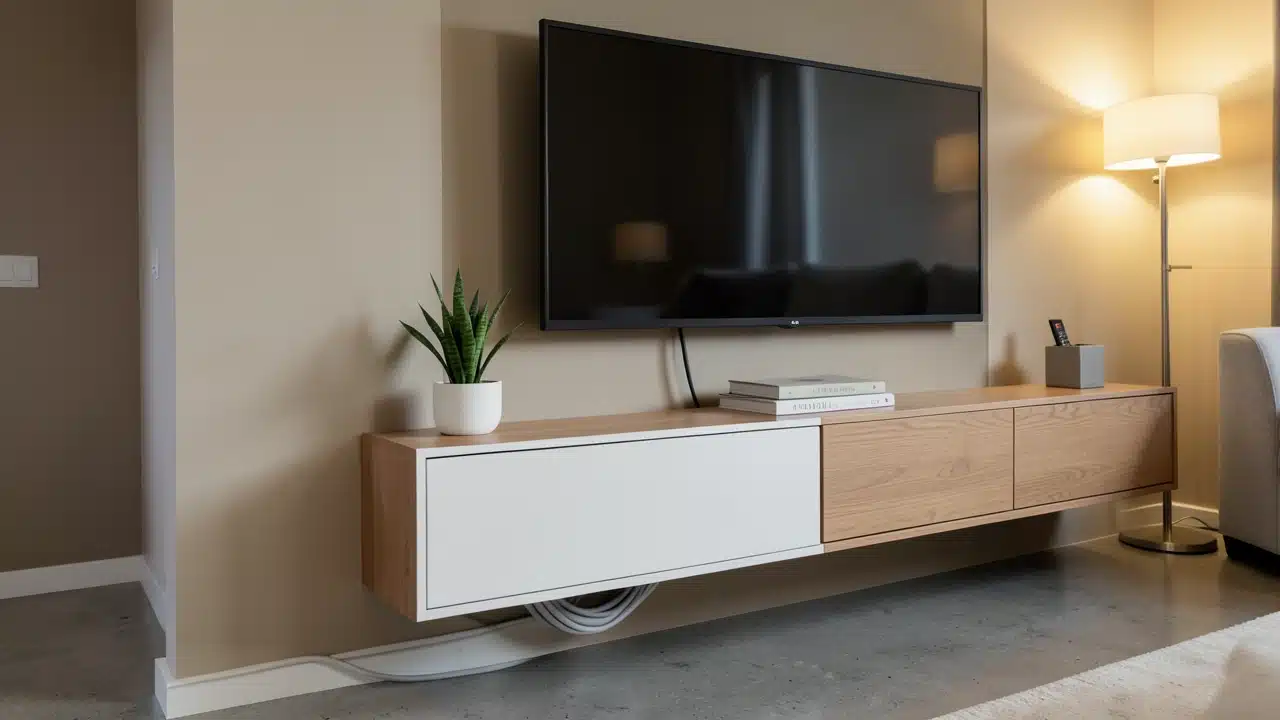
Install a Cable Management Box or Cover
Cable management boxes are like small containers designed to hide power strips and excess cable length.
You place your power strip inside the box, plug in your devices, and then feed the cords out through small openings. The box then sits on the floor or on a shelf, neatly tucking away all the clutter.
This is a very effective method for dealing with the bulk of your cables. It keeps everything contained in one place and looks much better than a tangled mess of wires and a power strip. Many boxes come with a lid, so you can’t see inside at all.
When looking for a cable management box, consider its size. You need one big enough to hold your power strip and all the plugs. Also, look at the number and placement of the cable exit slots.Some boxes are designed to be placed against a wall, while others can sit in the middle of a room.
This is a popular choice among the 5 Practical Ways To Hide Cables Behind Your TV Unit because it hides the most visible mess.
It’s a clean and organized way to manage electronics power. It makes your entertainment area look much more professional and tidy.
Benefits of Cable Management Boxes
Cable management boxes not only hide cables but also help protect them from damage. They keep dust away from plugs and sockets. Plus, they can be a safety feature, reducing the risk of tripping over loose cords.
This is a solid solution for a neat and safe setup.
Mount Your TV and Conceal Cables Within the Wall
For the ultimate clean look, consider mounting your TV on the wall and running the cables inside the wall. This is a more advanced solution but offers the most seamless appearance. It makes it look like the TV is floating without any wires showing.
Next, you’ll need a TV wall mount. Once the TV is mounted, you’ll need to create or use openings in the wall to route the cables. Some wall mount kits come with special in-wall cable management systems.
These include grommets or tubes that you can feed the cables through. You’ll also need to ensure you have access to power outlets, which might mean installing new ones near the TV or using a power cord extension that is safely routed.
Running cables inside the wall requires some DIY skill or hiring a professional. It’s important to follow electrical safety guidelines. You don’t want to damage your wiring or create a fire hazard.
However, the result is incredibly clean and modern.
This method is one of the most effective 5 Practical Ways To Hide Cables Behind Your TV Unit for a minimalist aesthetic. It truly makes the cables disappear. The clean lines of a wall-mounted TV without visible wires are very appealing.
Safety and Professional Help
If you’re not comfortable working with electrical wiring or cutting into walls, it’s best to hire an electrician or a professional installer. They can ensure the job is done safely and correctly. They can also advise on the best way to route power and signal cables.
This approach requires careful planning but offers the most dramatic visual improvement. It’s a significant step towards a completely wire-free look.
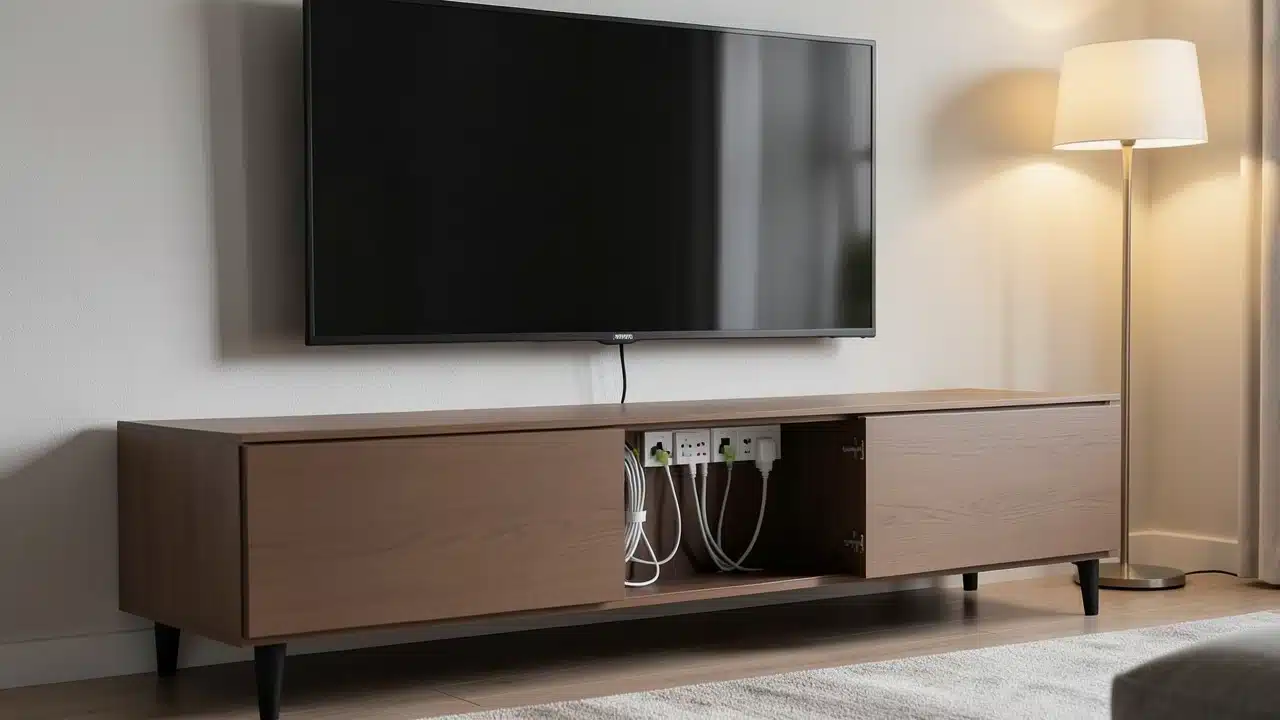
Use Furniture with Built-in Cable Management
Many modern TV stands and entertainment units are designed with cable management in mind. They often have pre-drilled holes, cable pass-throughs, and compartments specifically for hiding wires and electronics.
Then, when you are choosing new furniture, look for these features. A good TV unit will have holes in the back panel. These allow you to thread cables from your devices through to the back of the unit, and then down to a power source.
Some units also have a separate compartment for a power strip, keeping all the plugs and excess wires out of sight.
This is a very practical solution because it integrates cable management into the furniture itself. You don’t need to buy extra accessories. The furniture does the work for you.
Choosing furniture with built-in features is one of the 5 Practical Ways To Hide Cables Behind Your TV Unit that also upgrades your space.
It’s a smart way to combine function and style. It makes setting up your electronics much easier and the final look much tidier.
Key Features to Look For
When shopping for a TV unit, check for features like:
- Cable management ports: Holes in the back panel to feed cables through.
- Built-in power strip holders: A specific spot to place your power strip.
- Ventilation: Openings or spaces that allow air to circulate around electronics, preventing overheating.
- Adjustable shelves: To fit different-sized components.
These features make a big difference in keeping your setup organized and your cables hidden. Managing cable clutter not only improves aesthetics but also reduces trip hazards and electrical risks, as noted by safety authorities.
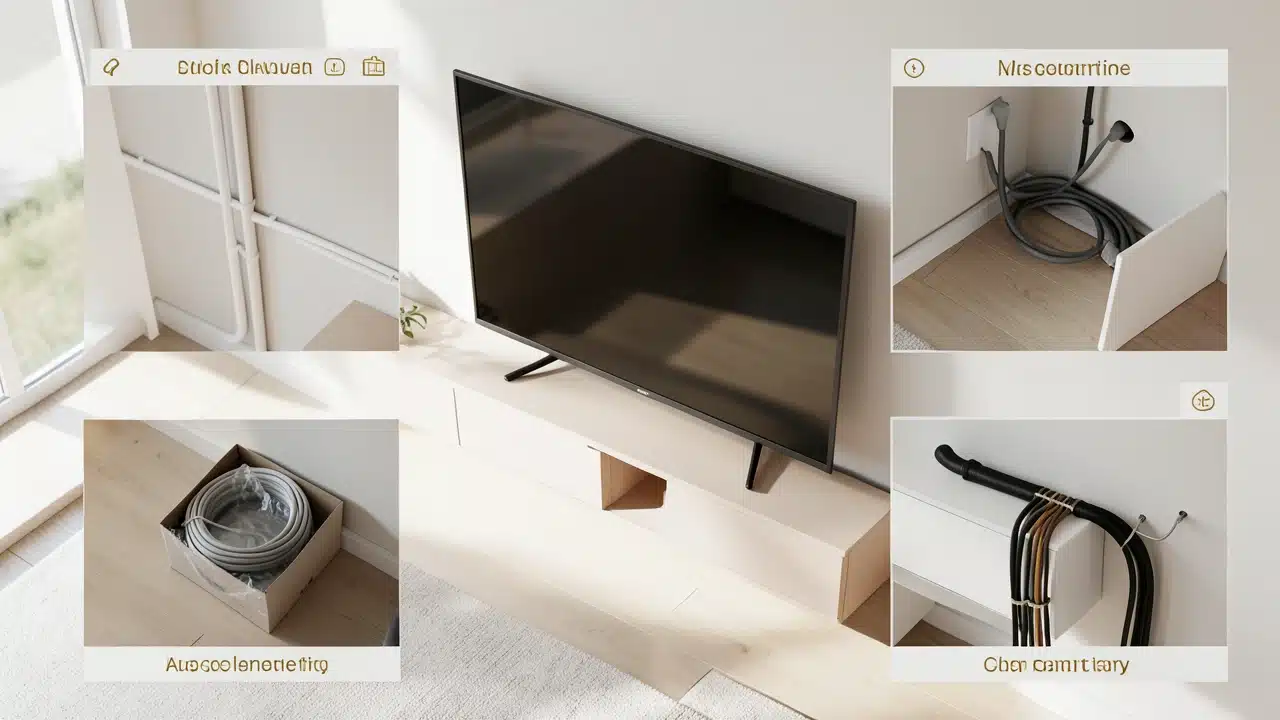
Comparing Cable Hiding Methods
Each method for hiding cables has its own pros and cons. Choosing the best one depends on your budget, DIY skills, and how tidy you want your space to be. For a seamless look, consider professional in-wall concealment of cables behind your TV unit.
| Cable Sleeves | Very Easy | Low | Good | Bundling multiple cords together |
| Cable Clips & Ties | Easy | Very Low | Good | Securing individual cords and tidying bundles |
| Cable Management Box | Easy | Low to Medium | Excellent | Hiding power strips and excess cable length |
| In-Wall Concealment | Difficult (Requires Professional) | Medium to High | Best (Invisible) | Ultimate clean look, permanent solution |
| Furniture with Built-in Management | Easy (during setup) | Medium to High (cost of furniture) | Excellent | Integrating cable hiding with furniture design |
As you can see, there are many ways to tackle cable clutter. The goal is to find a solution that works for your specific setup and preferences. All of these are great options for your 5 Practical Ways To Hide Cables Behind Your TV Unit. Look for cable management ports in your TV unit to easily route cables out of sight.
Frequently Asked Questions Of 5 Practical Ways To Hide Cables Behind Your Tv Unit
How do I hide TV cables without drilling holes?
You can use cable management sleeves, clips, ties, or a cable management box. These methods allow you to bundle, secure, and hide cables without making permanent changes to your walls or furniture.
What is the cheapest way to hide TV cables?
The cheapest ways involve using simple cable ties or twist ties you might already have, along with adhesive cable clips. These are very inexpensive to buy in bulk and can significantly tidy up your cables.
Can I hide my cables behind a wall without special kits?
While you can sometimes route cables through existing openings, it’s generally recommended to use specialized in-wall cable management kits for safety and a clean finish. These kits often include protective sleeves and grommets.
Are cable management boxes worth the money?
Yes, cable management boxes are often worth the money if you want a neat and organized space. They effectively hide power strips and excess cords, improving the overall look and safety of your entertainment area.
What’s the best way to hide cables for a wall-mounted TV?
For a wall-mounted TV, the best way is often to run cables inside the wall using an in-wall cable management system. Alternatively, you can use cable sleeves or raceways that adhere to the wall and blend in.
How can I make my TV setup look professional?
To make your TV setup look professional, focus on hiding all visible cables using methods like cable sleeves, boxes, or in-wall concealment. Keep devices organized and dust-free. A clean and tidy setup makes a huge difference.
Final Thoughts
Taming those messy cables can make your living room look so much better. You’ve learned several easy ways to manage them, from simple sleeves and ties to more involved solutions like in-wall routing. Pick the method that best fits your space and enjoy a cleaner, more relaxing entertainment area.