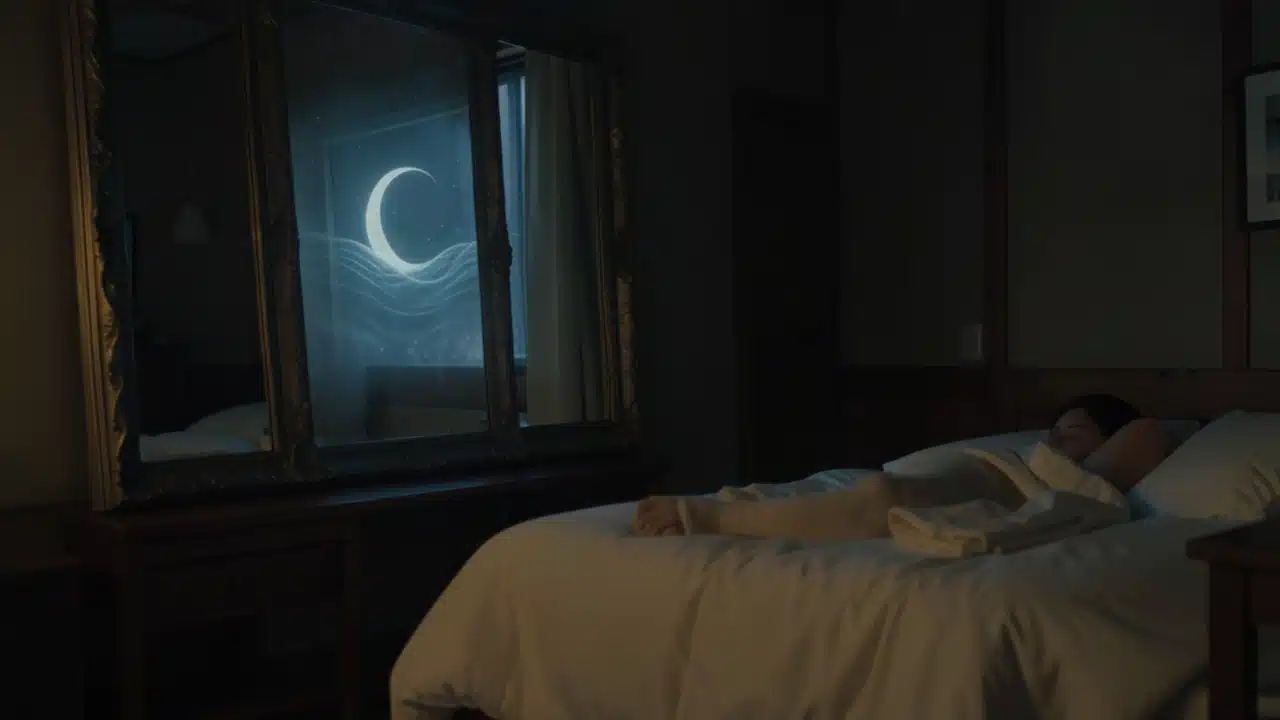
A mirror in the bedroom does not by itself disturb sleep according to current research, as the evidence points instead to how reflective surfaces interact with the surrounding environment. A mirror can indirectly impair rest when it reflects streetlights, screens, or movement, increasing visual stimulation and keeping the brain more alert at night. The practical takeaway is to cover the mirror, move it out of the bed's sightline, or reduce reflected light, while also recognizing that cultural beliefs and personal associations can shape how much a mirror affects perceived sleep quality.
A mirror in the bedroom does not appear to disturb sleep by itself; research points more clearly to light, arousal, and bedroom environment.
A mirror may affect sleep indirectly if it reflects streetlights, screens, or movement, making the room feel visually active. Cover it, move it from bed view, or reduce reflected light.
Many people wonder if having a mirror in their bedroom might be messing with their sleep. It’s a common concern, especially if you’re trying to create a peaceful sanctuary for rest.
Understanding how your surroundings can affect your sleep quality is super important for feeling your best.
This article dives into the research to answer the question: Does a Mirror in the Bedroom Really Disturb Sleep? What the Research Says, helping you make informed choices for a better night’s rest.
Key Takeaways
- Reflective surfaces can sometimes disrupt sleep due to light bouncing off them.
- The visual stimulation from a mirror, especially at night, might keep the brain more alert.
- Cultural beliefs and personal associations with mirrors can also play a role in sleep perception.
- Research on mirrors and sleep is limited, but existing studies point to potential, though not definitive, negative effects.
- Simple adjustments, like covering mirrors at night, can help mitigate any potential disturbances.
- Creating a dark, calm bedroom environment is key for optimal sleep, regardless of mirrors.
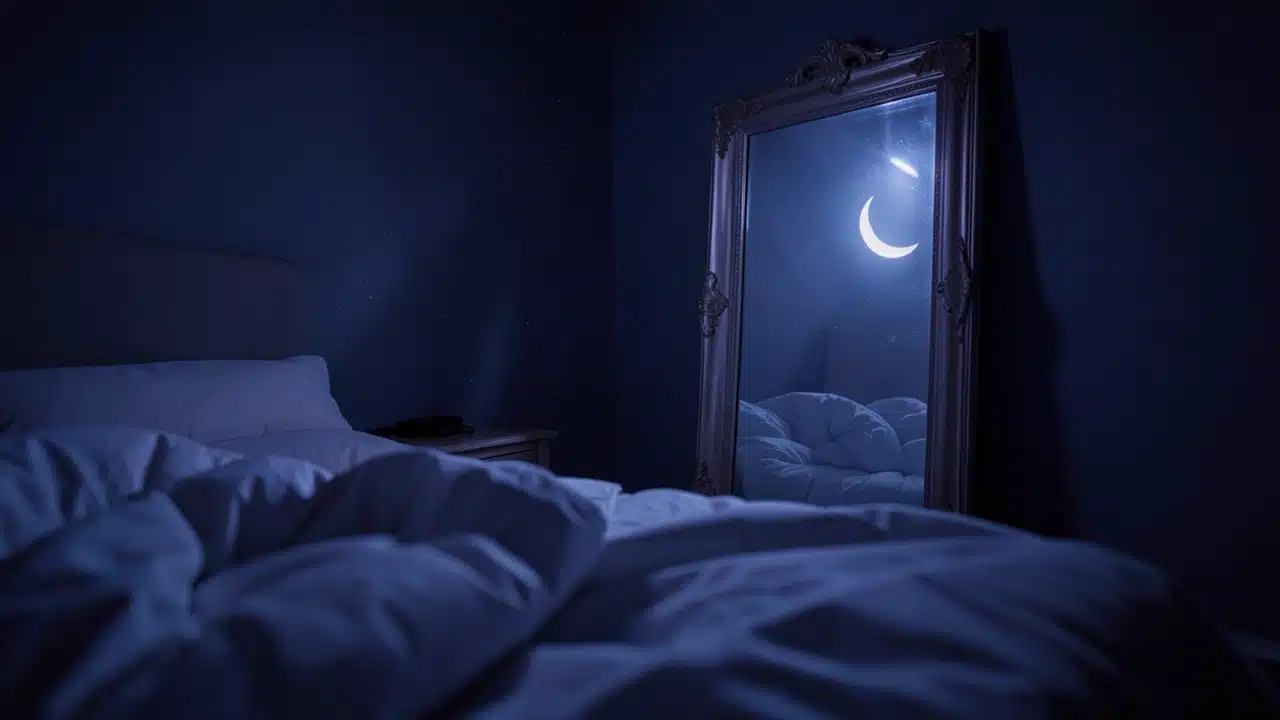
The Science Behind Bedroom Mirrors and Sleep
The idea that mirrors in bedrooms might affect sleep isn’t entirely new, but the scientific backing is still developing. We often think of bedrooms as places for rest and relaxation, and anything that interrupts that peace can be a concern. When we talk about Does a Mirror in the Bedroom Really Disturb Sleep?
What the Research Says, we’re looking at how visual elements in our sleep space can influence our brain’s ability to wind down.
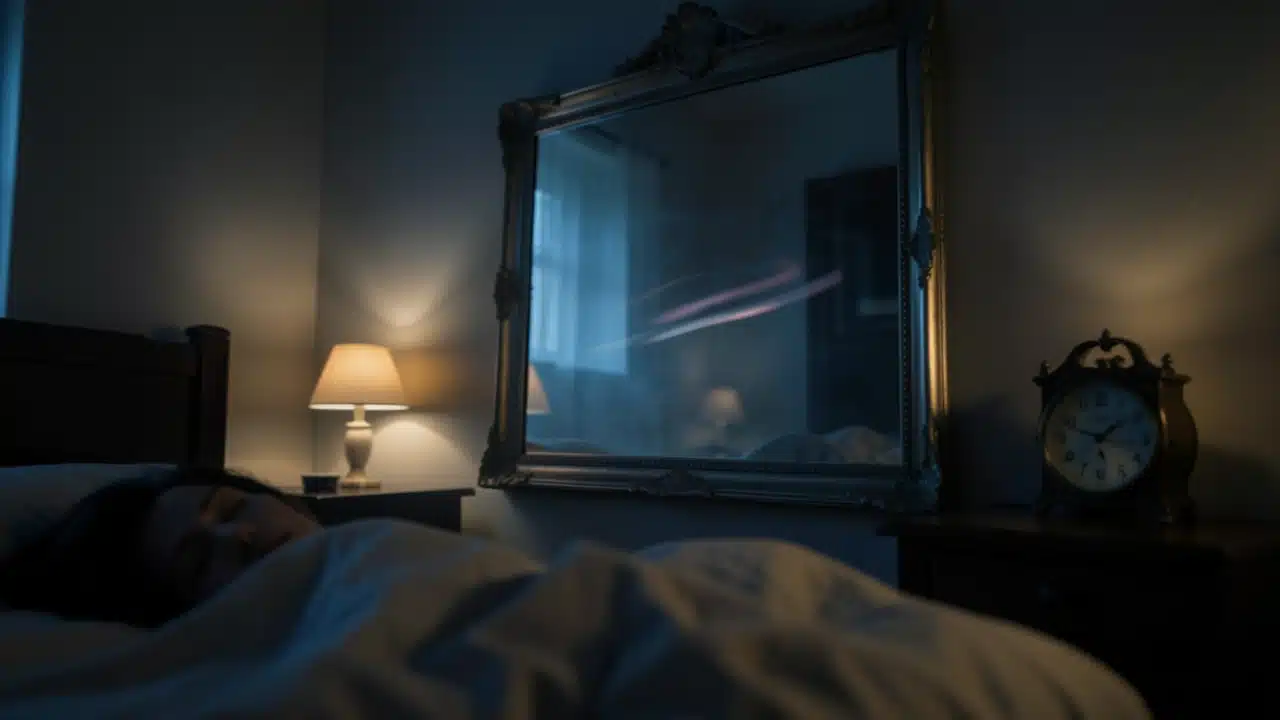
Mirrors reflect light. This is their primary function. In a dark room meant for sleep, even a small amount of light from outside – like streetlights or a digital clock – can be bounced around by a mirror.
This can create subtle flashes or glares that might be just enough to disturb someone’s sleep. For many, a completely dark room is ideal for the best sleep quality.
The research on Does a Mirror in the Bedroom Really Disturb Sleep? What the Research Says suggests that visual stimulation is a key factor. Our brains are wired to notice movement and light changes.
A mirror can inadvertently create these distractions, even if we don’t consciously register them. This constant subtle input might make it harder for the brain to enter deep sleep stages.
Light Reflection and Sleep Disruption
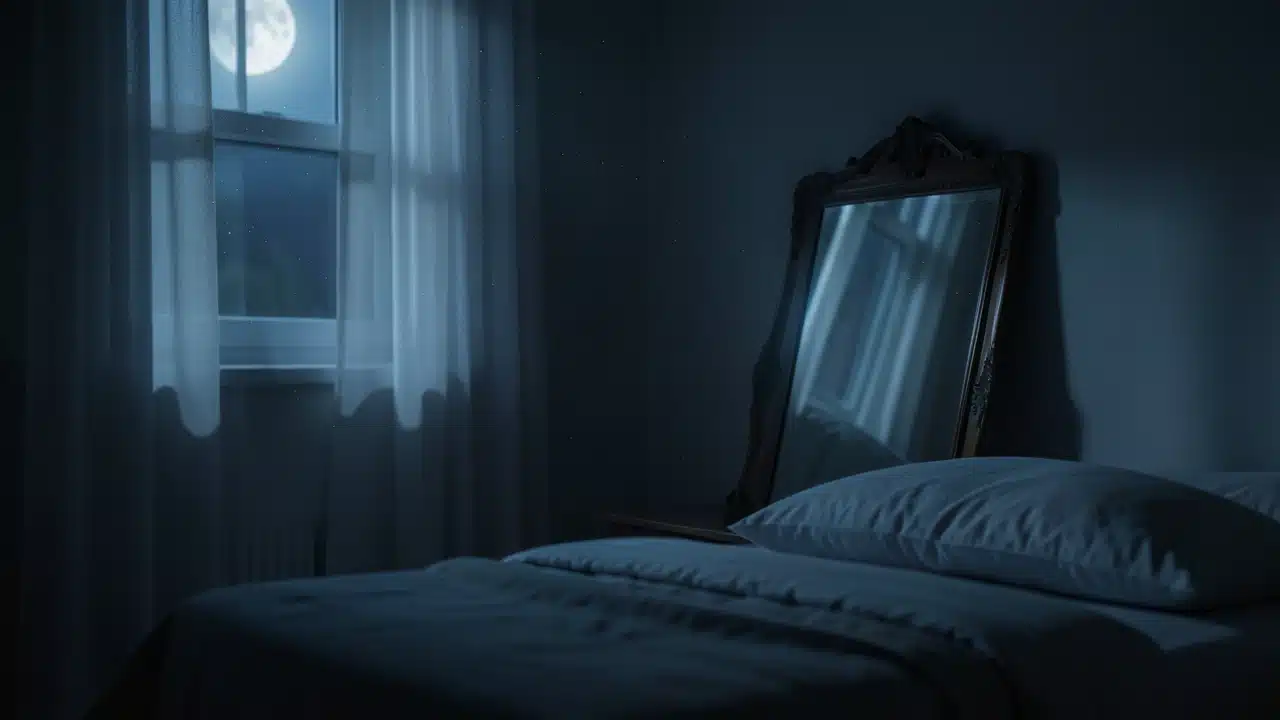
One of the most direct ways a mirror can impact sleep is through light reflection. Bedrooms are meant to be dark environments. Darkness signals to our bodies that it’s time to produce melatonin, the hormone that helps us sleep.
When light is present, this process can be interrupted.
Even low levels of light can be problematic. Think about the glowing numbers on a digital alarm clock or the faint light creeping in from under a door. A mirror can amplify these small light sources, reflecting them across the room.
This can create a more stimulating visual environment than a dark room should be.
Studies have shown that even minimal light exposure during sleep can affect our sleep cycles and quality.
For individuals sensitive to light, a mirror might act like a small, passive light source, constantly catching and redirecting light.
This is a significant consideration when asking, Does a Mirror in the Bedroom Really Disturb Sleep?
What the Research Says.
How Mirrors Amplify Light
Imagine a small LED light on a charger or a sliver of moonlight. Without a mirror, this light might just hit a wall and be absorbed.
With a mirror present, that same light can be reflected multiple times, reaching different parts of the room.
This can create unexpected glares or moving shadows as light sources shift.
This phenomenon is particularly relevant if the mirror is positioned opposite a window or a source of artificial light.
The reflective surface essentially doubles or triples the visual impact of that light source. This is a key reason why many sleep experts recommend keeping bedrooms as dark as possible.
The impact of this amplified light can range from mild annoyance to significant sleep disruption. For some, it might lead to more awakenings during the night. For others, it could make it harder to fall asleep in the first place.
It directly relates to the question, Does a Mirror in the Bedroom Really Disturb Sleep? What the Research Says.
Visual Stimulation and Brain Activity
Beyond light, mirrors can also contribute to sleep disruption through visual stimulation. Our brains are constantly processing visual information.
Even when we’re trying to relax, the presence of a reflective surface can keep the brain more active than it should be.
Seeing one’s own reflection, or even just the general shapes and movements within the room reflected, can be a form of visual input.
While we might not be actively looking at the mirror, our peripheral vision still registers the reflections. This can prevent the brain from fully switching off and entering a relaxed state conducive to sleep.
This is an important aspect of understanding Does a Mirror in the Bedroom Really Disturb Sleep? What the Research Says. The mind needs to quiet down to achieve restorative sleep.
Anything that keeps the brain on alert, even subtly, can interfere with this process. The presence of a mirror might contribute to this heightened state of awareness.
The Mirror as a Distraction
When you’re trying to wind down, your mind might wander. If your gaze happens to fall upon a mirror, it can draw your attention. You might think about your appearance, your day, or anything else.
This mental engagement can pull you away from the relaxation needed for sleep.
Even if you don’t actively look at the mirror, the mere presence of your reflection can be a subtle distraction.
It’s another visual element in the room that your brain has to process. For some people, this can be enough to make them feel less at ease and more awake.
The question of Does a Mirror in the Bedroom Really Disturb Sleep? What the Research Says often comes down to individual sensitivity. What might be a minor distraction for one person could be a significant sleep disruptor for another.
Cultural and Psychological Factors
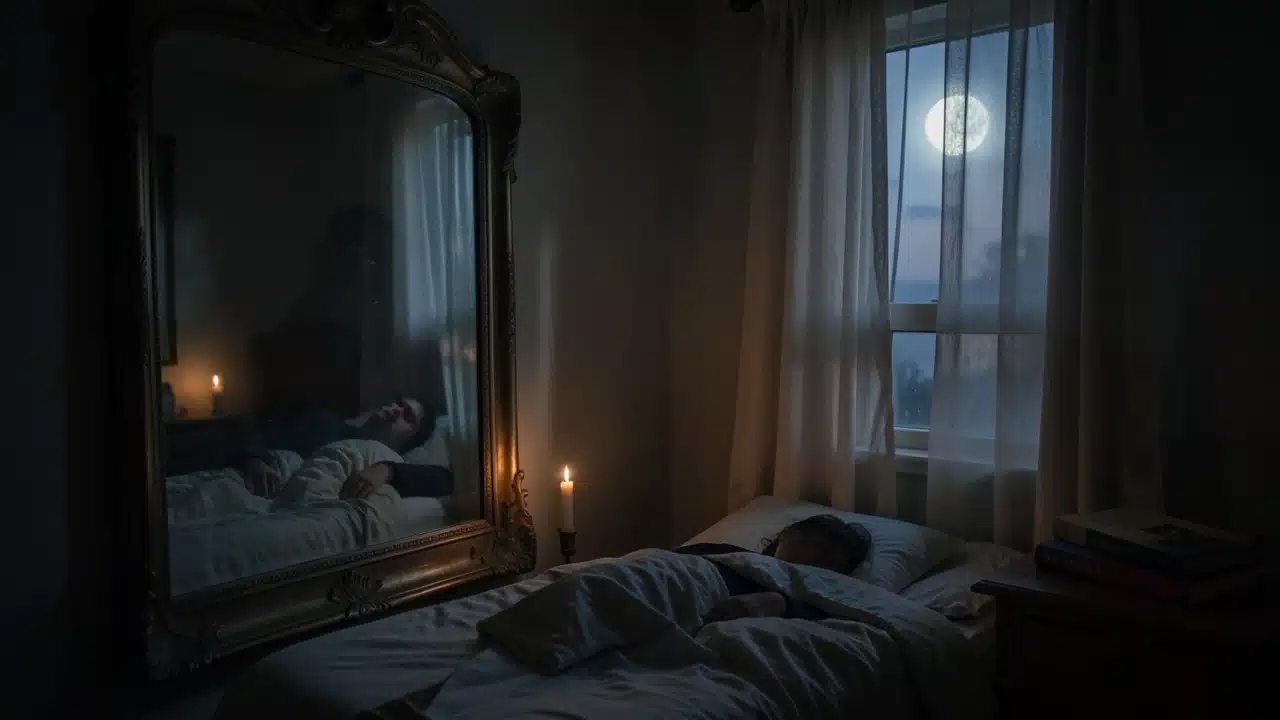
It’s not just about light and visual input; cultural beliefs and psychological associations also play a role. In many cultures, mirrors have symbolic meanings. Some traditions associate them with spirits or bad luck if placed incorrectly.
While science might not directly study these beliefs, they can influence how a person feels in their bedroom.
If someone believes a mirror in the bedroom is unlucky or will cause nightmares, this belief itself can create anxiety.
This anxiety can absolutely interfere with sleep. The mind-body connection is powerful, and our thoughts and feelings can directly impact our physiological state, including our ability to sleep.
Therefore, when considering Does a Mirror in the Bedroom Really Disturb Sleep? What the Research Says, we must acknowledge that personal perception and cultural context are significant.
For some, the presence of a mirror might be entirely benign, while for others, it could be a source of subconscious unease.
Personal Associations with Mirrors
Think about your own feelings towards mirrors. Do you feel calm when you see your reflection, or does it trigger self-consciousness?
If you tend to be critical of your appearance, seeing yourself in the mirror, especially when you’re trying to relax, might not be conducive to sleep.
Conversely, some people might find comfort in seeing their reflection, feeling it makes the room feel more complete.
However, the context of sleep is different from waking hours. The brain needs to shut down, not engage with visual stimuli.
This personal element is crucial in the broader discussion of Does a Mirror in the Bedroom Really Disturb Sleep? What the Research Says. The scientific data provides general insights, but individual experiences can vary greatly.
What the Research Actually Says (and Doesn’t Say)
The scientific literature specifically addressing mirrors and their direct impact on sleep is surprisingly limited. Much of what we understand comes from broader principles of sleep hygiene and the impact of light and visual stimuli.
We know that darkness is essential for sleep. We also know that visual distractions can keep the brain alert. These established facts lead us to infer that mirrors could be problematic.However, there aren’t many large-scale studies that directly test the hypothesis: “Does a mirror in the bedroom really disturb sleep?”
Most sleep research focuses on factors like ambient light levels, noise, temperature, and sleep disorders.
The specific placement and effect of furniture like mirrors are often overlooked in formal studies. This means that much of the advice given is based on logical extension of known sleep science principles.
Evidence from Related Fields
While direct studies on bedroom mirrors are scarce, research in related areas provides supporting evidence.
For instance, studies on the impact of screen time before bed highlight how visual stimulation can delay sleep onset and reduce sleep quality. Mirrors, in a way, contribute to visual stimulation.
Research into the effects of ambient light on sleep is extensive. It consistently shows that even low levels of light can suppress melatonin production and disrupt circadian rhythms. A mirror’s ability to reflect and amplify light directly ties into this body of research.
So, while a definitive “yes” or “no” based on extensive direct research is hard to find, the existing evidence points towards a potential for disturbance.
This is why the question, Does a Mirror in the Bedroom Really Disturb Sleep? What the Research Says, is answered with a cautious “it might, for some people.”
Practical Tips for a Sleep-Friendly Bedroom
If you’re concerned about a mirror in your bedroom or want to optimize your sleep environment, there are simple steps you can take. The goal is to create a space that promotes relaxation and deep sleep.
The most straightforward solution is to manage the mirror’s presence. This doesn’t necessarily mean removing it entirely, but rather controlling its impact, especially during sleep hours.
Thinking about how to minimize any potential negative effects is key to answering Does a Mirror in the Bedroom Really Disturb Sleep?
What the Research Says in a practical way.
Here are some actionable tips:
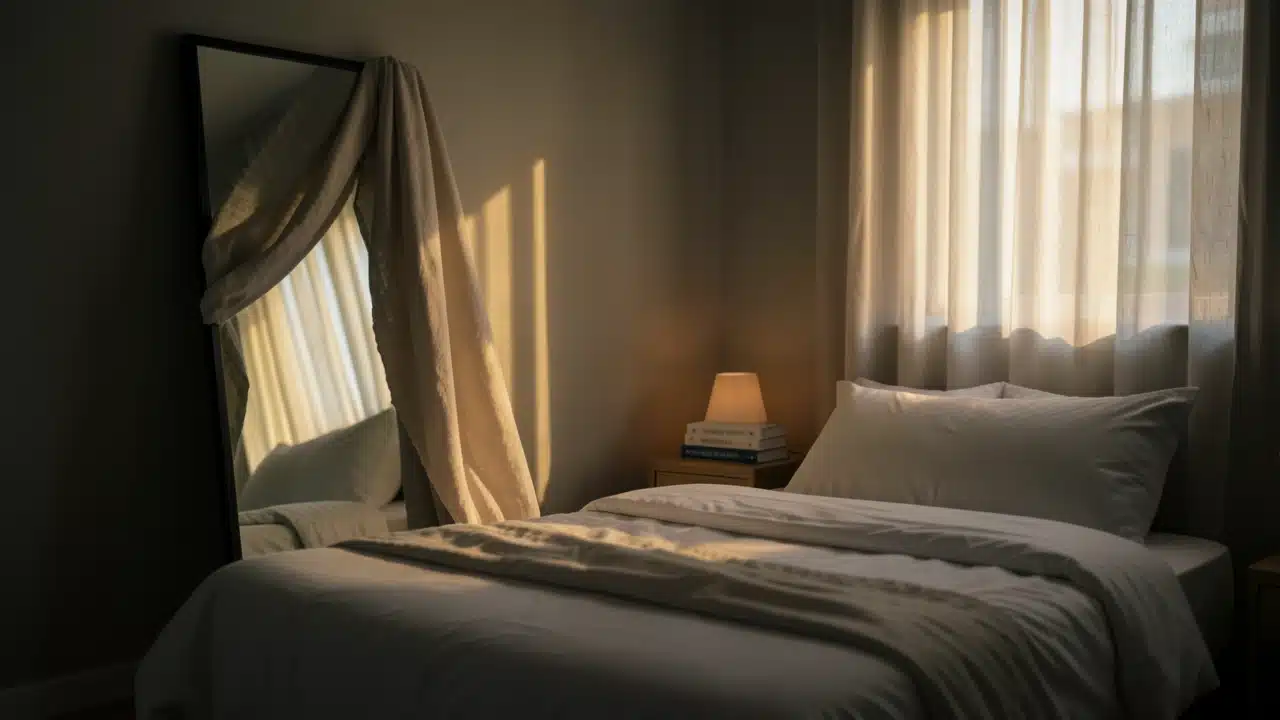
- Cover the Mirror: The easiest fix is to cover the mirror at night. You can use a decorative cloth, a screen, or even a blackout curtain specifically for the mirror. This completely eliminates light reflection and visual stimulation from the mirror.
- Relocate the Mirror: If possible, move the mirror to a different room, like a hallway, dressing area, or bathroom. This ensures it’s not a factor in your sleep space.
- Choose Mirror Placement Wisely: If you must have a mirror, try to position it so it doesn’t directly face your bed. Avoid placing it where it can catch light from windows or doors.
- Minimize Light Sources: Ensure all other light sources in the bedroom are managed. Use blackout curtains for windows, cover LED lights on electronics, or opt for dimmer, warmer lighting options.
- Maintain a Dark Room: Aim for your bedroom to be as dark as possible when you sleep. This is a fundamental principle of good sleep hygiene.
Testing Your Own Sleep Environment
Ultimately, the best way to know if a mirror is affecting your sleep is to observe yourself. Pay attention to how you feel when you sleep with and without the mirror being a factor.
You can conduct a simple experiment. For a week, cover the mirror every night and observe your sleep quality. Then, for another week, leave it uncovered.
Note any differences in how quickly you fall asleep, how many times you wake up, and how rested you feel in the morning.
This personal testing can provide more clarity than general research when asking Does a Mirror in the Bedroom Really Disturb Sleep? What the Research Says. Your individual response is what matters most for your well-being.
When to Consider Removing a Bedroom Mirror
While not everyone needs to remove their bedroom mirror, there are certain signs that suggest it might be contributing to sleep problems. If you’ve tried other sleep hygiene tips and are still struggling, a mirror could be a culprit.
Consider removing or covering your mirror if you experience any of the following:
- Difficulty Falling Asleep: You lie awake for a long time, even when you feel tired.
- Frequent Waking: You wake up multiple times during the night, sometimes without a clear reason.
- Sensitivity to Light: You are easily disturbed by even small amounts of light in the bedroom.
- Feeling Restless: You often feel restless or agitated in your bedroom, even when trying to relax.
- General Sleep Issues: You have persistent sleep problems that haven’t been resolved by other means.
These symptoms, when present, strengthen the case for investigating your bedroom’s environment, including the presence of mirrors. The question of Does a Mirror in the Bedroom Really Disturb Sleep? What the Research Says becomes more relevant when these issues arise.
The Feng Shui Perspective
Interestingly, Feng Shui, an ancient Chinese practice, also offers advice on mirrors in bedrooms. While not scientific research, it’s a perspective many find helpful for creating harmonious spaces. Feng Shui generally advises against placing mirrors directly facing the bed.
The reasoning is that mirrors reflect energy, and reflecting the energy of a sleeping person is thought to disrupt their rest and even invite unwanted influences.
This cultural advice aligns with the idea that a mirror opposite the bed can be visually disruptive. While Feng Shui principles are not empirical science, they often tap into psychological and aesthetic considerations that can influence our comfort and well-being in a space. It’s another layer to consider when pondering Does a Mirror in the Bedroom Really Disturb Sleep?
What the Research Says.
Frequently Asked Questions Of Does A Mirror In The Bedroom Really Disturb Sleep? What The Research Says
Is it true that mirrors in bedrooms cause nightmares?
There is no scientific evidence directly linking bedroom mirrors to an increase in nightmares. However, if a mirror causes anxiety or visual disturbance, it could indirectly contribute to restless sleep that might involve more vivid dreams or nightmares for some individuals.
Should I cover my mirror if I have one in my bedroom?
Covering your mirror at night is a good idea if you suspect it might be affecting your sleep. It’s a simple way to block light reflection and visual stimulation, helping to create a darker, more restful environment.
What is the scientific consensus on Does a Mirror in the Bedroom Really Disturb Sleep? What the Research Says?
The scientific consensus is that while there’s limited direct research, mirrors can potentially disturb sleep for some individuals due to light reflection and visual stimulation. It’s not a universal effect but a possibility worth considering.
Are there any benefits to having a mirror in the bedroom?
Mirrors can make a room feel larger and brighter. They are also practical for getting dressed and checking your appearance. However, these benefits should be weighed against potential sleep disturbances.
What’s the best way to test if a mirror is affecting my sleep?
Try covering the mirror each night for a week and observe your sleep quality. Then, leave it uncovered for another week and compare. Paying attention to how rested you feel can give you a good indication.
Does the size of the mirror matter for sleep disturbance?
Larger mirrors have a greater surface area to reflect light and visual elements, so they might potentially cause more disturbance than smaller ones. However, even a small mirror can be disruptive if positioned poorly or if you are very sensitive.
Final Thoughts
Ultimately, whether a mirror in your bedroom disturbs your sleep depends on individual sensitivity and how it’s positioned.
While research is ongoing, the potential for light reflection and visual stimulation means it’s worth considering if you’re having trouble resting. Simple solutions like covering the mirror at night can help create a more peaceful sleep environment.