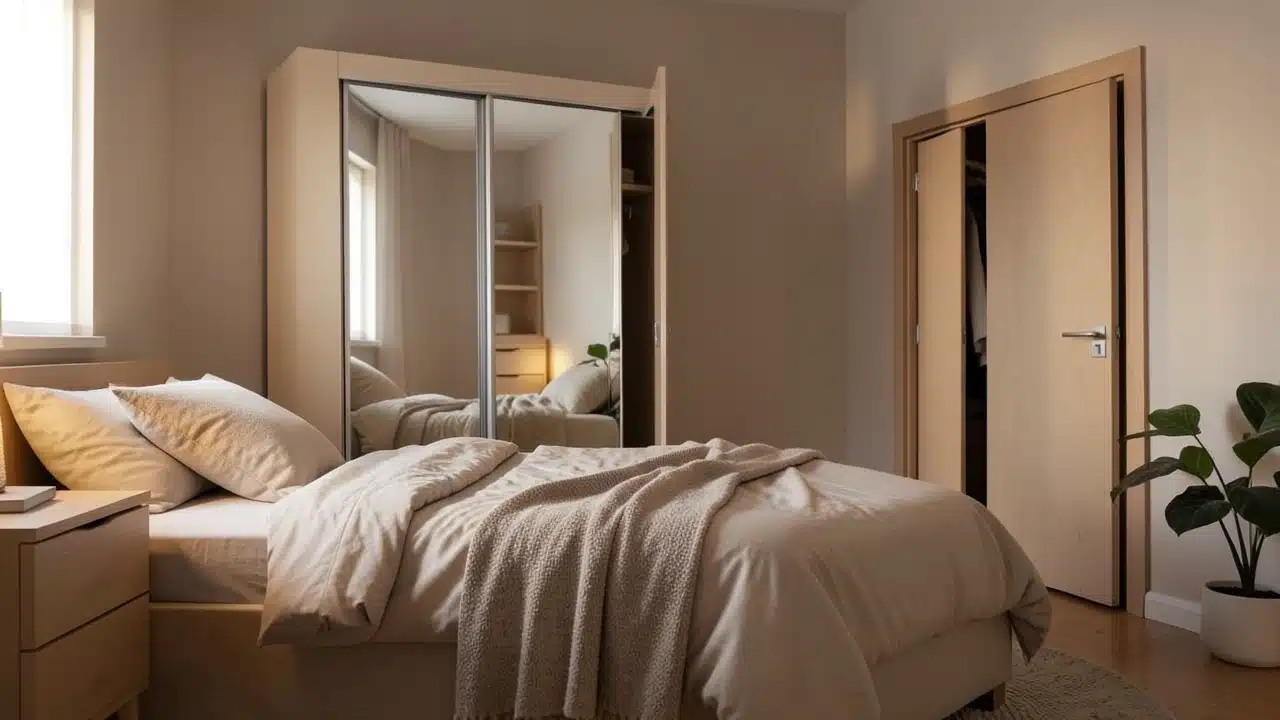
In a small bedroom, wardrobe doors should open in the direction that keeps the main walkway, bed access, and drawer space clear, which usually means hinged doors swinging away from tight corners and bedside tables. Sliding doors offer a space-saving alternative for narrow rooms, though they limit full wardrobe visibility. Pocket doors provide the maximum floor space by disappearing into the wall, making them the best choice when every inch of clearance counts in a compact bedroom.
A wardrobe door in a small bedroom should open in the direction that leaves the main walkway, bed access, and drawer space clear.
Hinged doors need swing clearance, so they work best opening away from tight corners or bedside tables. Sliding doors are better when floor space is limited, but they restrict full wardrobe visibility.
When you’re trying to make the most of a small bedroom, every little detail counts. Figuring out Which Way Should Your Wardrobe Door Open in a Small Bedroom? isn’t just about looks; it directly impacts how you move around and use your space.
Getting this right means you can easily access your clothes without feeling cramped, and your room will feel much bigger and more functional.
We’ll help you make the best choice for your room.
Key Takeaways
- The direction your wardrobe door opens can make a big difference in how a small room feels.
- Outward-swinging doors are common but can block pathways in tight spaces.
- Sliding doors are a great space-saving option for narrow rooms.
- Pocket doors disappear when open, offering maximum floor space.
- Consider how you use the space around the wardrobe when deciding.
- Choosing the right door type can make your small bedroom feel more open and usable.
Maximizing Space With Wardrobe Door Choice
In a small bedroom, every inch of floor space is precious. The type of wardrobe door you choose and the direction it opens can dramatically change how a room feels.
A poorly chosen door can make a small space feel even tighter, while the right choice can create a sense of openness and improve flow.
Understanding the options is the first step to making your small bedroom more comfortable and practical.
The main goal is to avoid blocking essential pathways or furniture. You want to be able to open your wardrobe fully without bumping into your bed, a desk, or the main entrance to your room.
This is where the decision about Which Way Should Your Wardrobe Door Open in a Small Bedroom? becomes crucial for daily living.
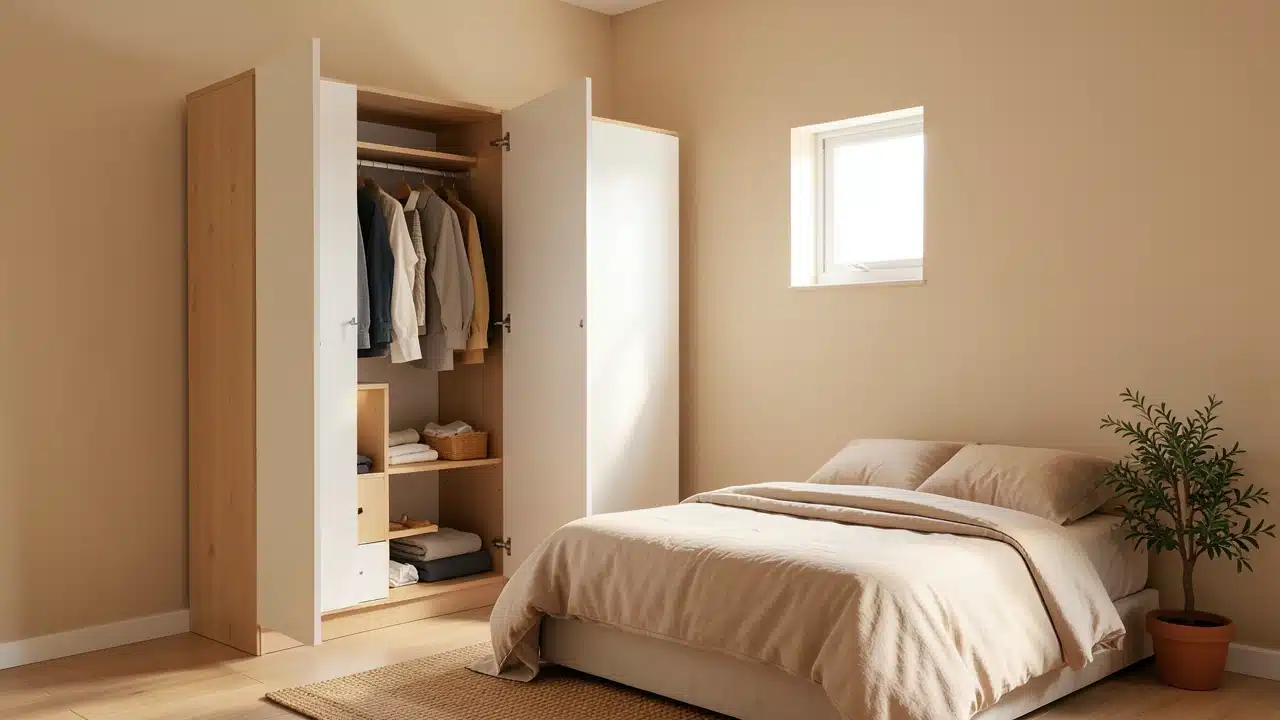
Outward-Swinging Doors: The Classic Choice
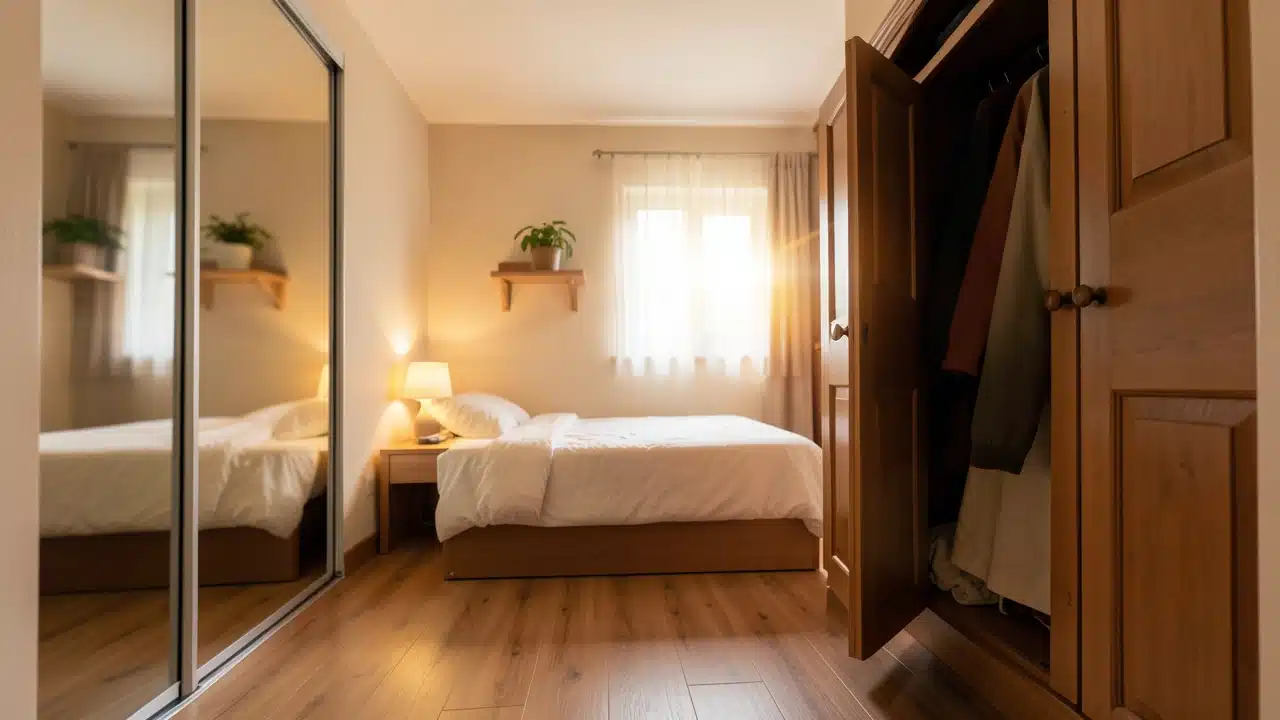
Outward-swinging doors are the most traditional type of wardrobe door. They are simple, often less expensive, and come in many styles. However, for small bedrooms, they can present a significant challenge.
When these doors open, they swing out into the room, taking up valuable floor space.
If your wardrobe is placed against a wall, the door will swing out into the room. This means you need a clear path for the door to open fully.
In a very small bedroom, this swing path might cut across the main walkway of the room or even hit your bed.
This is why considering Which Way Should Your Wardrobe Door Open in a Small Bedroom? is so important for these types of doors.
When Outward-Swinging Doors Work Best
These doors are still a good option if your wardrobe is positioned in a corner or along a longer wall where the swing won't interfere with daily traffic.
For example, if the wardrobe is on the wall opposite your bed and there’s ample space between them, an outward-swinging door might be perfectly fine. You just need to measure the swing radius carefully.
First, measure the depth of your wardrobe plus the width of the door. Then, measure the distance from the wardrobe to the nearest obstruction (like your bed or a door). If the swing radius is less than the available space, it can work.
However, in many cramped rooms, this is rarely the case.
Potential Problems in Small Spaces
The main issue with outward-swinging doors in tight quarters is the obstruction they create. You might find yourself squeezing past the open door to get to your bed, or you might not be able to open the door all the way. This can be frustrating and make the room feel smaller and more cluttered.
This is a prime example of why understanding Which Way Should Your Wardrobe Door Open in a Small Bedroom? is a practical design consideration. It directly affects your ability to move freely and access your belongings without a struggle.
Sliding Doors: A Space-Saving Solution
Sliding wardrobe doors are a fantastic alternative for small bedrooms. They operate on a track and slide horizontally past each other. This means they don’t swing out into the room, saving a significant amount of floor space.
They are an excellent choice when outward-swinging doors are simply not feasible.
With sliding doors, you can place your bed or other furniture closer to the wardrobe without worrying about the doors blocking access.
This makes them ideal for narrow rooms or those with awkward layouts. The efficiency of sliding doors directly answers the question of Which Way Should Your Wardrobe Door Open in a Small Bedroom? by offering a solution that requires no outward swing.
How Sliding Doors Improve Flow
By eliminating the swing radius, sliding doors create a much more open feel. You can walk around your room freely, even when the wardrobe doors are open. This uninterrupted flow makes the room feel larger and more functional.
It’s a simple change that can have a big impact on the usability of your space.
Second, consider the aesthetic. Sliding doors can offer a sleek, modern look. They can also be made from various materials, including mirrored panels, which can help to reflect light and make the room appear even larger.
Types of Sliding Mechanisms
There are typically two main types of sliding door systems: top-hung and bottom-rolling. Top-hung systems have the weight supported by a track at the top, which can be good for uneven floors. Bottom-rolling systems have wheels at the bottom and are generally easier to install and maintain.
Regardless of the mechanism, the principle remains the same: no outward swing. This is a key benefit when you’re pondering Which Way Should Your Wardrobe Door Open in a Small Bedroom? and need to conserve every possible inch.
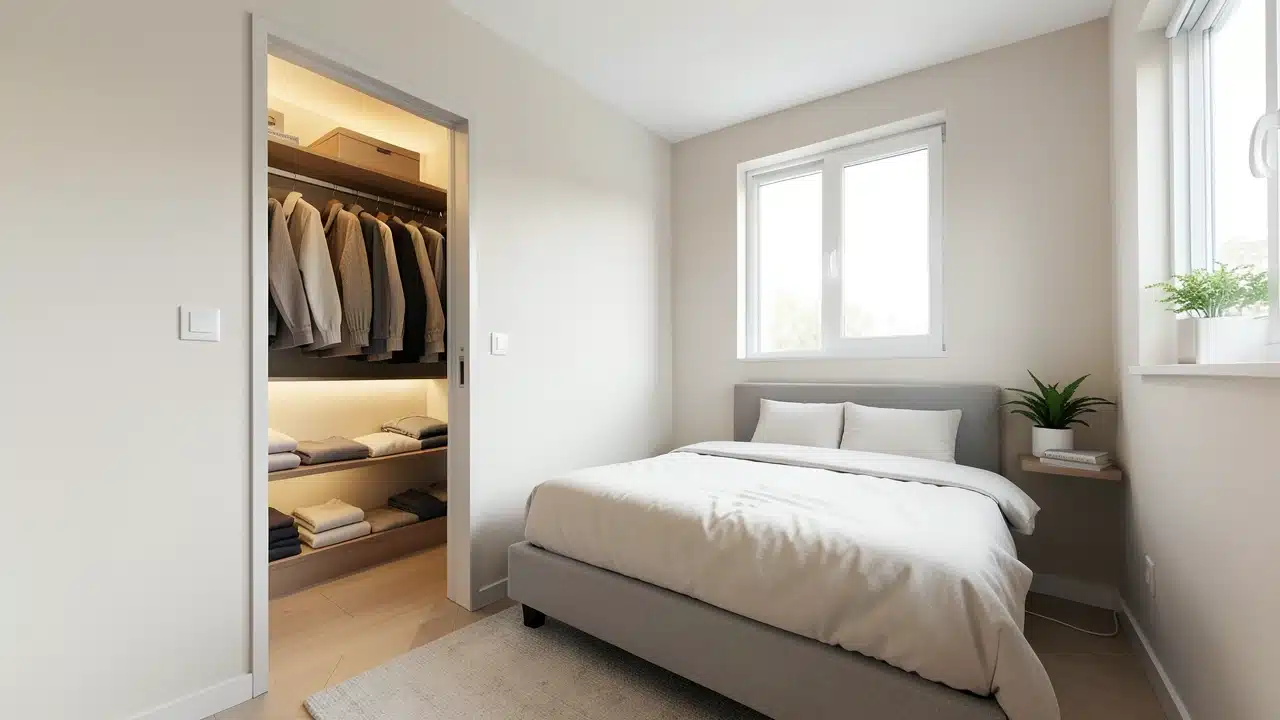
Pocket Doors: The Ultimate Space Saver
Pocket doors are an even more advanced space-saving solution. These doors slide into a hidden compartment within the wall itself. When open, they completely disappear, offering the maximum possible open floor space.
This makes them an excellent, albeit often more complex and expensive, option for very small rooms.
If you’re looking for a seamless look and the absolute best use of space, pocket doors are worth considering.
They eliminate any obstruction whatsoever when the wardrobe is accessed. For rooms where every centimeter counts, the answer to Which Way Should Your Wardrobe Door Open in a Small Bedroom? might very well be “into the wall.”
Benefits of Pocket Doors
The primary benefit is the complete elimination of any door swing or sliding path outside the wardrobe unit.
This creates a clean, minimalist look and maximizes usable floor space. It allows furniture to be placed very close to the wardrobe without any interference.
Next, pocket doors can significantly improve the perceived size of a room. By keeping the visual lines clean and the floor clear, they contribute to an airy and spacious feel.
Considerations for Pocket Doors
Installing pocket doors can be more involved than other types. It often requires modifying the wall structure to create the pocket. This might mean more complex construction and potentially higher costs.
It’s also important to ensure the mechanism is smooth and durable, as repairs can be more difficult than with surface-mounted doors.
When asking Which Way Should Your Wardrobe Door Open in a Small Bedroom?, pocket doors offer a high-end solution for those willing to invest in the ultimate space-saving design.
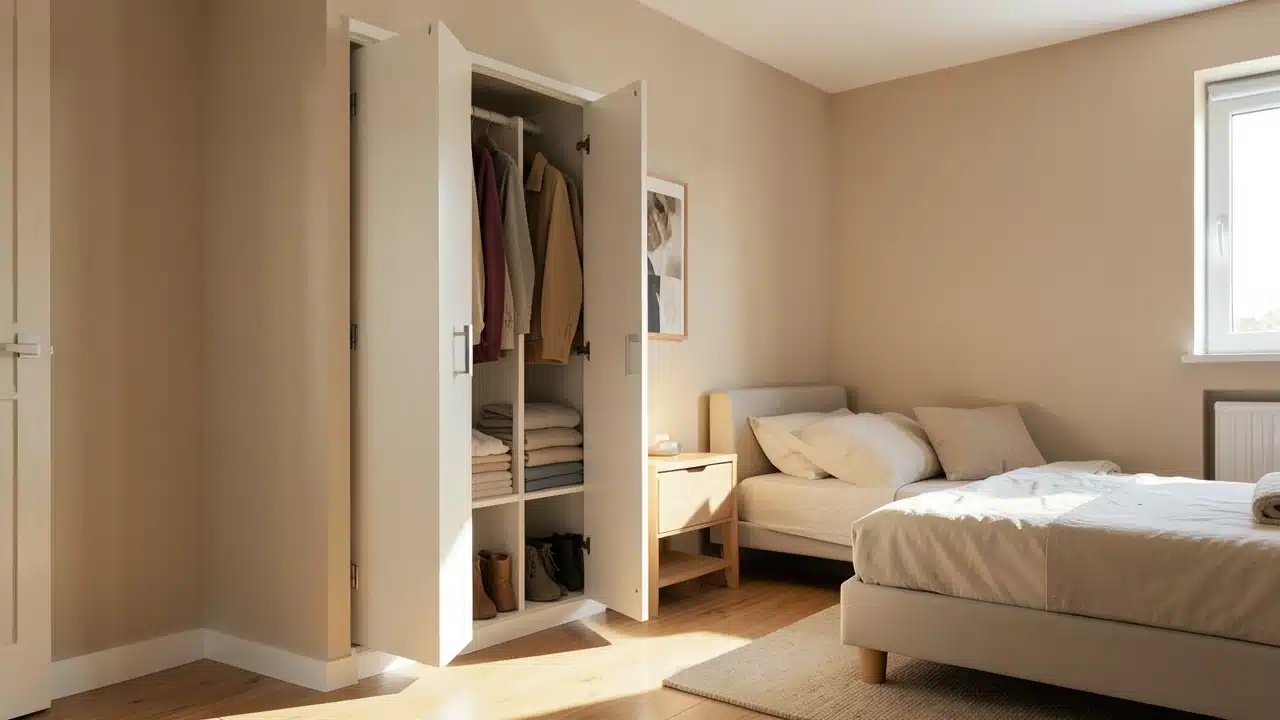
Bi-Fold Doors: A Compromise Option
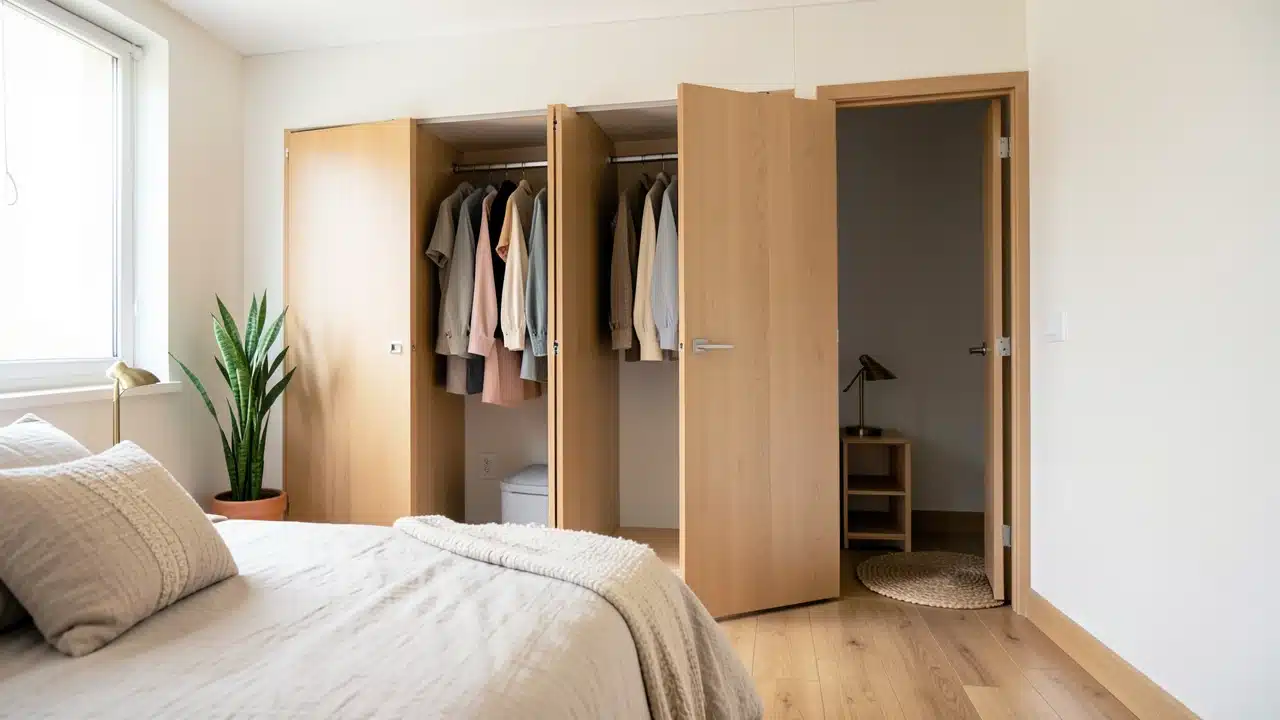
Bi-fold doors offer another way to manage wardrobe access in smaller spaces. These doors are hinged in the middle and fold in half as they open.
They require less swing space than traditional outward-swinging doors, but they do still protrude into the room to some extent.
Each panel folds onto the next, reducing the overall clearance needed compared to a single outward-swinging door.
While not as space-saving as sliding or pocket doors, they are often a more budget-friendly and easier-to-install option than sliding mechanisms.
Space Efficiency of Bi-Fold Doors
Bi-fold doors fold inwards, meaning they take up less space than a full swing. However, the folded doors still occupy some depth in front of the wardrobe. You need to consider this protrusion when placing furniture.They are a good middle ground if sliding or pocket doors aren’t practical for your situation.
Then, consider that bi-fold doors provide access to the full width of the wardrobe, unlike some sliding systems where only half the wardrobe is accessible at a time. This can be a significant advantage for usability.
When to Choose Bi-Fold Doors
These doors are a good choice if you have a moderate amount of space to spare, but not enough for a full outward swing.
They are common in smaller closets and can be a practical solution for bedroom wardrobes where space is a constraint.
They offer a functional compromise for Which Way Should Your Wardrobe Door Open in a Small Bedroom?.
Factors to Consider When Deciding
Choosing the right wardrobe door direction involves looking at your specific room and how you use it. It’s not just about the door type itself, but how it interacts with your existing layout.
Room Layout and Traffic Flow
Map out the main pathways in your bedroom. Where do you walk most often? Identify areas that are already tight.
The wardrobe doors should not impede these main routes. If your bed is very close to the wardrobe, outward-swinging doors are likely a bad idea. Sliding or pocket doors would be far better.
Consider the placement of other furniture. Does the wardrobe door swing towards your desk, a vanity, or a window? Any obstruction can make the room feel cluttered and difficult to navigate.
This is a core part of understanding Which Way Should Your Wardrobe Door Open in a Small Bedroom?.
Accessibility and Ease of Use
Think about how easily you can access your clothes. Can you open the wardrobe doors fully to see all your items? If you have to squeeze past an open door to get to your shirts, it’s not ideal.
Sliding doors allow you to see a large portion of your wardrobe at once, while outward-swinging doors might only give partial access if not fully opened.
Finally, consider who will be using the wardrobe. If children or elderly individuals will be using it, ease of operation is important. Some sliding mechanisms can be stiff, while outward-swinging doors are generally simple to operate.
Aesthetics and Style
Wardrobe doors are a significant visual element in a bedroom. Sliding doors often offer a sleek, modern look. Mirrored sliding doors can also enhance the sense of space.
Outward-swinging doors come in many styles, from traditional panelled doors to minimalist flat fronts. Pocket doors offer a very clean, integrated look.
The style you choose should complement your room’s decor. A door that looks good and functions well contributes to the overall comfort and appeal of your small bedroom. Understanding closet door types can help you choose the best option for your small bedroom.
This visual aspect is also part of the answer to Which Way Should Your Wardrobe Door Open in a Small Bedroom?.
Comparison of Wardrobe Door Types for Small Bedrooms
| Space Saving | Poor | Good | Excellent | Moderate |
| Floor Obstruction | High (swing path) | None | None | Moderate (folded doors) |
| Installation Complexity | Easy | Moderate | High | Moderate |
| Cost | Low | Moderate to High | High | Low to Moderate |
| Full Wardrobe Access | Yes (if fully opened) | Partial (half at a time) | Yes | Yes |
| Aesthetic | Versatile | Sleek, Modern | Minimalist, Integrated | Functional |
Frequently Asked Questions Of Which Way Should Your Wardrobe Door Open In A Small Bedroom?
What is the best type of wardrobe door for a very narrow small bedroom?
For a very narrow small bedroom, sliding doors or pocket doors are the best options. They do not swing out into the room, allowing you to place furniture closer and maintain clear pathways. Pocket doors offer the most space saving as they disappear into the wall.
Can outward-swinging wardrobe doors work in a small bedroom?
Outward-swinging wardrobe doors can work in a small bedroom if there is sufficient space for the door to swing open fully without hitting furniture or blocking the main walkway. Careful measurement of the swing radius is essential.
How much space do sliding wardrobe doors need?
Sliding wardrobe doors require space for the doors to slide past each other on their tracks. They do not require any outward swing space, making them ideal for small rooms where floor space is limited. You just need enough width for the doors to move freely.
Are pocket doors difficult to install in an existing small bedroom?
Installing pocket doors in an existing wall can be complex as it often requires altering the wall structure to create the pocket. It is usually a more involved renovation than fitting sliding or outward-swinging doors.
Which way should wardrobe doors open if my bed is very close to the wardrobe?
If your bed is very close to the wardrobe, you should avoid outward-swinging doors. Sliding doors, pocket doors, or even bi-fold doors that fold inwards are much better choices to prevent obstruction and allow easy access to both your bed and your wardrobe.
Does the direction wardrobe doors open affect the feeling of space in a small room?
Yes, absolutely. Doors that swing outwards into the room can make a small space feel cramped and cluttered. Doors that slide or disappear into the wall (pocket doors) create a much more open and spacious feel because they don’t take up usable floor area when open.
Final Thoughts
Deciding Which Way Should Your Wardrobe Door Open in a Small Bedroom? is a practical step towards a more functional and spacious room. The Wikipedia article on wardrobe door styles explains different configurations for compact spaces.
By choosing sliding, pocket, or carefully considered outward-swinging doors, you can avoid clutter and improve your daily movement. Make the choice that best fits your room’s layout for a more comfortable and open feel. You can refer to government housing space standards for official guidance on minimum room dimensions.