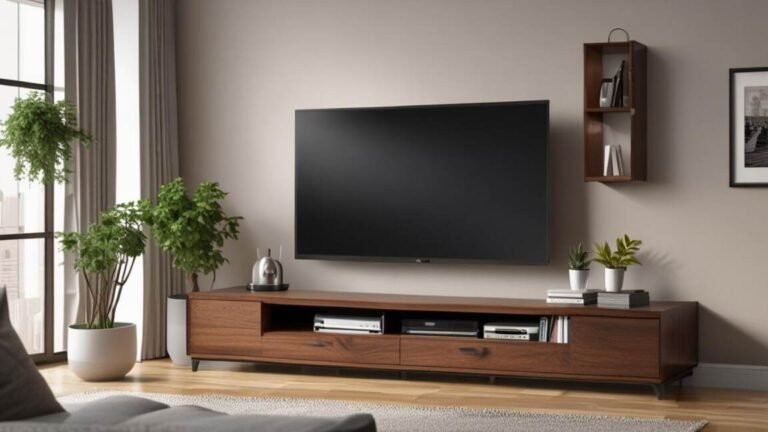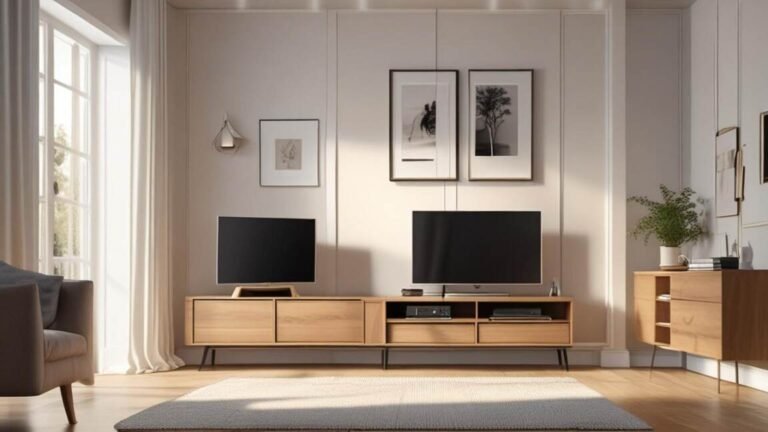
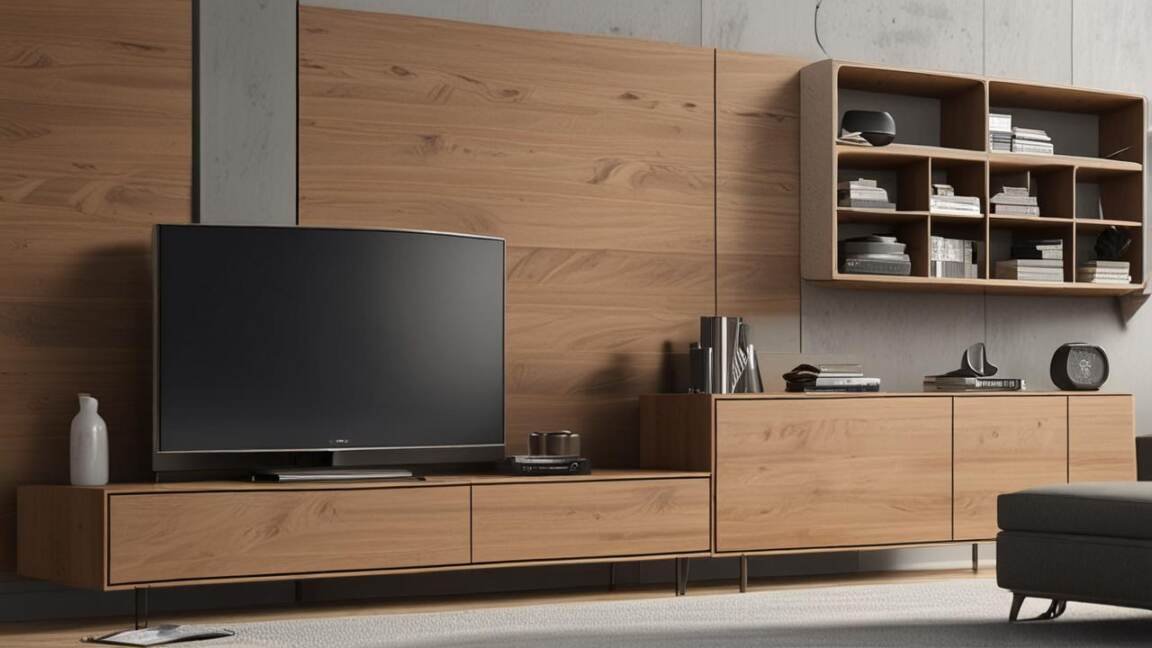
A TV console with storage showing sagging shelves, sticking doors, wobbling, creaking noises, peeling laminate, or rusted hardware is at risk of structural failure that can damage electronics or cause injury. These six warning signs indicate the unit can no longer safely support the weight of your television and stored items. Regularly inspect your console for these issues to address potential hazards before they result in damage or accidents.
Your TV console holds expensive electronics. It also stores games, cables, and accessories. When it starts to fail, the risks go beyond a messy room. This guide covers the six signs that your TV console with storage may need to be replaced or repaired.
Quick Verdict: Six warning signs indicate your TV console with storage is failing: visible sagging or bowing, doors or drawers that stick, wobbling or instability, strange noises from the frame, peeling laminate or veneer, and rusted or stripped hardware. Each sign points to structural weakness that can damage your TV or cause injury. Check your console regularly for these issues.
Key Takeaways
- A sagging shelf on your TV console with storage means the material is failing under the weight of your electronics and media items.
- Doors or drawers that stick indicate the frame has warped from humidity, weight, or poor construction over time.
- Wobbling or instability in your TV console can lead to your television tipping over, especially in homes with children or pets.
- Strange noises like creaking or popping suggest joints and connectors are loosening inside the console structure.
- Peeling laminate or veneer reveals moisture damage or cheap manufacturing that weakens the entire TV console unit.
- Rusted or stripped screws and brackets compromise the load-bearing ability of your storage console over time.
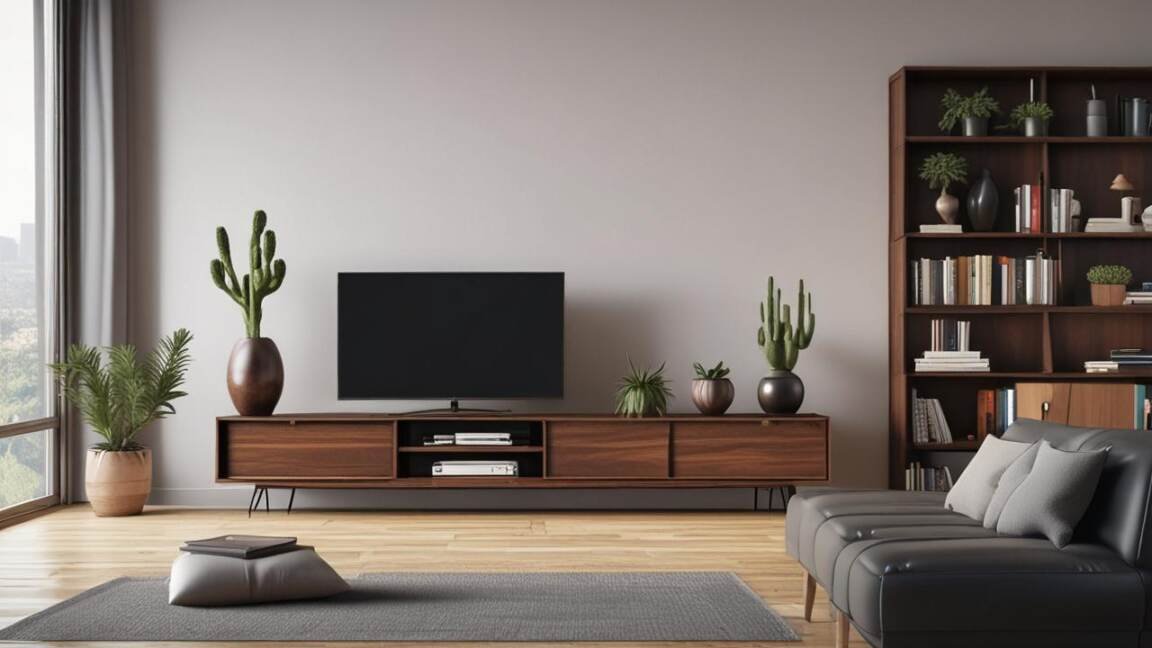
Quick Warning Signs Table
| Warning Sign | What It Looks Like | Risk Level | Action Needed |
|---|---|---|---|
| Sagging or bowing | Shelf dips in the middle | High | Reduce weight or replace |
| Sticking doors and drawers | Do not slide or open smoothly | Medium | Check humidity and alignment |
| Wobbling frame | Console rocks when bumped | High | Tighten joints or anchor it |
| Creaking or popping noises | Noise when placing items on it | Medium | Inspect all joints and fasteners |
| Peeling laminate or veneer | Surface layer lifts or bubbles | Medium | Seal edges or replace |
| Rusted or stripped hardware | Screws spin without gripping | High | Replace hardware or the unit |
1 – Sagging or Bowing Shelves
What to Look For
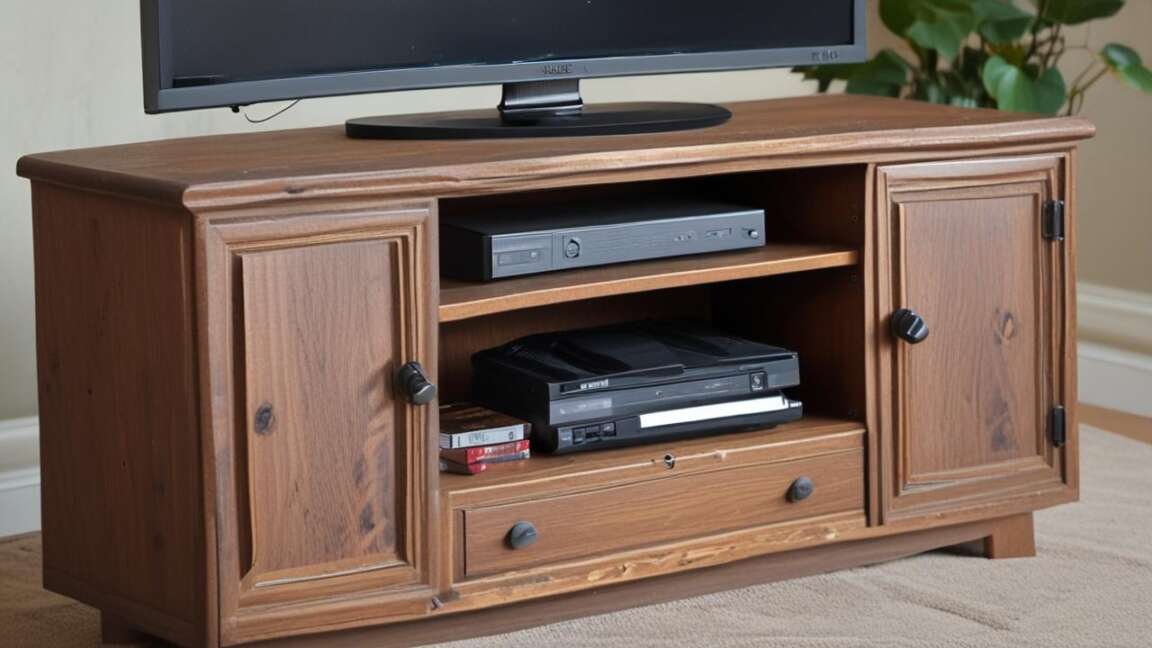
A shelf that dips in the center is the most obvious warning sign. Place a level across the shelf to confirm. You may also see cracks forming near the screw holes or along the edges. TV console with storage shelves made from particle board or MDF are most prone to this problem.
Warning: A sagging shelf reduces the clearance below it. This can pinch cables or damage the equipment on the next shelf. Over time, the shelf can collapse completely and drop your TV or gaming console onto the floor.
Why It Matters
Most flat screen TVs weigh between 25 and 60 pounds. If you place a 45-pound TV on a shelf rated for 30 pounds, that shelf will start to bow. According to the, furniture tip-overs cause over 10,000 injuries each year in the United States. A sagging shelf is often a sign that the whole unit is overloaded. The risk increases when you store heavy game consoles, books, or decorative items on the same shelf.
What to Do
- Remove all items from the sagging shelf right away.
- Check the weight rating of the shelf. Many particle board shelves can only hold 20 to 40 pounds evenly distributed.
- If the damage is minor, shift the weight to the ends of the shelf, which are stronger.
- If the shelf is cracked or permanently bent, replace the entire TV console with a sturdier model.
2 – Doors and Drawers That Stick
What to Look For
Doors that no longer close flush or drawers that need a hard pull to open are common issues. You may see scrapes on the inside edges where the door rubs against the frame. The culprit is usually a warped frame caused by moisture or excessive weight on the top of the console. Humidity changes can cause wood and MDF to expand and contract, throwing off the alignment.
Why It Matters
Sticking doors and drawers mean your console is under stress. The frame may be twisting. This stresses the joints and connectors. When the frame twists, the load-bearing capacity drops. A twisted frame also means your TV no longer sits on a level surface. A 55-inch TV that tilts by even a small angle increases the risk of tipping. According to, furniture stability tests require a unit to remain steady under a 50-pound pull test. Warped frames often fail that test.
What to Do
- Measure the humidity in the room. The ideal range for wood furniture is 40 to 50 percent.
- Use a dehumidifier if the room is damp.
- Adjust the hinges on the doors if possible. Most modern consoles have adjustable hinges.
- If the frame is warped beyond adjustment, replace the unit. Repairing a warped MDF frame is rarely successful.
3 – Wobbling or Instability
What to Look For
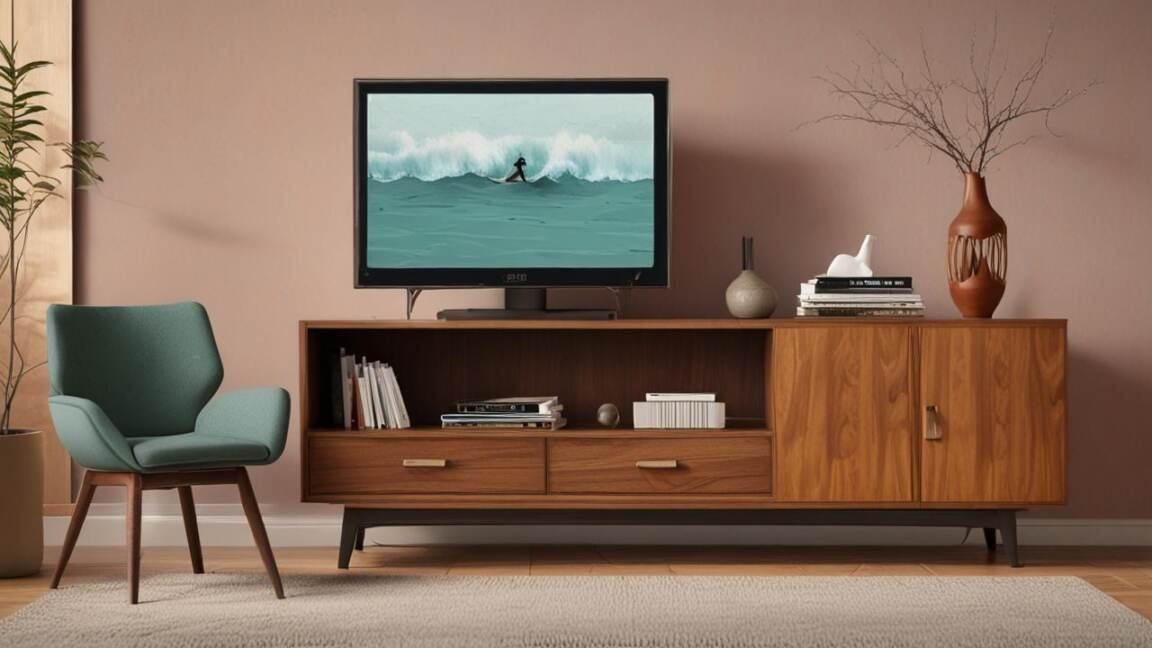
Stand at the side of your console and gently push it. Does it rock back and forth? Does it sway even a little? A stable TV console should not move when you push it with moderate force. Check the legs or base for any movement. Uneven floors can cause wobbling, but so can loose joints and a weak frame.
Important: According to, a TV tip-over can cause serious head and neck injuries to children. Anchoring your console to the wall is the best way to prevent injuries. If your console wobbles, it is more likely to tip over during an earthquake or if a child climbs on it.
Why It Matters
A wobbly console is a safety hazard. Modern televisions are thin and heavy at the base. When the console wobbles, the TV rocks too. This can cause the TV to fall forward. The recommends that all TV consoles pass a stability test where a 50-pound weight is applied to the top edge. A wobbling console would fail that test. The issue gets worse over time as the joints loosen further.
What to Do
- Check that all screws and bolts are tightened. Use a screwdriver or Allen wrench to tighten them.
- Place a shim under the legs if the floor is uneven.
- Always anchor the console to the wall using the included anti-tip straps or a kit from a hardware store.
- If the frame is loose and tightening does not fix it, the console may need to be replaced.
4 – Creaking or Popping Noises
What to Look For
Listen for sounds when you place items on the console or open the drawers. A creak or pop often comes from the joints. Wood and MDF expand and contract. But if the noise is new or getting louder, it signals that something is shifting inside the structure. The most common source is the cam lock fasteners used in flat-pack furniture from brands like IKEA. These can loosen over time and cause the panels to separate.
Why It Matters
Cam locks and dowels hold together most mass-market TV consoles. When these fasteners loosen, the panels begin to separate. This reduces the overall strength of the unit. A sudden pop can mean a joint has failed completely. According to the analysis of furniture construction, flat-pack furniture has an average lifespan of 5 to 10 years with normal use. After that, the joints tend to fail. Noise is the first audible warning sign.
What to Do
- Open all doors and drawers and inspect the cam locks. Tighten them with a screwdriver.
- Apply wood glue to loose dowels if you can access them.
- If the noise comes from a joint you cannot reach, consider replacing the unit before it fails completely.
- For heavy items like a center-channel speaker, distribute the weight evenly across the frame.
5 – Peeling Laminate or Veneer
What to Look For
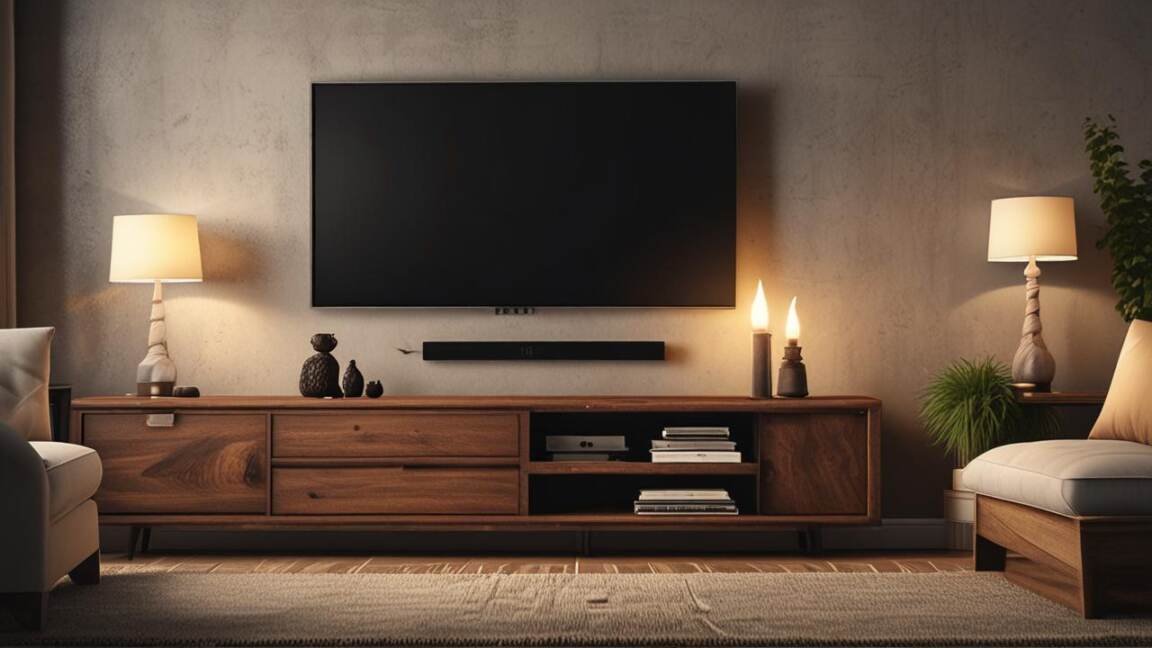
Check the edges and corners of your console. Laminate or veneer can peel away from the core material. You may see bubbles under the surface or chips along the edges. This commonly happens on the front edges of shelves and doors. Moisture is the main cause. A drink spill, a damp cloth left on the surface, or high humidity can cause the adhesive to fail. Once the surface layer lifts, the core material below it is exposed to more damage. Particle board and MDF swell when wet, which makes the peeling worse.
Why It Matters
Peeling laminate is not just a cosmetic issue. The surface layer acts as a moisture barrier. When it lifts, the core absorbs humidity and expands. This weakens the entire shelf or panel. A swollen panel loses its structural integrity. It may no longer support the weight it was designed to hold. If the peeling is on the top surface where your TV sits, the TV could become unstable. In a survey by, furniture with laminate failure was more likely to fail completely within 12 months if left unaddressed.
What to Do
- Remove items from the affected area immediately.
- Dry the area thoroughly. Use a fan or dehumidifier for 24 hours.
- Apply wood glue or contact cement under the loosened laminate and clamp it with a heavy book or weight for 24 hours.
- If the core is swollen or the peeling covers a large area, replace the console. The structural damage is likely too far gone.
6 – Rusted or Stripped Hardware
What to Look For
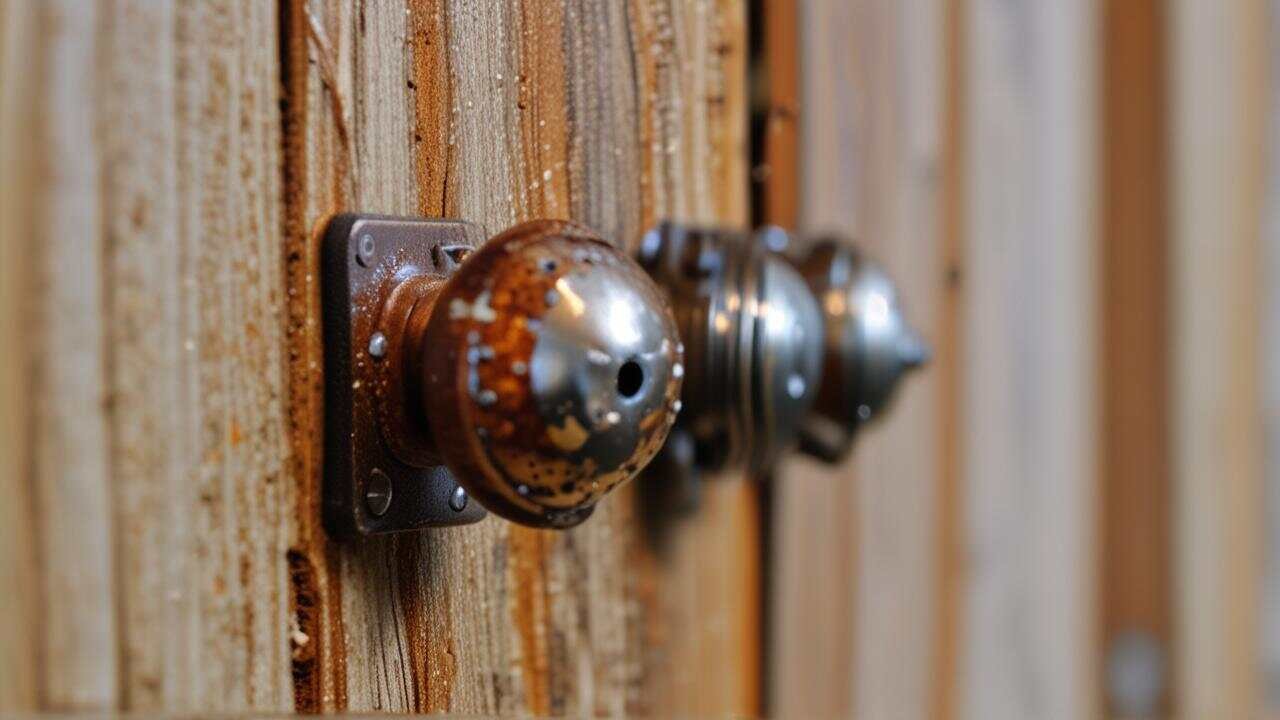
Remove the drawers or open the back panel of your console. Look at the screws, bolts, brackets, and metal slides. Signs of rust are orange or brown discoloration. Stripped hardware looks like the screw head is worn down, or the screw spins without tightening. Check the bracket that holds the TV stand itself. This is a critical component. If the bracket is rusted or the screws are stripped, the TV can fall forward with minimal force.
Warning: Rust spreads quickly in humid environments. A small rusty spot on a bracket can weaken the metal significantly in just a few months. If you see rust on the main support brackets, stop using the console and replace it. The risk of a sudden collapse is very real.
Why It Matters
Hardware failures are the most dangerous warning sign on this list. Screws and brackets are the backbone of your TV console. When they fail, there is no backup system. According to the, furniture tip-overs sent an average of 11,000 people to the emergency room each year between 2020 and 2023. In many of those cases, the hardware was the point of failure. Stripped screws cannot be tightened. Rusted brackets cannot be repaired. They must be replaced.
What to Do
- Inspect all visible hardware at least once every six months.
- Replace stripped screws with new ones of the exact same size and thread pitch.
- For rusted brackets, replace them with stainless steel or coated brackets if possible.
- If the screw holes in the wood are stripped, fill them with wooden toothpicks and wood glue, then reinsert the screws. This works for minor stripping.
- If multiple fasteners are failing, replace the entire TV console for safety.
How to Prevent Future Issues With Your TV Console
Prevention is easier than repair. Follow these steps to extend the life of your TV console with storage.
Weight Management
Check the weight rating of each shelf. Most consoles list the maximum weight in the assembly manual. Distribute heavy items like game consoles and speakers across different shelves. Do not place your TV on a shelf that is not designed for it. The largest TV consoles can support televisions up to 80 pounds, but always confirm the rating.
Environment Control
Wood and MDF are sensitive to humidity. Keep your living room between 40 and 50 percent humidity. Use a dehumidifier in damp climates. Avoid placing your console near a radiator, heating vent, or direct sunlight. Heat and UV light dry out the material and make it brittle.
- Use a hygrometer to check humidity levels. They cost less than 15 dollars.
- Keep drinks in coasters and wipe spills immediately.
- Dust the console weekly with a soft, dry cloth. Avoid wet cloths that can seep into the edges.
Regular Maintenance
Tighten all visible screws and bolts every three months. Cam lock fasteners can loosen over time. A simple turn with a screwdriver can prevent a joint from failing. Clean the drawer slides and apply silicone spray if they start to stick. Inspect the anti-tip strap and reattach it if it becomes loose. Always follow furniture tip-over safety guidelines to secure your TV console and protect your family.
- Check all screws and bolts with a screwdriver or Allen wrench.
- Inspect the anti-tip strap. Make sure it is securely attached to both the console and the wall stud.
- Test the stability by gently pushing the console from the side and front.
- Listen for any new creaks or pops during use.
- Clean the surface and edges with a dry microfiber cloth.
Common Myths vs Facts About TV Console Failure
Many people misunderstand how and why a TV console with storage fails. Here are three myths and the facts that correct them. Understanding furniture tip-over risks can help you avoid common myths about console failure.
- Myth: A wobbly console is fine as long as the TV is secured with a strap.
Fact: A strap reduces the risk of the TV falling, but it does nothing to stop the console itself from collapsing. If the frame is weak, the entire unit can still break apart and cause injury. - Myth: Only cheap furniture from discount stores fails this way.
Fact: Even premium brands can fail if they are overloaded or exposed to high humidity. According to, some higher-end consoles use MDF or particle board that swells just as easily as budget models. Always check the materials used, regardless of the price tag. - Myth: You can fix any sagging shelf by adding a support bracket in the middle.
Fact: A support bracket helps distribute weight, but it does not reverse the structural damage that has already occurred. If the shelf is already bowed or cracked, it will fail eventually. Replacement is the only permanent fix.
Frequently Asked Questions
How long does a typical TV console with storage last?
A solid wood TV console with storage can last 15 to 20 years with proper care. Consoles made from particle board or MDF typically last 5 to 10 years. The lifespan depends on the weight placed on it and the humidity of the room. Regular maintenance can extend the life of any console.
Can I repair a stripped screw hole in my TV console?
Yes. Fill the hole with wooden toothpicks coated in wood glue. Break the toothpicks off flush with the surface. Wait 24 hours for the glue to dry. Then reinsert the screw into the filled hole. This works for most particle board and wood consoles. For MDF, use a plastic wall anchor designed for furniture instead.
What is the best material for a TV console with storage?
Solid hardwood is the strongest and longest lasting material. It resists sagging, warping, and hardware stripping better than MDF or particle board. Plywood with a veneer surface is the next best option. Avoid thin particle board and laminate if you plan to store heavy items. According to the, solid wood consoles can support 30 to 50 percent more weight than MDF consoles of the same thickness.
Should I anchor my TV console to the wall even if it feels stable?
Yes. The recommends anchoring all furniture that is 30 inches tall or taller. A stable console can become unstable if a child climbs on it or during an earthquake. The anchor strap is a simple and low-cost safety measure. Most damage from tip-overs is preventable with proper anchoring.
How often should I inspect my TV console for warning signs?
Inspect your console every three months. Check for loose screws, sagging shelves, sticking drawers, and any signs of rust or moisture damage. Mark the inspection dates on a calendar. If you notice any of the six warning signs listed in this guide, take action immediately.
Final Thoughts
Your TV console with storage works hard every day. It holds a heavy television and stores your media items. The six warning signs in this guide will help you catch problems early. Staying on top of maintenance will keep your equipment safe and your home secure. Performing regular furniture maintenance extends the life of your TV console and prevents sudden failure.