
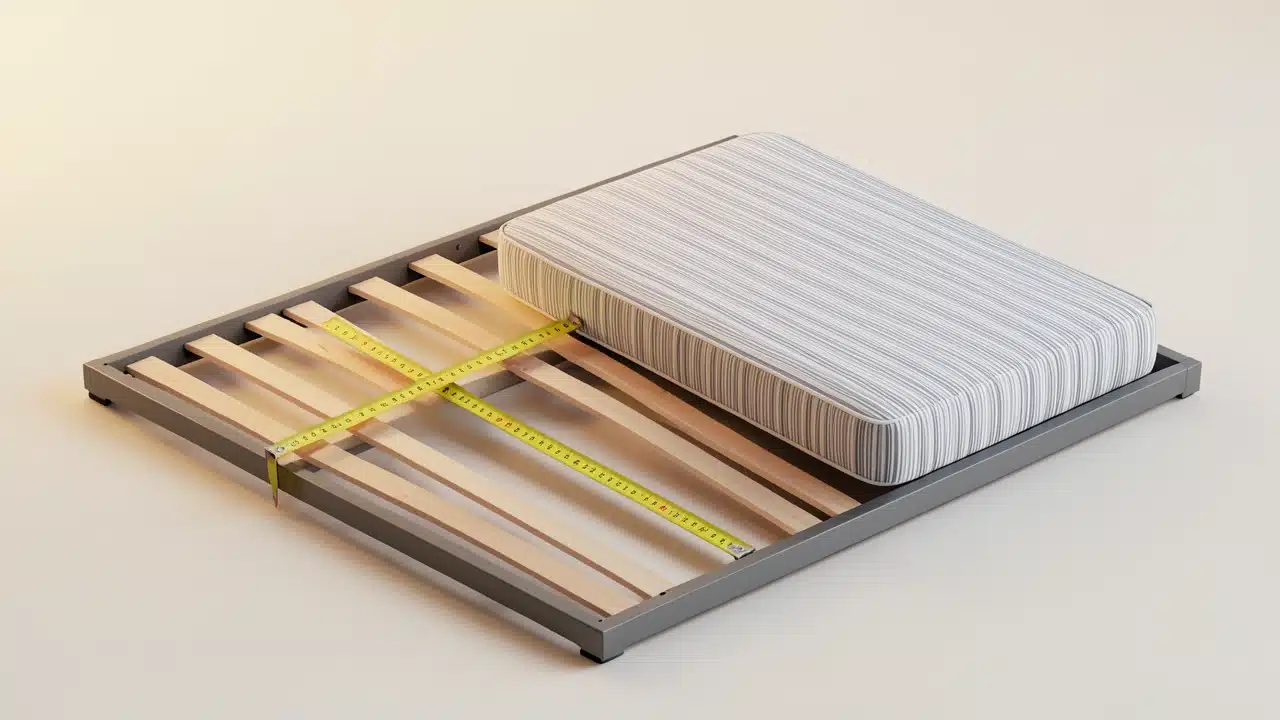
Bed slats should be spaced no more than 2 to 3 inches apart for proper mattress support, particularly for memory foam, latex, and hybrid mattresses. Wider gaps allow the mattress to sag between slats, which reduces comfort, shortens the mattress lifespan, and can contribute to back pain. Checking the mattress manufacturer's support specifications is essential, because improper slat spacing can void the warranty and limit the bed's structural integrity.
Bed slats should usually be no more than 2–3 inches apart for proper mattress support, especially for foam, latex, and hybrid mattresses.
Wider gaps can let the mattress sag between slats, reducing comfort and possibly shortening its life. Always check the mattress brand’s support rules, because poor slat spacing may affect warranty coverage.
Getting the right support for your mattress is super important for a good night’s sleep and for making your mattress last longer.
If your bed slats are too far apart, your mattress can sag in the middle. This can lead to back pain and make your mattress wear out faster.
Understanding How Far Apart Should Bed Slats Be for Proper Mattress Support? will help you create a solid foundation for your bed, ensuring comfort and durability. We’ll cover what you need to know to get this right.
Key Takeaways
- Different mattress types need different slat spacing for optimal support.
- Too much space between slats can void mattress warranties.
- Most memory foam and hybrid mattresses require slats closer together.
- Platform beds often have slats already built to the correct spacing.
- Measuring your current slat spacing can help you identify issues.
- Adjusting slat spacing or adding more can improve mattress longevity.

Why Slat Spacing Matters for Your Mattress
The space between your bed slats plays a big role in how your mattress performs. Think of slats as the backbone of your bed. They hold up your mattress and distribute your weight evenly.
If the gaps are too wide, your mattress doesn’t get enough support. It can start to dip or sag between the slats. This can make sleeping uncomfortable.
It also puts extra stress on the mattress materials, causing them to break down faster. Getting the spacing right means your mattress will feel better and last longer.
When you buy a new mattress, especially foam ones, they often come with specific care instructions. One of the most common recommendations is about bed frame support. This is where slat spacing comes in.
Many mattress warranties specifically state how far apart your slats can be. If your bed frame doesn’t meet these requirements, your warranty could be void.
This means if something goes wrong with your mattress, you might not be able to get it replaced or repaired.
So, knowing How Far Apart Should Bed Slats Be for Proper Mattress Support? isn’t just about comfort. It’s also about protecting your investment in a good mattress. A well-supported mattress means better sleep quality.
You’ll wake up feeling more rested and without aches and pains. It also means you won’t have to buy a new mattress as often, saving you money in the long run.

Understanding Different Mattress Types and Slat Needs
Not all mattresses are created equal, and their support needs vary. The type of mattress you have is the biggest factor in determining the right slat spacing. This is because different materials react differently to pressure and support.
Memory Foam Mattresses
Memory foam mattresses are very popular for their comfort and contouring abilities. However, they can also be more sensitive to support. For memory foam, you generally need slats that are closer together.
This is because memory foam is designed to mold to your body. If the slats are too far apart, the foam can sink too deeply into the gaps. This can cause the mattress to lose its shape over time.It can also lead to poor airflow, making the mattress feel warmer.
A common recommendation for memory foam mattresses is a slat spacing of 2 to 3 inches apart. Some manufacturers might even suggest 2 inches or less. This close spacing provides a solid, even surface for the memory foam to rest on.
It helps maintain the mattress’s integrity and ensures you get the full benefits of its conforming properties. Always check your specific mattress’s warranty or manufacturer guidelines for the exact spacing they recommend.
Innerspring Mattresses
Traditional innerspring mattresses have a core made of metal coils. These mattresses are generally more forgiving when it comes to slat spacing. The coils themselves provide a good amount of support.
Because of this, innerspring mattresses can often handle slightly wider gaps between slats compared to foam mattresses. You might see recommendations for innerspring mattresses to have slats spaced up to 4 inches apart.
However, even with innerspring mattresses, very wide gaps can still cause issues. If the gaps are too large, the mattress can still sag. This can put uneven pressure on the coils.
It might also allow thinner parts of the mattress to sink down, making the surface feel less uniform. For most innerspring mattresses, keeping slats around 3 to 4 inches apart is a good rule of thumb. Again, checking the manufacturer’s advice is always best.
Hybrid Mattresses
Hybrid mattresses combine the benefits of both innerspring and foam layers. They typically have a coil support system topped with foam comfort layers. Because of this combination, hybrid mattresses often need a balance of support.
They need enough support to keep the coils from sagging, but also a surface that’s not too rigid for the foam layers.
For hybrid mattresses, a slat spacing of 2 to 3 inches is usually ideal. This range provides good support for the entire mattress structure.
It prevents the foam layers from sinking too much while also ensuring the coil system is adequately supported.
This closer spacing helps maintain the mattress’s shape and comfort for years to come. Understanding How Far Apart Should Bed Slats Be for Proper Mattress Support? is crucial for hybrids.
Latex Mattresses
Latex mattresses are known for their durability and responsiveness. They offer a different feel than memory foam, often being more buoyant. Latex is also a sturdy material.
Generally, latex mattresses can handle slightly wider slat spacing than memory foam. However, they still benefit from good support to maintain their shape and performance.
For many latex mattresses, a spacing of 2 to 3 inches is recommended. Some denser latex mattresses might even be fine with up to 4 inches. The key is to ensure there are enough slats to prevent any sagging or uneven pressure points.
Always refer to the specific latex mattress manufacturer’s guidelines for the most accurate information.
What is the Ideal Slat Spacing?
The question of How Far Apart Should Bed Slats Be for Proper Mattress Support? doesn’t have a single, universal answer. It truly depends on your mattress. However, there are general guidelines that most manufacturers follow.
General Guidelines
As a general rule of thumb, most modern mattresses, especially foam and hybrid types, benefit from slats spaced between 2 and 3 inches apart.
This spacing provides a solid foundation. It prevents the mattress from sinking too much and ensures even weight distribution.
For older innerspring mattresses, you might get away with up to 4 inches, but closer is often better for longevity.
Some manufacturers have even stricter requirements. They might suggest slats no more than 2 inches apart, or even continuous solid support. This is particularly true for very soft or very heavy mattresses.
Always prioritize the recommendations from your mattress’s manufacturer. They know their product best and have designed it to work with specific support systems.
Solid vs. Slatted Foundations
Some bed frames offer solid platforms instead of slats. Solid platforms provide continuous support. This is often considered the best option for memory foam and latex mattresses.
If you have a solid platform, there are no gaps for the mattress to sink into. This maximizes support and can help improve airflow.
If your bed frame has slats, the spacing is critical. If you’re unsure, measure the distance between the centers of two adjacent slats. This is the spacing you need to consider.
A bed frame designed for a specific mattress type will typically have the correct slat spacing built-in.

Signs Your Bed Slats Need Adjustment
You might not realize your bed slat spacing is an issue until you start noticing problems. Paying attention to these signs can help you catch problems early.
- Mattress Sagging: If you see a dip in the middle of your mattress, especially where you sleep, it’s a strong indicator of insufficient support.
- Uneven Feel: Your mattress might feel lumpy or uneven, even when it’s relatively new. This can happen when the mattress is not getting consistent support.
- Back Pain: Waking up with back pain or stiffness is a common sign that your mattress isn’t providing proper spinal alignment. This can be due to sagging.
- Visible Gaps: If you can clearly see large gaps between your slats, and your mattress seems to be sinking into them, it’s time to re-evaluate.
- Mattress Wear: Your mattress might show premature signs of wear and tear, like indentations or loss of loft, faster than expected.

How to Improve Your Bed Slat Support
If you’ve identified that your current slat setup isn’t ideal, there are several ways to improve it. You don’t always need to buy a whole new bed frame.
Adding More Slats
One of the easiest ways to improve support is to add more slats. If your bed frame has a few large gaps, you can buy extra wooden slats. You can then place these between your existing ones.
This reduces the distance between them. For example, if you have slats 4 inches apart, adding more can bring that spacing down to 2 inches. Make sure the new slats are the same thickness and length as your current ones.
Using Plywood or a Bunkie Board
For memory foam or latex mattresses that need very uniform support, you can place a sheet of plywood or a bunkie board over your existing slats. Cut a piece of plywood to fit the exact dimensions of your bed frame. Then, place it on top of the slats.
This creates a solid, continuous surface for your mattress. Ensure the plywood is at least 1/2 inch thick. You might want to drill some holes in the plywood to allow for better airflow, especially for foam mattresses.
A bunkie board is a pre-made, thin foundation that serves a similar purpose to plywood. They are specifically designed to provide extra support for mattresses. They are often lighter and easier to handle than a full sheet of plywood.
Replacing Your Bed Frame
If your current bed frame is old, unstable, or simply not designed for your mattress, replacing it might be the best long-term solution.
Look for bed frames that specifically mention their slat spacing or are designed for your type of mattress. Many modern platform beds are made with closely spaced slats or a solid base.
When choosing a new bed frame, check its weight capacity. Ensure it can support both the mattress and the sleepers. A sturdy frame is fundamental to achieving proper mattress support.
This is a key step in ensuring How Far Apart Should Bed Slats Be for Proper Mattress Support? is met.
Comparison: Slat Spacing Needs by Mattress Type
To make it easy to see the differences, here’s a quick comparison of slat spacing needs for common mattress types.
| Memory Foam | 2-3 inches (some prefer 2 inches or less) | Prevents deep sinking and maintains mattress shape; ensures even support. |
| Innerspring | 3-4 inches (closer is often better) | Coils provide some support, but gaps too wide can cause sagging and uneven pressure. |
| Hybrid | 2-3 inches | Balances support for coils and prevents foam layers from sinking too much. |
| Latex | 2-3 inches (some denser types up to 4 inches) | Maintains shape and responsiveness; ensures sufficient support for the durable material. |
Choosing the Right Bed Frame
When you’re buying a new mattress, it’s often a good time to think about your bed frame too. A frame that’s compatible with your mattress will make sure you get the best performance from it.
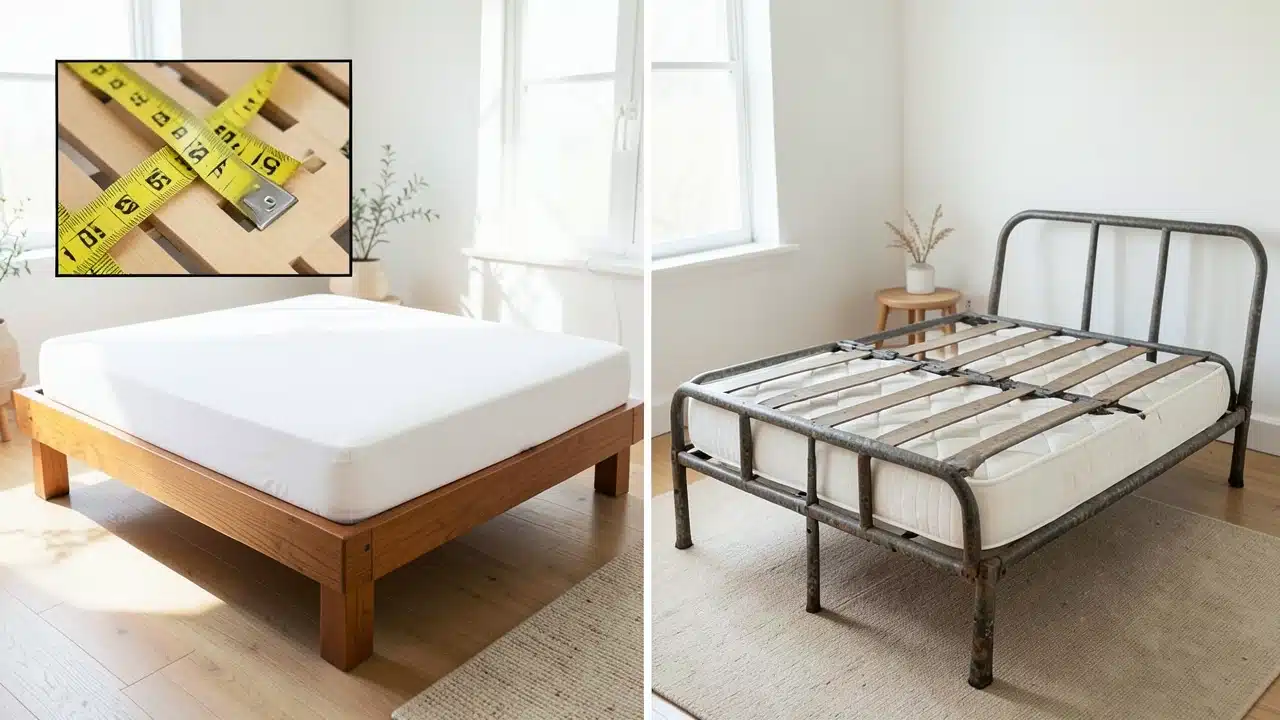
Platform Beds
Platform beds are a popular choice because they often come with built-in support. Many have closely spaced slats or a solid surface. They are designed to be used without a box spring.
This makes them an excellent option for memory foam, latex, and hybrid mattresses. They inherently provide the kind of support needed for these mattress types.
Adjustable Bases
Adjustable bases offer more than just support; they provide customizable comfort. Many modern adjustable bases are designed to work with most mattress types, including foam and hybrids. However, it’s crucial to check if your specific mattress is compatible with an adjustable base.
Some mattresses, especially older innerspring models, might not bend well and could be damaged. If compatible, the base usually offers good support, often with closely spaced slats or a flexible system.
Traditional Bed Frames with Box Springs
If you’re using a traditional bed frame that requires a box spring, ensure the box spring itself is in good condition.
A worn-out box spring can also lead to poor mattress support. For mattresses that specifically require a box spring, make sure it has a strong, supportive structure.
For many newer mattresses, box springs are not recommended and can actually hinder performance. Always check your mattress warranty. A traditional box spring provides a solid, flat surface for innerspring mattresses but is not recommended for many newer foam models.
Frequently Asked Questions Of How Far Apart Should Bed Slats Be For Proper Mattress Support?
What is the standard spacing for bed slats?
The standard spacing for bed slats varies, but for most modern mattresses like memory foam and hybrids, it’s typically between 2 to 3 inches apart to ensure proper support.
Can I use my mattress on a bed frame with slats that are too far apart?
While you can place your mattress on it, it’s not recommended. Slats too far apart can cause your mattress to sag, reduce its lifespan, and potentially void your warranty. This is why knowing How Far Apart Should Bed Slats Be for Proper Mattress Support? is important.
My mattress warranty says slats should be 2 inches apart. What if mine are 3 inches?
If your mattress warranty specifies a maximum slat spacing of 2 inches and yours are 3 inches, you are likely not meeting the warranty requirements. It would be best to add more slats or use a bunkie board to reduce the gap.
Do I need to worry about slat spacing for an old innerspring mattress?
While older innerspring mattresses are more forgiving, very wide gaps (over 4 inches) can still cause sagging and uneven wear. Keeping them closer, around 3-4 inches, is still beneficial for overall support and comfort.
How can I measure my bed slat spacing?
Simply use a ruler or measuring tape. Measure the distance from the center of one slat to the center of the next slat. This will give you the actual spacing your mattress is supported by.
Is a solid platform bed better than slats for mattress support?
For many modern mattresses, especially memory foam and latex, a solid platform bed offers the most consistent and even support, preventing any sagging into gaps.
Final Thoughts
Ensuring your bed slats are spaced correctly is a simple but vital step for mattress health and your sleep quality. Following CDC sleep recommendations can help ensure you get restful sleep on a properly supported mattress.
Aim for 2-3 inches apart for most foam and hybrid mattresses, and check your manufacturer’s specific recommendations. Proper slat spacing protects your mattress, supports your body, and helps you enjoy restful sleep. For proper mattress support, bed slat spacing should typically be between two and three inches apart.