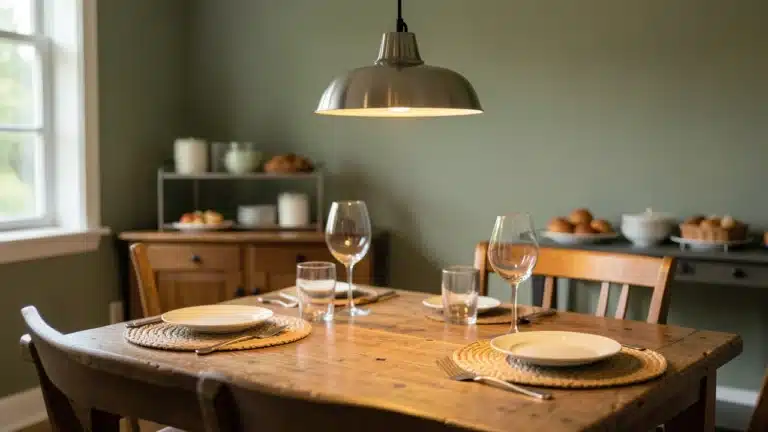
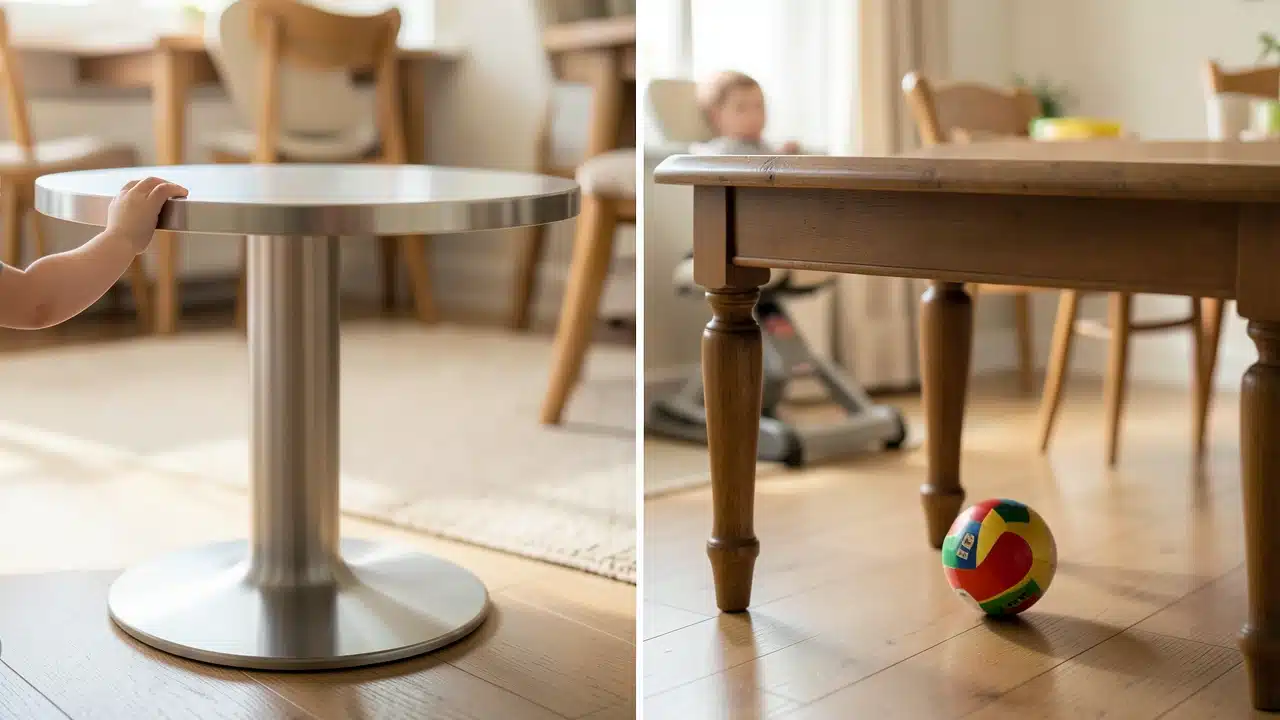
For households with young children, a heavy four-leg dining table is generally safer than a pedestal base because it provides superior stability against climbing, leaning, and pulling. Pedestal tables offer more knee room and fewer sharp edges, but a narrow or lightweight base raises tipping risk, whereas four-leg designs introduce more corners and tripping hazards. Prioritize a wide, heavy footprint with rounded edges and wobble-free construction in either style to minimize the risk of bumps and tumbles.
Pedestal base vs. 4-leg dining table safety depends on stability, weight, and child behaviour. A heavy 4-leg table is usually steadier for climbing, leaning, and pulling.
A pedestal table gives more knee room but can tip if the base is narrow or lightweight. Choose rounded edges, a wide base, and avoid wobbly designs.
Keeping your little ones safe while they eat is a top priority for any parent. You want a dining space that’s both stylish and secure, especially when tiny hands and active bodies are around.
Making the right choice for your dining table can make a big difference in preventing bumps and tumbles.
We’ll help you figure out the best option for your family by looking at the pros and cons of a Pedestal Base vs. 4-Leg Dining Table: Which Is Safer With Young Children? This guide will show you what to consider so you can create a worry-free dining area for everyone.
Key Takeaways
- Pedestal tables often have fewer sharp edges and a more streamlined design, which can be safer for toddlers.
- Four-leg tables offer more stability but can present tripping hazards and have more corners.
- Consider the height and sturdiness of the table base when evaluating safety.
- The material and finish of the table can also impact child safety.
- Even with the safest table, supervision is always the best way to ensure child safety.
Understanding Table Stability and Child Safety
When we talk about dining tables and young children, safety is the first thing on most parents’ minds. A wobbly table or a table with sharp corners can quickly become a hazard.
The design of the table base plays a huge role in how safe it is for little ones who are still learning to navigate their world.
We need to think about how easily a table can tip over and what kind of bumps and bruises might happen. This is why understanding the differences in stability is so important for families.
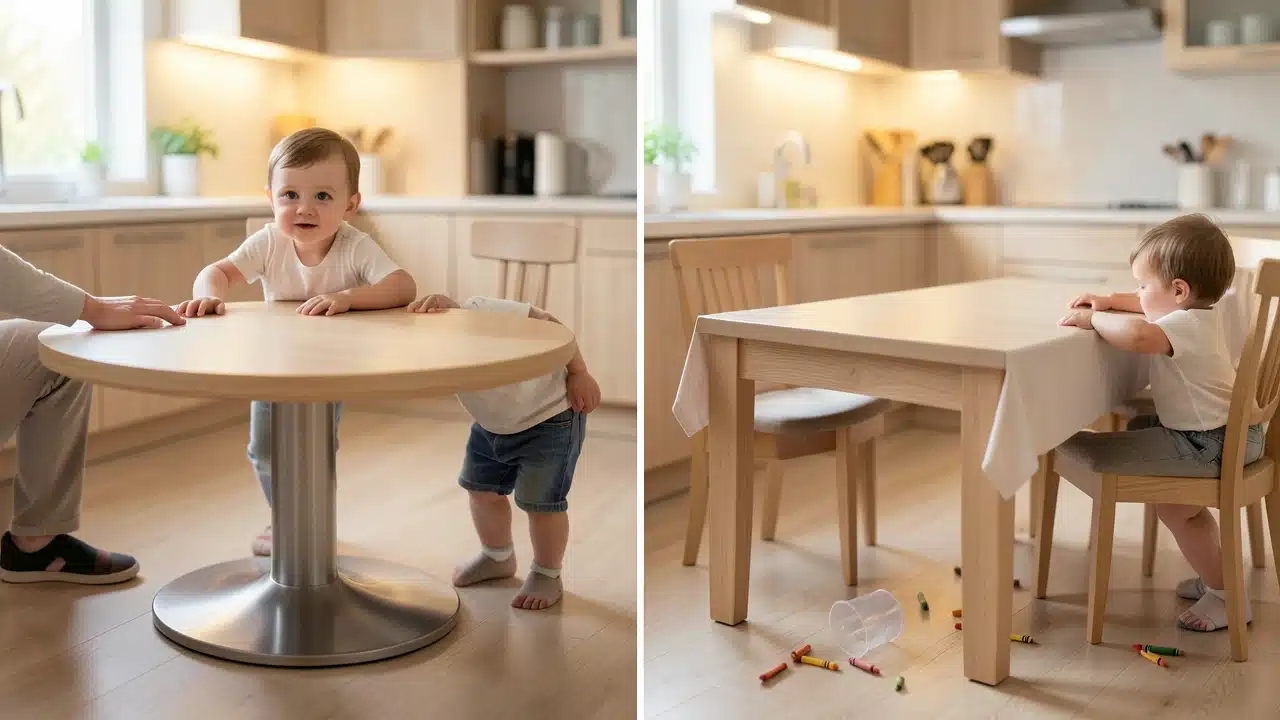
The Stability Factor: Pedestal vs. Four Legs
Stability is key when thinking about Pedestal Base vs. 4-Leg Dining Table: Which Is Safer With Young Children? A table that is very stable is less likely to fall over if a child leans on it or bumps into it.
A table with four legs usually has a broader base of support. This can make it feel very sturdy. However, those four legs can sometimes be in the way. Children might trip over them, especially when they are running around or trying to pull out a chair. The legs can also have sharp corners that a child might bump into.
A pedestal table has a central support that spreads out at the base. This often creates a cleaner look with fewer obstacles around the legs.
The base of a pedestal table can be quite wide and heavy, which helps with stability. However, some pedestal designs might be narrower at the bottom or have a shape that could be a tripping hazard if not placed carefully.
Assessing Potential Hazards
Every table type has potential hazards for young children. It’s about weighing which hazards are more likely or more severe.
For a four-leg table, the main concerns are:
- Tripping: The legs can be hard to see, especially for a toddler.
- Bumping into corners: Many four-leg tables have sharp, square corners on the legs.
- Stability issues: If one leg is on an uneven surface, the table could wobble.
For a pedestal table, the potential hazards include:
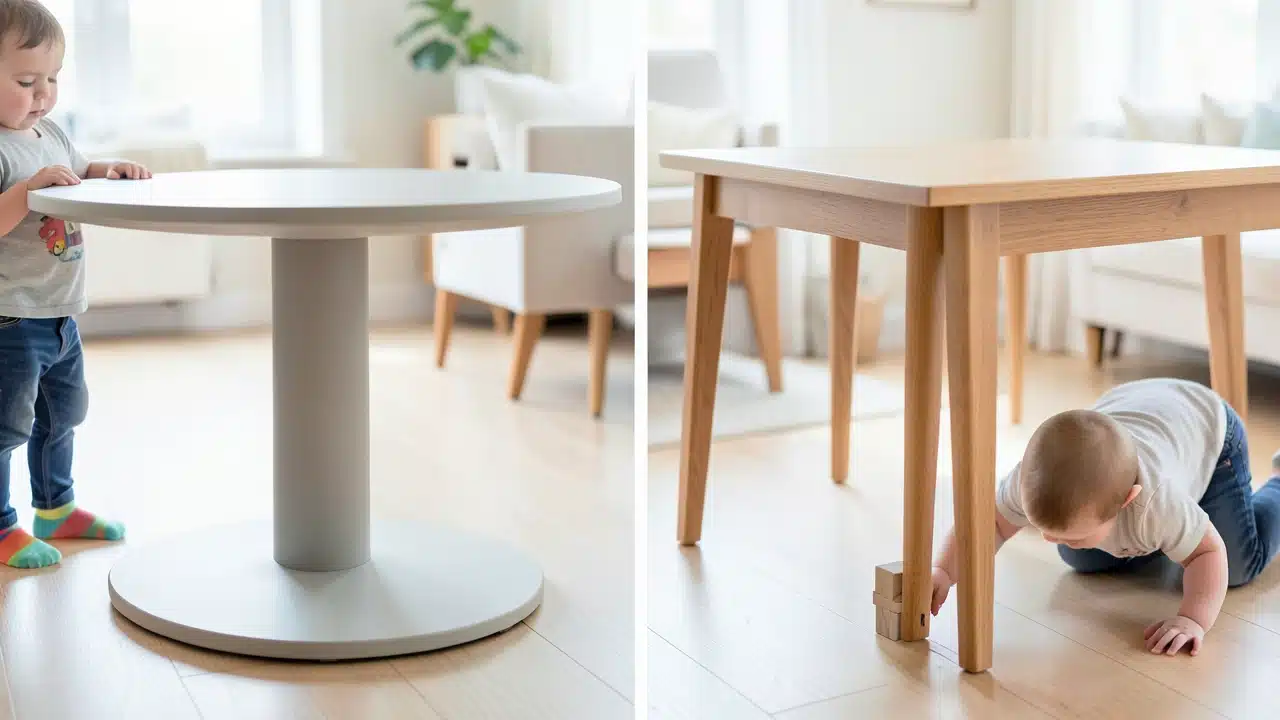
- The central column: A child could bump their head or body against the solid central support.
- The base shape: Some pedestal bases are round or have a unique shape that could still be a tripping hazard.
- Tipping risk: If the base is too small or the table is very top-heavy, there’s a slight risk of tipping, though this is less common with well-made tables.
Design and Features That Impact Child Safety
Beyond just the number of legs, the overall design and specific features of a dining table can greatly affect its safety for children. Think about the edges, the height, and even the material.
Edge Profiles and Corners
The edges of a dining table are often the first point of contact for a child who might stumble.
On a four-leg table, the legs themselves might have sharp corners. The tabletop also has edges, and these can be square or rounded. Rounded edges are always a safer bet for children.Pedestal tables often have a more continuous, flowing design. The central column is usually smooth and round.
The tabletop edges can be rounded or have a more modern, straight edge. If the tabletop has a very sharp edge, it’s a risk regardless of the base. However, many pedestal tables are designed with softer lines.
Tabletop Height and Reach
The height of the dining table is important for how children interact with it. A table that is too high might encourage climbing. A table that is too low could be a tripping hazard for the legs.
Most standard dining tables are around 28-30 inches high. This height is generally safe for most children when seated in a proper chair. The concern isn’t usually the height itself, but what a child can reach or lean on.
With a pedestal table, the central support means there are no legs to get in the way when a child is trying to get close to the table, perhaps to reach for something. This can be a good thing, as it reduces the chance of them getting their feet caught.
Material and Finish Considerations
The material a table is made from and its finish can also play a role in child safety.
- Wood: Natural wood can be beautiful, but the finish is important. A smooth, sealed finish is better than a rough or splintery one. Solid wood is generally very sturdy.
- Glass: While stylish, glass tabletops can be a concern. Tempered glass is safer than regular glass, but any glass can break. For very young children, a solid surface might be preferable.
- Metal: Metal tables can be very durable. However, metal edges or legs can be hard and cold, leading to painful bumps.
- Laminate/Veneer: These materials can be good because they are often smooth and easy to clean. However, if they chip or peel, they can create sharp edges or small pieces that could be a choking hazard.
When thinking about Pedestal Base vs. 4-Leg Dining Table: Which Is Safer With Young Children?, consider how easy the table is to clean. Spills are inevitable with kids, and a smooth, easy-to-wipe surface is a plus.
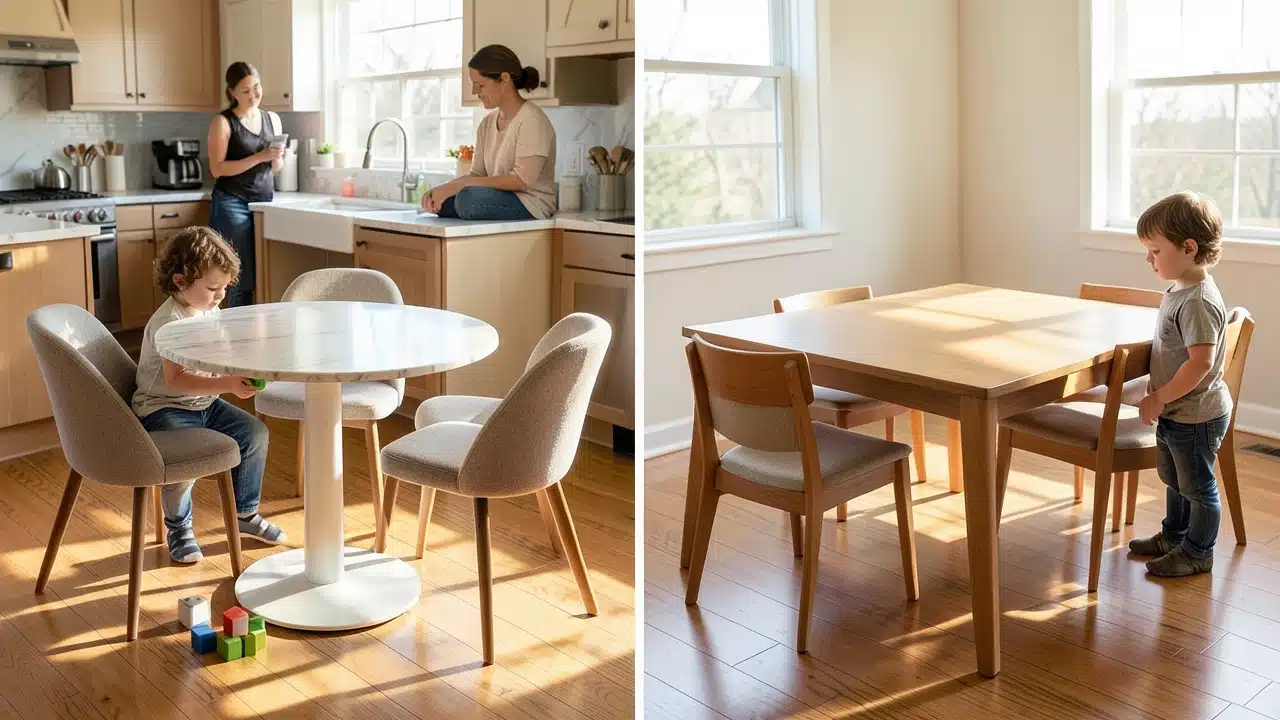
Comparing the Two Styles: A Practical Look
To really get a handle on the Pedestal Base vs. 4-Leg Dining Table: Which Is Safer With Young Children? question, let’s break down the practical aspects of each. This isn’t just about looks; it’s about how they function in a busy family home.
Ease of Movement and Access
How easy is it for children to get around the table? This is a big factor.
With a four-leg table, chairs can sometimes get stuck against the legs. Children might also have to maneuver around legs when walking past. This can increase the chance of tripping.
A pedestal table often allows chairs to be tucked in more cleanly. There are fewer obstacles around the base.
This can make it easier for children to move around the table without bumping into anything. It also makes it easier for them to get in and out of their seats.
Potential for Injury from Falls
Falls are a common concern with young children. How does each table type fare?
A fall onto a sharp corner of a four-leg table or its legs can cause a nasty bruise or cut. The legs themselves can also be a hard object to fall against.
A pedestal table, with its often smoother, more continuous design, might offer a slightly softer landing if a child falls near it.
The central column is usually round. However, if the pedestal base is wide and has a distinct edge, a child could still trip and fall against it.
Stability Under Pressure
Kids can be surprisingly strong and sometimes lean or push on things.
A well-built four-leg table is inherently very stable. The weight is distributed evenly. It’s unlikely to tip unless deliberately pushed with extreme force.
A pedestal table’s stability depends heavily on the design of its base. A wide, heavy base is crucial. If the base is narrow or the tabletop is very large and heavy, there’s a greater risk of tipping, though this is rare for quality furniture. For most families, the stability of a good pedestal table is more than adequate.
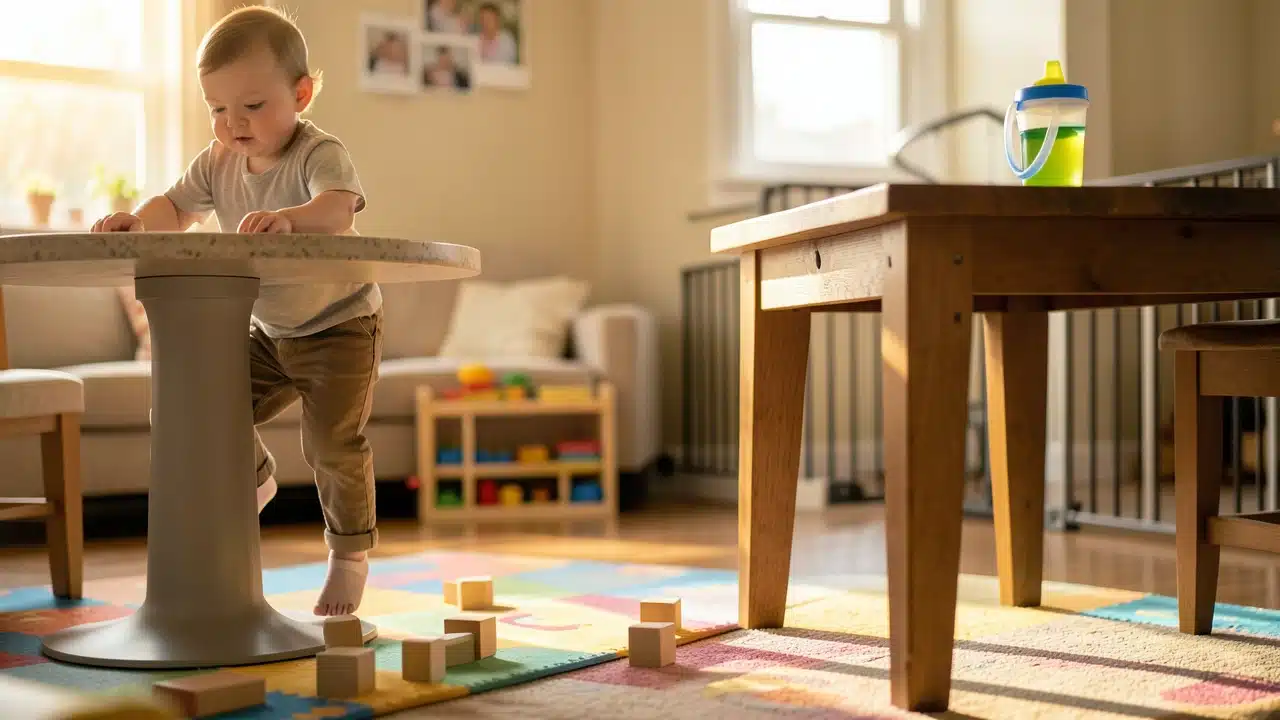
Making the Best Choice for Your Family
Deciding between a pedestal base and a four-leg dining table involves looking at your specific needs and the ages of your children. There’s no single “perfect” answer, but we can highlight what makes each a good or less good choice.
When a Pedestal Base Might Be Safer
A pedestal table can be a great choice for families with very young children, especially toddlers and preschoolers.
- Fewer sharp corners: The rounded design of many pedestal bases and columns means fewer places for little heads and bodies to get hurt.
- Clearer walking path: With no legs to navigate around, children have a safer space to move.
- Streamlined appearance: The smooth lines can reduce visual clutter, making it easier for children to avoid bumping into things.
Consider a pedestal table if your main concern is reducing sharp edges and tripping hazards in the immediate vicinity of the table. This style often lends itself well to modern or minimalist décor, which also tends to favor simpler shapes.When a Four-Leg Table Might Be Preferable
A four-leg table still offers many advantages, especially for families with slightly older children or those who prioritize maximum stability.
- Unmatched stability: The classic four-leg design is generally the most stable option, resisting tipping even with significant force.
- Variety of styles: Four-leg tables come in an enormous range of styles, from sturdy farmhouse to sleek modern.
- Chair placement: You can often position chairs more independently without being limited by a central support.
If your children are a bit older and less prone to random tumbles, or if you have a very active household where a table might be leaned on frequently, a robust four-leg table could be the better choice. Opting for a four-leg table with rounded corners and a solid build is key.
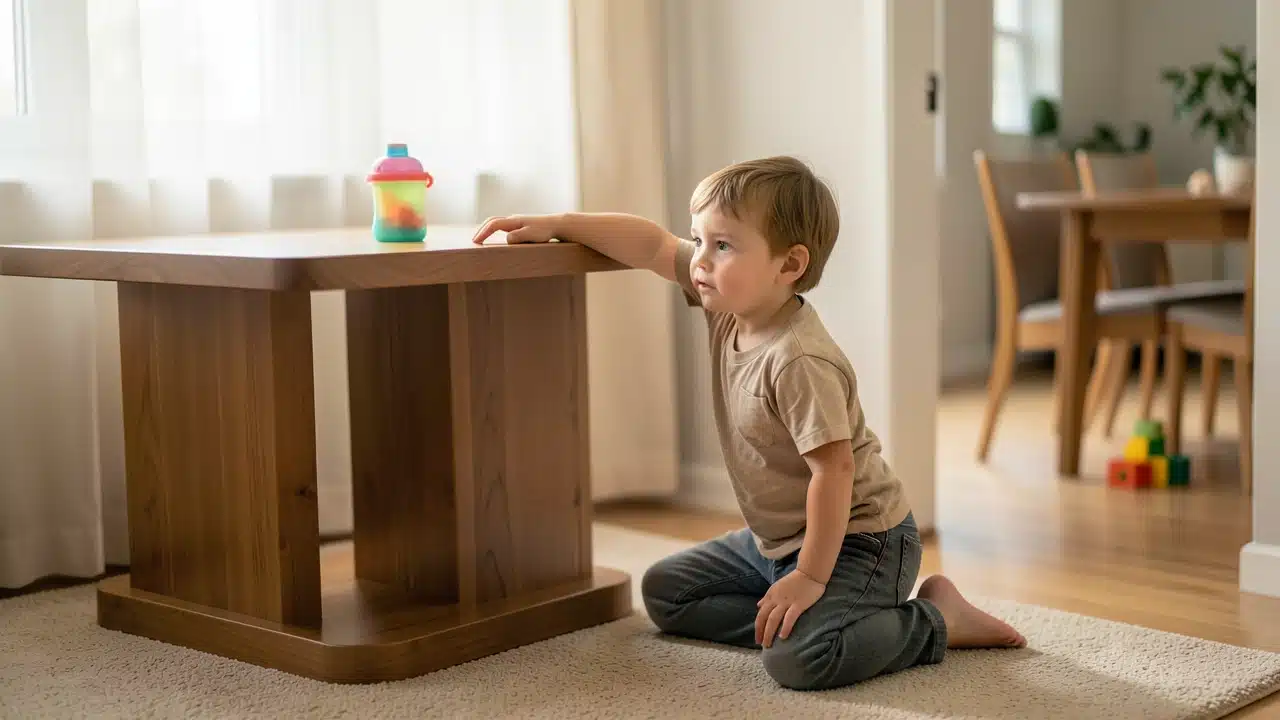
The Crucial Role of Supervision and Table Placement
No matter which type of table you choose, remember that supervision is always the most important safety measure. Even the safest table can become a hazard if children are not watched.
Supervision is Non-Negotiable
Always keep an eye on young children around the dining table. Teach them the rules of the house, like not standing on chairs or climbing on the table. This is true whether you have a Pedestal Base vs. 4-Leg Dining Table: Which Is Safer With Young Children?
Strategic Table Placement
Where you put the table in your dining area matters.
- Avoid high-traffic areas: Don’t place the table where children are likely to run past it at high speed.
- Clear the floor: Keep the area around the table clear of toys or other items that could cause a trip.
- Consider the base: If you have a pedestal table, ensure the base isn’t a trip hazard in itself. For a four-leg table, make sure the legs aren’t too close to main walkways.
Frequently Asked Questions Of Pedestal Base Vs. 4-Leg Dining Table: Which Is Safer With Young Children?
Is a pedestal table always safer than a 4-leg table for toddlers?
Generally, pedestal tables often have fewer sharp corners and obstacles, making them a preferred choice for toddlers. However, stability and the specific design of the base are also critical safety factors.
What are the main tripping hazards with a 4-leg dining table?
The main tripping hazards with a 4-leg dining table are the legs themselves, which can be hard to see, and any sharp corners on the legs or tabletop.
Should I worry about a pedestal table tipping over with young children?
A well-made pedestal table with a wide, heavy base is very stable and rarely tips. However, it’s always wise to check the sturdiness and ensure it’s not top-heavy.
Are round dining tables safer than square ones for kids?
Round dining tables, whether pedestal or four-leg, are generally safer because they lack sharp corners, reducing the risk of bumps and injuries.
What is the best material for a dining table when you have young children?
Smooth, durable, and easy-to-clean materials like solid wood with a sealed finish, or certain types of laminate, are often recommended for their safety and practicality.
Does the height of the dining table matter for child safety?
The height itself is less of a concern than what children can reach or lean on. Standard dining table heights are usually fine, but ensure children are seated properly and not encouraged to climb.
How can I make a 4-leg dining table safer for my kids?
Opt for a table with rounded corners, ensure it’s very stable, and keep the area around the legs clear. You can also use corner protectors on any sharp edges.
Final Thoughts
Choosing between a Pedestal Base vs. 4-Leg Dining Table: Which Is Safer With Young Children? comes down to understanding your family’s needs. Always follow childproofing tips for dining tables to ensure a safe environment for young children.
Pedestal tables often offer a smoother, less obstructed space, while four-leg tables provide robust stability. Understanding furniture tip-over prevention is key when choosing between a pedestal and four-leg table.
Prioritize rounded edges and a sturdy build, and always remember that active supervision is the best safety tool you have. Refer to CPSC furniture safety guidelines for anchoring recommendations to prevent tip-overs.