
U-shaped sectionals can work for tall users, but only if specific measurements are met: a seat depth of at least 24 inches, a back height exceeding 20 inches, and a chaise length of 72 inches or more to fully support legs. Standard u-shaped sectionals often fail for people over 6 feet tall because they lack adequate thigh support and lumbar placement. Tall buyers should prioritize models with adjustable headrests and removable back cushions to customize fit and avoid knee pressure or neck strain.
Do u-shaped sectionals force tall people into a terrible sitting position? This guide explores the specific ergonomic challenges and shows you exactly what to look for before buying.
Tip: Simply put, a u-shaped sectional can work for tall users, but only if the seat depth is 24 inches or more, the back height exceeds 20 inches, and the chaise section is long enough to support your full leg length. Standard sectionals often fail for people over 6 feet tall.
Key Takeaways
- Tall users need a seat depth of at least 24 inches to avoid knee pressure and thigh overhang.
- The back height of a u-shaped sectional must be 20 inches or taller to support the upper back and neck of a tall person.
- Lumbar support placement is critical for tall users because standard sectionals often position the lumbar curve too low.
- Chaise length on a u-shaped sectional should be 72 inches or more to fully support a tall person’s legs without ankle overhang.
- Adjustable headrests and removable back cushions give tall users the flexibility to customize the fit for their height.

What Is a U-Shaped Sectional?
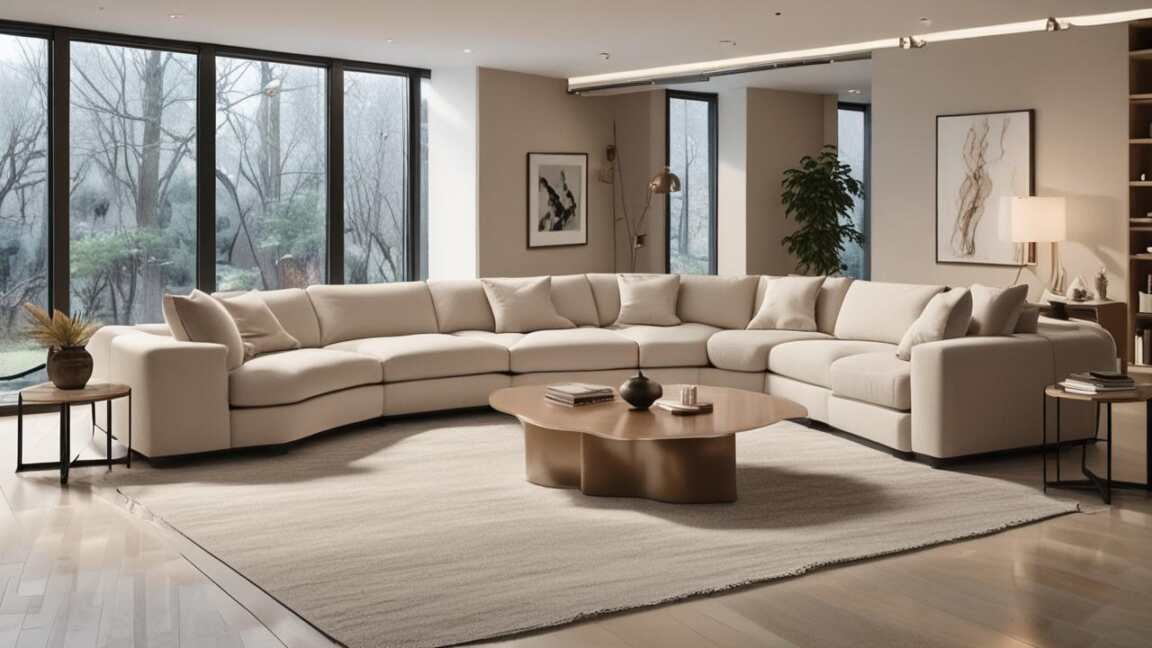
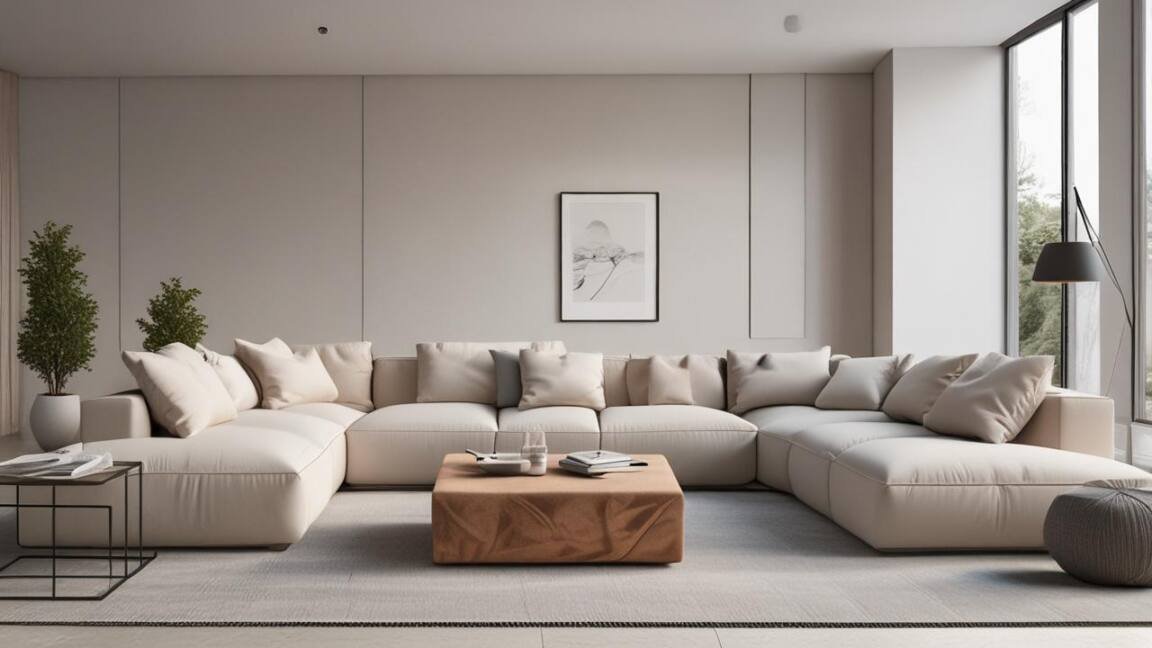
A u-shaped sectional is a large sofa configuration with three connected seating sections that form a U shape. It typically includes a main sofa, a left-facing chaise or loveseat, and a right-facing chaise or loveseat.
These sectionals can seat 6 to 10 people depending on size. Many models come with a built-in chaise, recliner sections, or a pull-out bed.
Important: Standard u-shaped sectionals are designed for the average adult height of 5 feet 9 inches. If you are 6 feet or taller, you cannot assume a standard model will work for you.

How Does a U-Shaped Sectional Work for Tall Users?
Ergonomics for tall users depends on three key measurements: seat depth, back height, and chaise length. Each measurement affects how your body aligns with the furniture.
According to, the ideal seat depth for a tall person is 24 to 28 inches. This allows your thighs to rest fully on the seat without pressure behind your knees.
Back height is equally important. A tall person needs the back of the sectional to reach at least 20 inches. Standard sectionals often have back heights between 16 and 18 inches, which leaves the upper back and neck unsupported.
Key Measurements Tall Users Must Check
Before you buy a u-shaped sectional, measure these four dimensions. Bring a tape measure to the store or check the product specifications online.
| Measurement | Standard Size | Tall Size (6’+) | Why It Matters |
|---|---|---|---|
| Seat Depth | 20-22 inches | 24-28 inches | Prevents knee pressure and thigh overhang |
| Back Height | 16-18 inches | 20-24 inches | Supports upper back and neck |
| Seat Height | 17-19 inches | 18-20 inches | Allows feet to rest flat on floor |
| Chaise Length | 60-66 inches | 72-80 inches | Full leg support without ankle overhang |
Warning: If you are 6 feet 2 inches or taller, a standard chaise length of 60 to 66 inches will leave your ankles and feet hanging off the edge. This can cause lower back strain and poor circulation over time.

Key Considerations for Tall Users
Seat Depth and Thigh Support
Seat depth measures from the front edge of the seat to the backrest. For tall users, the standard 20 to 22 inch depth is too short.
According to the, the average American male height is 5 feet 9 inches, but tall users over 6 feet have longer thigh bones. A seat depth under 24 inches forces your knees to bend at a sharp angle.
Look for sectionals with seat depths between 24 and 28 inches. Test the sofa by sitting with your back against the cushion. You should have two to three fingers of space between the edge of the seat and the back of your knee.
Back Height and Upper Body Support
Back height determines how much of your spine the couch supports. Standard u-shaped sectionals have back heights between 16 and 18 inches.
For a person over 6 feet tall, a 16 inch back hits below the shoulder blades. This leaves the entire upper back and neck unsupported. The result is hunching and neck strain after just 20 minutes of sitting.
Choose a sectional with a back height of at least 20 inches. Some brands offer high-back models with back heights of 24 to 28 inches. These provide support up to the base of your skull.
Lumbar Support Placement
Lumbar support is the curve in the lower back area of the sofa. Standard sectionals place the lumbar support between 8 and 10 inches from the seat.
For tall users with longer torsos, this support hits too low. It can push your pelvis forward and create lower back pain. You need lumbar support placed 10 to 12 inches from the seat.
Some u-shaped sectionals have removable back cushions. You can add a lumbar pillow or an adjustable lumbar insert to get the right positioning for your height.
Tip: Look for sectionals with adjustable headrests and removable back cushions. These features give tall users the ability to customize the support for their specific height and body proportions.
Who Should Consider a U-Shaped Sectional?
Not every tall person needs to avoid u-shaped sectionals. The right configuration works well for specific use cases and room layouts.
- Tall people with long legs and short torsos – These users benefit from deep seats but may need lower back heights. Look for a sectional with 26 inch seat depth and 18 inch back height.
- Tall people who recline or lie down – A u-shaped sectional with a long chaise gives you space to stretch out fully. The chaise should be at least 72 inches long.
- Tall people who host guests – The U shape creates intimate conversation areas. Choose a sectional with adjustable headrests so every guest can find a comfortable position.
- Tall people with large living rooms – U-shaped sectionals need at least 10 by 12 feet of floor space. Measure your room first to ensure the sectional fits without crowding.

Common Myths vs Facts About U-Shaped Sectionals and Tall Users
Myth: No u-shaped sectional can ever work for a tall person.
Fact: Many brands make tall-friendly u-shaped sectionals with extended seat depths and high backs. Brands like,, and offer customizable options for tall users.
Myth: Adding pillows and cushions can fix any sizing problem.
Fact: Pillows only adjust the seat depth, not the back height or chaise length. You cannot fix a chaise that is 60 inches long by adding a throw pillow. You need a chaise that matches your leg length.
Myth: Tall users should only buy reclining sectionals.
Fact: Recliners help, but they do not solve seat depth or lumbar support issues. A reclining sectional with a 20 inch seat depth still puts pressure behind your knees. Focus on the three core measurements first.
How to Test a U-Shaped Sectional Before You Buy
Follow these five steps to test any u-shaped sectional for tall usability. Use them in the store or when the furniture arrives at your home.
- Sit with your back flat against the backrest. Your feet should rest flat on the floor without tiptoeing.
- Slide your hand between the front edge of the seat and the back of your knee. You should have two to three fingers of space.
- Lean back and check if the backrest reaches your shoulder blades. If it hits below your shoulder blades, the back height is too low.
- Lie down on the chaise section. Your feet should not hang off the edge. Ideally, your ankles and feet rest fully on the cushion.
- Recline or adjust any headrests. Check if the headrest supports the base of your skull without pushing your head forward.
Important: Bring someone who is 5 feet 9 inches or shorter with you. Compare how the same sectional feels for different heights. This shows you exactly how much the furniture favors average-height users.
Top 5 Tall-Friendly U-Shaped Sectional Brands
These brands offer u-shaped sectionals with customization options that work for tall users. Always confirm specific measurements before ordering. Following ergonomic seating guidelines ensures comfort and support for taller individuals.
- West Elm – Offers modular u-shaped sectionals with 26 inch seat depth and high-back options. The has a configurable chaise length up to 78 inches.
- IKEA – The and models have 24 inch seat depth. The modular design lets you add an extra chaise for more legroom.
- La-Z-Boy – Many reclining u-shaped sectionals have 20 inch back height and 24 to 26 inch seat depth. Look for the for tall-friendly dimensions.
- Crate & Barrel – The has a 24 inch seat depth and high-back options. The chaise measures 72 inches long.
- Custom Upholstery Shops – Local furniture makers can build a u-shaped sectional to your exact height measurements. Expect delivery times of 8 to 12 weeks and prices starting around $3,000.
Frequently Asked Questions
Is a u-shaped sectional good for tall people?
A u-shaped sectional works for tall people if the seat depth is at least 24 inches and the back height is 20 inches or higher. The chaise section must be long enough to support your full leg length without ankle overhang.
What seat depth is best for a 6-foot-2 person?
A seat depth of 26 to 28 inches is best for someone who is 6 feet 2 inches tall. This depth allows your thighs to rest fully on the cushion without putting pressure behind your knees.
Can a tall person use a standard u-shaped sectional?
A tall person can use a standard u-shaped sectional for short periods, but it often causes knee pressure, lower back strain, and neck discomfort. Using the sofa for more than 30 minutes at a time may lead to pain or numbness.
What should I look for in a u-shaped sectional if I am tall?
Look for a seat depth of 24 to 28 inches, a back height of 20 inches or more, and a chaise length of at least 72 inches. Adjustable headrests and removable back cushions give you extra flexibility to customize the fit.
How do I make a standard u-shaped sectional more comfortable for my height?
Add a lumbar pillow to support your lower back at the correct height. Use a footstool or ottoman to extend the chaise length. Replace low back cushions with high-back pillows that support your upper back and neck.
Resources and Tools
- Measure Your Space Tool – Free online tool to calculate sofa dimensions against your room size.
- Cornell Ergonomic Guidelines – Research-based seat depth and back height recommendations for tall users.
- CDC Body Measurements Data – Official height and leg length statistics for the US population.
- Furniture Measurement Checklist – Printable PDF checklist for measuring sectionals in-store.
- Custom Upholstery Finder – Directory of local furniture shops that build custom sofas.
Final Thoughts
Tall users do not have to give up on u-shaped sectionals. Focus on seat depth, back height, and chaise length above all other features. Test the sofa in person using the five-step method before you buy. The right sectional lets you sit comfortably for hours without pain or strain. Understanding the design of u-shaped sectional sofas helps tall users choose the right configuration.
For official height statistics, refer to the CDC body measurements data from the National Health and Nutrition Examination Survey.