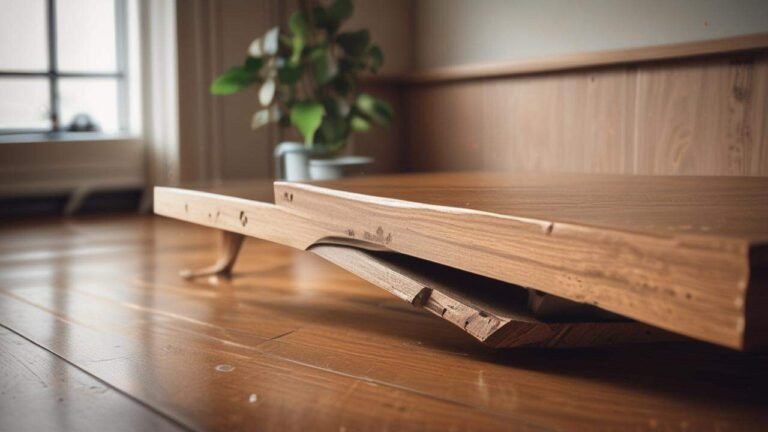
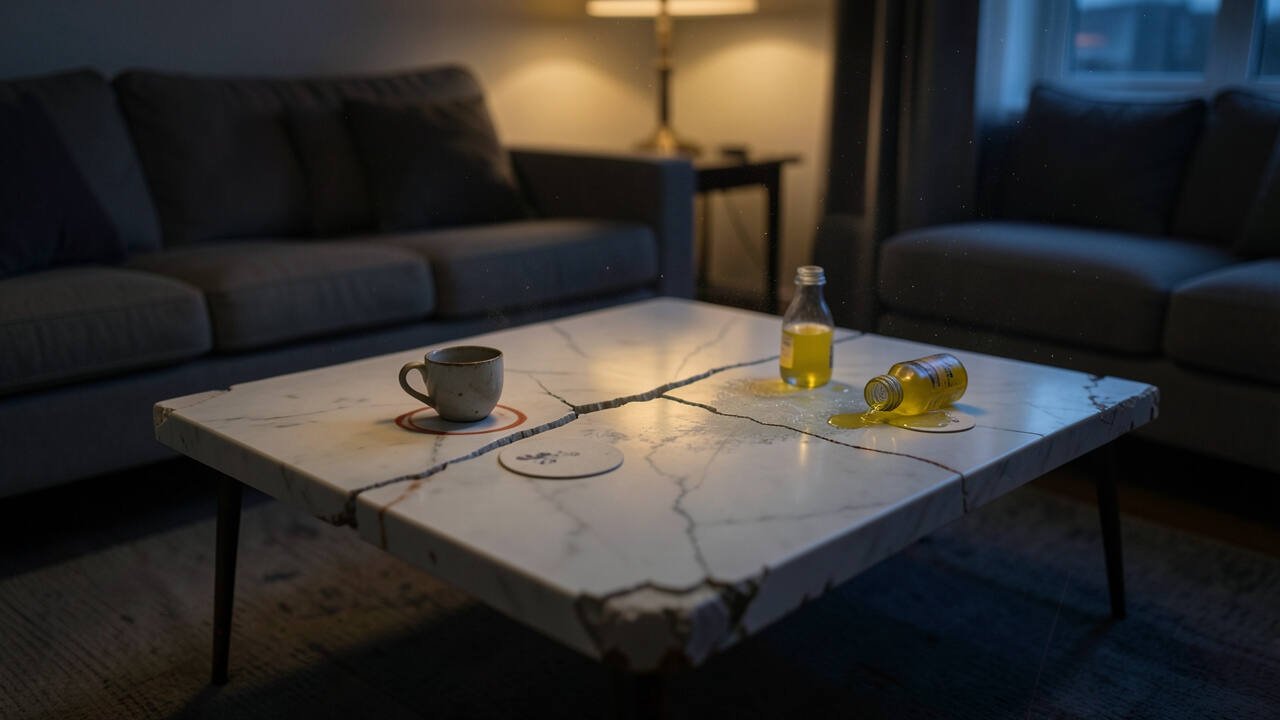
Marble coffee tables fail due to six primary causes: acid etching from spills like lemon juice and vinegar, liquid staining through porous unsealed surfaces, thermal shock cracking from hot items, abrasive scratching from harsh cleaners, sealant breakdown within 6 to 12 months, and impact chipping from heavy objects. Each issue stems from marble's natural softness and chemical reactivity, but proper prevention—using pH-neutral cleaners, coasters, trivets, and annual resealing—can maintain the table's appearance. Immediate action on spills and avoiding direct heat or abrasive contact are critical to preventing permanent damage and extending the table's life.
Quick Verdict: Marble coffee tables fail mainly due to acid etching, liquid staining, thermal shock cracking, abrasive scratching, sealant breakdown, and impact chipping. These problems are preventable with proper sealing, pH-neutral cleaners, coasters, and careful placement away from heat sources. Regular maintenance keeps your table looking new for years.
Key Takeaways
- Marble is a soft, porous stone that reacts chemically with acidic substances like lemon juice and vinegar, causing permanent etch marks.
- Unsealed or poorly sealed marble absorbs liquids quickly, leading to stubborn stains that require professional attention to remove.
- Placing hot items directly on marble creates thermal shock, which can cause hairline cracks and structural weakening over time.
- Using abrasive cleaners or scrub pads scratches the polished surface, creating a dull, rough finish that is hard to restore.
- Sealant wears off every 6 to 12 months depending on use, and failing to reapply leaves marble vulnerable to damage.
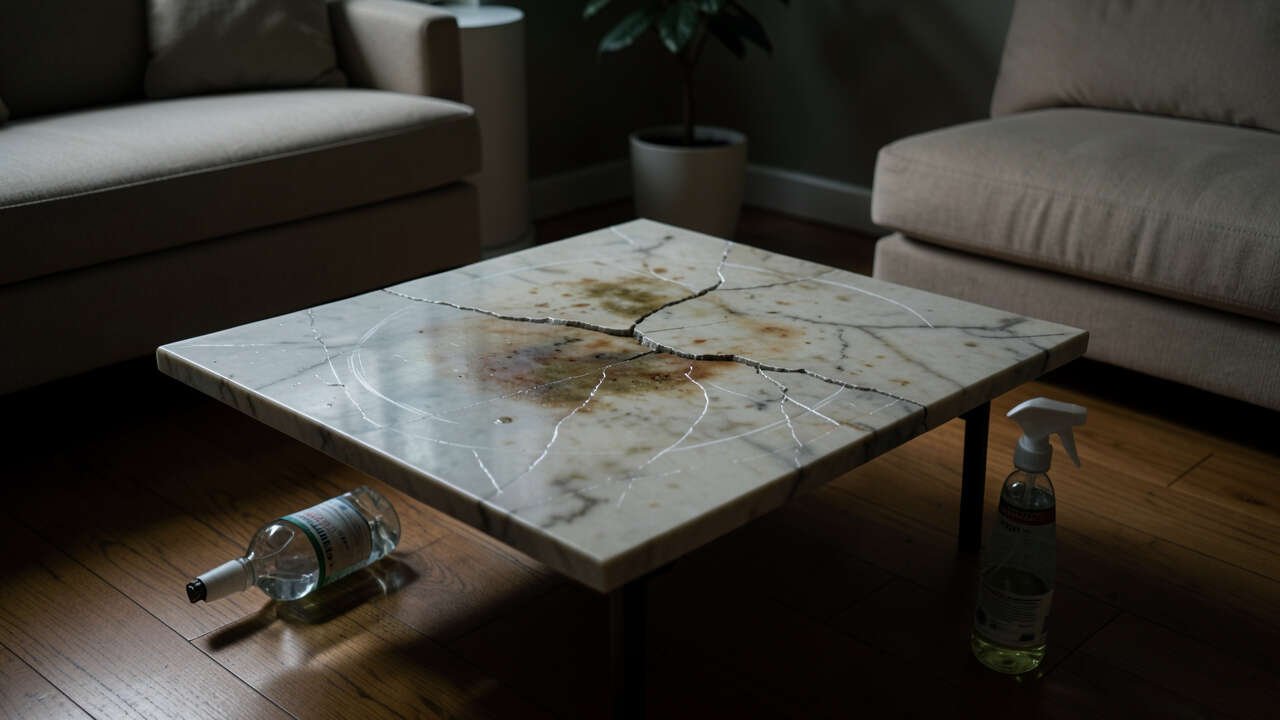
Quick Overview of Common Marble Failures
| Problem | Cause | Appearance | Prevention |
|---|---|---|---|
| Etching | Acidic liquids (citrus, wine, soda) | Dull, whitish marks | Use coasters, seal properly |
| Staining | Liquid absorption through pores | Dark or colored spots | Seal twice a year, wipe spills fast |
| Cracking | Thermal shock from heat | Hairline fractures | Use trivets, avoid direct heat |
| Scratching | Abrasive cleaners and pads | Fine lines, cloudy finish | Use soft cloths, pH-neutral soap |
| Dulling | Sealant wear, improper cleaning | Loss of gloss | Regular resealing, gentle polish |
| Chipping | Heavy impact, sharp objects | Missing pieces, cracks at edges | Handle with care, use placemats |
1 – Etching from Acidic Spills
Why This Happens
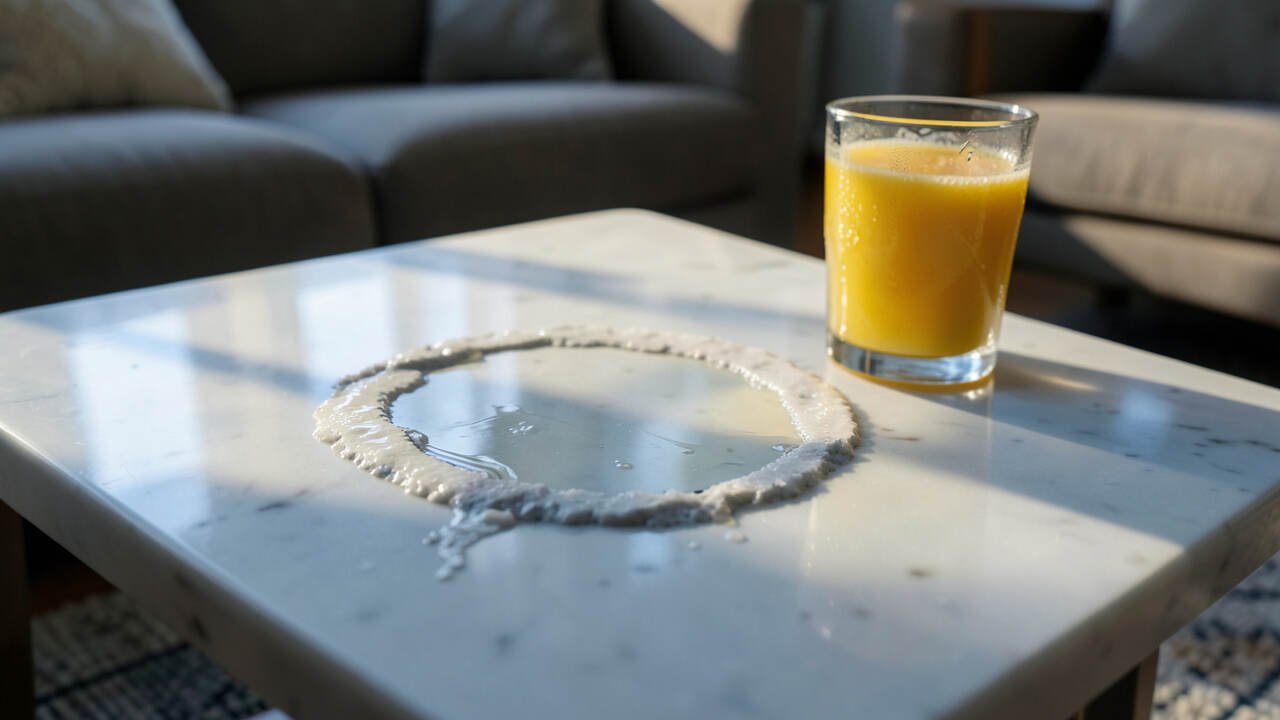
Marble is primarily composed of calcium carbonate. When acidic substances like lemon juice, wine, or soda touch the surface, a chemical reaction occurs. The acid dissolves the calcium carbonate, leaving a dull, whitish mark that cannot be wiped away. According to the, etching is the most common complaint among marble owners. Even mild acids such as coffee or orange juice can cause damage if left sitting.
Warning: Do not try to wipe an etch mark with water alone. Water cannot reverse the chemical reaction. You need a marble polishing powder or a professional refinishing service to remove etching.
How to Prevent It
- Always use coasters under drinks, especially those containing citrus, wine, or carbonation.
- Wipe up spills immediately with a soft, damp cloth. Blot, do not rub.
- Apply a high-quality impregnating sealer every six months to reduce the stone’s sensitivity.
What to Do If It Happens
- Clean the area with a pH-neutral marble cleaner and let it dry completely.
- Apply a marble etching remover powder (like MB-11 or Tenax) following the manufacturer’s instructions.
- Buff the area with a soft cloth and check if the etch mark has disappeared. For deep etches, hire a professional stone restorer.
2 – Staining from Porous Surface
Why This Happens
Marble coffee tables are naturally porous. Even when sealed, microscopic pores can trap liquids. Oily substances like cooking oil, butter, or hand lotion penetrate deeply and cause dark stains that are difficult to remove. Water-based stains from coffee or tea are less severe but still permanent if not addressed quickly. The notes that sealing marble reduces stain risk by about 80%, but no sealer makes marble completely stain-proof.
Tip: Test if your marble needs resealing by dropping a few drops of water on the surface. If the water beads up, the seal is still good. If it soaks in within 30 seconds, it is time to reseal.
How to Prevent It
- Use felt pads or placemats under decorative items, vases, and especially candles (which can leak wax).
- Wipe up any spills right away using a soft cloth. Do not let liquids sit for more than a minute.
- Reapply sealer according to the product directions, typically twice per year for a coffee table that sees daily use.
What to Do If It Happens
- Blot the stain with a clean, dry cloth to absorb any remaining liquid.
- Make a poultice using baking soda and water (for water-based stains) or baking soda and acetone (for oil-based stains).
- Spread the poultice ¼ inch thick over the stain, cover with plastic wrap, and let it sit for 24 to 48 hours.
- Remove the dried poultice and wipe the area clean. Repeat if necessary.
3 – Cracks from Temperature Shock
Why This Happens
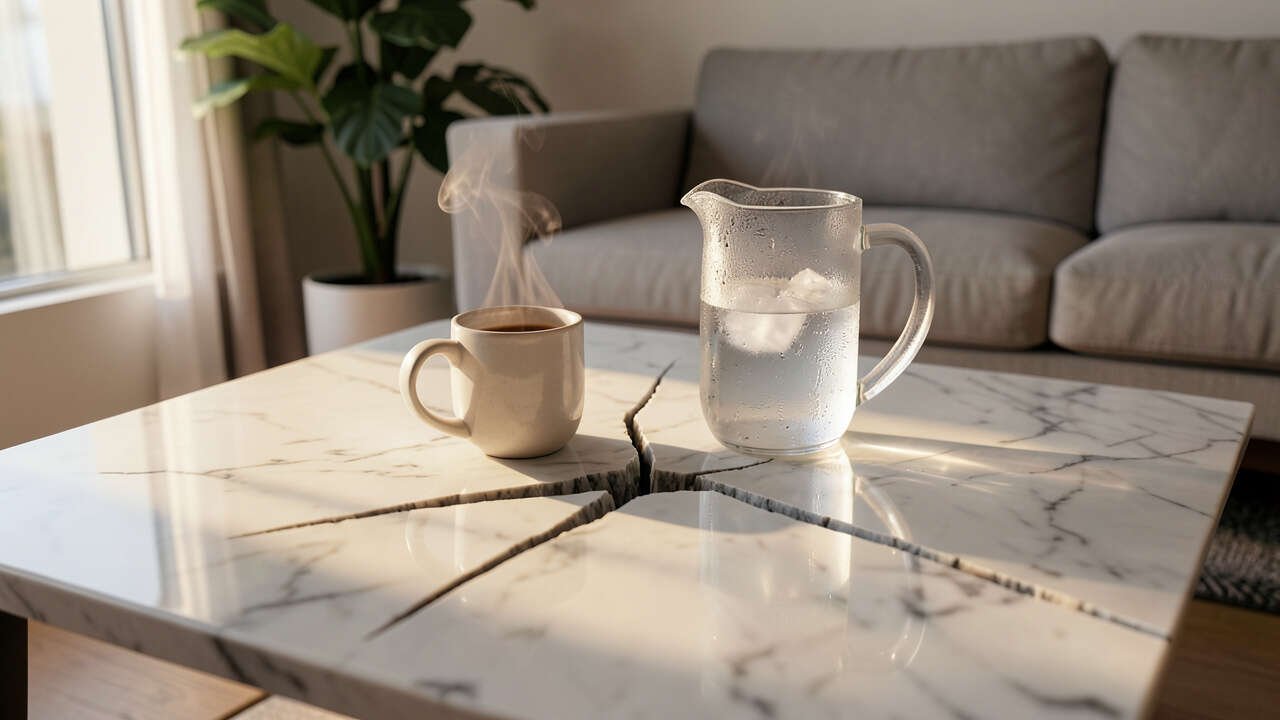
Marble reacts to rapid temperature changes. Placing a hot coffee mug, a pizza box, or a laptop charger directly on the table creates a sudden expansion at the contact point while the rest of the stone remains cool. This stress can cause hairline cracks. According to the, thermal shock is especially risky for thinner tops or those with natural fissures. Even a hot hair dryer pointed at the surface can cause damage.
Important: Never place hot cookware, curling irons, or electronic devices that generate heat directly on your marble coffee table. Always use a trivet or heat-resistant mat.
How to Prevent It
- Use coasters, trivets, or heat-proof mats for any hot items.
- Avoid placing the table near heating vents, fireplaces, or direct sunlight that can cause uneven heating.
- If you routinely use a laptop on the table, put it on a lap desk or a silicone pad.
What to Do If It Happens
Small hairline cracks may be cosmetic only, but they can worsen over time. Fill them with a color-matched marble epoxy or hire a professional to inject resin into the crack. For structural cracks, the tabletop may need replacement.
4 – Scratches from Abrasive Cleaners
Why This Happens
Marble is relatively soft compared to granite or quartz. Many household cleaners contain abrasives like baking soda, bleach, or citrus extracts that scratch the polished surface. Even common products like Windex or vinegar-based cleaners can dull the shine. The recommends only pH-neutral cleaners for natural stone. Scrubbing with coarse pads or brushes creates fine scratches that trap dirt and make the table look cloudy.
How to Prevent It
- Use only cleaners specifically labeled for marble or natural stone.
- Dust the table regularly with a microfiber cloth to remove grit before wiping.
- Never use steel wool, scouring pads, or scrub brushes on the surface.
What to Do If It Happens
Light scratches can be polished out using a marble polishing compound and a soft, damp cloth. Rub in a circular motion until the scratch fades. Deeper scratches require professional honing and polishing.
5 – Dulling from Improper Sealing
Why This Happens
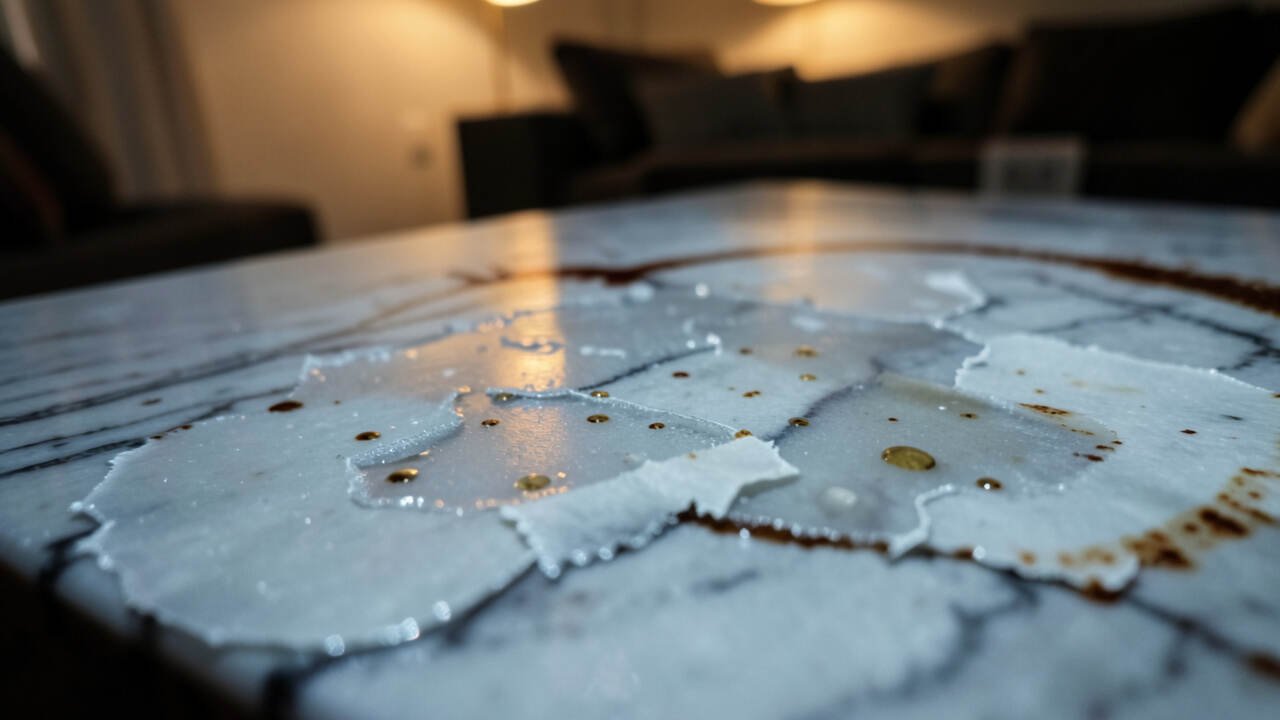
Many marble coffee table owners apply a sealer incorrectly or skip resealing altogether. Over time, the sealer wears off, leaving the stone unprotected. Some sealers also leave a residue that attracts dust and creates a dull film. Using wax-based polishes can also build up and cause yellowing. According to, marble should be cleaned with a mild dish soap and water and then dried completely before resealing.
How to Prevent It
- Test water absorption every six months to know when to reseal.
- Choose a penetrating sealer that does not leave a surface film.
- Avoid using furniture polishes or multi-surface sprays on marble.
What to Do If It Happens
Strip any old sealer or wax buildup using a stone-safe stripping product. Then apply a fresh coat of impregnating sealer according to the instructions. Allow the sealer to cure for at least 24 hours before placing objects on the table.
6 – Chipping from Heavy Impact
Why This Happens
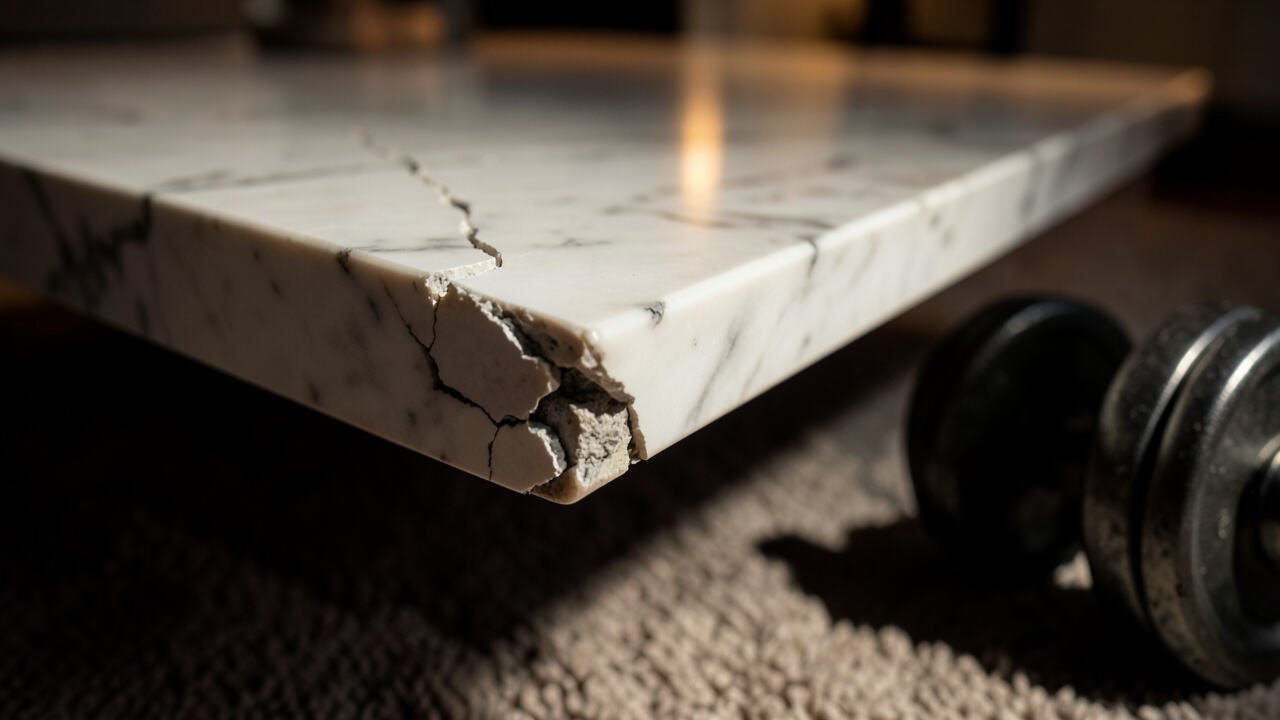
Marble is brittle. Dropping a heavy book, a remote control, or a metal vase can chip the edges or corners. Even the edge of a glass can leave a chip if it hits with enough force. The Marble Institute of America notes that marble is not suitable for high-traffic areas where heavy objects are frequently moved around. Coffee tables are especially vulnerable because people tend to rest their feet or place drinks on the edges.
Warning: A chipped edge can turn into a larger crack if left unrepaired. Always fix chips promptly to prevent further damage.
How to Prevent It
- Place your marble coffee table in a low-traffic area of the living room.
- Avoid using the table as a step stool or a seat.
- Use soft bumpers on the edges if the table is near a walkway.
What to Do If It Happens
Small chips can be filled with a marble epoxy tinted to match the color. Sand the excess with fine-grit sandpaper and polish. Larger chips may require a professional to replace the damaged section or the entire top.
Common Myths vs Facts
Many marble coffee table owners follow bad advice. Here are three widespread myths and the truth behind them.
Myth: Lemon juice cleans marble safely
Fact: Lemon juice is acidic and will etch marble almost instantly. The only safe cleaners are pH-neutral stone soaps.
Myth: Sealing makes marble stain-proof
Fact: Sealing only slows down absorption. Liquids left on marble can still stain if not wiped up within a few minutes. No sealer provides permanent protection.
Myth: Marble is too fragile for a coffee table
Fact: With proper care and resealing, marble coffee tables can last for decades. The problems arise from neglect, not from the material itself. Learn about professional stone cleaning techniques from the Wikipedia search results for marble care.
Resources and Tools
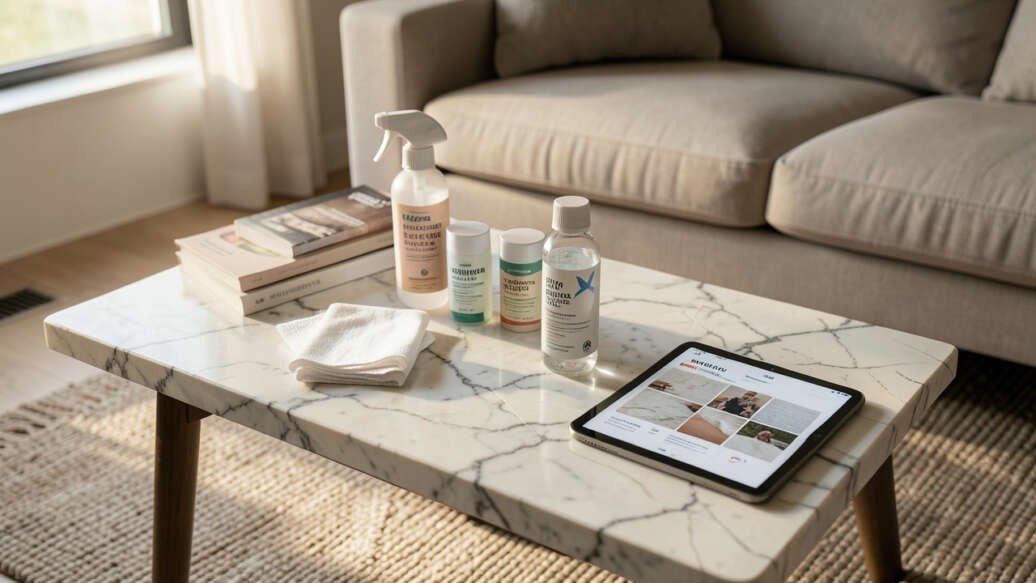
- StoneTech Professional Marble Sealer – A penetrating sealer recommended by stone care professionals.
- MB-11 Marble Etch Remover – A powder that removes light etch marks without professional help.
- Method Stone Cleaner – A pH-neutral, biodegradable cleaner safe for marble.
- Marble Institute of America – Comprehensive care guides and product recommendations.
Frequently Asked Questions
How often should I seal my marble coffee table?
Seal your table every 6 to 12 months. Test by dropping water on the surface. If the water soaks in within 30 seconds, it is time to reseal. Use a penetrating sealer for best results.
Can I use vinegar to clean marble?
No. Vinegar is acidic and will etch the surface. Use only pH-neutral cleaners designed for natural stone. Even diluted vinegar can cause permanent damage.
What is the best way to remove a wine stain from marble?
Blot the stain with a cloth immediately. For set-in stains, make a poultice of baking soda and hydrogen peroxide. Apply a thick layer, cover with plastic, and let sit for 24 hours. Repeat as needed.
Is polished marble or honed marble better for a coffee table?
Honed marble has a matte finish and shows etch marks less than polished marble. However, polished marble is easier to clean and more resistant to staining. Choose based on your style tolerance for maintenance.
How do I fix a hairline crack in my marble coffee table?
For small cracks, use a color-matched marble epoxy. Apply with a toothpick, let dry, then sand and polish. For larger cracks, consult a professional stone restorer to prevent further damage.
Final Thoughts
Your marble coffee table fails because of common, avoidable mistakes: using the wrong cleaners, skipping regular sealing, and ignoring spills. Focus on prevention with coasters, trivets, and pH-neutral products. With proper care, your table will stay beautiful for many years. Start today by checking your sealant and swapping out abrasive cleaners for stone-safe alternatives. For a comprehensive overview of marble and its care, consult the article on Marble composition and care on Wikipedia.
The National Park Service offers expert guidelines on preserving historic stone, which apply to modern marble care as well.