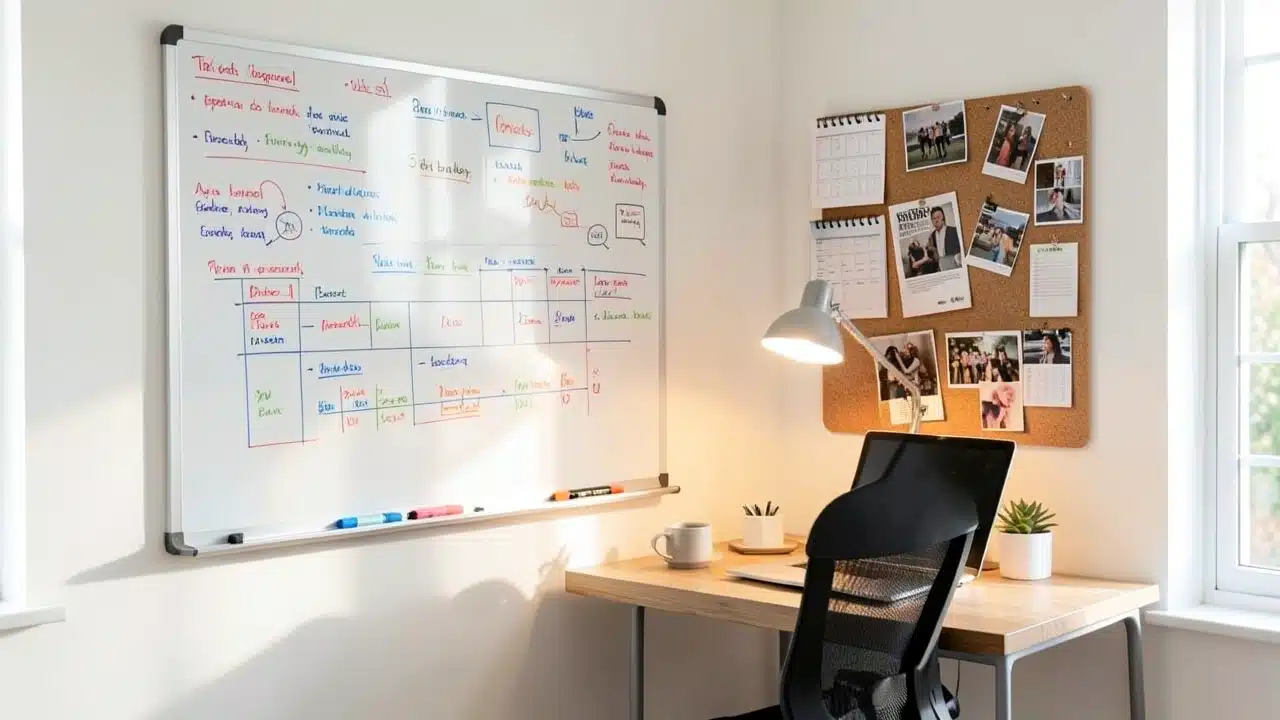
Place a whiteboard or pinboard in a home office within your normal sightline and arm's reach, such as beside the desk, behind the monitor, or near the door, so it becomes a daily destination rather than a forgotten wall fixture. Strategic placement in high-traffic areas supports workflow by keeping tasks, ideas, and important visuals visible exactly when decisions are made. Regular use depends on keeping the board clear, updated, and task-focused, preventing it from becoming visual clutter while serving as a functional command center.
A whiteboard or pinboard in a home office gets used when it sits within your normal sightline and arm’s reach, not on a forgotten side wall.
Place it beside the desk, behind the monitor, or near the door for quick reminders. Keep it clear, updated, and task-focused so it supports planning instead of becoming visual clutter.
Getting your home office organized can make a big difference in how much you get done. Sometimes, having a visual reminder of your tasks or ideas is super helpful. That’s where a whiteboard or pinboard comes in handy.
But just having one isn’t enough; you need to place it right. Thinking about Where To Put a Whiteboard or Pinboard in a Home Office so It Gets Used is key to making sure it actually helps you stay focused and productive.
When you put it in the perfect spot, you’ll find yourself referring to it all the time, helping you remember important things and keep your projects on track.
Key Takeaways
- Placing your whiteboard or pinboard where you can easily see it is crucial for regular use.
- Consider the flow of your office space to avoid clutter and ensure accessibility.
- Utilize wall space strategically, thinking about visibility and how it complements your workspace.
- The best spots often align with your daily routine and work habits.
- Think about how the board can enhance your workflow, not just serve as decoration.
- Consider smaller, portable options if dedicated wall space is limited.
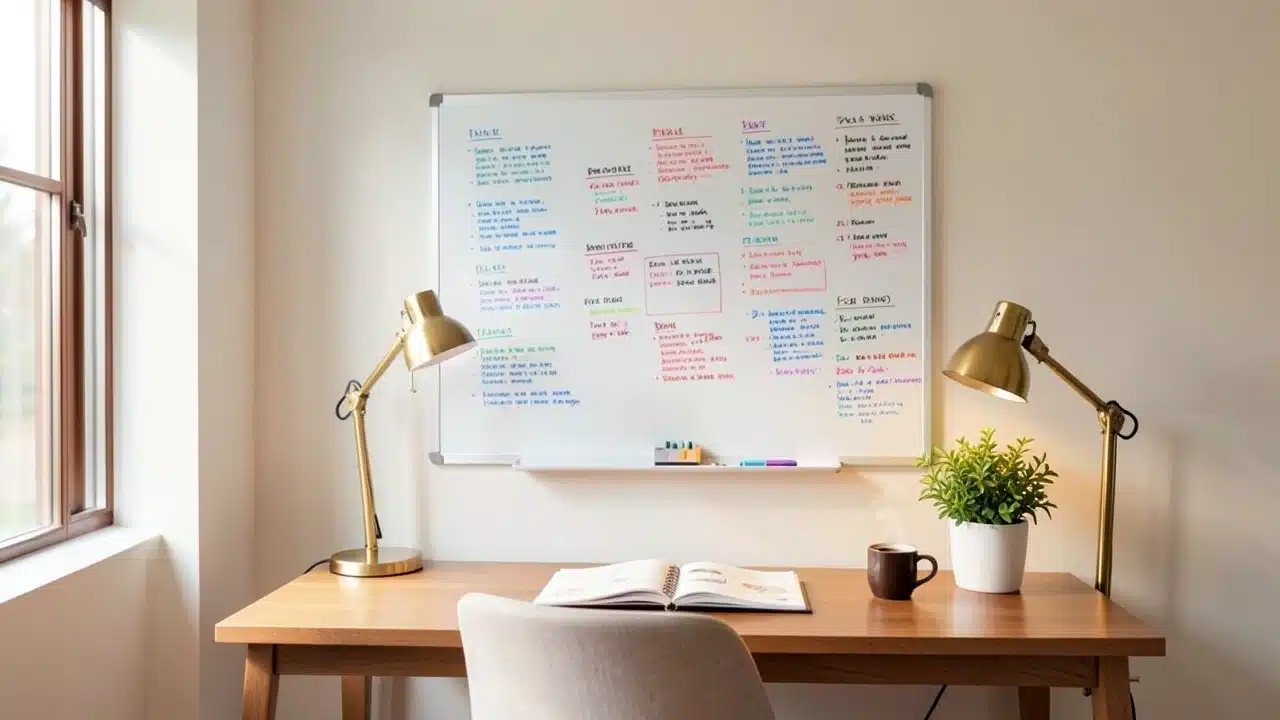
Make Your Whiteboard or Pinboard a Daily Destination
The main goal is to make your whiteboard or pinboard a natural part of your workday. If it’s tucked away in a corner or hard to reach, you’ll likely forget it’s even there. The best placement ensures it’s always within your line of sight or a quick step away.
This constant visibility acts as a gentle nudge, reminding you of your goals, tasks, and creative thoughts.
When you’re sitting at your desk, or even just walking through your office, a quick glance can keep you on track.
This is fundamental to understanding Where To Put a Whiteboard or Pinboard in a Home Office so It Gets Used.
Think about what you’ll use the board for. Will it be for daily to-do lists, brainstorming ideas, or displaying important reminders? The purpose will guide its ideal location.
For instance, if you’re constantly jotting down quick notes as ideas strike, it should be somewhere you can grab a marker or a pin instantly.
If it’s for longer-term project planning, it might be in a slightly less immediate, but still easily accessible, spot.
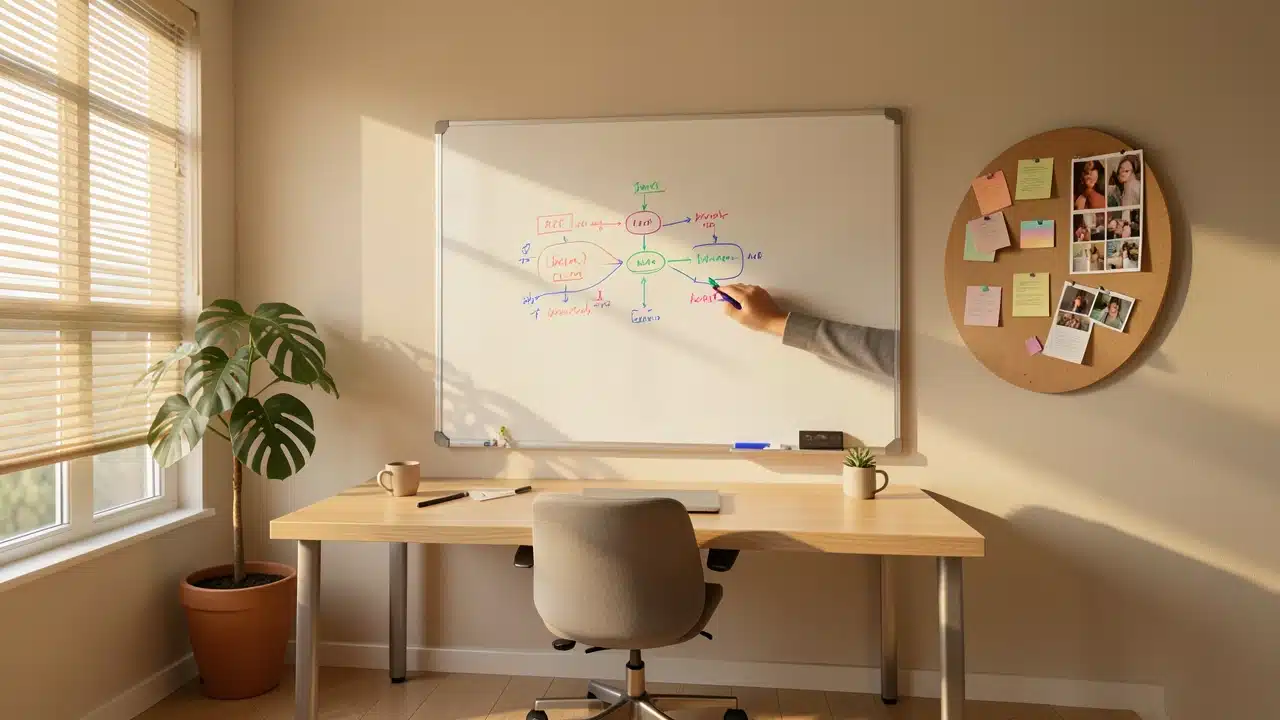
Strategic Wall Placement for Maximum Impact
Your walls are prime real estate in a home office. Choosing the right wall is vital for making sure your whiteboard or pinboard is seen and used. Consider the wall directly opposite your desk.
This is often the most visible spot when you’re working. It’s a classic choice for a reason: it’s always in front of you.
Another great option is a wall you pass by frequently. If you have a pathway through your office, placing the board along that route means you'll see it multiple times a day. This is especially effective for motivational quotes or daily goals.You’ll absorb the information passively throughout the day.
When deciding Where To Put a Whiteboard or Pinboard in a Home Office so It Gets Used, think about the size of your board and your office.
A large whiteboard might dominate a small wall, while a smaller pinboard could get lost on a vast expanse. Measure your space and your board to ensure a good fit.
This prevents the board from feeling out of place or ineffective.
Utilizing the Space Around Your Desk
The area immediately surrounding your desk is often the most convenient. Placing a whiteboard or pinboard on the wall behind or to the side of your desk is a popular and practical choice.
This allows you to quickly jot down notes or refer to information without having to stand up or turn away from your work.
Consider the ergonomics of your setup. You don’t want to strain your neck looking up at the board constantly. The ideal height is at eye level when you are seated at your desk.
This makes it comfortable to view and interact with.
If you have a corner desk, the wall in the corner can also be a good spot. It’s often visible from your main work position and can help utilize otherwise awkward space. This is a smart way to think about Where To Put a Whiteboard or Pinboard in a Home Office so It Gets Used by integrating it into your existing setup.
Beyond the Desk: Other High-Traffic Areas
Don’t limit your thinking to just the immediate desk area. Think about other places in your home office where you naturally spend time or pass through.
If you have a reading nook or a small seating area in your office, placing a board nearby can be useful for capturing thoughts while you’re in a more relaxed state.
Consider the door to your office. A pinboard on the back of the door can be a great place for quick notes, schedules, or even family photos.
It’s visible when you enter and leave, serving as a final check before you step out or a welcome reminder when you return.
This placement is often overlooked but can be very effective.
If your office has a window, the wall next to the window can also be a good option. Natural light can make the area feel more inviting, and the board will be visible. Just ensure that glare from the window doesn’t make it hard to see what’s on the board.
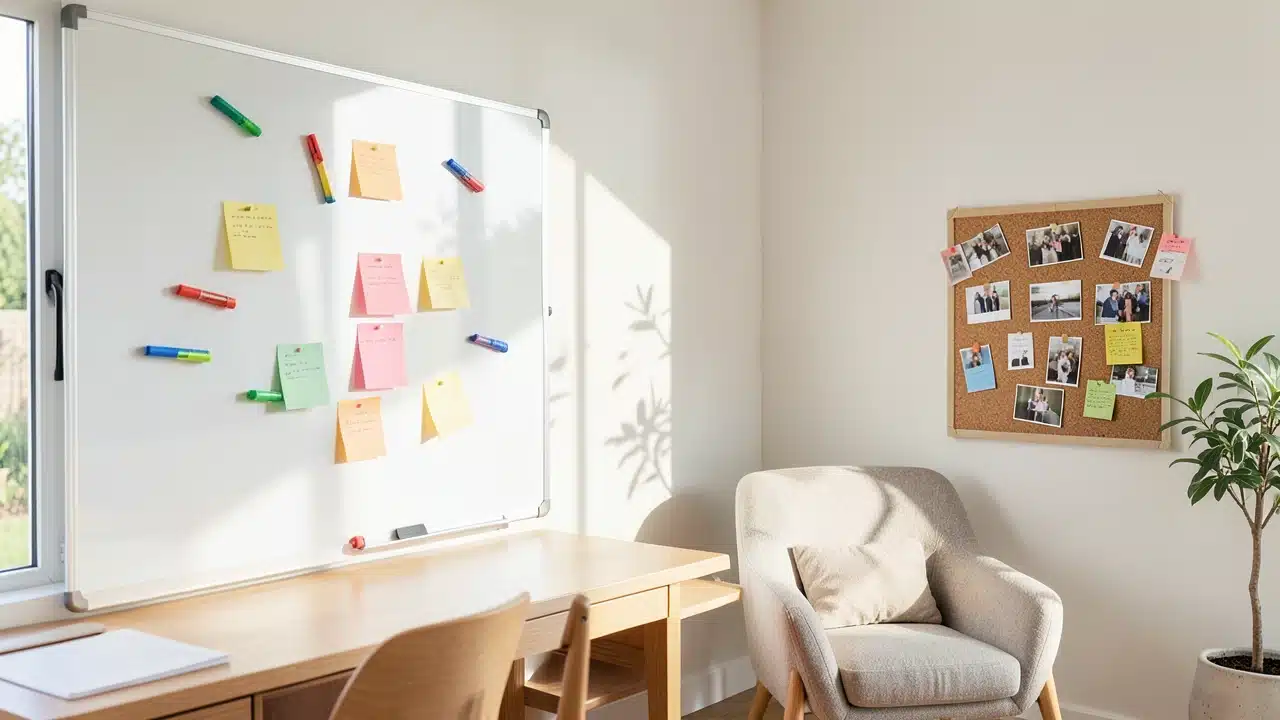
Choosing the Right Type of Board for Your Space
The type of board you choose also influences where it will work best. A large, magnetic whiteboard is great for detailed planning and brainstorming. A smaller, framed pinboard might be better for quick notes and visual inspiration.
Understanding the different types helps you decide on the best placement.
Whiteboards: For Ideas and Daily Plans
Whiteboards are excellent for dynamic content. You can erase and rewrite as much as you need. This makes them ideal for daily to-do lists, weekly schedules, or brainstorming sessions where ideas evolve.
For a whiteboard to be truly useful, it needs to be where you can easily grab a marker.
A common and effective placement for a whiteboard is directly opposite your desk. This allows you to glance at your tasks or notes without shifting your focus too much. Another good spot is on a wall adjacent to your desk, within your peripheral vision.
This ensures that Where To Put a Whiteboard or Pinboard in a Home Office so It Gets Used is answered by making it constantly visible.
If you have a large whiteboard, ensure it doesn’t overpower the room. It should be substantial enough to be useful but not so large that it makes the space feel cramped. Consider a sleek, frameless design to minimize visual bulk.
Pinboards: For Visuals and Important Items
Pinboards are perfect for displaying physical items like photos, business cards, important documents, or inspirational clippings.
They offer a tactile way to organize information. For a pinboard, visibility is still key, but the immediacy might be slightly less critical than for a whiteboard.
A pinboard can work well on a wall near your filing cabinet or storage area. This is logical if you’re pinning up documents that relate to your stored files. It can also be a great addition to a creative corner where you display mood boards or project inspiration.
The back of your office door is a classic spot for a pinboard. It’s a place where you can quickly pin up notes as you enter or leave the room.
This is a practical answer to Where To Put a Whiteboard or Pinboard in a Home Office so It Gets Used, especially for those who like to keep physical reminders handy.
Considering Functionality and Workflow
The best placement for your whiteboard or pinboard is one that supports your actual work habits. Think about how you move around your office and when you’re most likely to need a visual aid.
This is the core of understanding Where To Put a Whiteboard or Pinboard in a Home Office so It Gets Used effectively.
If you often pace while thinking, placing a board in a spot where you can pause and jot down ideas as you walk by can be very beneficial. It becomes a natural extension of your thought process.
For teams or collaborative environments, even within a home office setting (e.g., if you have a partner who uses the office sometimes), placing the board in a central, easily accessible location is important. Everyone should be able to contribute and see the information.
The “Command Center” Approach
Many people find success by setting up their whiteboard or pinboard as a central “command center.” This is a dedicated area where all important information converges. It becomes the go-to spot for daily plans, project updates, and key reminders.
To achieve this, choose a prominent wall space. This could be the wall directly in front of your desk or a main wall in the room. Ensure there's enough space around the board for other elements like pens, markers, or sticky notes.This makes the entire area functional.
The idea is to consolidate your visual planning. Instead of scattered notes, everything important lives on this one board.
This approach makes it much easier to keep track of things and ensures that Where To Put a Whiteboard or Pinboard in a Home Office so It Gets Used is answered by making it the focal point of your organization.
Integrating with Your Existing Decor
While functionality is paramount, you also want your whiteboard or pinboard to fit in with your office decor.
A large, stark whiteboard might clash with a minimalist or cozy aesthetic. Consider options with stylish frames or materials that complement your existing style.
For pinboards, the fabric or material can add texture and color. For whiteboards, consider magnetic versions that allow for decorative magnets or even colored markers that match your room’s palette.
The placement should also consider visual balance. A huge board on a tiny wall can look overwhelming. Conversely, a tiny board on a large wall might disappear.
Aim for a size and placement that feels proportionate to the space.
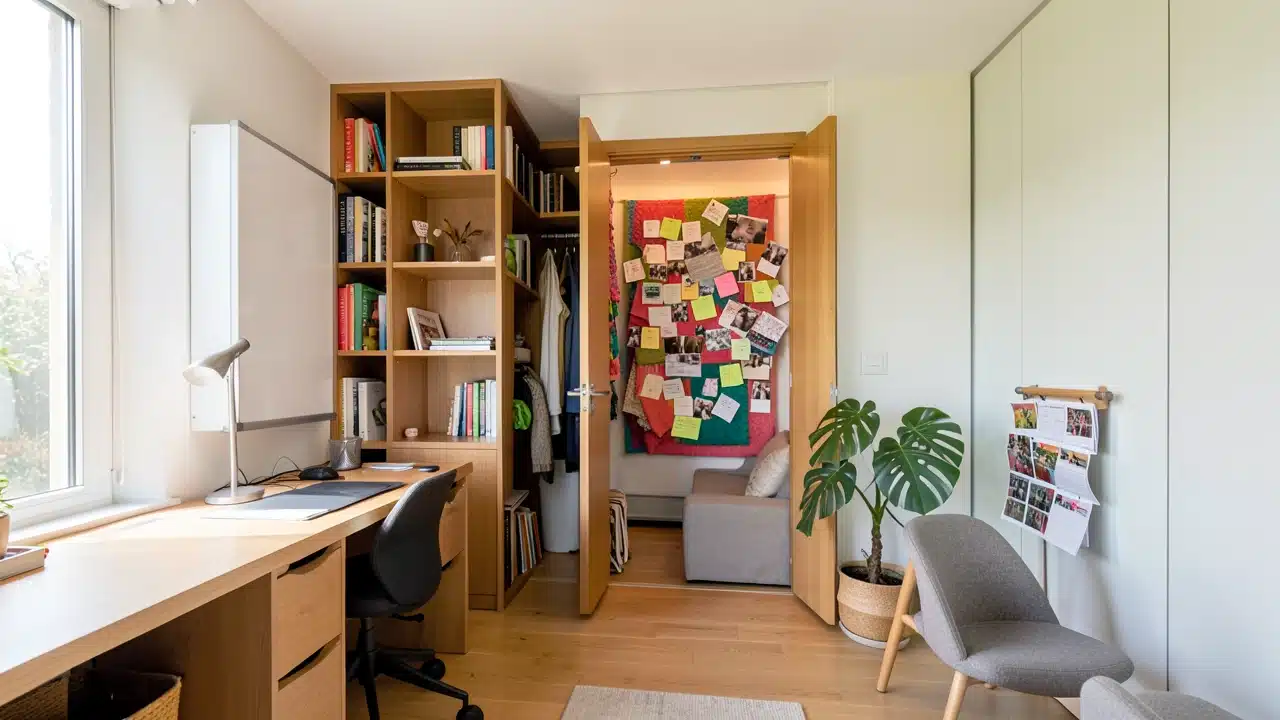
Creative and Unexpected Placements
Sometimes, the best spots aren’t the most obvious ones. Thinking outside the box can lead to surprisingly effective solutions for Where To Put a Whiteboard or Pinboard in a Home Office so It Gets Used.
Side Walls and Angles
If the wall directly in front of you is occupied by a window or a large piece of furniture, consider a side wall.
A wall to your left or right can still be within your peripheral vision, especially if it’s close to your desk. This is a great way to use available space without obstructing your view.
For very small offices, a narrow side wall or even the side of a cabinet can be a perfect spot for a smaller whiteboard or pinboard. It utilizes often-ignored surfaces.
Portable and Mobile Options
If you’re struggling to find a permanent wall space, consider portable options. A small, tabletop whiteboard or a rolling whiteboard can be moved around as needed. This offers ultimate flexibility.
You can place a rolling whiteboard next to your desk when you need it for focused work, then move it against a wall or into a closet when it’s not in use.
This is a fantastic solution for renters or those who frequently rearrange their office space. The key is that it’s available when you need it, answering the question of Where To Put a Whiteboard or Pinboard in a Home Office so It Gets Used by making it adaptable.
The Power of a Dedicated Corner
If you have a corner in your office, it can become a dedicated planning zone. Mount a whiteboard or pinboard on one of the walls in the corner. You can then arrange a small table or shelf nearby for markers, pens, and supplies.
This creates a compact, efficient area for all your visual planning needs.
This corner setup is particularly effective because it visually separates your planning area from your primary work desk. It can help you mentally switch gears when you move from one task to another.
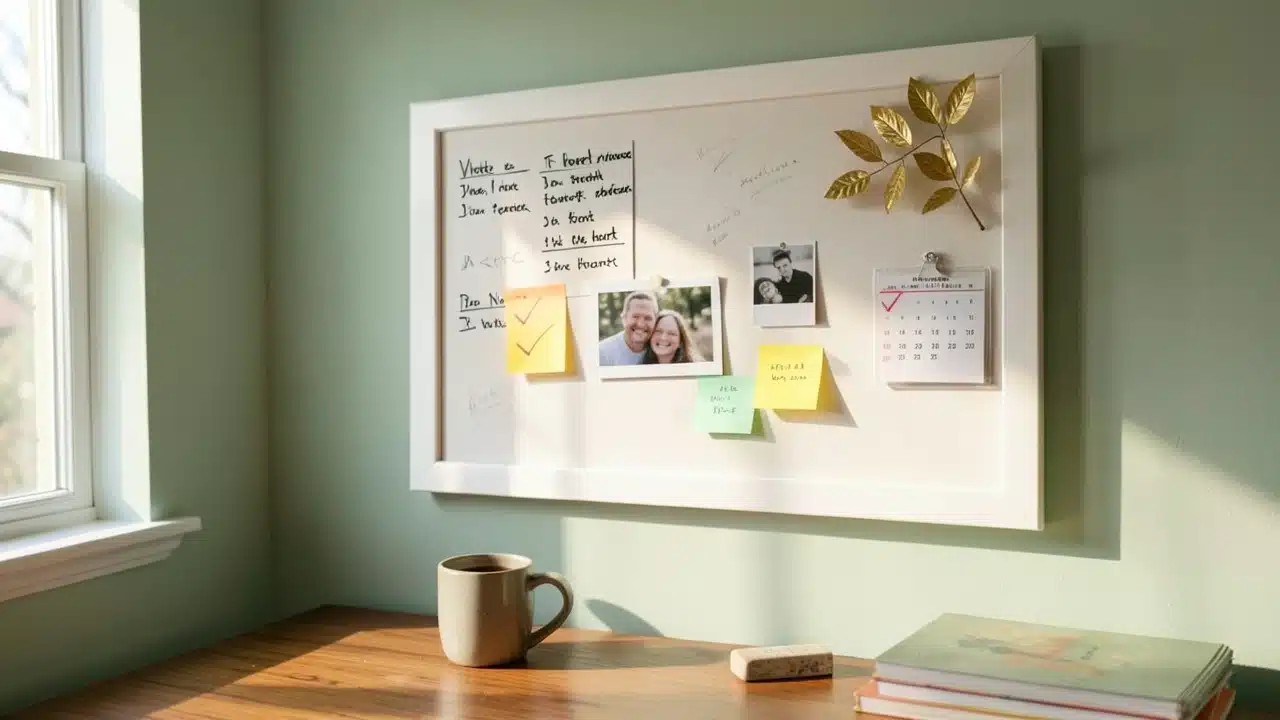
Making Sure It Stays Used: Habits and Maintenance
Even the best placement won’t guarantee a board gets used if you don’t build habits around it. Once you’ve figured out Where To Put a Whiteboard or Pinboard in a Home Office so It Gets Used, you need to make using it a routine.
First, schedule a few minutes each morning or evening to update your board. This could be writing down your top three priorities for the day or reviewing what you accomplished. This ritual ensures the board remains relevant and up-to-date.
Second, keep your writing tools (markers, pens, pins) readily accessible. If you have to search for them, you’re less likely to use the board. Store them in a cup on the board itself, a nearby drawer, or a small shelf.
Next, make it a habit to glance at your board regularly throughout the day. Train yourself to look at it before starting a new task or when you feel stuck. This reinforces its presence and utility.
Then, periodically clear off old information. A cluttered board can become overwhelming and lose its effectiveness. Regularly review and remove what’s no longer needed.
This keeps the board clean and focused.
Finally, experiment and adjust. If you find your chosen spot isn’t working as well as you’d hoped, don’t be afraid to move it. The perfect placement might take a little trial and error.
| Visibility & Accessibility | High visibility, easy to write on, good for quick notes and brainstorming. | High visibility, easy to attach/remove items, good for visual reminders. |
| Content Type Suitability | Ideal for dynamic information, to-do lists, flowcharts, temporary notes. | Best for static items like photos, inspirational quotes, schedules, important documents. |
| Maintenance & Longevity | Requires regular cleaning to maintain writing surface, markers can dry out. | Can accumulate clutter over time, pins can damage items if not careful. |
| Aesthetics & Integration | Can be sleek and modern, but can also look utilitarian. Needs good frame/mounting. | Can be more decorative (cork, fabric), blends well with various decor styles. |
| Space Requirement | Generally requires a clear wall space for writing and marker storage. | Can be mounted on doors, cabinets, or smaller wall sections. |
| Cost of Materials | Initial cost of board, ongoing cost of markers and erasers. | Initial cost of board, ongoing cost of pins/clips. |
Frequently Asked Questions Of Where To Put A Whiteboard Or Pinboard In A Home Office So It Gets Used
Where is the absolute best place to put a whiteboard in my home office?
The best place is usually directly opposite your desk so it’s always in your line of sight. However, a side wall that’s within your peripheral vision is also a great option for consistent use.
Should I put my pinboard near my desk or somewhere else?
Putting your pinboard near your desk is good if you need quick access to pinned items. Alternatively, placing it in a high-traffic area you pass often, like near the office door, ensures you see it regularly.
What if I have a very small home office and no wall space for a whiteboard?
Consider a tabletop whiteboard or a rolling whiteboard that you can move around. You can also use smaller magnetic boards on the side of filing cabinets or refrigerators if applicable.
How can I ensure my whiteboard or pinboard actually gets used after I decide Where To Put a Whiteboard or Pinboard in a Home Office so It Gets Used?
Make using it a habit. Schedule time daily to update it, keep supplies handy, and train yourself to glance at it often. Regularly clearing old notes also keeps it inviting.
Can the placement of my whiteboard affect my productivity?
Yes, absolutely. Placing it where you can easily see and interact with it reduces friction, making it more likely you’ll use it for planning, reminders, and brainstorming, which boosts productivity.
Is it better to put a whiteboard or pinboard in a home office?
It depends on your needs. Whiteboards are better for dynamic notes and ideas you erase often. Pinboards are ideal for displaying physical items, photos, and long-term reminders.
Final Thoughts
Finding the ideal spot for your whiteboard or pinboard is about making it a natural part of your workflow. Aim for visibility and easy access, whether it’s opposite your desk or along a frequent path.
With the right placement and a few good habits, your board will become an indispensable tool for staying organized and productive in your home office.