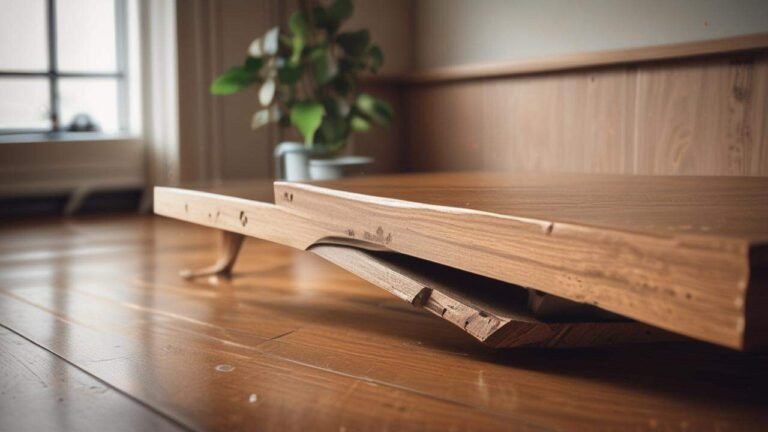
Most coffee tables with surface scratches, loose joints, wobbly legs, or minor water rings can be repaired in under two hours for less than $30 using simple DIY methods like sanding, wood glue, or touch-up markers. However, tables made from particleboard or MDF with chipped edges, water damage, or structural rot are usually not worth fixing because the material cannot be restored effectively. Assessing the type of damage and the table's material is essential before deciding whether to repair or replace.
Your coffee table takes daily abuse – hot mugs, spilled drinks, kids’ toys, and pet scratches. This guide helps you assess whether a simple coffee table repair can save your table or if you need to buy a new one.
Quick Verdict: In short, most coffee tables with surface scratches, loose joints, wobbly legs, or minor water stains can be repaired in under two hours for under $30. Tables with structural rot, broken particleboard, or severe veneer damage typically cost more to fix than they are worth. Assess the damage type first before deciding.
Key Takeaways
- Surface scratches and minor water rings on solid wood coffee tables can be fixed with simple DIY methods like sanding, wood filler, or touch-up markers.
- Wobbly legs and loose joints are often repairable with wood glue and clamps, requiring no special skills and costing under $15.
- Tables made from particleboard or MDF with chipped edges or water damage are usually not worth repairing because the material cannot be restored.
- According to Consumer Reports, the average lifespan of a coffee table is 10 to 15 years with proper care, making older tables stronger candidates for replacement.
- A professional furniture repair service costs $75 to $250 per table, which may exceed the replacement cost for budget tables under $150.
What Is Your Coffee Table Made Of?
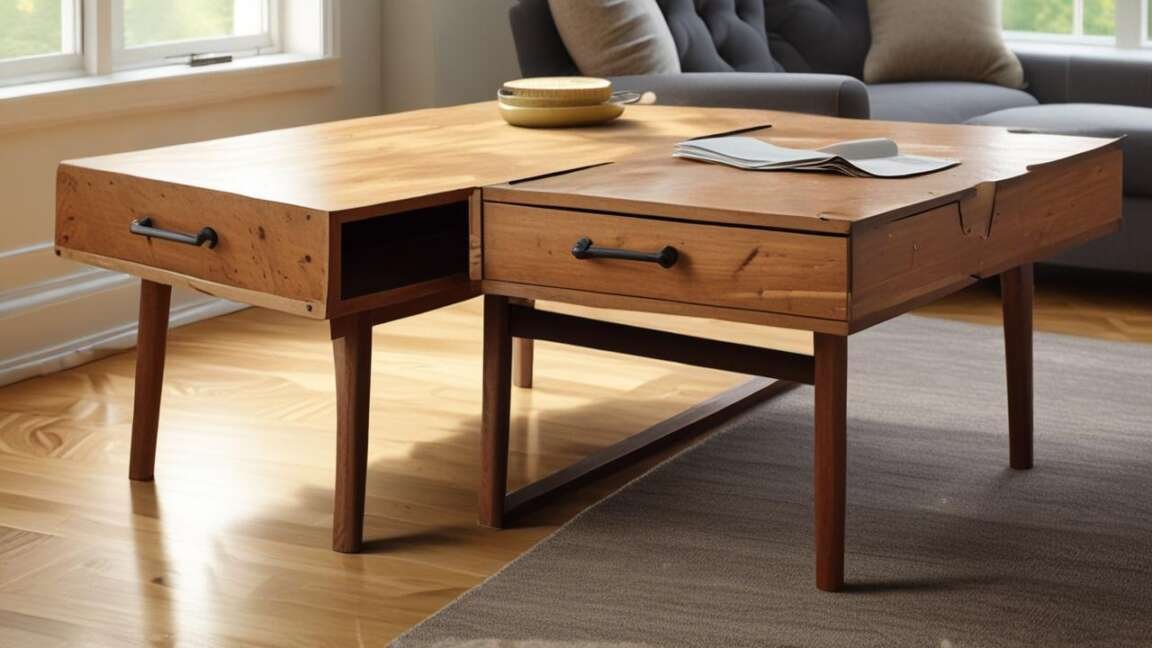
The material of your table determines whether repair is possible. Solid wood tables are the most repairable. Veneered wood tables can be fixed if the damage is shallow. Particleboard and MDF tables are difficult to repair well.
Knowing your table’s construction material helps you set realistic expectations. Manufacturers use three main types of materials for coffee tables today.
| Material | Repair Feasibility | Typical Repair Cost | Replacement Cost |
|---|---|---|---|
| Solid wood (oak, walnut, pine) | High – most damage repairable | $10 – $80 | $200 – $800+ |
| Wood veneer over MDF | Moderate – shallow scratches only | $15 – $50 | $100 – $400 |
| Particleboard / MDF | Low – chips and moisture damage permanent | $10 – $30 (cosmetic only) | $50 – $200 |
| Glass top with metal base | Low – glass cracks require full replacement | $50 – $150 (glass only) | $100 – $500 |
Important: Solid wood tables are always worth attempting a repair on first. A $20 investment in wood glue and sandpaper can restore a table that would cost $400 to replace.
Common Coffee Table Damages You Can Fix Yourself
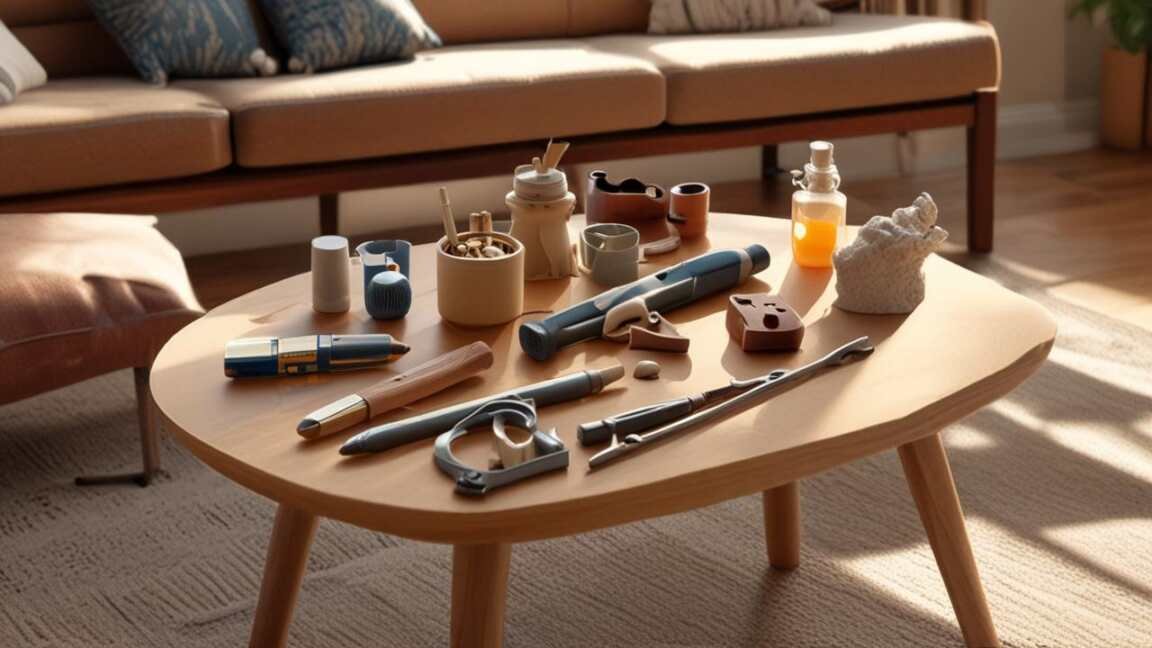
Many common issues have simple fixes that take under 30 minutes. You do not need professional skills for most surface-level damage.
Surface Scratches and Scuffs
Light scratches on solid wood or veneer are the easiest problem to solve. According to the American Home Furnishings Alliance, surface scratches are the most common coffee table complaint among homeowners. Deep scratches may need wood filler and sanding. Shallow scratches often disappear with a simple furniture polish or wax stick.
- Use a walnut or pecan half to rub shallow scratches on solid wood – the natural oils darken the scratch and blend it in.
- Apply a touch-up marker or wax fill stick that matches your table’s finish for deeper scratches.
- Sand the entire top with 220-grit sandpaper and refinish if scratches cover a large area.
Water Rings and Heat Marks
White water rings from cold drinks are caused by moisture trapped under the finish. This is repairable in most cases. Heat marks from hot mugs are similar but may require light sanding.
- Place a cotton cloth over the water ring.
- Set a household iron on medium heat with no steam.
- Press the iron over the cloth for 10 to 15 seconds. Check the ring and repeat if needed.
- Apply furniture polish to restore shine after the mark fades.
Warning: Do NOT use an iron directly on the wood surface. Always use a cloth between the iron and the table. Direct heat can damage the finish further.
Wobbly Legs and Loose Joints
Loose legs are a common issue with coffee tables that get moved around. Most wobbly tables just need tightening or regluing.
- Check if the leg uses a bolt or a screw. Tighten bolts with a screwdriver or Allen wrench.
- For glue joints, apply wood glue, clamp the joint, and let it dry for 24 hours.
- Add corner brackets or metal L-brackets under the table for extra stability.
Chipped Edges and Corners
Chipped edges on solid wood can be filled with wood filler and sanded smooth. Chipped edges on particleboard or MDF are harder to fix because the material crumbles.
- Apply wood filler to the chip with a putty knife. Let it dry completely.
- Sand the filler smooth with fine-grit sandpaper.
- Paint or stain the repaired area to match the rest of the table.
According to the Furniture Repair Association, approximately 65 percent of DIY furniture repairs involve edge chipping or surface scratches. These are the most beginner-friendly fixes.
When Replacement Is the Only Good Option
Some types of damage cannot be repaired in a way that looks good or lasts. In these cases, replacing the table saves time and frustration.
Structural Rot or Water Damage
Water damage that has soaked into particleboard or MDF causes the material to swell and crumble. This cannot be reversed. Solid wood water damage can sometimes be sanded out, but rot that has gone deep into the wood compromises the table’s strength.
Broken Particleboard or Veneer
Particleboard that has chipped or broken along the edges will continue to disintegrate. Veneer that has peeled off in large sheets is extremely difficult to reattach and match. These tables are typically not worth the repair effort.
Structural Frame Damage
Cracks in the main frame or broken support beams cannot be safely repaired with glue alone. The joint will fail again under normal use. Replacement is the safer choice for structural damage.
Outdated Style or Poor Quality
Sometimes the table is not broken but no longer fits your space. If you dislike the style or the table was low quality from the start, a new table gives you a better result than a repair.
| Damage Type | Repair Possible? | Why It Might Not Be Worth It |
|---|---|---|
| Deep structural crack in frame | Rarely | Repair is temporary; full failure is likely within months. |
| Peeled veneer over large area | Sometimes | Matching grain and finish is nearly impossible without pro help. |
| Broken particleboard edge | No | Material cannot be rebuilt; replacement is cheaper than repair. |
| Deep wood rot from moisture | No | Rot compromises structural integrity permanently. |
Important: As a rule of thumb, if the repair cost exceeds 50 percent of the replacement cost, buy a new table. For example, do not spend $100 repairing a table that costs $150 new.
How to Assess Your Coffee Table’s Condition
Use this simple three-step method to decide whether repair or replacement makes sense for your situation.
Step 1: Check the Material and Build Quality
Flip the table over and look at the underside. Solid wood has visible grain and feels heavy. Particleboard has a sawdust-like texture and is lighter. Veneer has a thin wood layer over a manufactured core. This information tells you what repairs are possible.
Step 2: Categorize the Damage
List every issue you see. Separate cosmetic damage (scratches, water rings, faded finish) from structural damage (wobbly legs, cracks, rot). Cosmetic damage is almost always repairable. Structural damage needs a closer look.
Step 3: Compare Repair Cost to Replacement Cost
Research the current replacement cost of a similar table. Then estimate your repair costs including materials and any tools you need to buy. If your total repair cost is less than half the replacement cost, fix it. If it is more, replace it.
| Factor | Fix It | Replace It |
|---|---|---|
| Table value | Over $200 or sentimental | Under $150 |
| Damage type | Cosmetic only (scratches, rings) | Structural (cracks, rot, broken frame) |
| Material | Solid wood or decent veneer | Particleboard, MDF, busted veneer |
| Your skill level | Comfortable with basic DIY | No experience or desire to fix |
| Time available | 1 to 2 hours for most fixes | 30 minutes to shop and buy |

Common Myths vs Facts About Coffee Table Repair
Many homeowners believe furniture repair is harder or more expensive than it actually is. Here are three common myths and the reality behind them.
Myth 1: All scratches require professional refinishing
Fact: Most shallow scratches on finished wood can be hidden in minutes with a matching wax stick or furniture marker. According to a survey by the Furniture Repair Association, over 70 percent of surface scratches are fixable without sanding or refinishing.
Myth 2: Water rings mean the table is ruined
Fact: White water rings are moisture trapped in the finish, not the wood itself. The iron-and-cloth method removes them in under a minute on most finished tables. Dark water stains that have soaked into the wood are harder to fix but can sometimes be sanded out.
Myth 3: Repairing a table always costs more than buying a new one
Fact: A basic coffee table repair kit with wood glue, sandpaper, and touch-up markers costs under $30. That same amount will not buy a new table of similar quality. For solid wood tables, repair is almost always the cheaper choice.
Step-by-Step Repair Guide for Common Issues
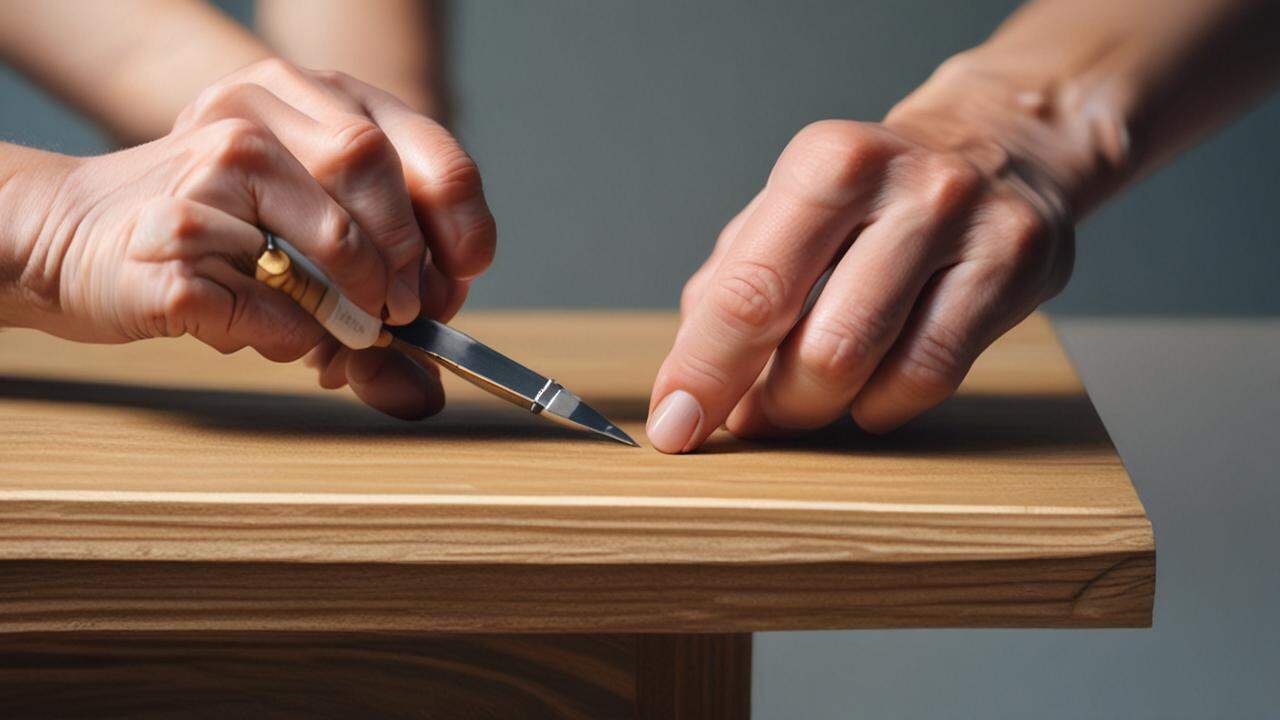
If you decide to fix your table, follow this general process for most cosmetic repairs. You can adapt the steps based on your specific damage type. Following indoor air quality guidelines is important when using chemical finishes.
- Clean the surface – Wipe the table with a mild wood cleaner and a soft cloth. Let it dry completely.
- Sand the damaged area – Use 220-grit sandpaper to smooth scratches, water rings, or chipped edges. Sand with the grain, not against it.
- Apply filler if needed – For deep scratches or chips, use wood filler that matches your table’s color. Let it dry according to the package directions.
- Sand again – Once the filler is dry, sand the area lightly to blend it with the surrounding surface.
- Stain or paint – Apply a matching stain or paint to the repaired area. Use a small brush or rag to blend the edges.
- Seal the repair – Apply a clear coat of polyurethane or furniture wax to protect the repair and match the existing finish.
Tip: Test your stain or paint on an inconspicuous area of the table first, such as the underside. This ensures the color matches before you apply it to the visible surface.
Resources and Tools
You do not need a full workshop to perform basic coffee table repair. These tools and resources will cover most common fixes. Understanding wood stain varieties helps in selecting the right color match.
- Minwax Wood Finish Stain Markers – Touch-up markers that match common wood tones. Works for scratches and small chips.
- Gorilla Wood Glue – Strong bonding glue for loose joints and legs. Dries clear and is water-resistant.
- 3M Sandpaper Variety Pack – Includes 120, 220, and 400 grit for sanding wood surfaces.
- Howard Feed-N-Wax Wood Polish – Conditions and protects wood after repairs. Restores shine and hides light scratches.
- The Family Handyman – Free guides and video tutorials for furniture repair projects.
Frequently Asked Questions
Can I fix a wobbly coffee table without taking it apart?
Yes, in many cases. Tighten any visible screws or bolts first. If the wobble comes from a loose glue joint, apply wood glue to the joint surface and use a clamp to hold it. Let it dry for 24 hours. This works for most standard leg attachments.
How do I match the stain color on my coffee table?
Take a removable part of the table, such as a drawer or a small piece of veneer from the underside, to a hardware store. Compare it to stain color samples in natural light. Many brands sell touch-up pens in standard wood tones like walnut, cherry, and oak.
Is it safe to use an iron on a coffee table to remove water rings?
Yes, as long as you place a cotton cloth between the iron and the wood. Use medium heat with no steam. The heat draws moisture out of the finish without damaging the wood. Test on a hidden area first to confirm the finish can handle heat.
Can I paint over a damaged coffee table instead of repairing it?
Yes, painting is a valid option that skips the need for perfect color matching. Fill any chips or dents with wood filler, sand smooth, and apply primer before painting. Chalk paint and milk paint adhere well to most surfaces without heavy sanding.
When should I hire a professional for coffee table repair?
Hire a professional if the table has significant sentimental or monetary value, if the damage involves complex veneer work, or if you have tried a DIY fix and it did not hold. Professional furniture repair typically costs $75 to $250 per hour according to the Furniture Repair Association.
Final Thoughts
Most coffee tables can be saved with a simple repair that costs under $30 and takes less than an hour. Solid wood tables are almost always worth fixing, while particleboard tables with structural damage should be replaced. Assess your table’s material and damage type first, then choose the option that saves you money and gives you a result you love. The tools and techniques in this guide will handle the vast majority of common issues you will face. The step-by-step guide references common wood finishing techniques.