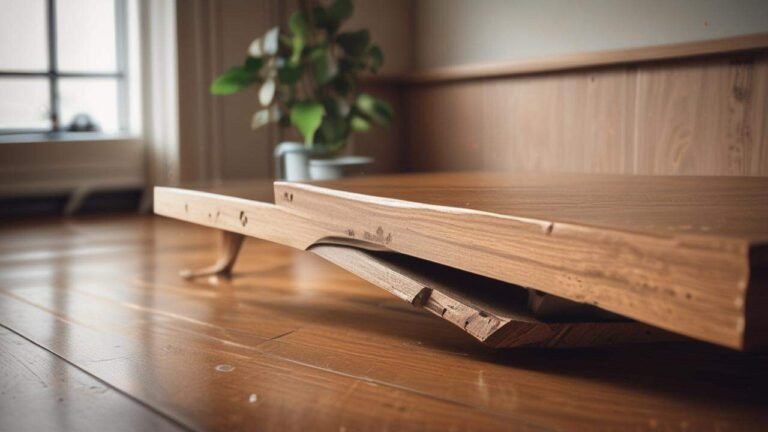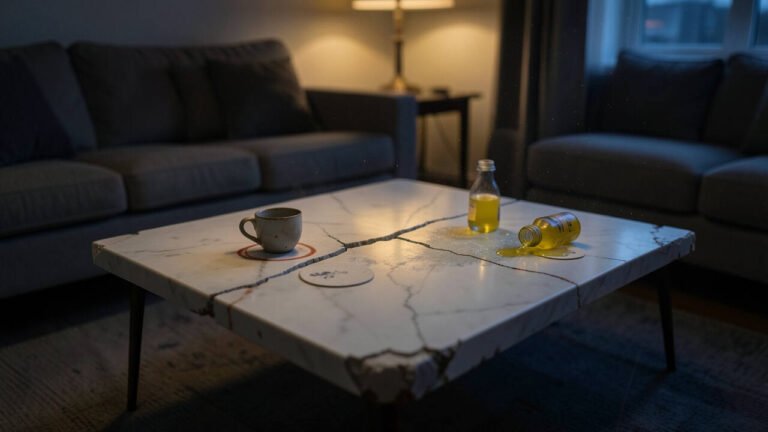
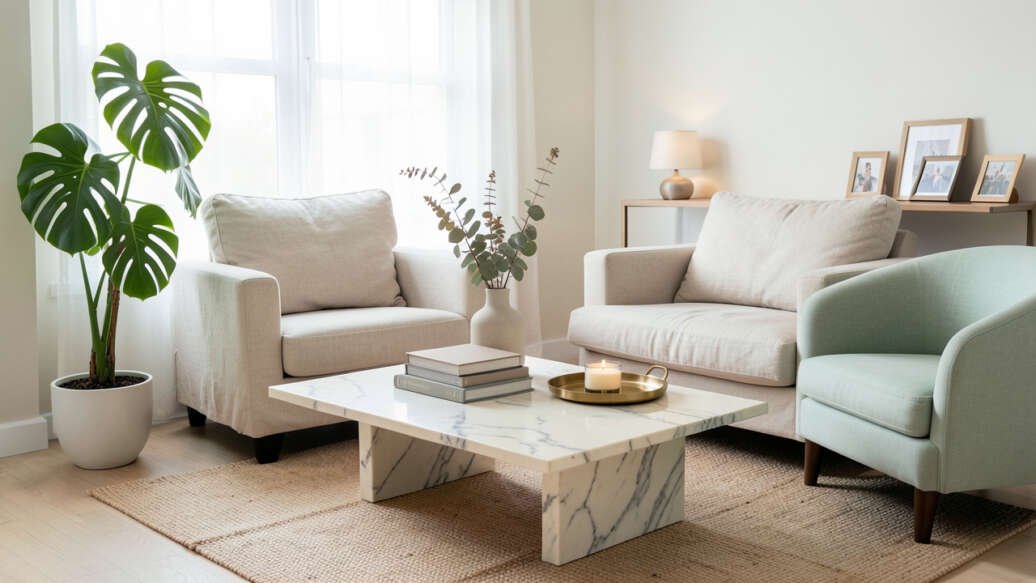
A marble coffee table can work in a small living room, but only if you select a compact size under 40 inches wide and a light color to avoid overwhelming the space. You should skip natural marble if you need storage, have young children, or cannot maintain a sealed surface, as it stains easily and adds visual weight. For a small room, a polished or composite marble table with at least 14-18 inches of clearance around seating provides the aesthetic without crowding, or consider tempered glass or light wood as practical alternatives.
Quick Verdict: Simply put, a marble coffee table can work in a small living room, but you must choose the right size, finish, and placement. Skip it if you have limited floor space, need storage, or have young children. Opt for a compact, polished marble table with a slim profile or consider alternatives like quartz or wood if durability is a concern.
- A small marble coffee table (under 40 inches wide) fits most small living rooms without overwhelming the space.
- Light-colored marble brightens a room, while dark marble adds visual weight and can make a small room feel smaller.
- Marble is porous and stains easily, so sealed, honed, or composite marble is better for high-use coffee tables.
- Alternatives like tempered glass, light wood, or quartz offer similar aesthetics without the downsides of natural marble.
- Measure your seating area and leave at least 14-18 inches of clearance around the table for comfortable movement.
The Aesthetic and Functional Appeal of Marble
Marble has been a luxury material for centuries. Its veining and color variations make each table unique. In a small living room, a marble coffee table can serve as the focal point that elevates the entire design.According to the, marble remains one of the top three most desired countertop and tabletop materials among homeowners. The polish reflects light, which helps a small room feel larger when the marble is light in tone.Why Homeowners Choose Marble
- Timeless look: Marble never goes out of style, unlike trendy materials.
- Heat resistance: You can place hot drinks directly on a marble surface.
- Value addition: A real marble coffee table can increase perceived home value.
- Unique patterns: No two marble pieces look exactly alike.
Space Constraints: Why Size Matters
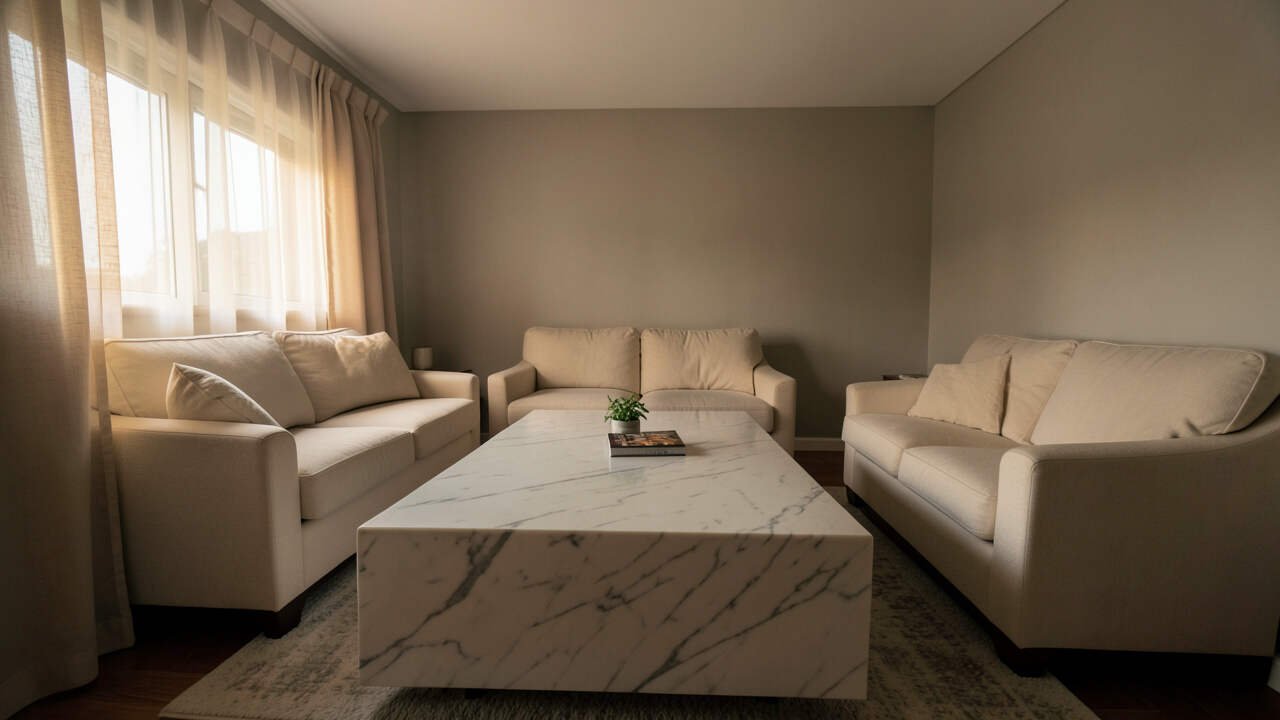
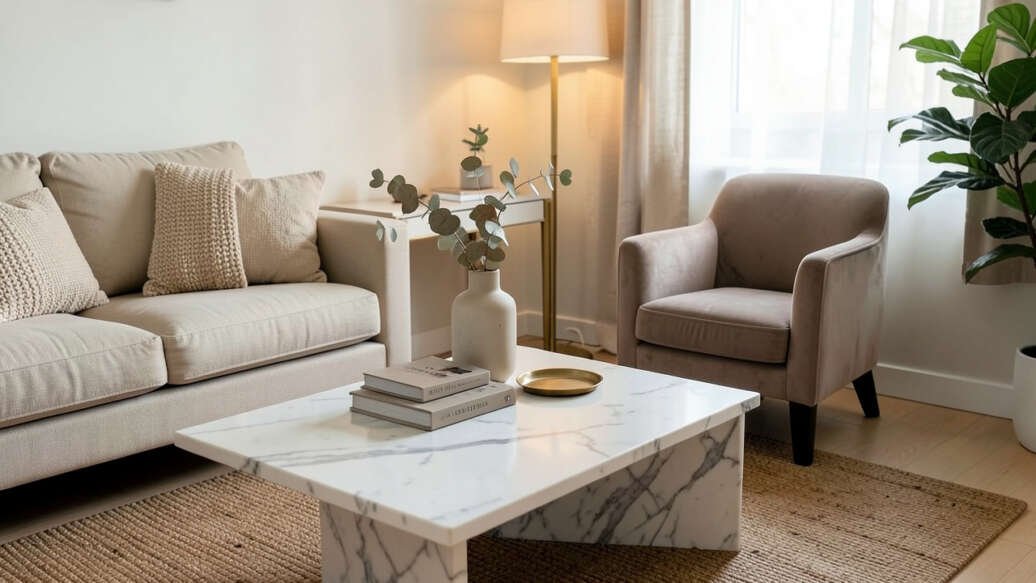
The average small living room in the United States measures about 11 by 13 feet, according to the. That means a coffee table that is too large can block traffic flow and make the room feel cramped.A marble coffee table often has a heavier visual presence than wood or glass. In a small room, this weight can overwhelm unless you balance it with slim legs, a transparent base, or a lighter color.Key Measurements for Small Living Rooms
- Table width: Choose a table that is no more than two-thirds the length of your sofa.
- Height: The table top should be at the same height as your sofa seat or 1-2 inches lower.
- Clearance: Leave at least 14 inches between the table and the sofa, and 18 inches on walkway sides.
Pros and Cons at a Glance
Tip: If you love the look of marble but worry about maintenance, choose a honed marble tabletop. The matte finish hides scratches and stains better than polished marble.
| Pros | Cons |
|---|---|
| Natural elegance that improves with age | Easily scratched, stained, or etched by acids |
| Reflects light to brighten small rooms | Very heavy – difficult to rearrange in compact spaces |
| Heat resistant – safe for hot mugs | High cost – genuine marble starts at $400 for small tables |
| Unique veining creates a one-of-a-kind piece | Needs regular sealing – every 6-12 months |
| Adds resale value to your home | Hard edges can be a hazard for toddlers |
How to Choose a Marble Coffee Table for a Small Room
If you decide to go ahead, follow these guidelines to make sure your marble coffee table enhances rather than hurts your small living room.Select the Right Size and Shape
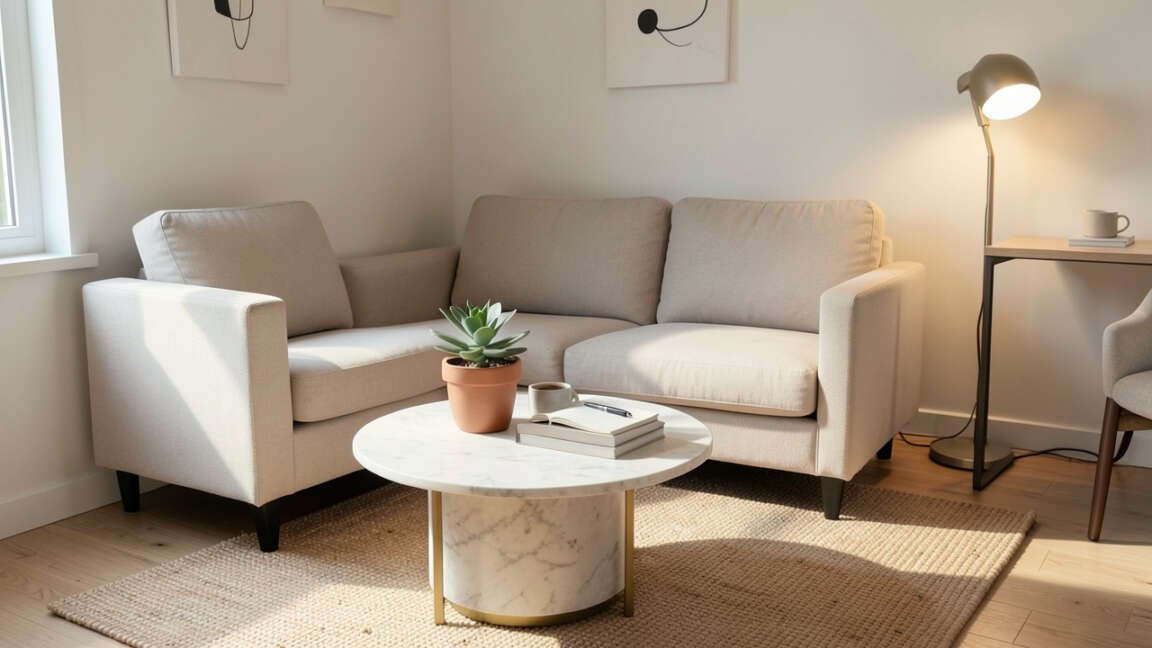
Avoid large rectangular tables that extend close to walls. A round or oval marble coffee table is usually best for small rooms. It eliminates sharp corners and allows easier traffic flow.- Round tables: Ideal for tight spaces – requires less clearance than rectangular.
- Slim-leg designs: Lifting the table off the floor creates visual airiness.
- Nesting tables: Two small tables that stack allow you to adjust the size when needed.
Choose the Color and Finish Carefully
Light marble colors – Carrara white, Calacatta ivory, or dove gray – reflect light and make the room feel open. Dark marble like Nero Marquina or Emperador adds drama but absorbs light. Honed or leathered finishes hide fingerprints and small scratches better than high-gloss polished surfaces.Warning: Do not use acidic cleaners like vinegar, lemon juice, or commercial bathroom sprays on a marble coffee table. These will etch the surface permanently. Use a mild pH-neutral cleaner instead.
Look for Multi-Function Features
In a small living room, every piece of furniture should earn its footprint. A marble coffee table with a lower shelf, a drawer, or a lift-top mechanism gives you storage without adding bulk. Some designs include removable trays or built-in coasters.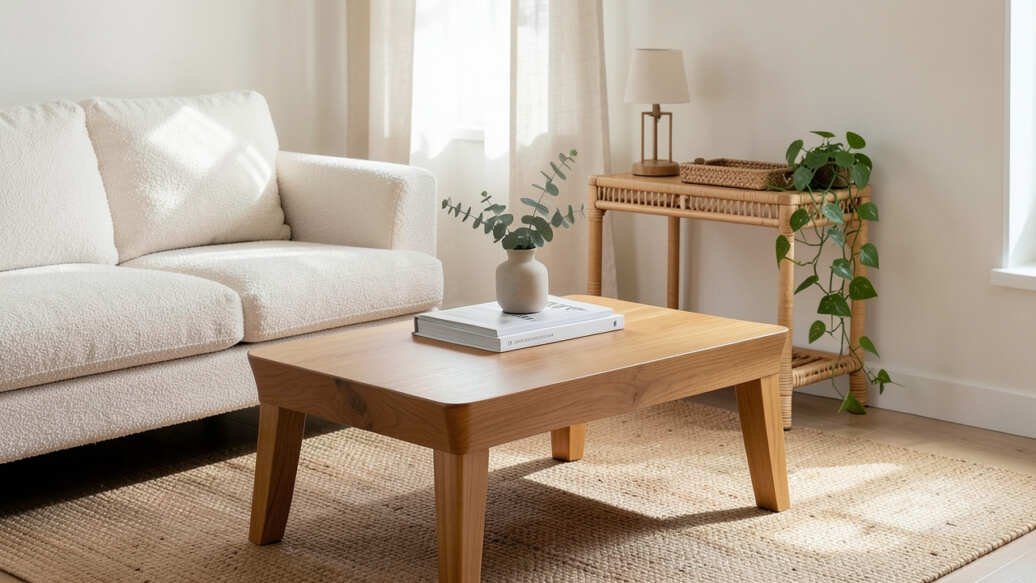
Best Alternatives to Marble for Small Spaces
Sometimes skipping the marble is the smarter move. Here are materials that mimic the look of marble without the drawbacks.| Material | Best For | Main Concern |
|---|---|---|
| Quartz (engineered stone) | Stain resistance, scratch resistance | Not heat-proof – may discolor under hot pans |
| Tempered glass | Making a small room feel larger | Shows every fingerprint and dust speck |
| Light wood (oak, ash) | Warmth, cost, low maintenance | Can warp in humid climates |
| Porcelain slab | Ultra-durable, looks like marble | Heavy and expensive |
| Acrylic / resin with marble print | Budget buyers, renters | Less premium feel than real stone |
How to Decide: A Quick Decision Checklist
Ask yourself these questions before buying a marble coffee table for your small living room.- Do you have at least 14 inches of clearance on all sides? If not, skip marble and choose a smaller or alternate material.
- Can you commit to sealing the table every 6-12 months? Marble requires ongoing maintenance.
- Do you have young children or clumsy pets? Marble chips, scratches, and stains easily.
- Is your living room also your dining or work area? If the table will see heavy use, consider a more durable surface like quartz or porcelain.
- Do you prefer a light, airy look? Choose white or light gray marble with a slim metal base.
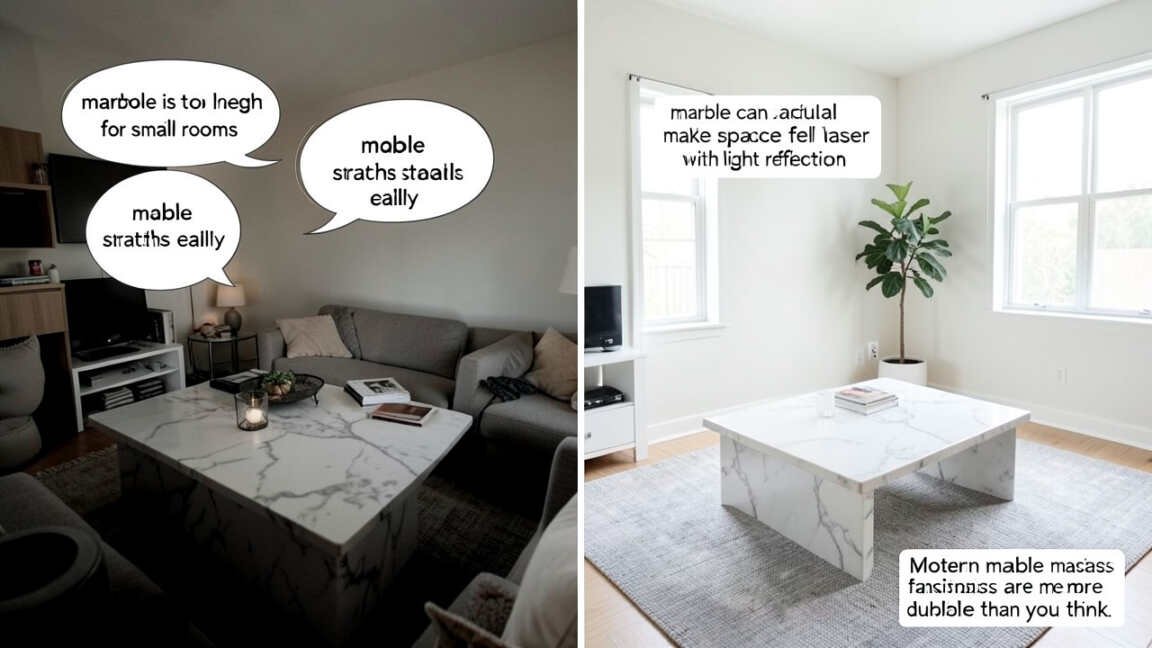
Common Myths vs Facts About Marble Coffee Tables
Important: Many myths about marble come from commercial grade usage. For a residential coffee table, marble can be durable if properly maintained and used with care.
- Myth: Marble is too fragile for a coffee table. Fact: Marble is strong enough for daily use, but it scratches and stains easier than granite or quartz. A honed finish resists staining better than polished.
- Myth: A marble coffee table always looks cold and formal. Fact: A small round marble table with a wooden or brass base feels warm and modern, especially in a minimalist small room.
- Myth: You cannot put anything hot on marble. Fact: Marble is heat-resistant and can handle hot coffee mugs. However, extreme heat like a direct flame can cause thermal shock.
Frequently Asked Questions
What size marble coffee table is best for a small living room?
Choose a table that is 30 to 40 inches wide for most sofas. Round tables work best under 36 inches. Measure your sofa length and pick a table that is no more than two-thirds of that measurement.
Is a marble coffee table difficult to maintain?
Marble requires regular sealing, typically every 6 to 12 months, using a stone sealer. Clean spills immediately with a pH-neutral cleaner. With proper care, a marble coffee table can last for decades.
Can a marble coffee table make a small room look bigger?
Yes, if you choose light-colored marble with a polished finish. The reflective surface bounces light around the room. A slim, pedestal base also creates the illusion of more floor space.
What are the best legs for a marble coffee table in a small space?
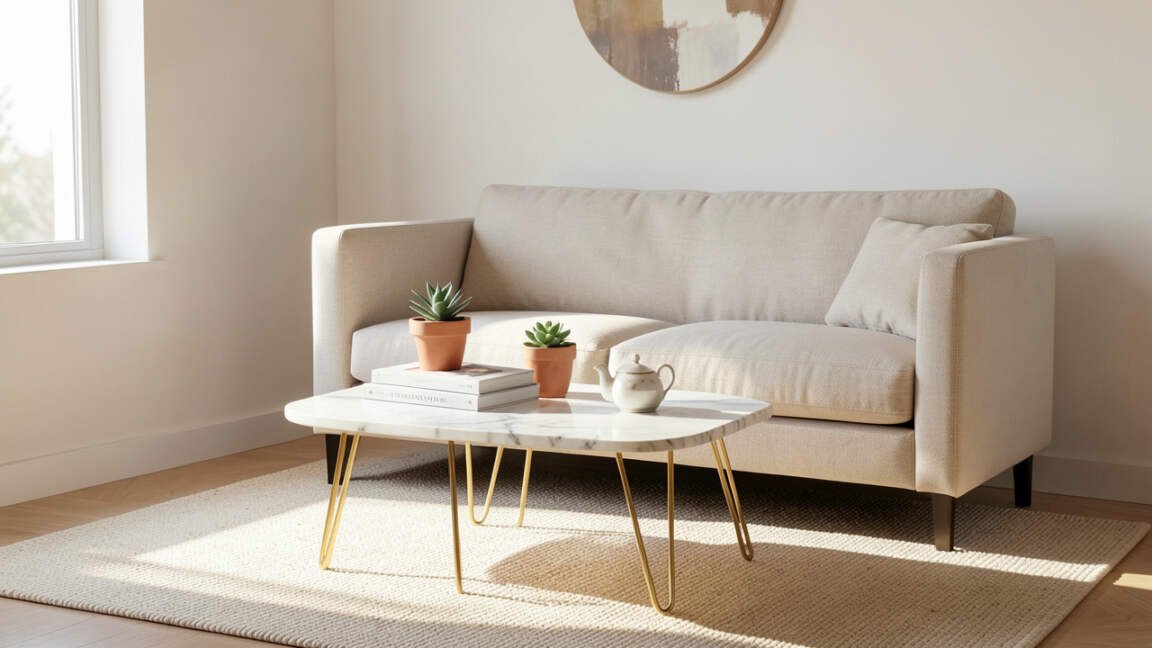
Metal legs in gold, brass, or black keep the visual weight low. Hairpin legs or a simple X-frame base work well. Avoid bulky wooden pedestals that take up too much visual space.
Should I buy a real marble coffee table or one with a marble veneer?
Real marble is heavier and more expensive, but it adds authenticity and resale value. Marble veneer over a lighter core is cheaper and easier to move, but the top layer can chip. For small rooms, veneer is often practical if you move frequently.
Final Thoughts
A marble coffee table can work in a small living room when you pick the right size, finish, and color. Measure your space first, consider the maintenance commitment, and look at alternatives like quartz or glass if you need something more durable. Ultimately, choose what makes your small room feel open and enjoyable every day.Knowing that marble is durable can help you decide if a marble coffee table suits your small living room.
A marble coffee table can add elegance to your small living room when chosen carefully.
For long-term care, commit to sealing marble coffee table every 6-12 months to prevent stains.