Over five years, wood sofa frame versus metal frame durability depends more on build quality than the material itself, with kiln-dried hardwood and solid joinery typically providing a quieter, repairable sofa and powder-coated steel resisting bending in recliners or modular designs. Softwood, particleboard, weak welds, staples, and unreinforced joints fail early regardless of whether the frame is wood or metal. To get lasting stability past the five-year mark, check the joinery and materials first, because construction quality decides whether your sofa holds up far more than the frame material alone.
Wood sofa frame vs. metal frame durability depends more on build quality than material. Over five years, kiln-dried hardwood with strong joinery usually feels quieter, warmer, and repairable, while powder-coated steel can resist bending in recliners or modular sofas.
Avoid particleboard, softwood, weak welds, staples, and unreinforced joints if you want long-term stability.
When you’re picking out a new sofa, the frame material is a big deal. It’s the backbone of your furniture, and you want it to last. Thinking about Wood Sofa Frame vs.
Metal Frame: Which Holds Up Better Over 5 Years? helps you make a smart choice that saves you money and hassle down the road. We’ll look at how each type fares over time so you can feel confident in your purchase.
You’ll learn what to expect in terms of wear and tear, making sure your sofa stays comfy and looks great for years to come.
Key Takeaways
- Wood frames can be strong and classic, but quality varies greatly.
- Metal frames often offer superior strength and resistance to warping.
- The overall construction and joinery are more important than just the material.
- Consider your lifestyle and how you use your sofa when choosing.
- Maintenance needs differ between wood and metal sofa frames.
- Understanding the trade-offs helps you get the best value and longevity.
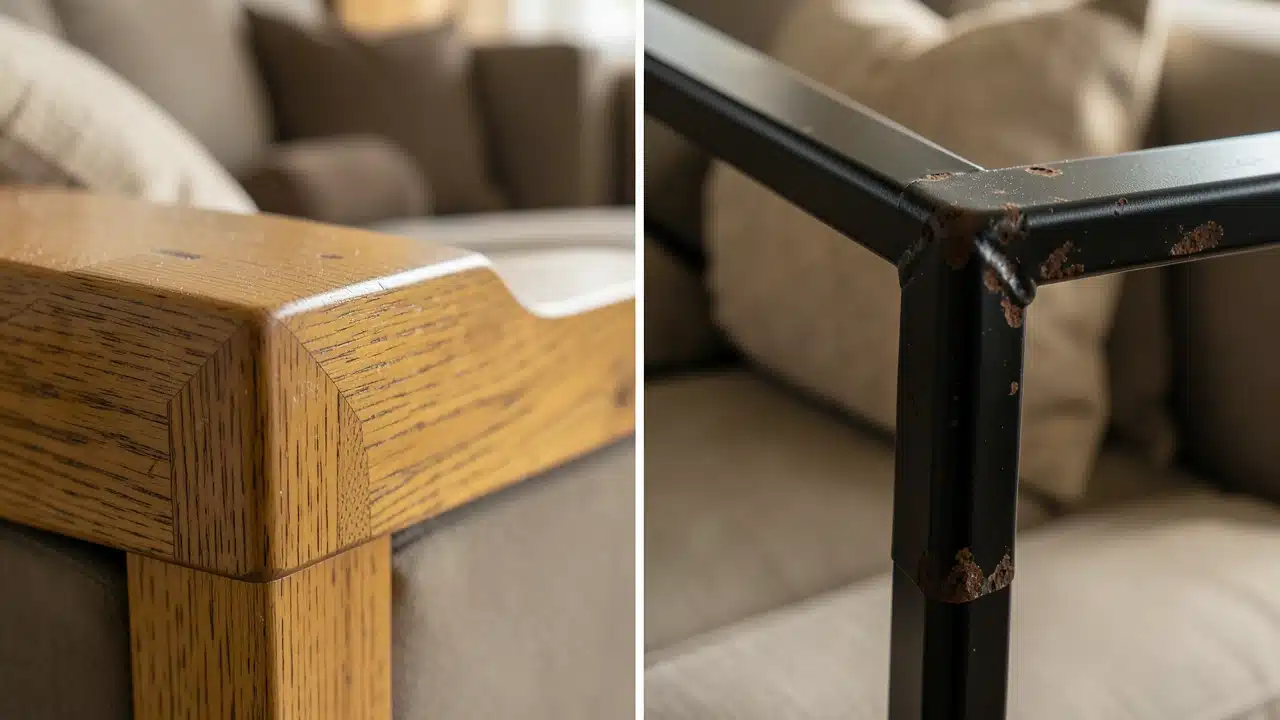
How Wood Frames Stand Up Over Time
Wood has been a go-to material for sofa frames for ages. It’s familiar and can feel warm and inviting. When people ask about Wood Sofa Frame vs.
Metal Frame: Which Holds Up Better Over 5 Years?, they often think of solid hardwood as the best option.
High-quality hardwoods like oak, maple, or ash can indeed be very durable. They can support weight well and, if built properly, will last a long time.
However, not all wood frames are created equal. Many sofas use particleboard or lower-grade woods, especially in stress areas.
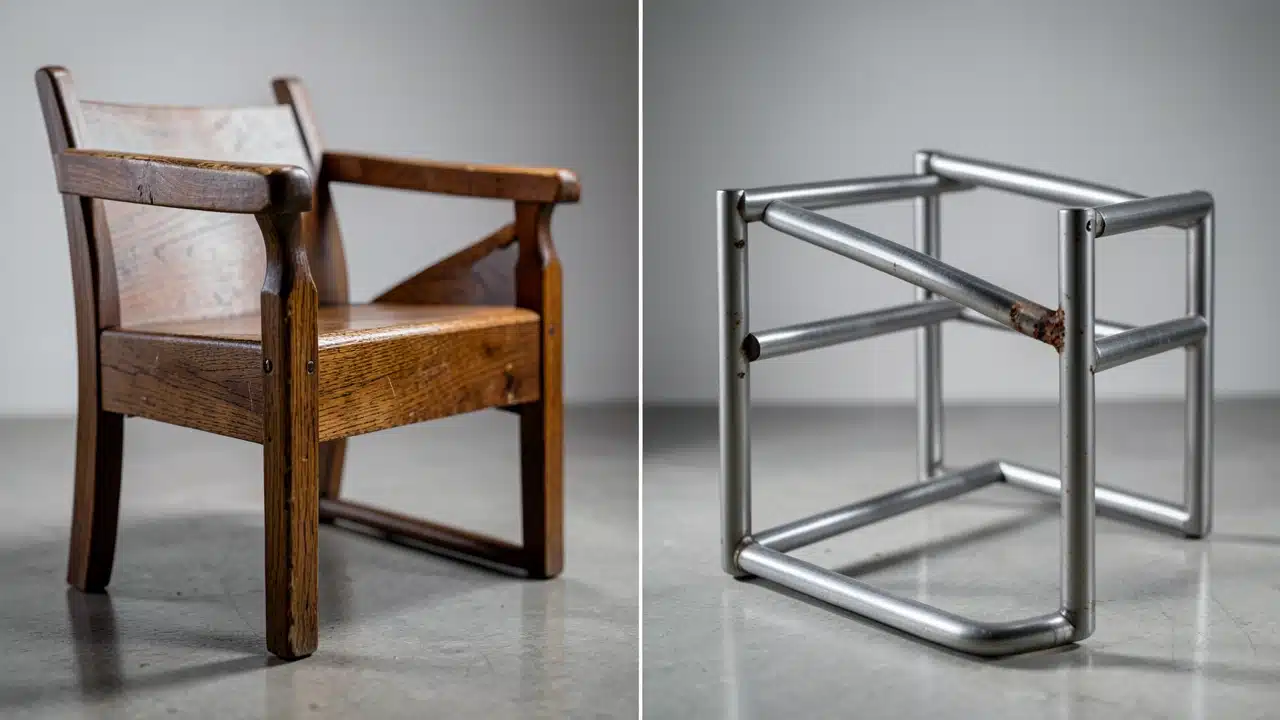
Over five years, a well-made hardwood frame can show minimal signs of wear. You might see some slight settling or creaking if it’s under heavy use. A poorly constructed frame, on the other hand, could start to warp, crack, or even break.
This is especially true if the wood wasn’t properly dried or if the joints are weak. The way the frame is put together matters a lot. Screws, glue, and corner blocks all play a role in its strength.
A frame held together with just staples and glue might not last as long.
The Importance of Wood Quality
The type of wood is a major factor in durability. Hardwoods are dense and strong. They resist bending and breaking much better than softwoods like pine.
Pine can be used, but it’s more prone to dents and damage over time. It’s also less expensive, which is why it’s common in budget-friendly furniture.
Engineered wood products like plywood and MDF are also used. High-quality plywood, made from thin layers of wood glued together, can be quite strong. It’s often used for stability.
MDF (Medium-Density Fiberboard) is made from wood fibers and resin. It’s dense but can be vulnerable to moisture and can lose its structural integrity if it gets wet.
Signs of Wear in Wood Frames
After a few years, you might notice a few things with a wood frame. A slight squeak when you sit down is common. This often means joints are a bit loose.
If the sofa feels wobbly or uneven, it could be a sign of structural issues. Uneven cushions can also indicate that the frame underneath has shifted or weakened. For a wood frame, checking for cracks or splits, especially around joints, is important.
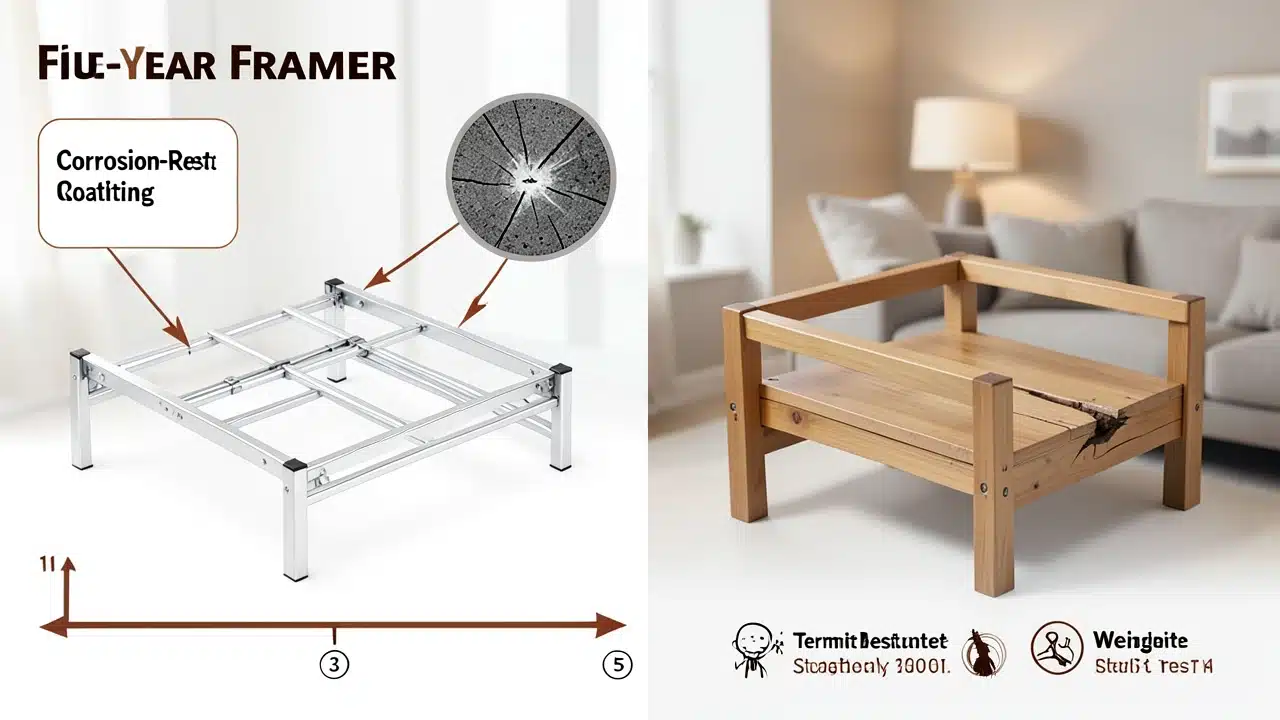
How Metal Frames Stand Up Over Time
Metal frames offer a different kind of durability. They are often seen as more modern and industrial. When comparing Wood Sofa Frame vs.
Metal Frame: Which Holds Up Better Over 5 Years?, metal often wins in terms of sheer strength and resistance to warping. Steel and aluminum are common metals used for sofa frames. Steel is very strong and can support heavy loads without bending.
Aluminum is lighter but still very durable and resistant to rust.
A well-constructed metal frame can easily last well beyond five years with minimal issues. Metal doesn’t warp or crack like wood can. It’s also less susceptible to issues like insect damage or rot.
The main concerns with metal frames are usually related to the welding or joining of the metal pieces. If these connections are weak, they can fail. Rust can also be an issue with steel if it’s not properly coated or if the coating is scratched.
Types of Metal Frames
Steel frames are the most common. They offer excellent strength and are relatively affordable. You’ll find them in many types of sofas, from sleek modern designs to sturdy sectionals.
They can handle a lot of weight and stress, making them a good choice for busy households.
Aluminum frames are lighter than steel. They are also more resistant to rust, which can be an advantage in humid environments. However, aluminum is generally more expensive than steel.
It’s often used in outdoor furniture or high-end indoor pieces where weight is a concern.
Signs of Wear in Metal Frames
Metal frames are generally very low maintenance. Over five years, you’re unlikely to see any warping or cracking. The most common issues might be loose bolts or screws if the frame is assembled with them.
If the metal is painted or coated, scratches can expose the metal underneath, potentially leading to rust over time, especially in humid conditions. However, for indoor use, this is rarely a major problem for a quality frame.
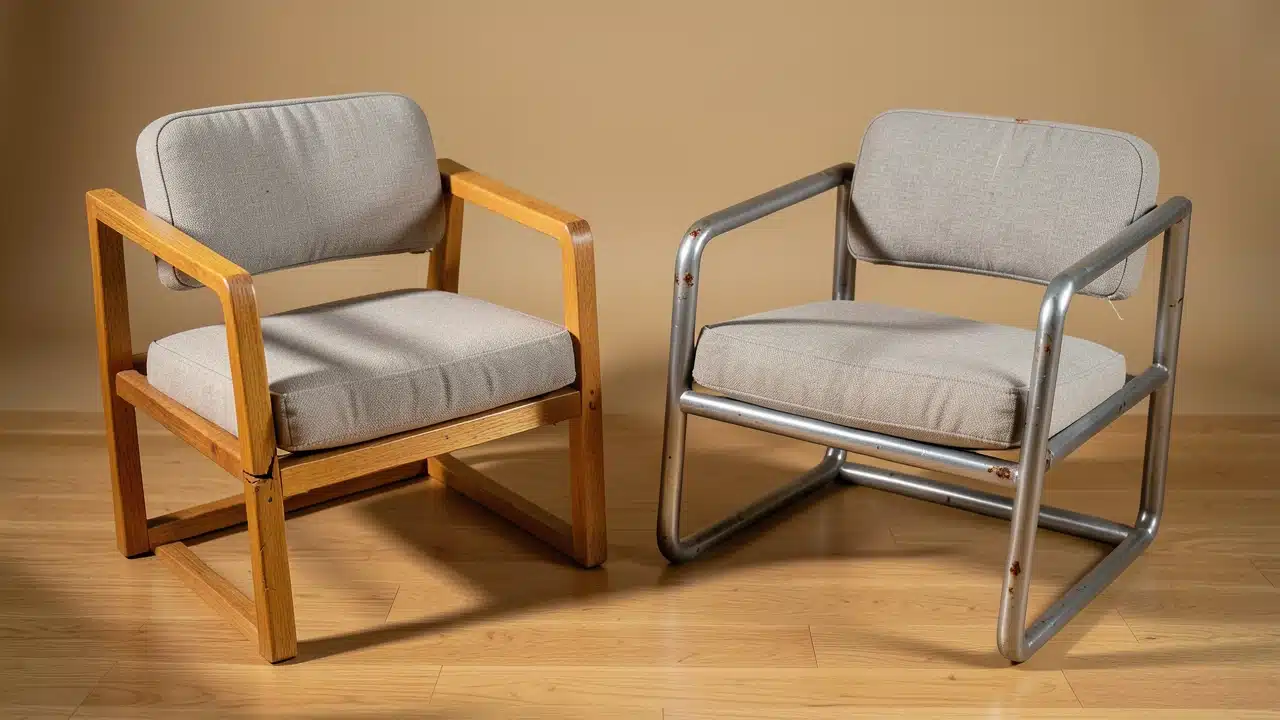
Comparing Durability Factors
To truly understand Wood Sofa Frame vs. Metal Frame: Which Holds Up Better Over 5 Years?, we need to look at specific factors. Both materials have their strengths and weaknesses.
The context of how the frame is made and used is key. A cheap wood frame might fail much faster than a well-built metal one. Conversely, a very high-quality hardwood frame could outlast a poorly made metal frame.
Here’s a look at some key points:
- Strength and Weight Capacity: Generally, steel and high-quality hardwood frames can support significant weight. Poor quality wood or thin metal can be a weak point.
- Resistance to Warping: Metal is far more resistant to warping than wood, especially in varying humidity levels.
- Moisture Sensitivity: Wood can be damaged by spills and humidity, leading to rot or warping. Metal is generally not affected by moisture, though steel can rust if not protected.
- Longevity: A quality metal frame often has a longer lifespan with fewer issues than a quality wood frame, especially under heavy use.
- Repairability: Minor issues in wood frames, like loose joints, can sometimes be repaired. Major damage to either material can be difficult or impossible to fix without replacing the frame.
| Strength | Very Good (especially hardwoods) | Excellent (especially steel) |
| Warping Resistance | Moderate (can warp with humidity/stress) | Excellent |
| Moisture Impact | Can be damaged (rot, warp) | Minimal (steel can rust if uncoated) |
| Weight Capacity | High | Very High |
| Lifespan Expectation (5+ Years) | Good to Excellent | Excellent |
| Potential Issues | Cracking, warping, loose joints, rot | Loose connections, rust (if uncoated) |
Construction Quality: The Real Deciding Factor
When we talk about Wood Sofa Frame vs. Metal Frame: Which Holds Up Better Over 5 Years?, the material is only part of the story. How the sofa is actually built is often more important.
A sofa with a poorly constructed frame, regardless of material, will not last. Look for furniture that is described as having a “kiln-dried hardwood frame” or “reinforced joinery.”
Joinery methods are crucial. Dovetail joints, mortise and tenon joints, and strong corner blocks are signs of good craftsmanship in wood frames. These methods create strong, lasting connections.
For metal frames, look for sturdy welds and secure bolts. The frame should feel solid and not flex or creak when you test it.
First, inspect the joints. Are they glued and screwed? Are there metal brackets reinforcing them?
For wood, check for corner blocks that add extra support. Second, consider the overall build. Does the frame feel solid when you push on it?
Does it wobble? A good frame should feel stable and secure.
Next, think about the finishing. For wood, a good finish protects it from moisture and wear. For metal, a powder coating or paint finish helps prevent rust.
The quality of these finishes can impact how well the frame holds up over time.
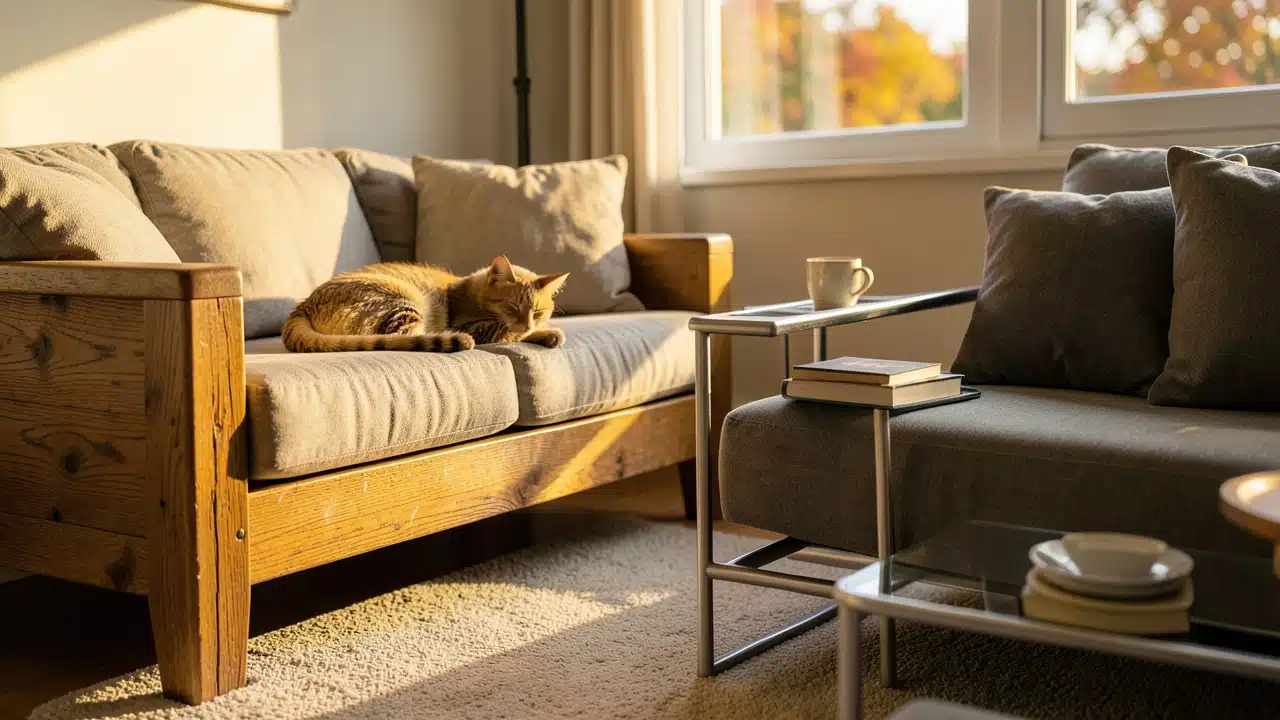
Lifestyle and Usage Considerations
Your daily life plays a big role in how your sofa frame will perform. If you have a busy family with kids and pets, you’ll need something that can withstand a lot of use. This is where the question of Wood Sofa Frame vs.
Metal Frame: Which Holds Up Better Over 5 Years? becomes very practical. A metal frame might be a better choice for high-traffic areas or for families who are a bit rougher on their furniture.
First, consider your family size and whether you have pets. Children jumping on the sofa or pets scratching can put extra stress on the frame. Second, think about how often the sofa will be used.Is it for a formal living room that gets light use, or a family room that’s the hub of activity? Heavy daily use will test any frame.
Third, if you move frequently or rearrange your furniture often, a lighter metal frame might be easier to handle. However, some heavy hardwood frames are built for extreme stability. The best choice depends on your specific needs and how you plan to use your sofa.
Maintenance and Care
Both wood and metal frames require some level of care, though their needs differ. Understanding these differences can help you maintain your sofa and extend its life. For Wood Sofa Frame vs.
Metal Frame: Which Holds Up Better Over 5 Years?, maintenance is a key part of the equation.
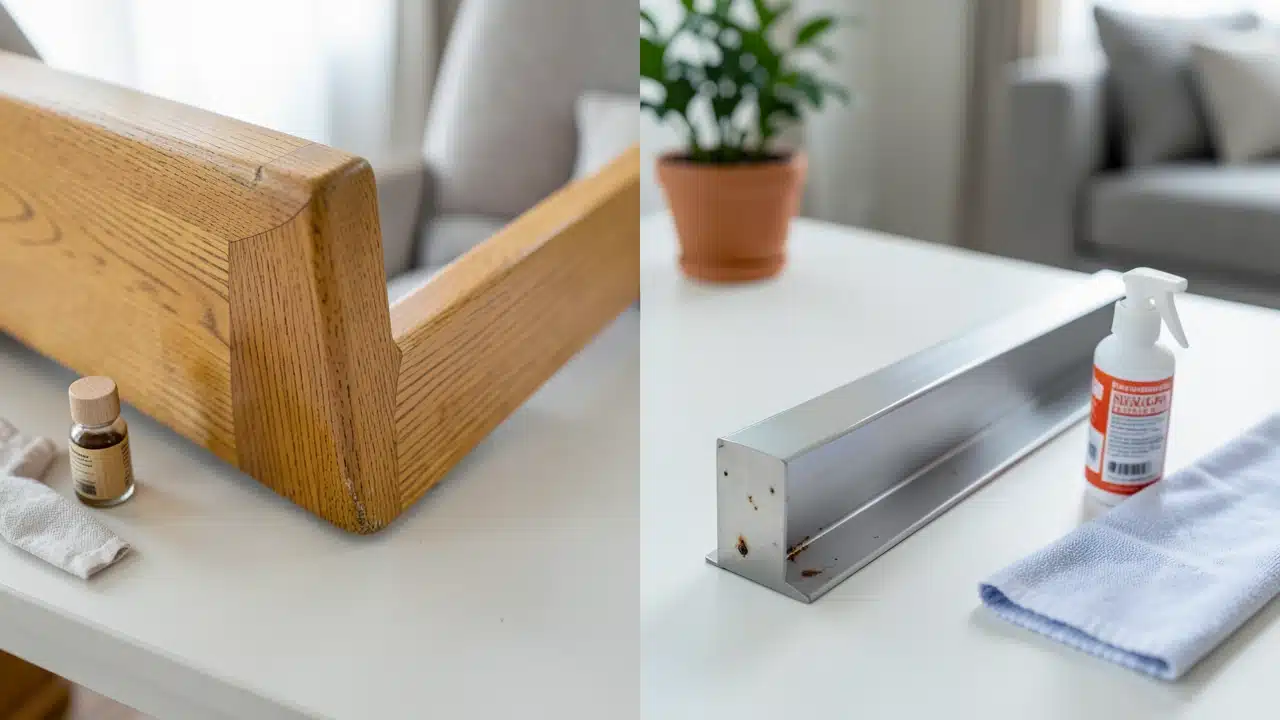
Wood frames benefit from avoiding excessive moisture. Clean up spills immediately. If you live in a very humid climate, consider a dehumidifier for the room.
Periodically checking and tightening any visible screws or bolts can help keep joints secure. Avoid placing wooden furniture in direct sunlight, as this can cause the wood to dry out and crack over time.
Metal frames are generally easier to care for. Regular dusting is usually all that’s needed. If you notice any scratches on a painted or coated metal frame, it’s a good idea to touch them up to prevent rust.
For steel frames, especially in coastal or humid areas, ensuring the protective coating is intact is important.
Frequently Asked Questions Of Wood Sofa Frame Vs. Metal Frame: Which Holds Up Better Over 5 Years?
Is a metal sofa frame better than a wood sofa frame for a family with young children?
Generally, yes. Metal frames tend to be more robust and resistant to damage from rough play. They are less likely to warp or break under heavy stress compared to many wood frames, especially if the wood quality is not top-tier.
What type of wood is best for a sofa frame to ensure it lasts over 5 years?
High-quality hardwoods like oak, maple, ash, or beech are best. These woods are dense and strong, providing excellent durability. Kiln-dried hardwood is also important to prevent warping.
Can wood sofa frames be as durable as metal frames over 5 years?
A premium, well-constructed hardwood frame can be very durable and last for many years. However, many mass-produced sofas use lower-quality wood or engineered wood that may not hold up as well as a good metal frame over the same period.
What are the signs that a sofa frame is starting to fail after 5 years?
For wood frames, look for creaking, wobbling, unevenness, or visible cracks. For metal frames, check for loose connections, rust spots, or bent parts.
Is a metal frame always more expensive than a wood frame?
Not necessarily. While high-end metal frames can be costly, many basic steel frames are competitively priced with mid-range wood frames. The overall price depends heavily on the quality of the materials and the craftsmanship.
How does the joinery affect the durability of a wood sofa frame over 5 years?
Strong joinery, like screws, glue, and corner blocks, is crucial for a wood frame’s longevity. Weak joinery, such as just staples, will lead to the frame loosening and failing much sooner than 5 years.
Final Thoughts
Choosing between a wood and metal sofa frame comes down to priorities. For many, a well-built hardwood frame offers classic appeal and good durability.
However, for maximum strength and resistance to warping over 5 years and beyond, a quality metal frame often has an edge.
Ultimately, the construction quality and your lifestyle are the most important factors to consider for long-lasting comfort.