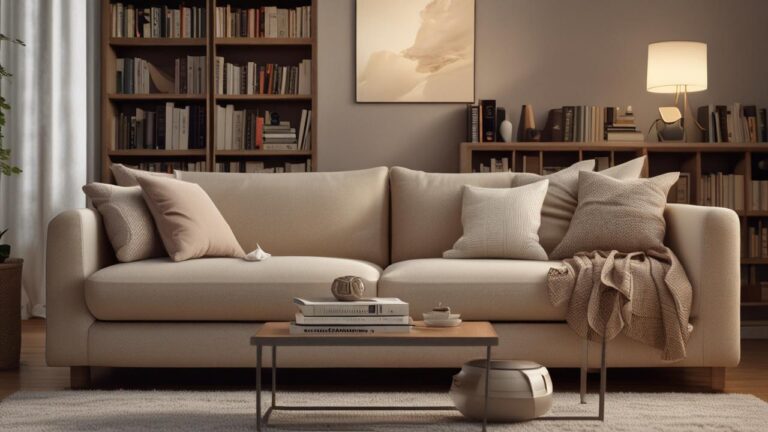
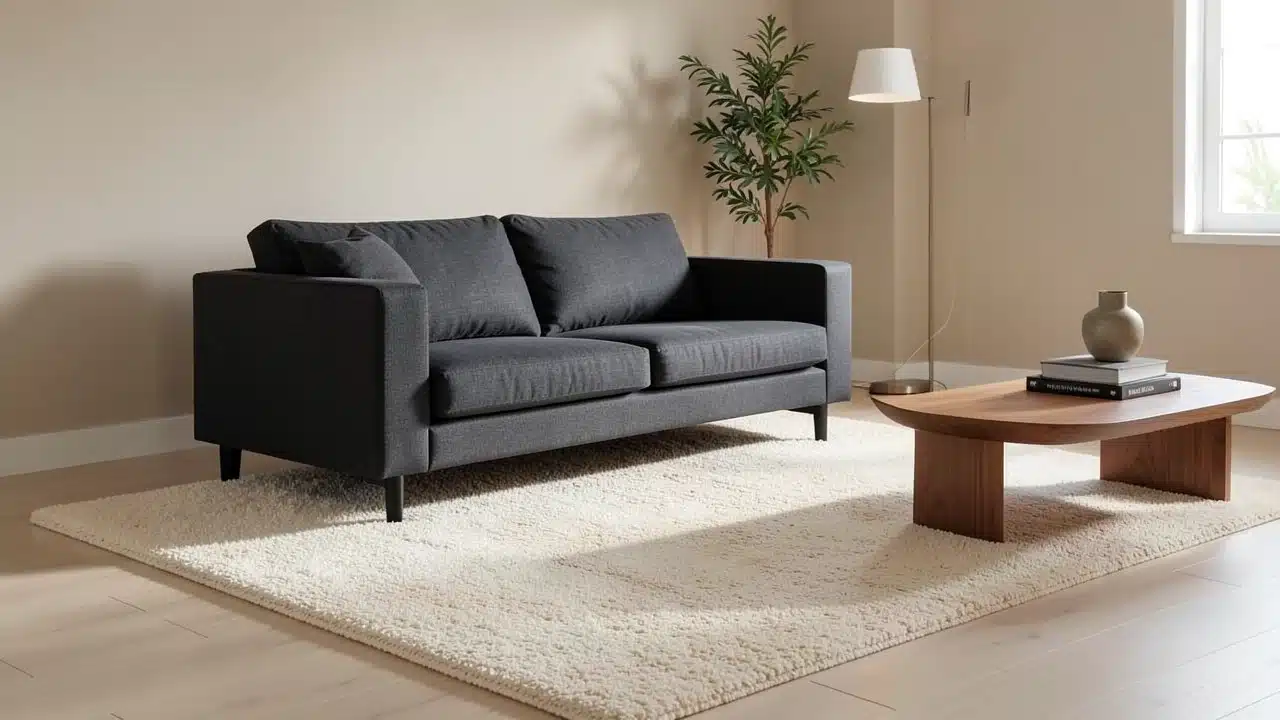
The rug size that stops your sofa from looking like it's floating is one large enough for at least the front legs of the sofa and any nearby chairs to rest on it, typically extending several inches beyond the sofa's width. A too-small rug leaves furniture visually disconnected, while a properly sized rug anchors the entire seating zone and makes the room feel deliberate and balanced. For most standard living rooms, an 8×10 or 9×12 rug works best for a sofa with two chairs, while sectionals require measuring the full length and depth to ensure all front legs sit on the rug.
The rug size that stops your sofa from looking like it’s floating is large enough for at least the front legs of the sofa and nearby chairs to sit on it.
A too-small rug leaves furniture disconnected. Choose a rug that extends beyond the sofa width and anchors the seating zone, making the room feel planned and balanced.
Choosing the right rug can make all the difference in how your living room feels. A rug that’s too small can make your furniture look like it’s just sitting there, disconnected from everything. You want your space to feel cozy and put together, not like your sofa is about to drift away!
Understanding What Rug Size Stops Your Sofa From Looking Like It’s Floating is key to creating a balanced and inviting room.
Getting this right means your furniture will feel grounded, and your whole room will look more intentional and stylish. We’ll show you exactly how to pick the perfect size so your sofa feels perfectly placed.
Key Takeaways
- Understanding rug placement helps ground your furniture.
- The right rug size makes a room feel more cohesive.
- Front legs of furniture on the rug create a connected look.
- Larger rugs can make a room feel bigger and more luxurious.
- Consider the overall layout and furniture arrangement when choosing a rug.
- A rug that’s too small can make your sofa look like it’s floating.
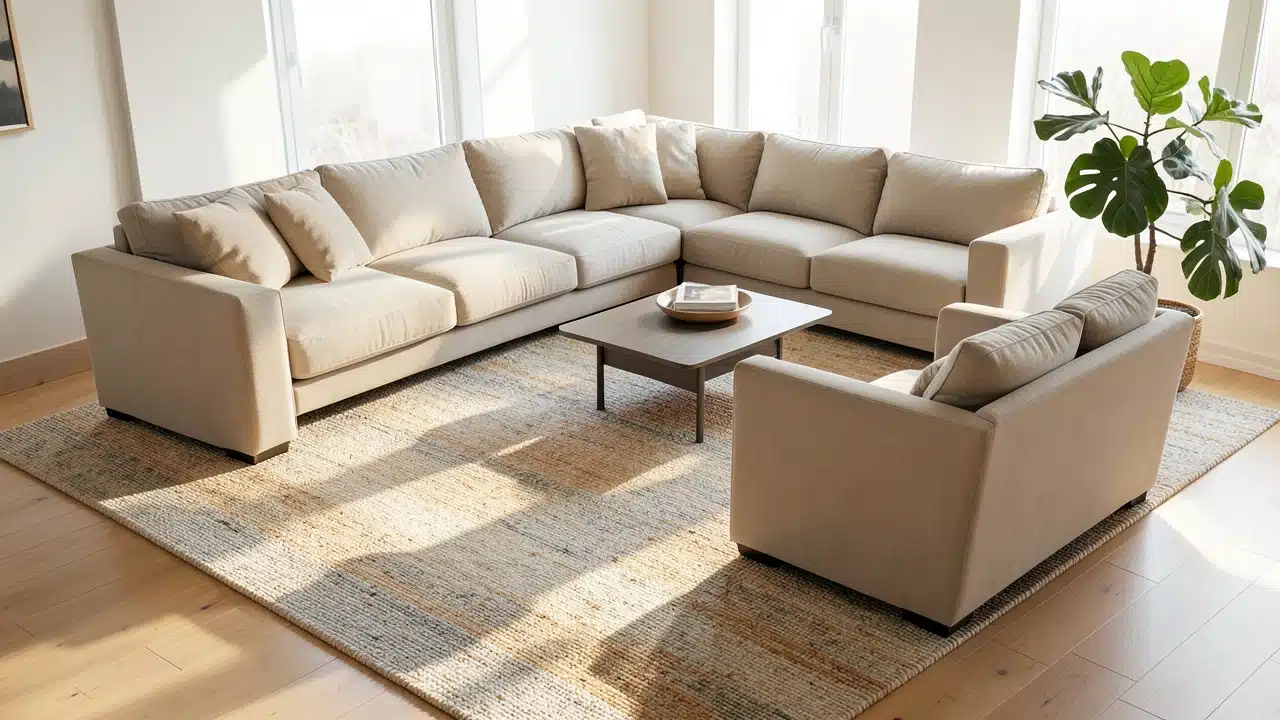
Why Rug Size Matters for Sofa Placement
It might seem like just a piece of fabric on the floor, but a rug does so much more for a room. It anchors your furniture, defines the space, and adds warmth and texture. When your rug is too small, it creates an awkward visual gap.
Your sofa and other seating pieces can end up looking like they’re just loosely placed, without a clear connection to the rug or each other.
This is where the question of What Rug Size Stops Your Sofa From Looking Like It’s Floating becomes so important.
A well-sized rug acts like a foundation for your furniture arrangement. It pulls everything together, making the entire seating area feel like one cohesive unit. This visual grounding is what prevents that “floating” effect.
It makes your room feel more intentional and professionally designed, even if you’re doing it yourself. You want your guests to feel comfortable and your space to feel complete, and the rug is a major player in achieving that.
Common Rug Size Mistakes and Their Impact
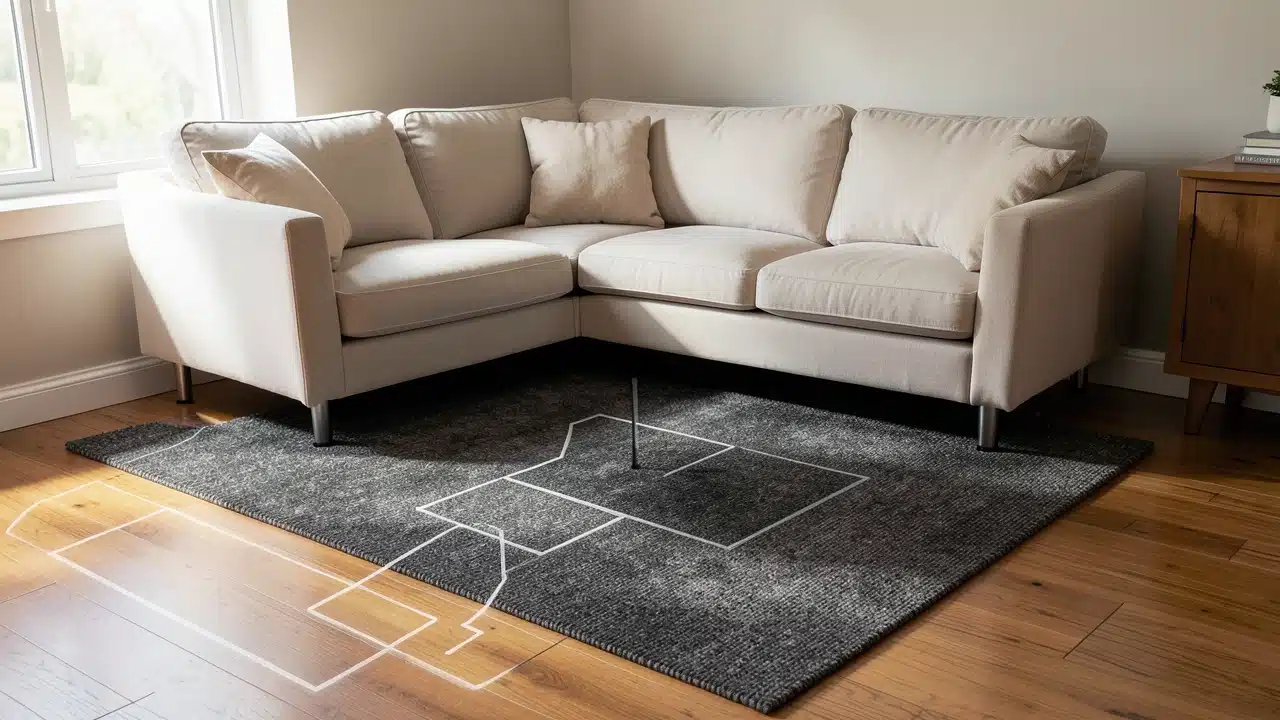
Many people accidentally choose rugs that are too small for their living spaces. This is a common mistake, and it has a big impact on how the room feels. A rug that’s too small can make your sofa look like it’s stranded in the middle of a vast, empty floor.
It doesn’t provide enough visual support for the furniture.
Think about a small rug in a large living room. It might only fit under the coffee table, leaving all the sofa legs dangling in the air. This creates a disconnected look.
Your eye doesn’t know where to rest, and the room can feel unfinished. It’s like putting a tiny doormat in front of a huge doorway – it just doesn’t fit the scale.
The opposite problem, a rug that’s too large, can also be an issue, but it’s less common when trying to avoid the floating sofa look.
An oversized rug can overwhelm the space, making furniture feel cramped. However, the “floating sofa” is almost always a symptom of a rug that’s too small.
Finding the Right Rug Size for Your Sofa
So, how do you figure out What Rug Size Stops Your Sofa From Looking Like It’s Floating? The general rule of thumb is to ensure at least the front legs of your sofa and any other main seating pieces (like armchairs) sit on the rug. This is the most effective way to anchor your furniture and create that cohesive look.
For a standard living room setup with a sofa, a couple of chairs, and a coffee table, an 8×10 foot rug is often a good starting point.
This size usually allows the front legs of the sofa and chairs to rest comfortably on the rug, with the coffee table centered on top. It provides enough coverage to tie the seating area together.
If you have a larger sectional or a very spacious room, you might need to go even bigger. A 9×12 foot rug or a large area rug (like 10×14 feet or more) can be necessary to properly accommodate all the furniture.
The goal is to have the rug extend at least a foot or two beyond the seating pieces on all sides, if possible, to truly define the zone.
The “Front Legs On” Rule
This is the most widely accepted guideline for creating a visually connected seating area. When the front legs of your sofa are on the rug, it signals to your brain that the sofa is part of the rug’s area. It grounds the furniture and makes the entire arrangement feel more stable and intentional.
This simple rule is a big part of answering What Rug Size Stops Your Sofa From Looking Like It’s Floating.
If your sofa is very long, you might even consider having all four legs on the rug. This is ideal for very large rooms or if you want to create a truly luxurious feel.
However, for most standard living rooms, ensuring the front legs are on the rug is sufficient to avoid that floating sensation.
Don’t forget about your other seating! If you have accent chairs, make sure their front legs are also on the rug. This creates a sense of balance and ensures all your seating pieces work together harmoniously.
When All Legs Can Fit
In larger rooms, or with very generous furniture, having all four legs of your sofa on the rug is the ultimate goal.
This creates the most grounded and integrated look possible. It makes the rug feel like the true center of the room, with the furniture nestled comfortably within its borders.
This setup often requires a larger rug size, typically 9×12 feet or 10×14 feet, or even larger custom sizes.
When all furniture legs are on the rug, it visually expands the space and adds a sense of opulence. It’s a fantastic way to avoid any hint of a floating sofa.
Measuring Your Space for the Perfect Rug
Before you buy any rug, it’s crucial to measure your space. Don’t just guess or rely on standard sizes. Your room’s dimensions and your furniture’s layout are unique.
Taking a few minutes to measure will save you the headache of buying a rug that’s the wrong size.
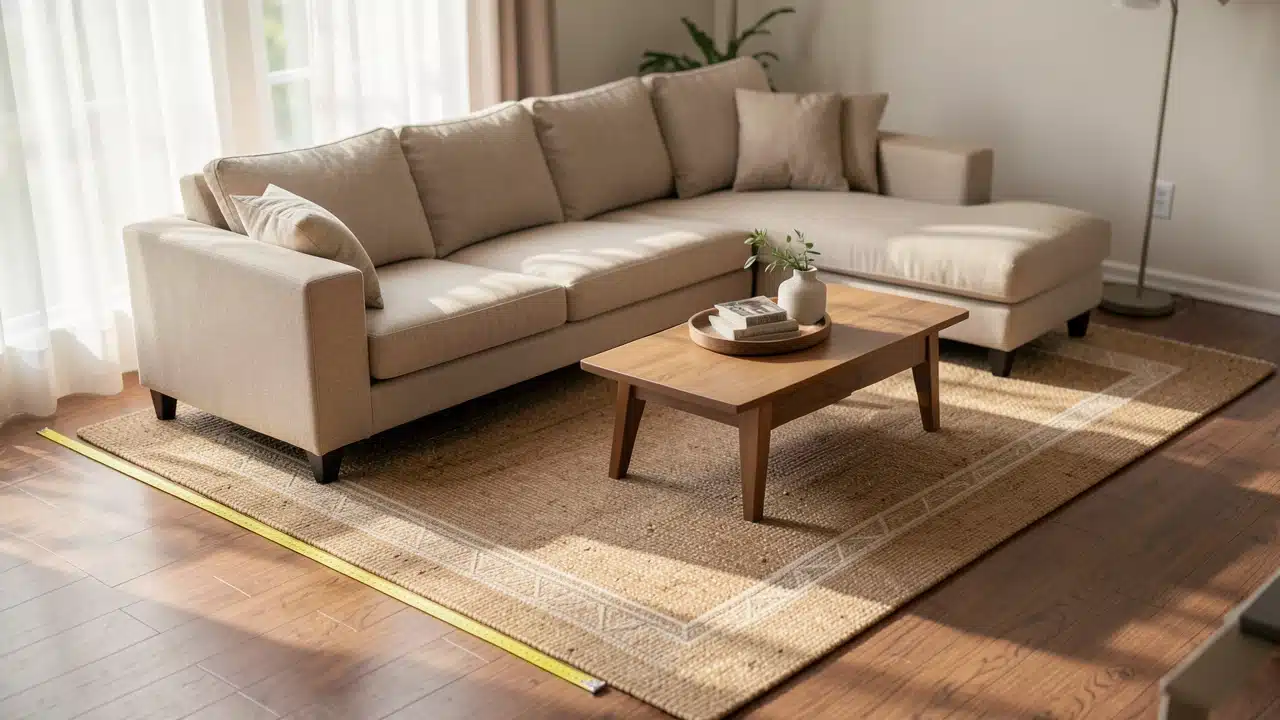
First, measure the length and width of your seating area. This is the space where your sofa, chairs, and coffee table are placed. You want the rug to be large enough to encompass this entire zone.
Second, consider the placement of your furniture. Lay down painter’s tape on your floor to outline the ideal rug dimensions.
Place the tape where you imagine the edges of the rug would be, keeping in mind the “front legs on” rule or the “all legs on” ideal.
Next, think about the space between your furniture and the walls. Ideally, you want about 12-18 inches of bare floor visible between the edge of the rug and the walls. This prevents the rug from looking too large or making the room feel smaller.
Then, take these measurements to the store or use them when browsing online. This will help you narrow down your options significantly and ensure you’re looking at rugs that are the right scale for your room.
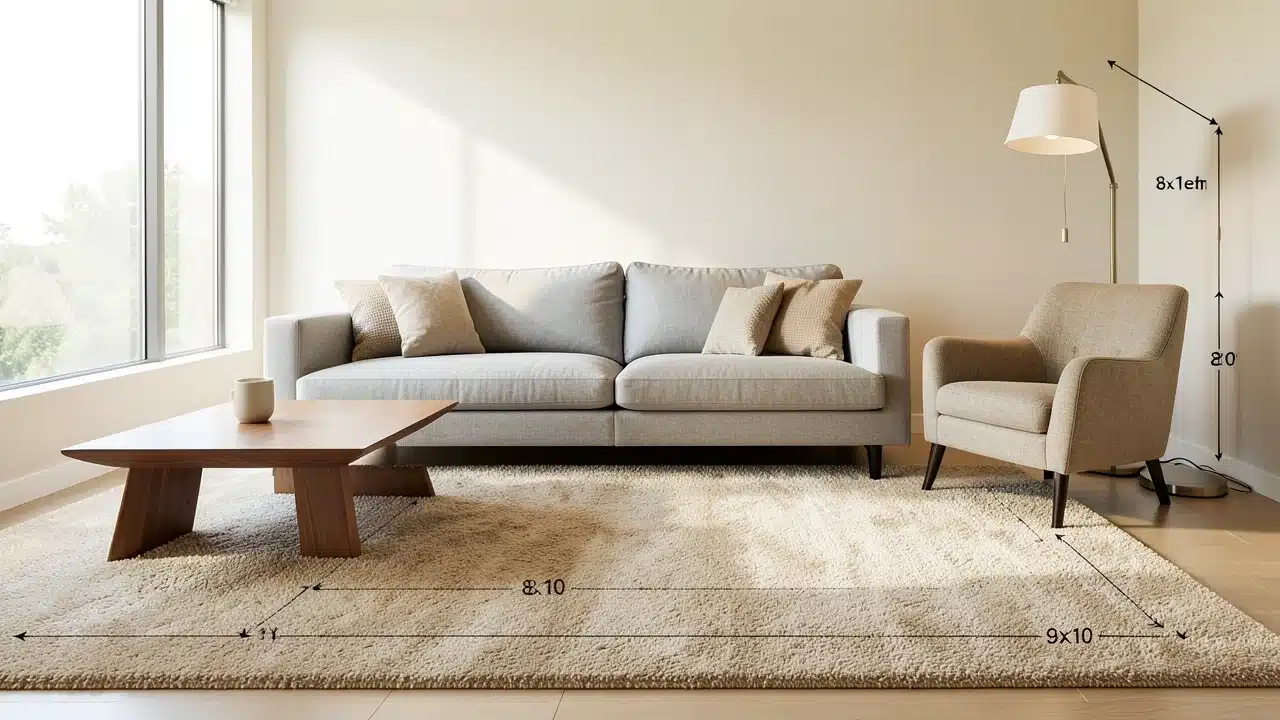
Rug Size Guide for Common Living Room Layouts
Different living room layouts call for different rug sizes. Understanding these common scenarios can help you pinpoint What Rug Size Stops Your Sofa From Looking Like It’s Floating in your specific space.
For a Standard Sofa and Two Chairs
This is a very common living room setup. For this arrangement, an 8×10 foot rug is usually ideal. It allows the front legs of the sofa and both chairs to rest on the rug, with the coffee table centered.
This creates a balanced and inviting conversation area.
If your sofa is particularly long or your chairs are oversized, you might consider a 9×12 foot rug to ensure all furniture legs have ample space on the rug.
For a Sectional Sofa
Sectionals can be tricky because they take up more space and have a unique shape. For an L-shaped or U-shaped sectional, you’ll generally need a larger rug.
A 9×12 foot rug might work if the sectional is on the smaller side, but often an 10×14 foot rug or even a larger custom size is best.
The key is to ensure that the main seating areas of the sectional have their front legs on the rug. You want the rug to feel substantial enough to anchor the entire sectional, not just a small portion of it.
For a Small Apartment Living Room
Even in smaller spaces, rug size is important. A common mistake is to use a rug that’s too small, making the room feel even smaller and the sofa float. For a small living room, a 5×8 foot rug is often a good choice.
In this case, you might only be able to fit the front legs of the sofa on the rug, or perhaps just the coffee table and a few inches of the sofa.
The goal is to define the seating area without overwhelming the room. Even a smaller rug that’s correctly placed can prevent the floating effect.
For a Large, Open-Concept Space
Large spaces require larger rugs to maintain balance. For an open-concept living area, you might need an 10x14 foot rug, a 12x15 foot rug, or even larger. The rug needs to be big enough to clearly define the living area and anchor the furniture within it.In these spaces, it’s often possible to have all four legs of your sofa and chairs on the rug, creating a luxurious and well-defined zone. This is the best way to avoid the floating sofa problem in expansive rooms.
Comparing Rug Sizes: A Visual Guide
Seeing the sizes side-by-side can really help you visualize what works best. Here’s a comparison of common rug sizes and how they generally fit with a standard sofa and chairs.
| 3×5 ft | Entryways, small nooks | Under coffee table only | Sofa will likely float |
| 5×8 ft | Small living rooms, apartments | Front legs of sofa, coffee table | Helps ground sofa, prevents major floating |
| 8×10 ft | Standard living rooms | Front legs of sofa & chairs, coffee table | Effectively stops sofa from floating |
| 9×12 ft | Larger living rooms, sectionals | All legs of sofa & chairs, coffee table | Fully grounds sofa, creates cohesive area |
| 10×14 ft+ | Very large rooms, open concepts | All furniture legs, ample space around | Creates a luxurious, anchored feel |
As you can see, the smaller rugs are more likely to cause that floating sofa effect. The 8×10 and 9×12 foot sizes are typically the sweet spot for ensuring your sofa feels grounded.
This comparison highlights exactly What Rug Size Stops Your Sofa From Looking Like It’s Floating.
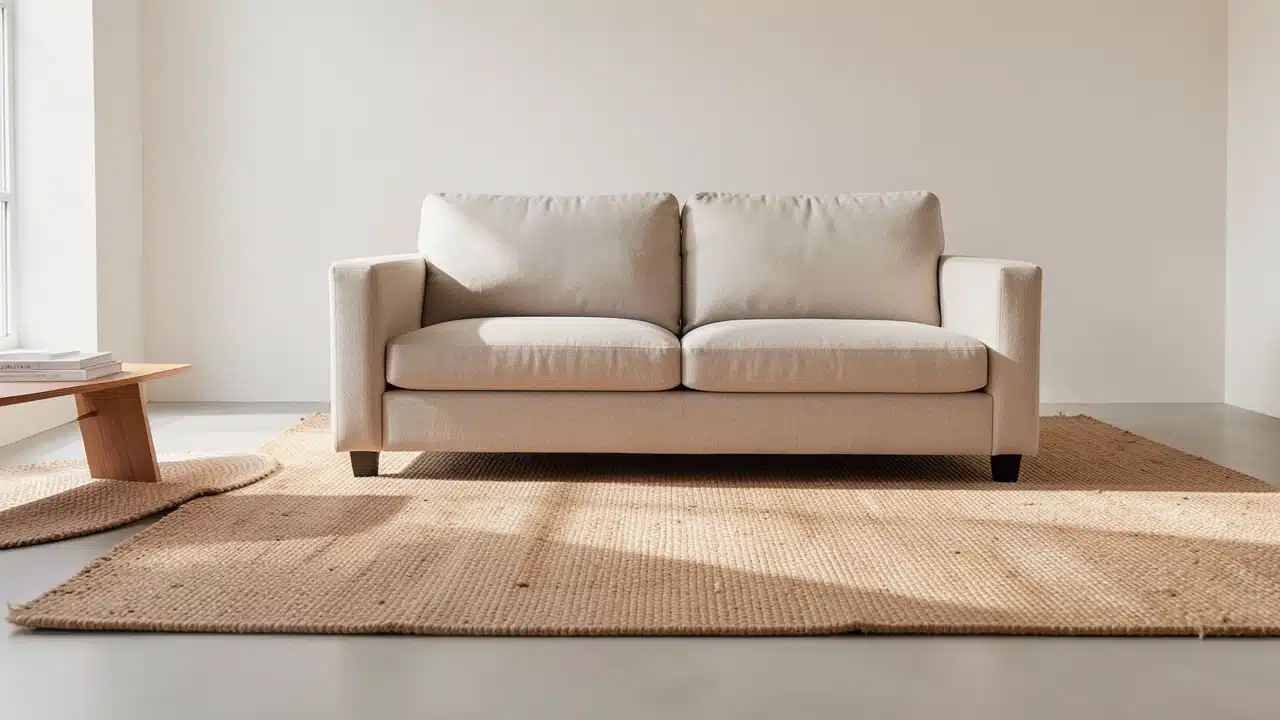
Beyond Size: Other Factors for Rug Placement
While size is paramount, a few other elements can enhance your rug and furniture arrangement. These subtle touches can make a big difference in the overall feel of your room.
Rug Material and Texture
The material and texture of your rug can also influence how it interacts with your furniture. A plush, thick rug can feel more substantial and inviting, helping to ground your sofa even more effectively. A thinner rug might feel less impactful, making a slightly smaller size seem even more inadequate.
Consider how the texture complements your sofa. A smooth, low-pile rug might look best with a textured fabric sofa, while a shag rug can add warmth to a leather sofa.
Color and Pattern
The color and pattern of your rug play a role in visual weight. A rug with a bold pattern or a darker color can feel more grounding than a very light, solid-colored rug. If you’re worried about a floating sofa, a rug with a strong design can help visually anchor the space.
Ensure the rug’s colors coordinate with your sofa and other decor. This creates a harmonious look where the rug feels like a natural part of the room, not an afterthought. A well-chosen pattern can also add depth and interest to your seating area.
Room Layout and Flow
The way you arrange your furniture in relation to the rug and the room’s overall layout is also important. Make sure your rug doesn’t block pathways or make it difficult to move around. The rug should define the seating area, but it shouldn’t impede the natural flow of the room. Consider the room layout and flow when placing a rug in your living space.
Consider the distance between the rug and other furniture. For example, how much space is there between the rug and a console table behind the sofa? These details contribute to the overall balance and functionality of your space.
Frequently Asked Questions Of What Rug Size Stops Your Sofa From Looking Like It’S Floating
What is the most common rug size for a living room?
The most common and often recommended rug size for a standard living room is 8×10 feet. This size typically allows the front legs of your sofa and chairs to sit on the rug, which is key to stopping your sofa from looking like it’s floating.
Can a rug be too big for a room?
Yes, a rug can be too big. If a rug covers too much of the floor, especially if it goes all the way to the walls, it can make the room feel smaller and the furniture cramped. The goal is to define a space, not to cover the entire floor.
Should all furniture legs be on the rug?
Ideally, yes, for the most grounded and luxurious feel. However, for many living rooms, having at least the front legs of your sofa and chairs on the rug is sufficient to prevent the floating effect and create a cohesive look. This is a big part of answering What Rug Size Stops Your Sofa From Looking Like It’s Floating.
What rug size should I get if I have a sectional sofa?
Sectional sofas usually require larger rugs. A 9×12 foot rug is often a good starting point, but for larger sectionals or very spacious rooms, a 10×14 foot rug or even a custom-sized rug might be necessary to ensure the main seating areas are anchored and the sofa doesn’t appear to be floating.
How do I measure for a rug?
Measure the dimensions of your seating area. Use painter’s tape to outline potential rug sizes on your floor. Consider leaving 12-18 inches of bare floor around the rug’s edges.
This helps ensure the rug fits the space and anchors your furniture effectively.
What if my sofa is very large?
If you have a very large sofa, especially a sectional, you will likely need a larger rug. Aim for a rug that can accommodate all four legs of your sofa, or at least the majority of its length. This is crucial for preventing a large sofa from looking like it’s floating.
Final Thoughts
Getting the rug size right is essential for a balanced living room. Ensure your sofa’s front legs are on the rug to create a grounded, cohesive look. This simple step makes a huge difference in how your entire space feels. Readers looking for reliable background can compare this guidance with authoritative information about front legs on rug.
Choose a size that anchors your furniture and ties your room together beautifully.